
Business
RBI compounds FEMA violations in Deccan Digital Networks case: ED

New Delhi, Feb 11: The Reserve Bank of India (RBI) has issued a compounding order of the Foreign Exchange Management Act (FEMA) violations in the case of Deccan Digital Networks Pvt Ltd, according to a statement issued by the Enforcement Directorate (ED) on Wednesday.
The compounding order was passed by the Reserve Bank on January 14 under Section 15 of the Foreign Exchange Management Act, 1999 (FEMA), “in the case of Deccan Digital Networks Private Limited, which has resulted in termination of proceedings against the company for alleged contraventions of provisions of FEMA, 1999”, the ED statement said.
The agency statement further added that the said order has been passed by the RBI after issuance of ‘No Objection’ by the ED.
In this case, based on the credible information received, an investigation was taken up by the ED under the provisions of FEMA.
After completion of the investigation, ED filed a complaint under Section 16 of FEMA before the Adjudicating Authority on December 27, 2012, against Deccan Digital Networks, pointing out several contraventions under FEMA, 1999, for which compounding has been passed by the RBI.
These contraventions are late reporting of “foreign inward payments under Para 9(1) (A) of Schedule 1 to FEMA 20/2000-RB, covering Rs 11,82,84,399 and late filing of Form FCGPR after issuing shares under Para 9(1) (B) of the same Schedule 1 to FEMA 20/2000-RB, covering Rs 11,82,84,400”.
As per the provisions of FEMA, the adjudication proceedings were initiated by the Adjudicating Authority by issuance of a Show Cause Notice under Section 16 of FEMA to the company and its Directors/officers who were in charge and responsible for the conduct of the business of the company during the relevant period of contravention.
The ED statement said that the company, later on, filed an application before the RBI for compounding of the said contraventions under FEMA as per the provisions of Section 15 of the Act. On reference from the RBI, the ED issued no objection for such compounding in line with the true spirit of the Act.
Accordingly, the RBI, on the basis of no objection issued by ED, has compounded the said contraventions vide compounding order with a one-time payment of Rs 1,03,333.
“This has resulted in termination of adjudication proceedings under the provisions of FEMA, 1999, against the company for the said contraventions as well as further litigation,” said the ED statement.

New Delhi, March 15: The Bharat Progress Report 2025-26, released by the NXT Foundation, highlights India’s rapid economic and technological growth over the year with the achievement of as many as 101 major milestones across digital public infrastructure, highways, railways, space, and renewable energy, taking the country towards the goal of becoming a developed nation.
The report underscores that India became the world’s fourth-largest economy in 2025, overtaking Japan with a nominal GDP of about $4.18 trillion. Driven by a robust 8.2 per cent growth rate, India continues to be the world’s fastest-growing major economy. The country is now on course to soon become the third-largest economy in the world.
The report points to several high-frequency indicators that reflect the economic growth momentum. GST collections reached a record Rs 2.17 lakh crore in April 2025, while the country’s mutual fund industry surpassed Rs 80 lakh crore in assets under management. Besides, cumulative foreign direct investment crossed $1.15 trillion with the surge in investor confidence.
The development of India’s digital public infrastructure, which is being adopted by other countries as well, is reflected in the monthly UPI transactions surpassing Rs 21 lakh crore, while Aadhaar authentication crossed one billion. This enabled the expansion of financial inclusion in the country with a marked improvement in the delivery of government services to the poor in a transparent manner, directly into the accounts of beneficiaries.
On the infrastructure and connectivity front, the major achievements included the completion of the Chenab Rail Bridge, the world’s highest railway arch bridge, and the continued expansion of the Vande Bharat train network, which has enhanced high-speed rail connectivity. At the same time, the country expanded its national highways and logistics networks, helping improve supply chains and reduce transportation costs.
The report further highlights the country’s progress in science and advanced technology. The Space Docking Experiment (SpaDeX) conducted by the Indian Space Research Organisation successfully demonstrated in-orbit docking capability, saw India storming into the exclusive club of countries with this sophisticated technology. A major step was also undertaken during the year to develop domestic capacity in semiconductors, artificial intelligence and quantum computing as the country emerges as an alternative to China for becoming a world manufacturing hub for hi-tech electronic products.
India also made major advancements in achieving its renewable energy goals in the fight against climate change. The country’s share of non-fossil fuel power capacity reached the 50 per cent mark five years ahead of the 2030 target, on the back of strong growth in solar, hydel and wind energy. The report points out that the achievement of these milestones showcases the country’s evolution into a major driver of global growth in the new world order.
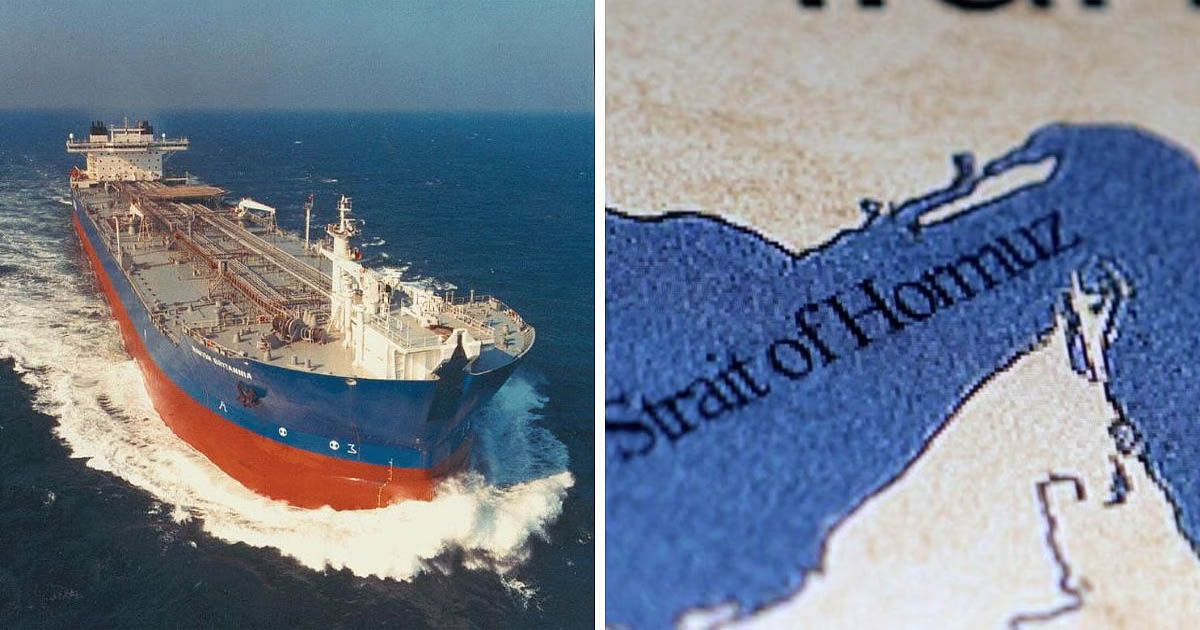
New Delhi: Iranian Ambassador Mohammad Fathali’s words of reassurance that India will receive safe passage through the Strait of Hormuz will certainly gladden Indian hearts. The Iranian envoy to India told reporters that “changes would be seen in two-three hours,” suggesting that ships carrying Indian oil and Indian nationals may be safe while going through the Strait.
The reality isn’t that simple. India is dependent on 40% of its oil from the Strait of Hormuz, but there’s a catch. Energy experts say that Indian ships do not pick up oil from the Strait but have so far outsourced it to foreign tankers.
The main reason for this is insurance. Due to the Strait being so geopolitically sensitive, insurance costs are very high, and therefore Indian Oil Corporation (IOC) or BPCL prefer to outsource it.
There is another advantage to outsourcing the oil to foreign tankers – Indian oil companies do not have to own the fleet.
India could attach its flag to the foreign tankers, but naval regulations state that there must be a minimum number of Indian crew members on the ship, along with other regulations that have to be met before the Indian flag can be put on the tanker.
If there is no flag, there is no way that an Iranian ship can detect if a ship is carrying Indian oil or not.
Coming to Indian crew members, India is one of the top three nations in the world that supplies sailors.
Government data shows the number of Indian sailors has grown from around 1.25 lakh a decade ago to more than three lakh now. Indians now comprise around 10–12% of the total number of sailors in the world.
The problem for India is that most of the Indian crew members work on oil tankers, containers, LPG vessels and bulk carriers on foreign tankers and are at great risk when naval warfare takes place.
The Ministry of Ports, Shipping and Waterways has confirmed three Indian seafarers died, with four others injured in maritime attacks around the strait amid escalating hostilities. Naval experts believe the figure is likely to be much higher.
Despite these problems, some level of coordination seems to be taking place between India and Iran.
Agency reports said that on Thursday, the Suezmax tanker Shenlong, carrying Saudi crude, arrived at a port in Mumbai after transiting the strait. The Liberia-flagged vessel was the first crude carrier to reach India from the Middle East since the war between Iran and the United States and Israel broke out in late February, according to LSEG data.
The customer is state-run Bharat Petroleum Corp.
But the lack of a formal agreement between the Iranian Navy and tankers carrying Indian oil suggests the Iranian envoy’s assurance does not guarantee a safe maritime corridor.
An MEA official says talks are on to make this happen, but so far Iran has not provided such assurance. In turn, Iran wants assurance from New Delhi that it will provide a joint statement from BRICS nations condemning the US-Israeli aggression.
India currently holds the chairmanship of BRICS, and so far there has been no joint statement. This has not been viewed well by Iran, which is a full member of BRICS.
Business
Mumbai: Police Bust LPG Black-Marketing Racket In Worli; 64 Cylinders Seized Amid Panic Booking Surge

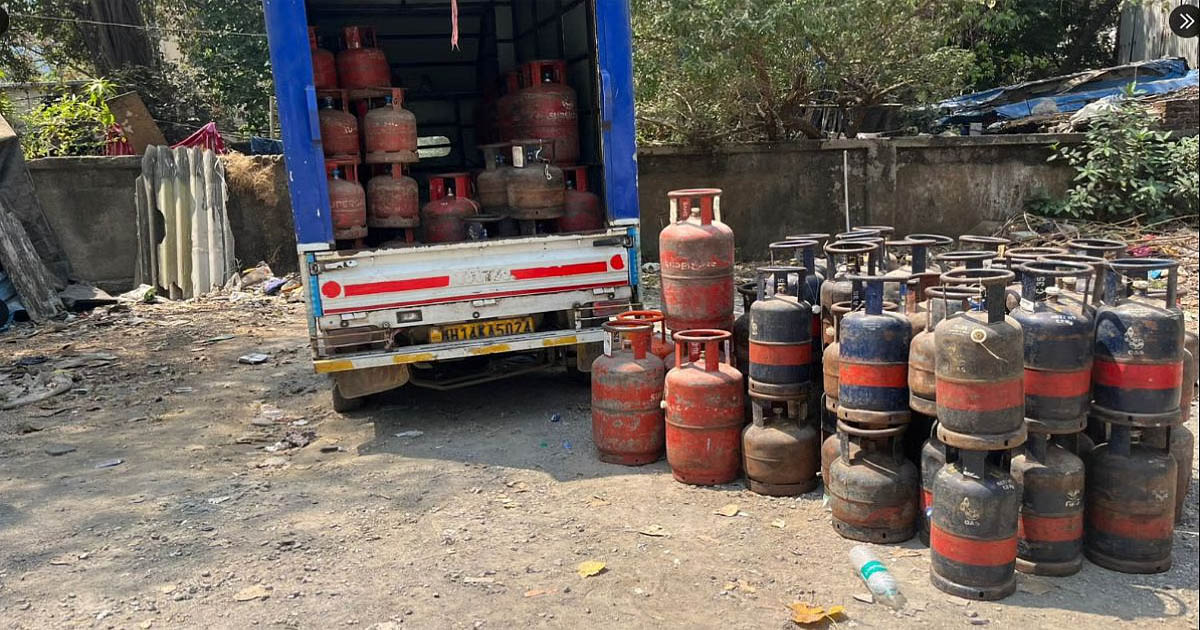
Mumbai: Authorities in Mumbai have busted a gas cylinder black-marketing racket in Worli and seized several LPG cylinders during an operation, Mumbai Police said. The action comes at a time when concerns over cooking gas availability have triggered panic bookings in parts of the country.
During the raid, officials recovered six filled and 58 empty HP Gas cylinders along with several other cylinders from the location. Police said the stock was being illegally stored inside residential premises. The seized cylinders have been handed over to Worli Police Station, where further legal action is being initiated against those involved in the illegal storage and distribution.
Officials stated that storing and selling LPG cylinders outside authorised channels poses serious safety risks, especially in residential areas where such stockpiling can lead to fire hazards and other emergencies. Authorities are now investigating the source of the cylinders and the possible distribution network linked to the racket.
The development comes amid heightened demand for LPG across the country, the Union government on Friday said it is ensuring uninterrupted supply of cooking gas to households despite a surge in panic bookings. Consumers have been advised not to rush to dealerships or place unnecessary refill orders.
At a media briefing on Friday, Sujata Sharma, Joint Secretary in the Ministry of Petroleum and Natural Gas, said fears of a shortage have led to a sudden spike in LPG cylinder bookings in recent days, even though supplies remain adequate across the country. She emphasised that LPG distributors currently have sufficient stocks and that supply chains are functioning normally.
The government has also advised nearly 60 lakh households located near piped natural gas (PNG) networks to consider switching to piped connections for convenience. Sharma warned that strict action will be taken against hoarders and black marketers attempting to exploit the crisis triggered by the ongoing conflict in West Asia.
While LPG supply to households, hospitals, and educational institutions continues to be prioritised, supplies to commercial establishments such as hotels and restaurants have been curtailed due to disruptions in energy sourcing linked to the geopolitical tensions in the region.
To stabilise supply, the Centre has increased domestic production by 30 per cent since March 5 by diverting refinery streams to maximise cooking gas output. Additionally, around 20 per cent of commercial LPG supplies have been placed with state governments and Union Territories, allowing local administrations to decide priority allocation based on regional requirements.

Mumbai: Not only Muslims but also Hindus are worried about SIR, SP national president Akhilesh Yadav criticizes UP government and Election Commission

BMC Removes Flashing Lights From Mumbai Mayor Ritu Tawde’s Car Following Social Media & RTI Protest

Trump rejects deal with Iran, seeks global help on Hormuz

China’s air defence system fails miserably, becomes ‘laughing stock’: Report

Mumbai: Shiv Sena (UBT) leader Sanjay Raut Alleges Election Commission Acting As ‘Extended Branch Of BJP’, Says Opposition Does Not Trust Poll Body

Salim Khan hospitalised following complaints of swelling

Mulund Horror: Maharashtra CM Devendra Fadnavis Expresses Grief After 1 Killed In Mumbai Metro 4 Slab Collapse; ₹5 Lakh Aid Announced For Deceased

Mumbai: JBCN International School In Borivali Gets Bomb Threat, Search Reveals Hoax, Students Safe

Former Arsenal Star Mesut Ozil’s Convoy Gets Involved In Road Accident During Bangladesh Visit

Gold and silver surge on safe haven demand, margin cut
-

 Crime4 years ago
Class 10 student jumps to death in Jaipur
-

 Maharashtra1 year ago
Mumbai Local Train Update: Central Railway’s New Timetable Comes Into Effect; Check Full List Of Revised Timings & Stations
-

 Maharashtra1 year ago
Mumbai To Go Toll-Free Tonight! Maharashtra Govt Announces Complete Toll Waiver For Light Motor Vehicles At All 5 Entry Points Of City
-

 Maharashtra1 year ago
False photo of Imtiaz Jaleel’s rally, exposing the fooling conspiracy
-

 National News1 year ago
Ministry of Railways rolls out Special Drive 4.0 with focus on digitisation, cleanliness, inclusiveness and grievance redressal
-

 Maharashtra1 year ago
Maharashtra Elections 2024: Mumbai Metro & BEST Services Extended Till Midnight On Voting Day
-

 National News1 year ago
J&K: 4 Jawans Killed, 28 Injured After Bus Carrying BSF Personnel For Poll Duty Falls Into Gorge In Budgam; Terrifying Visuals Surface
-

 Crime1 year ago
Baba Siddique Murder: Mumbai Police Unable To Get Lawrence Bishnoi Custody Due To Home Ministry Order, Says Report