
National
Ravi Shastri calls for reduction in number of T20Is played to counter scheduling issues

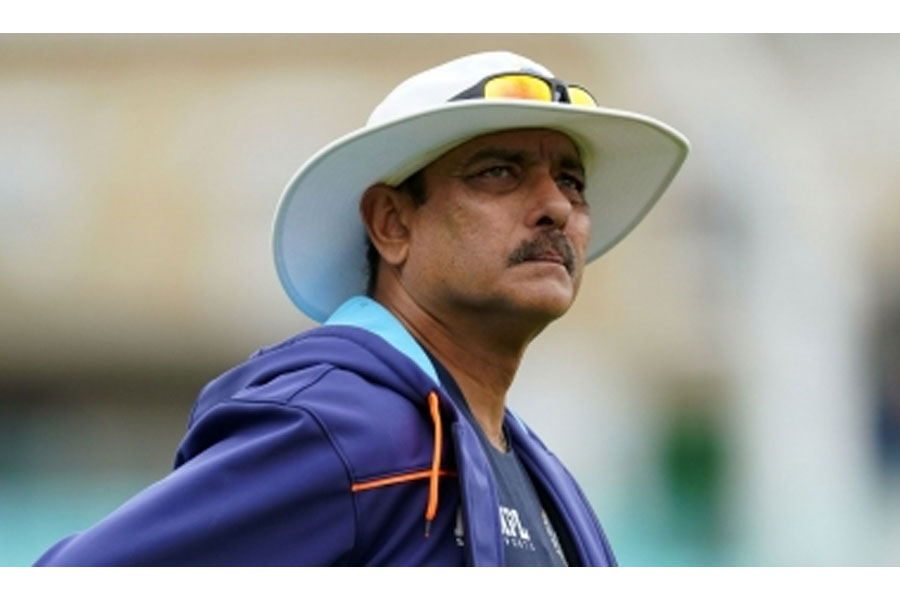
Former India head coach Ravi Shastri has called for a reduction in the number of T20Is played to counter the raging issue of scheduling in international cricket. The month of July 2022 has seen the issue of hectic scheduling in cricket and prioritisation of franchise T20 leagues being reignited.
South Africa chose to pull out of a three-match ODI series against Australia in January 2023 to ensure their players would be available for the upcoming new domestic T20 competition in the country.
Earlier this week, England’s Test skipper and all-rounder Ben Stokes announced his retirement from ODI cricket after the first match against South Africa at the age of 31, citing the “unsustainable” workload by playing in all three formats.
With speculations coming that the upcoming Future Tours Programme (FTP) for the 2023-27 cycle will have more of T20I action, Shastri, currently in United Kingdom as a member of the Sky Sports commentary team, feels that bilateral T20Is should be reduced by a huge amount to free up the hectic international calendar.
“I would be a little careful of the number of bilateral splits, especially in T20 cricket. There’s a lot of franchise cricket which can be encouraged, whichever country it’s in – India, West Indies, or Pakistan. You play less bilaterals and then you get together for the World Cups. So, the emphasis on ICC World Cup events becomes paramount. Then people look forward to them,” said Shastri in an episode of the Vaughany and Tuffers podcast.
Shastri, a former India all-rounder and member of the 1983 Cricket World Cup winning team, further asked for creation of two divisions in Test cricket in a bid to safeguard the future of the longest format of the game.
“I think two tiers are needed, otherwise Test cricket will die in 10 years time. You need six teams at the top, and then six teams in the second and then you qualify. And those top six play against each other more often because of the corridor you open up by having less bilateral T20 cricket and just franchise cricket. That’s the way all formats of the game can survive.”


New Delhi, Jan 24 : Investors are likely to remain on edge over the proposed US framework on Greenland, and near-term volatility related to this issue can continue, a report has said.
The report from Bank of Baroda said that market participants are awaiting more details that could determine whether negotiations succeed or unravel.
“Going ahead, investors are likely to await more details of the deal, as there are a few sticking points which can derail the negotiations. Hence, some volatility can be expected,” the report said.
Several analysts expect the arrangement to resemble an update of the existing security agreement between the US and Denmark, which was signed in 1951, the report noted.
Further negotiations will follow in due course which will cover areas such as US military presence in Greenland, as well as use of its mineral resources and sovereignty, said Aditi Gupta, Economist, Bank of Baroda.
US President Donald Trump has framed Washington’s interest in Greenland as driven by national security concerns, but the island’s largely unexplored mineral wealth including oil, gas and rare earth elements is of interest to US, the report said.
“The announcement of a framework deal between the US and NATO has helped to soothe investors’ nerves, however the details of the deal are still fuzzy,” it added.
Geo-political tensions escalated and markets went into turmoil after the US President intensified rhetoric to annex Greenland and threatened economic measures against European countries that oppose US plans. In response, several European nations, including France, Germany, Sweden amongst others increased military deployment in Greenland, further escalating tensions.
Trump had announced a 10 per cent additional tariff on goods from the UK, Denmark, Norway, Sweden, France, Germany, Netherlands and Finland from February 1, 2026. The rate was expected to increase to 25 per cent by June 1, 2026.
Later, he backed off from his threat of imposing tariffs on European countries along the sidelines of the World Economic Forum meeting in Davos.
Crime
Two Held With ₹68 Lakh Cash Near India-Myanmar Border In Mizoram; Heroin Worth ₹78 Lakh Seized


Aizawl: Two persons were arrested with Rs 68 lakh in cash near the India-Myanmar border in east Mizoram’s Champhai district, officials said on Thursday.
Acting on a tip-off, the Assam Rifles intercepted a vehicle at Zote village on August 11, they said.
Upon thorough checking, Rs 60 lakh in cash was recovered from two persons in the vehicle.
The duo, identified as Joseph Lalthansanga and Vanlalruati, could not state any proper reason why they were carrying such a huge amount of cash. They were subsequently handed over to the police for legal action, officials said.
In another operation, the Assam Rifles recovered 94.6 gram of heroin, worth Rs 78 lakh, from the village on Wednesday.
The drugs were handed over to the Excise and Narcotics Department, officials said.

India’s AI technology spending is projected to grow at an annualised rate of 38 per cent from 2023 to reach $10.4 billion (approximately Rs. 92 thousand crore) in 2028, a report said on Thursday.
Around 40 per cent of organisations in India have already implemented agentic AI, and close to 50 per cent are planning to use the technology within the next 12 months, IDC InfoBrief and UiPath said in a joint report.
In 2025, AI investments are focused on building the foundational infrastructure required to power transformative, high-value use cases.
According to the report, the adoption is surging, fueled by a tech-savvy workforce, expanding digital infrastructure, and government-backed initiatives.
Organisations’ spending on enterprise automation, multilingual AI models, and agentic deployments is driving this momentum further.
The benefits are already visible, as 80 per cent of Indian companies say agentic AI boosts productivity, while 73 per cent say it improves decision-making, the report said.
According to the report, agentic AI is gaining strong traction across the manufacturing, retail and wholesale, healthcare, and life sciences industries, which heavily rely on data and repetitive decision-making cycles.
“Agentic automation is rapidly redefining business operations across India. While enterprises in this region are embracing the full potential of AI agents to streamline workflows and autonomously execute complex business processes, trust and security remain barriers to widespread implementation,” said DebDeep Sengupta, Area Vice President, South Asia, UiPath.
Our agentic automation platform directly addresses these challenges, breaking down barriers to enterprise AI adoption by enhancing security and compliance, improving accuracy and reliability for agentic outcomes, Sengupta added.
About 69 per cent of Indian organisations are using agentic AI to enhance productivity, 59 per cent to drive personalised customer engagement, while 57 per cent apply it to risk and fraud detection, highlighting how agentic AI is being applied across front and back-office functions, the report highlighted.
“Becoming an AI-fueled business is no longer an option in today’s unpredictable climate. For many organisations, it’s fast becoming a strategic necessity,” said Deepika Giri, Associate Vice President, IDC Asia/Pacific.
Across the region, organisations are embracing agentic AI and agentic automation at scale, Giri added.

Jharkhand students’ march intensifies; police use water cannons after protesters breach barricades

Missing B’luru techie: Police suspect suicide bid at Shivagange Hill, search continues

Mini Mathur calls ‘Alliance’ the best digital detox experiences of her life: Had so much fun

MCA invites bids for ninth team as T20 Mumbai League expands

Security guard arrested for raping Ahmedabad student shot in leg while trying to flee police custody

Death toll from Japan’s Kumamoto earthquake rises to 38

Make ‘Har Ghar Tiranga’ people’s movement again: PM Modi

77 pc Indian companies see AI reshaping workspaces: Report

Iranian FM warns US against ‘adventurous’ actions

Indian equity markets open higher on positive global cues
-

 Crime4 years ago
Class 10 student jumps to death in Jaipur
-

 Maharashtra2 years ago
Mumbai Local Train Update: Central Railway’s New Timetable Comes Into Effect; Check Full List Of Revised Timings & Stations
-

 Maharashtra2 years ago
Mumbai To Go Toll-Free Tonight! Maharashtra Govt Announces Complete Toll Waiver For Light Motor Vehicles At All 5 Entry Points Of City
-

 Maharashtra2 years ago
False photo of Imtiaz Jaleel’s rally, exposing the fooling conspiracy
-

 National News2 years ago
Ministry of Railways rolls out Special Drive 4.0 with focus on digitisation, cleanliness, inclusiveness and grievance redressal
-

 Maharashtra2 years ago
Maharashtra Elections 2024: Mumbai Metro & BEST Services Extended Till Midnight On Voting Day
-

 National News2 years ago
J&K: 4 Jawans Killed, 28 Injured After Bus Carrying BSF Personnel For Poll Duty Falls Into Gorge In Budgam; Terrifying Visuals Surface
-

 Crime2 years ago
Baba Siddique Murder: Mumbai Police Unable To Get Lawrence Bishnoi Custody Due To Home Ministry Order, Says Report