
National News
Punjab assembly pays homage to Moosewala, others

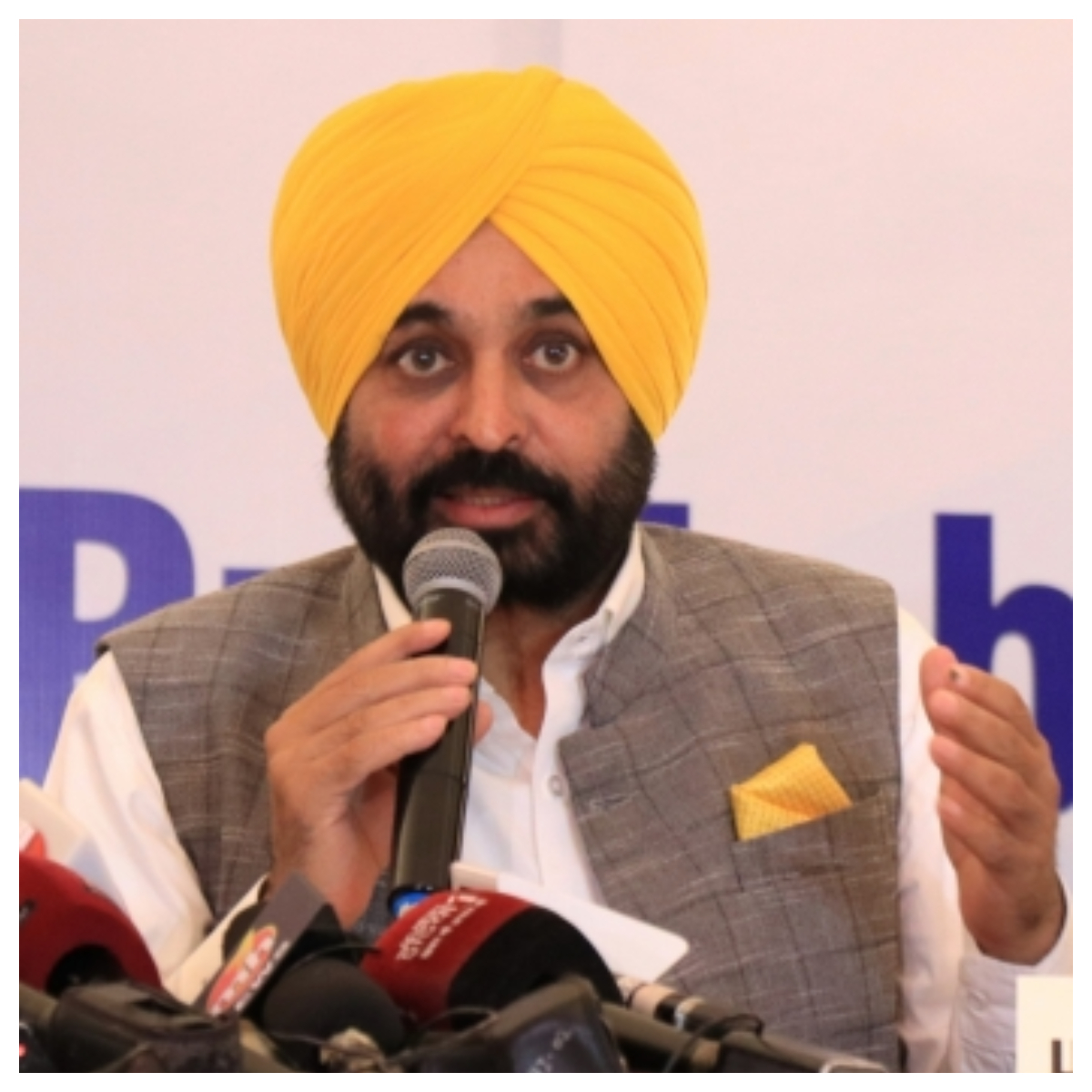
Punjab Chief Minister Bhagwant Mann on Friday, led the Vidhan Sabha, in paying tribute to eminent personalities, freedom fighters, political personalities and noted Punjab singer Sidhu Moosewala, all who had passed away since the last session of the Assembly.
On the first day of Budget session, the House paid respects to former ministers Hardipinder Singh Badal and Jathedar Tota Singh, besides formers MLAs — Sukhdev Singh Sukhladhi and Shingara Ram Sahungra.
The House also paid tribute to freedom fighters Tara Singh, Swarn Singh, Crora Singh and Sukhraj Singh Sandhawalia, who played a pivotal role in emancipating the country from the clutches of British imperialism.
Meanwhile, the House also paid homage to mountaineer and Arjun awardee Gurcharan Singh Bhangu, who was bestowed this prestigious award in 1965 for climbing the Mount Everest, and athlete Hari Chand, also an Arjun awardee, who brought laurels to the country in field of athletics.
The House also paid tributes to the famous Punjabi Singer Shubhdeep Singh Sidhu, alias Sidhu Moosewala, who had carved a niche for himself in the vast field of music and entertainment.
The legislative assembly also paid homage to eminent Sikh personality Principal Surinder Singh.
A two-minute silence was observed in the memory of departed souls as a mark of respect during the obituary references.


National News
PM Modi to launch key drinking water project in north Gujarat’s Banaskantha on March 31

Banaskantha (Gujarat), March 27: Prime Minister Narendra Modi will visit Gujarat on March 31 to lay the foundation stone and launch multiple development projects, including a major drinking water scheme for the pilgrimage town of Ambaji and adjoining tribal areas, according to an official statement issued on Friday.
The Prime Minister will inaugurate Part I and Part II of the Rs 141-crore Ambaji drinking water project, which is expected to benefit around 78,000 residents across 34 villages and Ambaji town in Banaskantha district.
The scheme covers villages in Danta and Amirgadh talukas, regions that have long struggled with reliable access to drinking water due to their hilly and rocky terrain. At present, many of these areas are dependent on groundwater sources.
Officials from the Water Supply Department said the project marks a significant shift from groundwater dependence to a surface water-based supply system, which is likely to bring substantial public health benefits along with improved water availability.
The project has also been planned with future demand in mind, given the growing footfall at the Ambaji Temple, a prominent pilgrimage destination. Authorities said the infrastructure has been designed to cater to both current needs and anticipated expansion in the region.
Highlighting the broader policy framework, the department noted that Gujarat has been steadily advancing in water management through sustained planning and infrastructure development. The initiative forms part of the state’s larger push to expand access under the ‘Statewide Water Supply Grid’.
Under this grid, more than 3,300 km of bulk pipelines have already been laid, enabling surface water supply to over 15,000 villages and 251 urban centres, benefiting an estimated population of over five crore people.
Officials added that the state has significantly reduced its reliance on groundwater by implementing water supply schemes based on rivers, canals and reservoirs.
Further momentum is expected under Phase II of the Jal Jeevan Mission, which aims to expedite water connectivity in the remaining rural areas. For grievance redressal, a 24-hour rural helpline has also been put in place to address water-related complaints promptly.
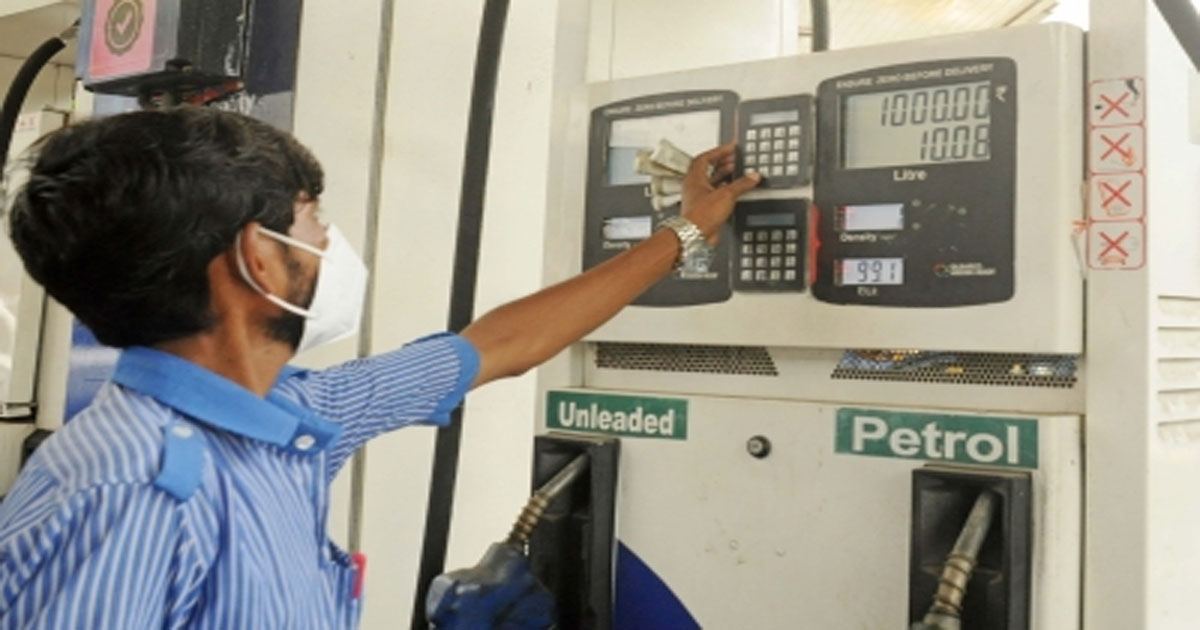
New Delhi, March 27: The government on Friday said retail pump prices of petrol and diesel will not change, and the excise reduction is not being passed on as a price cut at the pump.
Instead, it directly reduces the under-recoveries being absorbed by public sector oil marketing companies (OMCs) — Indian Oil Corporation, Bharat Petroleum Corporation and Hindustan Petroleum Corporation — who have continued to supply fuel to Indian consumers at prices well below their cost of supply, the Petroleum Ministry said.
At current international crude prices, under-recoveries stand at approximately Rs 26 per litre on petrol and Rs 81.90 per litre on diesel.
The combined daily under-recovery being absorbed by OMCs is approximately Rs 2,400 crore.
The excise reduction offsets Rs 10 per litre of these losses, ensuring OMCs can continue to supply fuel without disruption while keeping retail prices unchanged, said the ministry.
The government has reduced excise duty by Rs 10 per litre on both petrol and diesel with immediate effect.
“This decision has been taken in response to the steep and rapid rise in international crude oil prices, which have surged from approximately $70 per barrel to around $122 per barrel over the past month — an increase of nearly 75 per cent in under four weeks, driven by the ongoing conflict in West Asia and associated disruptions to global energy supply chains,” the ministry said.
The contrast with global fuel markets is instructive. Fuel prices have risen by 30 to 50 per cent across South and South-East Asian countries, 30 per cent in North America, and 20 per cent in Europe since the onset of the current crisis. India has held the line. That stability carries a fiscal cost, and the government has chosen to bear it.
Earlier in the day, Minister for Petroleum and Natural Gas, Hardeep Singh Puri, said that Prime Minister Narendra Modi decided to take a hit on government finances to safeguard the Indian citizen.
“The government has taken a substantial impact on its taxation revenues to reduce the high losses being faced by oil marketing companies at this time of sky-high international prices,” he mentioned.
Alongside the excise reduction, the government has simultaneously introduced an export levy on diesel. At a time when international diesel prices have surged sharply, the levy is designed to disincentivise exports and ensure that refinery output is directed first towards meeting domestic demand.
Keeping Indian pumps fully supplied takes precedence over export opportunities, however commercially attractive those may be at current global prices. The government will continue to monitor the evolving global energy situation and take all measures necessary to maintain supply stability and price protection for Indian consumers.
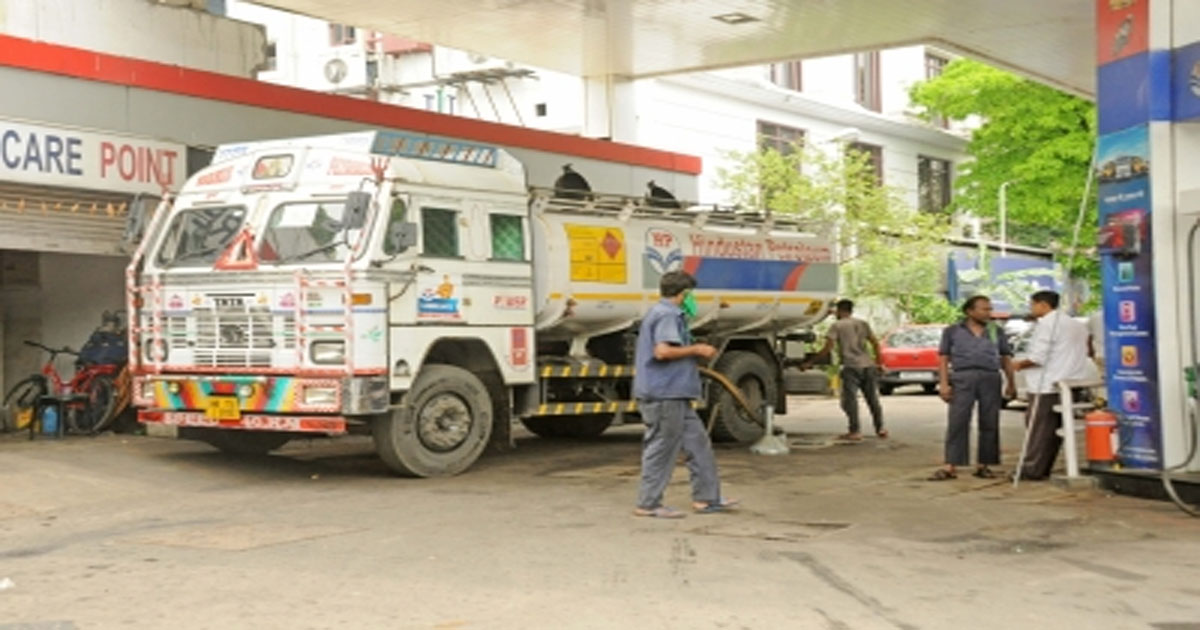
New Delhi, March 26: The government on Thursday categorically stated that India’s petroleum and LPG supply situation is fully secure and under control, calling upon citizens not to be misled by a “deliberately mischievous, coordinated campaign of misinformation” that is being carried out to spread unjustified panic.
India has 74 days of total reserve capacity, and actual stock cover is around 60 days right now (including crude stocks, products stocks and the dedicated strategic storage in caverns), even as “we are on the 27th day of the Middle East crisis”, the Petroleum Ministry said, adding that all retail fuel outlets have enough supplies.
“There is no shortage of petrol, diesel, or LPG anywhere in the country,” it said in a statement, adding that nearly two months of steady supply is available for every Indian citizen, regardless of what happens globally.
“Next 2 months of crude procurement has also been secured. India is completely secure for the next many months, and the quantity in strategic cavern storage becomes secondary in such a supply situation. Therefore, any representation that India’s reserves are depleted or insufficient should be dismissed with the disdain it deserves,” the ministry highlighted.
Across the world, countries are dealing with price increases, rationing, odd-even vehicle restrictions, and forced station closures. Few have declared a “National Energy Emergency”.
“India DOES NOT FEEL THE NEED FOR ANY SUCH MEASURES. While other nations are rationing, there is no shortage of supplies in India. Where isolated instances of panic buying occurred at select pumps, they were driven by deliberate misinformation spread by certain videos on social media,” the ministry emphasised.
Despite the surge in demand at such pumps, fuel was dispensed to all the consumers, and oil company depots have been operational through the night to ramp up supplies.
The ministry further stated that steps have also been taken by oil companies to increase credit to petrol pumps to over 3 days from the earlier allowed 1 day in order to ensure that there is no shortage of petrol and diesel at any pump due to working capital issues of pump owners.
Notably, despite the situation at the Strait of Hormuz, India is today receiving more crude oil from its 41-plus suppliers across the world than what was previously arriving through the Straits.
“Every Indian refinery is running at over 100 per cent utilisation. Crude oil supplies for next 60 days have already been tied up by Indian Oil companies. There is NO supply gap,” the ministry said.
There is also no LPG shortage. Following the LPG Control Order issued by this Ministry, domestic refinery production has been ramped up by 40 per cent, bringing daily LPG output to 50 TMT (more than 60 per cent of our requirement) against a total daily requirement of around 80 TMT.
The net daily import requirement has consequently come down to only 30 TMT — meaning India is now producing much more than it needs to import.
“Over and above domestic production, 800 TMT of assured inbound LPG cargoes are already secured and en route from the United States, Russia, Australia, and other countries, arriving across India’s 22 LPG import terminals — double the 11 terminals that existed in 2014,” the ministry said.
“Approximately one full month of supply is firmly arranged, with additional procurement being finalised continuously,” it added.
Oil companies are successfully delivering over 50 lakh cylinders every day. Commercial cylinder allocations have been raised to 50 per cent in consultation with state governments to avoid hoarding or black marketing.
Moreover, piped natural gas is being promoted — in full coordination with state governments — because it is cheaper, cleaner, and safer for Indian households.
India already produces 92 MMSCMD of natural gas domestically, out of a total daily requirement of 191 MMSCMD, making India far less import-dependent on gas than on LPG.
City gas distribution has expanded from 57 geographical areas in 2014 to over 300 today. Domestic PNG connections have grown from 25 lakh to over 1.5 crore. This transition was well underway before the current situation arose and reflects India’s long-term energy strategy.
“The claim that PNG is being pushed because LPG is running out is misinformation. LPG supply is secure. PNG is simply a better, more affordable and highly convenient fuel for India’s households,” said the ministry.
The ministry urged all citizens to rely only on official government communications for information regarding fuel and gas availability.

Government committed to creating a quality healthcare system: Devendra Fadnavis

Targetting of Iranian school crime against humanity: Iran’s FM at UNHRC session

Mumbai News: ED Attaches ₹19.12 Crore Asset Linked To LOIL Group In NSEL Scam Probe

Maharashtra Minister Nitesh Rane Announces AI Project For Mango, Cashew Farming In Sindhudurg With 400 Farmers In Pilot Phase

Lockdown will not be implemented… Oil prices will not increase either, criminal cases will be registered against those spreading rumors: Devendra Fadnavis

Married Mumbai Woman Mocked In Andheri Society Over ‘Lift Kissing’ CCTV Video, Files Police Complaint

Mumbai: JBCN International School In Borivali Gets Bomb Threat, Search Reveals Hoax, Students Safe

Mahayoti’s big gift to the people of Mumbai… Now there is no tax for houses up to 500 square feet, the Municipal Corporation has increased this limit to 700 square feet.

LPG Crisis In Maharashtra: Cyber Crime On Rise Amid Shortage, 2 Women Lose ₹4 Lakh In ‘Gas Update’ Online Scam In Kalyan-Dombivli

Rashmika Mandanna-Vijay Deverakonda Wedding: Virosh Turn Modern Day Prince & Princess For Their Dreamy Sangeet Ceremony
-

 Crime4 years ago
Class 10 student jumps to death in Jaipur
-

 Maharashtra1 year ago
Mumbai Local Train Update: Central Railway’s New Timetable Comes Into Effect; Check Full List Of Revised Timings & Stations
-

 Maharashtra1 year ago
Mumbai To Go Toll-Free Tonight! Maharashtra Govt Announces Complete Toll Waiver For Light Motor Vehicles At All 5 Entry Points Of City
-

 Maharashtra2 years ago
False photo of Imtiaz Jaleel’s rally, exposing the fooling conspiracy
-

 National News1 year ago
Ministry of Railways rolls out Special Drive 4.0 with focus on digitisation, cleanliness, inclusiveness and grievance redressal
-

 Maharashtra1 year ago
Maharashtra Elections 2024: Mumbai Metro & BEST Services Extended Till Midnight On Voting Day
-

 National News2 years ago
J&K: 4 Jawans Killed, 28 Injured After Bus Carrying BSF Personnel For Poll Duty Falls Into Gorge In Budgam; Terrifying Visuals Surface
-

 Crime1 year ago
Baba Siddique Murder: Mumbai Police Unable To Get Lawrence Bishnoi Custody Due To Home Ministry Order, Says Report