
Crime
Protest against ‘Agnipath’ turns violent in MP’s Gwalior

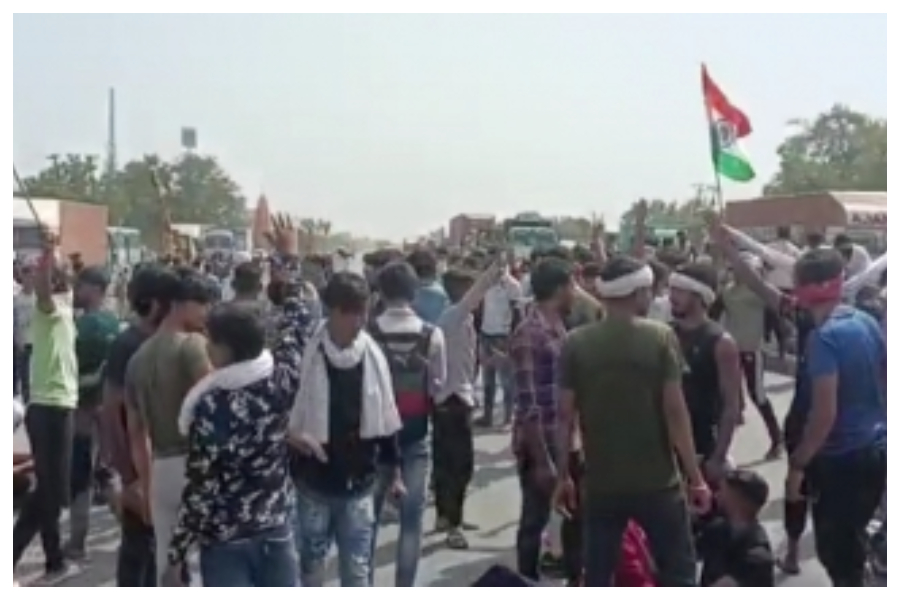
Hundreds of protesters on Thursday launched massive protest which soon turned violent in Gwalior district of Madhya Pradesh against the Centre’s ‘Agnipath’ recruitment scheme. Police had to resort to lathi-charge to disperse the mob.
Protesters went on a rampage, damaging and vandalising public properties at Birla Nagar railway station in Gwalior. Protesters broke the windows of some trains, set things on fire, burnt tyres and raised slogans against the Centre’s new recruitment policy. Train movement was affected in North Central Railway’s Jhansi division.
The protesters blocked the movement of at least 6-7 trains by keeping wooden logs, tree branches and other railway properties on tracks.
They also resorted to violence on the main roads breaking window panes of buses and other vehicles.
Violence was also reported in the Gole ka Mandir area of Gwalior. Protesters created ruckus on busy roads damaging private vehicles. It stopped only after police reached the spot.
Videos of violent protests surfaced on social media which showed the ransacking of the office of Birla Nagar railway station manager.
However, police, which were rushed to the spot, lathicharged on the protesters and dispersed them from the spot. Several protesters have been detained by the police.
The city witnessed multiple protests on Thursday since morning.
Gwalior is the region from where majority of youths line up for police and military services every year.


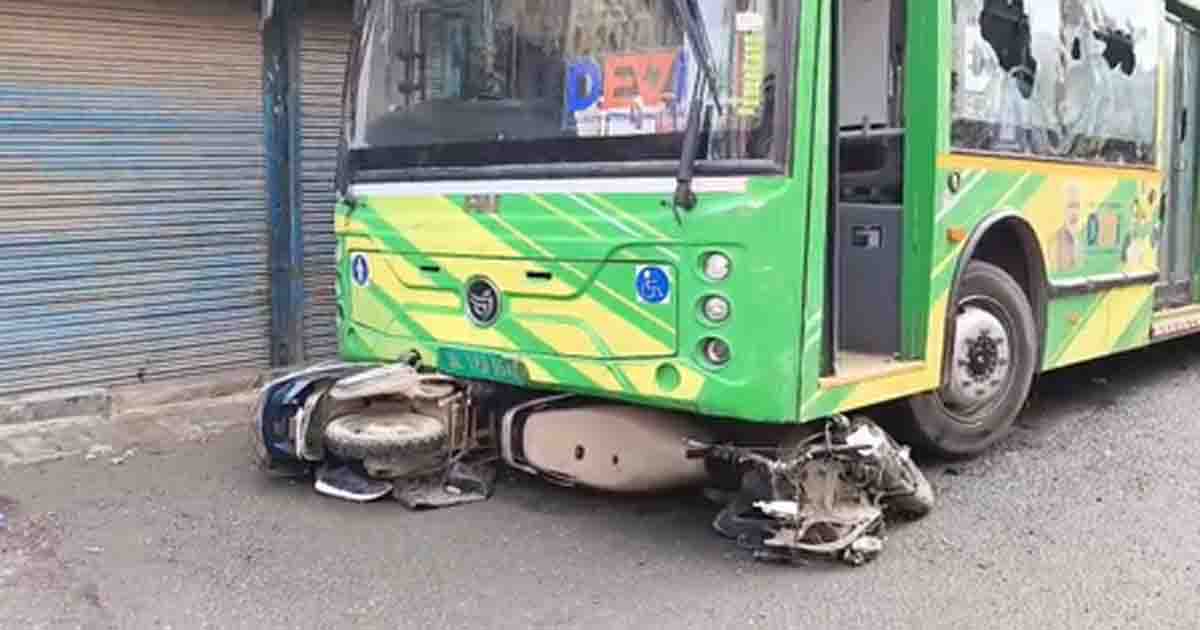
One person was killed, and two others were injured after a Delhi Transport Corporation (DTC) bus hit vehicles and pedestrians in Delhi Anand Parbat area on Saturday, officials said.
According to the officials, an e-rickshaw, two bikes, and a scooter rider were hit by the bus, which was heading towards Tikri Border.
One person died on the spot, while two others were seriously injured and were shifted to the hospital.
The officials added that the bus driver fled the scene following the accident.
According to the eyewitnesses, the bus was speeding when it hit the pedestrians.
“The bus was being driven by a female driver. The bus was at a very high speed. Pedestrians tried to save themselves; however, some were hit by the bus. Around 4-5 people were injured,” an eyewitness told media.
“There is always a traffic jam in this area. There is no place to walk on this road. Rikshaws and shops have encroached upon the road. Everyone fears to walk on this road. Today, a person has died because of all this,” another said.
“Several accidents keep happening here. The situation is miserable. The police also don’t arrive on time,” a local told media.
Police and forensic teams have reached the spot and are investigating the incident. Further details are awaited.
In a separate incident, one person was killed, and three others were injured after a truck hit two motorcycles near Crescent Apartment Red Light in Dwarka Sector 18 in the early hours of Saturday.
According to Delhi Police, the fatal accident occurred at around 12.45 a.m. The two motorcycles were carrying four people, with two persons on each vehicle, when the truck struck them.
Police apprehended the truck driver, Hotam Singh, 41, a resident of Agra, Uttar Pradesh. The truck, both motorcycles, and other exhibits were seized.
A case has been registered at Dwarka North police station under relevant sections, and further investigation is underway.

The Central District Police conducted simultaneous raids at two spa establishments in the Nabi Karim and Paharganj areas of Delhi, rescuing 19 women and arresting 10 people for their alleged involvement in illegal activities, police said on Saturday.
The raids were conducted as part of a crackdown on alleged illegal activities operating under the guise of spa services. Two FIRs have been registered under Sections 3, 4, and 5 of the Immoral Traffic (Prevention) Act, and further investigation is underway.
In the first operation, Nabi Karim police acted on specific information about an alleged sex racket operating at Hollywood Spa, located on the second and third floors of property number 8709-10 on Desh Bandhu Gupta Road.
According to police, on October 16, a secret informer approached Sub-Inspector Neeraj Rathi and provided information about the alleged racket. The information was shared with the station house officer (SHO), who constituted a team to verify the input and take legal action.
A police personnel was deployed as a decoy customer to verify the information. After the alleged illegal activity was confirmed, the team raided the premises, rescued 14 women and arrested nine accused.
The arrested persons were identified as Preeti Iman Ali, 39, the spa owner; Rizwan Ali, 38, the manager; Asif, 35; Shajeb, 31; Mohd. Umar, 39; Sameer, 25; Shahrukh, 35; Gulrej alias Danish, 28; and Shiva, 25. They are residents of Delhi, Uttar Pradesh, Uttarakhand and Karnataka.
An FIR (No. 473/26), dated October 16, was registered at Nabi Karim police station under Sections 3, 4 and 5 of the Immoral Traffic (Prevention) Act.
In a separate operation, Paharganj police raided New Latest Unisex Salon and Spa at property number 3738 on Desh Bandhu Gupta Road. During the raid, five women were rescued, and one accused was arrested.
The accused was identified as Shakeel Ahmed, 46, a native of Rampur, Uttar Pradesh, who was residing at the spa premises in Delhi.
An FIR (No. 452/2026), dated October 17, was registered at Paharganj police station under Sections 3, 4 and 5 of the Immoral Traffic (Prevention) Act.
Police teams from both stations carried out the operations under the supervision of their respective SHOs, with the Nabi Karim operation also supervised by the ACP, Paharganj.
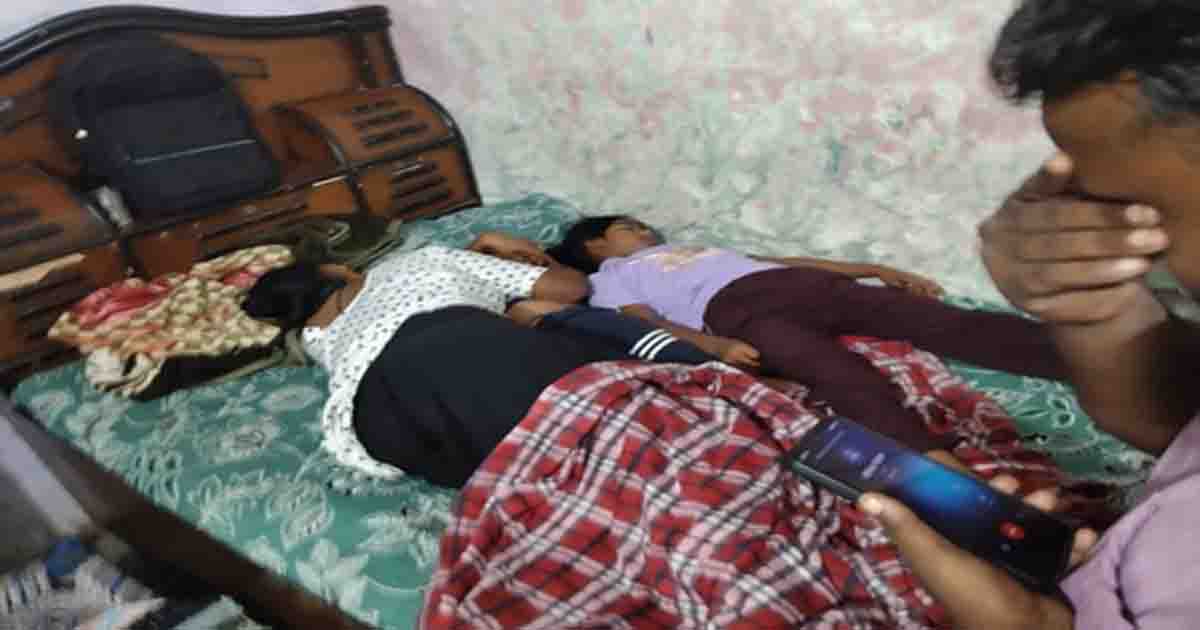
Greater Noida, Oct 17: A couple and their three children died under suspicious circumstances in Nagla Shri Padam village under the Rabupura police station area of Greater Noida on Saturday, police said.
According to reports, the Rabupura police station received information that a crowd had gathered outside the home of five family members from the Nagla Shri Padam village, following their deaths.
The deceased have been identified as Mahesh, 37, his wife Lalita, 35, and their three children, Laddu, 11, Mishti, 7, and Sakshat, 3.
According to the Gautam Buddh Nagar Police Media Cell, police received information about the deaths on Saturday morning.
Following the information, senior police officials, local police personnel, an ambulance and a Food Safety Department team rushed to the spot. Forensic experts and a field unit inspected the scene and began collecting scientific evidence.
Preliminary information suggests that the family had consumed noodles the previous night. Police are investigating possible food poisoning, based on accounts provided by neighbours and Mahesh’s mother. However, the exact cause of the deaths has not yet been established and will only be determined after the post-mortem examinations and other investigations.
The bodies are being sent for post-mortem examination. Further legal action will be taken based on the autopsy report and other scientific investigations, police said.
Earlier, in January 2026, Delhi Police registered an FIR against a five-star luxury hotel, located at New Delhi’s Barakhamba Road, after a woman alleged that she fell ill after consuming food there.
A 33-year-old woman made a PCR call and, based on her statements, an FIR was registered under Section 286 (negligent conduct with respect to poisonous substance) of the Bharatiya Nyaya Sanhita.
The woman complained that the hotel served her food that caused food poisoning, after which she felt unwell. The woman also told police that she had to stay in her hotel room and seek help.
A police team, including a woman Sub-Inspector, rushed to the room on the 12th floor of the hotel and, after no one responded to repeated knocks, the door was opened with the help of the hotel’s master key in the presence of staff, the FIR stated.
In another case in September 2025, around 200 people fell ill due to food poisoning allegedly after consuming buckwheat flour during Navratri fasting in northwest Delhi.

Leftist groups accuse cops of harassing women protestors; demonstrate outside Delhi Police HQ

‘Youth power aligned with ‘nation first’ ideology’: HM Amit Shah on ABVP’s Odisha poll victory

One killed as DTC bus runs into pedestrians in Delhi Anand Parbat

Delhi Police rescue 19 women, arrest 10 in raids on two spas in city

Nifty, Sensex see firm recovery after RBI’s support to rupee

Rahul, Cong ecosystem want to force regime change: BJP after Neha Bora praises B’desh Gen-Z protest

BJP pays tribute to ex-President Abdul Kalam, recalls his enduring influence on generations of India’s youth

Mumbai Cyber Cell arrests 6 members of organized gang in major operation; Beware of cyber fraudsters; Digital arrest has no legal status; DCP Bajrang Bansode

INDIA bloc begins protest march against ECI

Maha Congress stages agitation against Gyanesh Kumar
-

 Crime4 years ago
Class 10 student jumps to death in Jaipur
-

 Maharashtra2 years ago
Mumbai Local Train Update: Central Railway’s New Timetable Comes Into Effect; Check Full List Of Revised Timings & Stations
-

 Maharashtra2 years ago
Mumbai To Go Toll-Free Tonight! Maharashtra Govt Announces Complete Toll Waiver For Light Motor Vehicles At All 5 Entry Points Of City
-

 Maharashtra2 years ago
False photo of Imtiaz Jaleel’s rally, exposing the fooling conspiracy
-

 National News2 years ago
Ministry of Railways rolls out Special Drive 4.0 with focus on digitisation, cleanliness, inclusiveness and grievance redressal
-

 Maharashtra2 years ago
Maharashtra Elections 2024: Mumbai Metro & BEST Services Extended Till Midnight On Voting Day
-

 National News2 years ago
J&K: 4 Jawans Killed, 28 Injured After Bus Carrying BSF Personnel For Poll Duty Falls Into Gorge In Budgam; Terrifying Visuals Surface
-

 Crime2 years ago
Baba Siddique Murder: Mumbai Police Unable To Get Lawrence Bishnoi Custody Due To Home Ministry Order, Says Report