
Business
Primary market scenario post April 2022


The world has been affected by Covid-19 for over 24 months now. However, capital markets used this opportunity and had a fantastic run during the same whether it be secondary markets or for that matter primary markets. A striking feature of primary market offerings during calendar year 2021 was the fact that the bulk of the offerings, as much as roughly 80 per cent was offer for sale. This OFS was dominated by PE investors who took advantage of the markets and sold their stake at unbelievable valuations. This was also the period when tech platform companies and new age companies hit the market. As usual, the market had its fair share of successes and failures.
The driving force behind the listing gains was the oversubscription witnessed across companies barring a handful. This oversubscription came at a cost- the cost of funding the application and this got built into the listing price. This gave a feeling that the issue did well post listing. In reality, most of these companies have lost sharply from their highs and have given up a large part of their gains. Physical events of companies launching their roadshows had stopped and they had become digital with Zoom webinars being the way. This system had its advantages and disadvantages with time to complete being reduced to just one day. Further it gave an unfair advantage to merchant bankers and promoters as conferences were conducted behind an effective censor board in the form of a moderator and tough questions being simply avoided.
An interesting incident was in the Zomato digital event where the company made its entire presentation in US dollars forgetting the basic fact that in an Indian issue, the currency of subscription is Indian Rupees. Fortunately, no other such event has happened thereafter thankfully.
Let us move to April 2022. The scenario has changed completely. There are new regulations imposed by RBI and SEBI. RBI has introduced a ceiling on the amount of money that can be lent by an NBFC against application at an upper cap of Rs 1 crore. This means every HNI can borrow just one crore each. This would mean in simple terms that the HNI portion which has seen oversubscriptions of 200-600 times would just not happen. The method of controlling this lending would be the PAN card. The second thing would be that this oversubscription came at a cost. The cost of funding. When there is no leveraging, there is no cost of funding. This would have a dramatic impact on the unofficial but rampant grey market. Premiums there would crash and the obnoxious returns made on listing would simply vanish. This would put pressure on subscriptions from other categories as well. The day when an IPO for Rs 1,000 crore garnered subscription across categories of Rs 40,000-60,000 would just stop.
SEBI has split the HNI bucket of 15 per cent into two with the first bucket of 5 per cent for application between 2 lakhs to 10 lakhs. The remaining 10 per cent is for applications which are greater than Rs 10 lakhs. The allotment in these categories in case of oversubscription would be on basis of lots like retail. This implies that allotment would be uniform to all applicants of the base lot size which would be Rs 2 lakhs and 10 lakhs as the case maybe on basis of lottery. In case of undersubscription, allotment would be on normal basis where the applicant would get shares on the basis of his subscription.
The other major change is with respect to anchor allocation and lock-in. Half the shares allotted to anchors would be locked for 30 days while the balance half would be locked in for 90 days. This would make anchor investors seek comfort on the pricing of IPO’s and indirectly seek comfort that the issue is reasonably priced so that they do not go under during the mandatory lock-in period.
Let us look at the HNI bucket with an example. For assumption we take a size of the primary offering which could include fresh issue and offer for sale of Rs 1,000 crore. Fifty per cent of the issue would be for QIB’s, 15 per cent for HNI’s and the balance 35 per cent for retail. Of the 50 per cent for QIB’s, 60 per cent would be for anchors. In this example, Rs 300 crore would be for anchors with Rs 150 crore of shares being locked in for the customary 30 days and balance Rs 150 crore for the new period of 90 days. Any anchor would now take a view that his invested price or issue price should not go below the issue price in 90 days. This would give additional comfort to other investors hopefully.
HNI bucket of 5 per cent for Rs 2 lakhs to 10 lakhs would mean Rs 50 crore. This would require 2,500 applications of Rs 2 lakhs to be subscribed on lots. The larger bucket of 10 per cent or Rs 100 crore would require 1,000 applications of Rs 10 lakhs to be subscribed. When the allotment is capped at this system unlike the earlier proportionate, many large applications would be deterred until and unless on the last day just before closing time there is a feeling that the issue may not get subscribed in the HNI category. Then people would look at the issue and make larger applications than 10 lakhs.
In the new scheme of things there would be two major factors which would see a change. The first is subscription levels where three-digit subscription levels in HNI category would be a thing of the past. Second would be as far as premiums are concerned. They would fall significantly as there is no logical cost of interest which could decide the logical premium. The impact of these two factors combined should put pressure on pricing by merchant bankers and promoters.
As an analyst, a person like me would be very happy that management and merchant bankers would now have to justify valuations rather than take the easy way out of suggesting that there is a 50-60 per cent grey market premium. If you feel the price is high, sell in the grey market.
Interesting times ahead for primary markets which will learn to evolve with these changes as well.


The independent Oversight Board on Tuesday criticised Meta, saying the social media firm must improve the transparency and consistency of its election-related enforcement after a series of moderation failures involving political accounts in the United States and Brazil.
In a statement, the Board said it remained concerned by what it described as recurring shortcomings in Meta’s election integrity efforts and warned that mistakes in content moderation risk either suppressing legitimate political speech or undermining public confidence in electoral processes.
It pointed to the removal of political activist accounts linked to the ‘No Kings’ movement in the United States and restrictions placed on accounts associated with Brazilian President Luiz Inacio Lula da Silva during election periods as examples of enforcement actions that fuelled concerns about electoral interference.
According to the Board, the erroneous action against the No Kings Instagram account should have been detected by Meta’s safeguards designed to prevent moderation mistakes.
Meanwhile, it also questioned why the accounts were not included in Meta’s Cross-Check program which provides additional human review for high-profile civic and political entities before actions are taken that could affect participation in major public events.
The Board said Meta’s enforcement of fraud-related policies against ad accounts linked to Lula during Brazil’s presidential election campaign similarly represented a failure that should have been escalated to specialist reviewers.
The comments revisit concerns raised by the board following Brazil’s 2022 presidential election, when it called on Meta to establish measurable benchmarks for assessing the effectiveness of its election integrity programs and to publish relevant performance data.
While Meta regularly discloses broad statistics such as the number of advertisements archived or accounts removed, the Board said the company has yet to provide public metrics that adequately measure the effectiveness of its enforcement systems or identify significant shortcomings.
Moreover, the Board also warned that the wrongful removal of political content ahead of elections could have a chilling effect on political participation and potentially undermine electoral integrity.
“Automated enforcement tools must take language, nuance, and political context into account to better protect political speech that does not incite violence,” according to Oversight Board.
Meta had pledged in 2025 to reduce moderation errors while allowing greater freedom of expression around elections and political debate.
The Board said recent incidents suggest further improvements are needed for the company to meet that commitment.
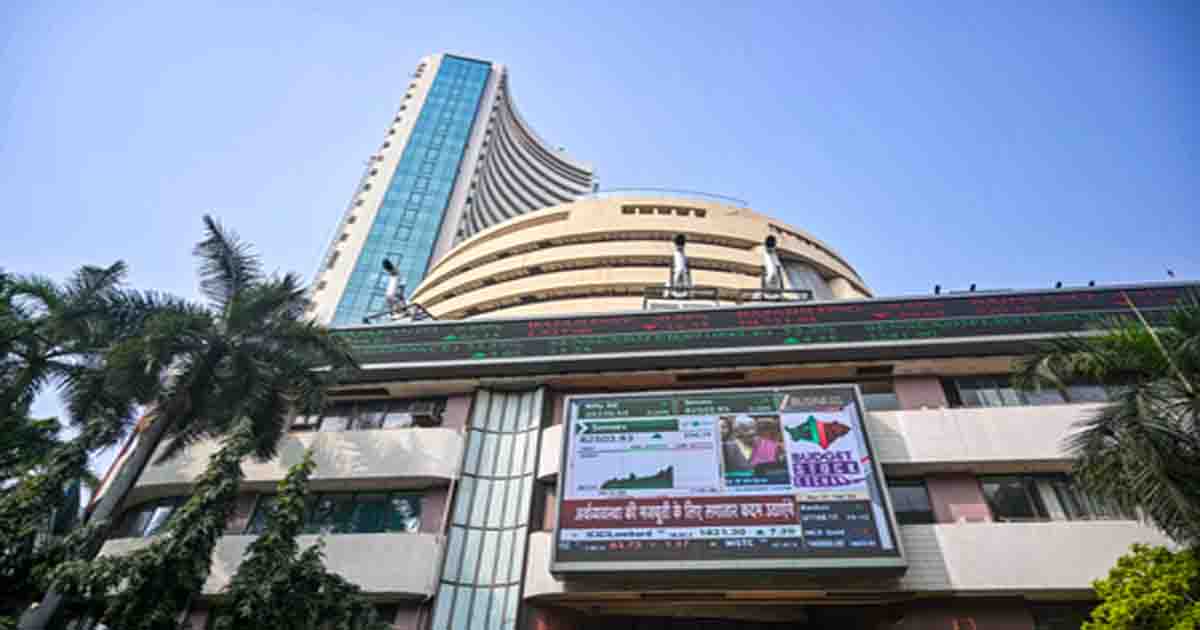
Indian stock markets will remain closed on Tuesday on account of Dussehra with trading suspended across major segments on the Bombay Stock Exchange (BSE) and National Stock Exchange (NSE).
Trading in equities, equity derivatives, securities lending and borrowing (SLB), currency derivatives and interest rate derivatives will remain closed for the day on both exchanges, according to them.
Notably, normal trading on NSE and BSE will resume on Wednesday.
However, the commodity derivatives segment will follow a different schedule. Trading will remain suspended during morning session from 9 am to 5 pm before resuming in evening. The session will continue till 11:30 pm or 11:55 pm depending on contract.
Multi Commodity Exchange of India (MCX) will not remain closed for entire day. Exchange will suspend trading during morning session from 9 am to 5 pm and reopen for evening session from 5 pm.
Investors will be able to trade commodities such as gold, silver, crude oil and base metals during evening session.
Meanwhile, National Commodity and Derivatives Exchange (NCDEX) will remain closed for both sessions on account of Dussehra.
Following Dussehra holiday, three regular trading holidays remain on NSE and BSE calendars for rest of 2026 — November 10, Tuesday, Diwali-Balipratipada; November 24, Tuesday, Prakash Gurpurb Sri Guru Nanak Dev; and December 25, Friday, Christmas.
In addition, exchanges have also scheduled a special Muhurat Trading session for November 8, 2026 on occasion of Diwali Laxmi Pujan. Timings for special session will be announced separately.
Notably, in the last session equity benchmarks closed in negative territory amid selling pressure in the banking and information technology (IT) sector stocks.
Sensex decreased over 850 points or 1 per cent to settle at 73,852.90 on Monday. Similarly, Nifty closed 257.20 points or 1.11 per cent lower at 22,888.95.
The Ministry of Electronics and Information Technology (MeitY) has asked technology giant firm Meta to review the content recommendation and ranking systems that power Facebook and Instagram, stepping up regulatory scrutiny of how social media algorithms amplify information in India, according to multiple reports.
In an advisory issued to the company, the ministry had asked Meta to ensure that its recommendation systems do not lead to the disproportionate exposure of users to a single or limited set of narratives and instead provide greater access to diverse, relevant and credible information, according to them.
The ministry also directed Meta to strengthen mechanisms for rapidly identifying, reviewing and escalating content that gains significant reach through recommendation systems when such material has the potential to contribute to public confusion, violence or disruption of public order.
Apart from that, the US-based company has been asked to implement the measures immediately and inform the government of the action taken.
The advisory specifically highlights photographs, videos and graphics related to ongoing public events where the authenticity, timing, location or surrounding circumstances may be unclear.
It calls for additional context where old or unrelated visuals are presented as current, where footage has been selectively edited or where unverified claims are made regarding emergencies, police action or other official measures.
Additionally, this marks the latest escalation in the government’s scrutiny of Meta’s moderation and recommendation systems.
Earlier in August, government officials questioned Meta executives over content recommendation algorithms, deepfakes, synthetic media and safeguards against unlawful content.
Meta has separately tightened content and advertising safeguards following concerns related to child sexual exploitation material.
The company said earlier this month it deployed new AI-driven advertising review systems and removed 5.3 million pieces of child sexual exploitation content in India during January-June 2026, with more than 98% detected proactively.

Akhilesh Yadav blows poll conch in UP; flags off PDA rath campaign on Dussehra ahead of Assembly polls

Oversight Board criticises Meta over election-related moderation errors

Suniel Shetty raises concern over Tiger Shroff firing incident: ‘Jackie Dada is my childhood friend’

Police Sub-Inspector son shot dead, elder offspring critical in Gaya; two suspects detained

Mexican cartels eye India expansion, turn rented homes into local drug production units

Rahul, Cong ecosystem want to force regime change: BJP after Neha Bora praises B’desh Gen-Z protest

BJP pays tribute to ex-President Abdul Kalam, recalls his enduring influence on generations of India’s youth

Attack on democratic rights: INDIA Bloc leaders on detentions of anti-ECI protestors

INDIA bloc begins protest march against ECI

Maha Congress stages agitation against Gyanesh Kumar
-

 Crime4 years ago
Class 10 student jumps to death in Jaipur
-

 Maharashtra2 years ago
Mumbai Local Train Update: Central Railway’s New Timetable Comes Into Effect; Check Full List Of Revised Timings & Stations
-

 Maharashtra2 years ago
Mumbai To Go Toll-Free Tonight! Maharashtra Govt Announces Complete Toll Waiver For Light Motor Vehicles At All 5 Entry Points Of City
-

 Maharashtra2 years ago
False photo of Imtiaz Jaleel’s rally, exposing the fooling conspiracy
-

 National News2 years ago
Ministry of Railways rolls out Special Drive 4.0 with focus on digitisation, cleanliness, inclusiveness and grievance redressal
-

 Maharashtra2 years ago
Maharashtra Elections 2024: Mumbai Metro & BEST Services Extended Till Midnight On Voting Day
-

 National News2 years ago
J&K: 4 Jawans Killed, 28 Injured After Bus Carrying BSF Personnel For Poll Duty Falls Into Gorge In Budgam; Terrifying Visuals Surface
-

 Crime2 years ago
Baba Siddique Murder: Mumbai Police Unable To Get Lawrence Bishnoi Custody Due To Home Ministry Order, Says Report