
Monsoon
Premature to attribute extreme heatwave in India, Pak solely to climate change: WMO

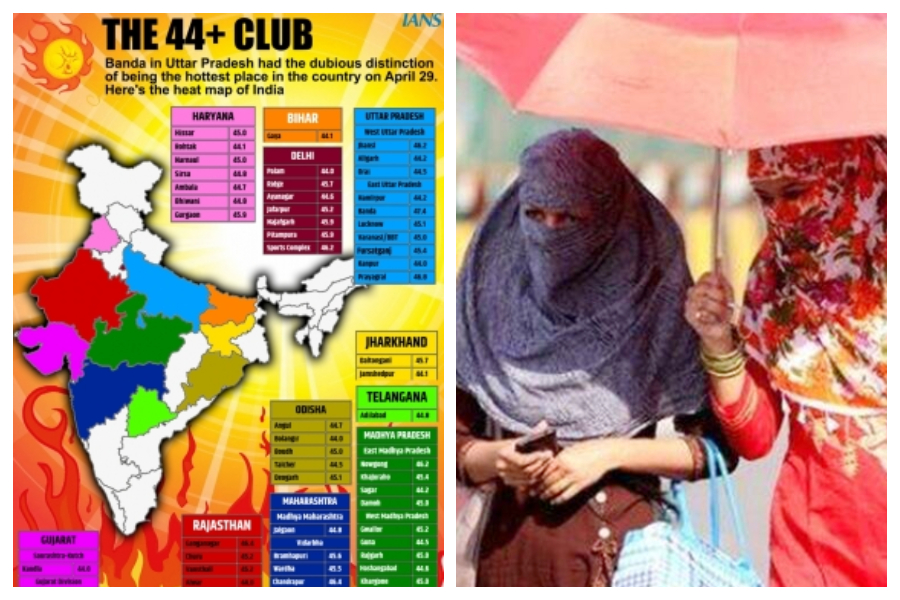
After multiple scientists claimed that the current spell of heatwaves in India and Pakistan are due to climate change, the World Meteorological Organization (WMO) said it would be premature to attribute it solely to climate change.
The WMO also appreciated warning systems and heat action plans that helped save lives.
In a statement issued on Friday night, the WMO said: “It is premature to attribute the extreme heat in India and Pakistan solely to climate change. However, it is consistent with what we expect in a changing climate. Heatwaves are more frequent and more intense and now start earlier than it did in the past.
“India, especially the northwest, has been witnessing a third heatwave since March with the current, third spell sending mercury soaring to more than 45 degrees Celsius across dozens of states of India, including the northwestern Himalayan states too.
“Similar temperatures have been seen in Pakistan. The Pakistan Meteorological Department said that daytime temperatures are likely to be between 5 degrees Celsius and 8 degrees Celsius above normal in large swathes of the country.
The agency warned that in the mountainous regions of Gilgit-Baltistan and Khyber Pakhtunkwa, the unusual heat would enhance the melting of snow and ice and might trigger glacial lake outburst floods or flash floods in vulnerable areas,
“Air quality has deteriorated, and large swathes of land are at risk of extreme fire danger.”
India recorded its warmest March on record while Pakistan recorded its highest March temperature in the past 60 years, with a number of stations breaking March records, the WMO said.
The Intergovernmental Panel on Climate Change in its Sixth Assessment Report (AR6) has said that heat waves and humid heat stress will be more intense and frequent in South Asia in this century.
The WMO, endorsing India’s Ministry of Earth Sciences’ publication on climate change in India that has a whole chapter on temperature change, said: “The frequency of warm extremes over India has increased during 1951-2015, with accelerated warming trends during the recent 30 year period 1986-2015. Significant warming is observed for the warmest day, warmest night and coldest night since 1986.”
Through its statement, the WMO also reminded the need for a multi-hazard early warning system that it has promised to ensure for all in the next five years.
“Heatwaves have multiple and cascading impacts not just on human health, but also on ecosystems, agriculture, water and energy supplies and key sectors of the economy. The risks to society underline why the WMO is committed to ensuring that multi-hazard early warning services reach the most vulnerable,” it said.
Stating that both India and Pakistan have successful heat-health early warning systems and action plans, including those specially tailored for urban areas, the WMO said: “Heat Action Plans reduce heat mortality and lessen the social impacts of extreme heat, including lost work productivity. Important lessons have been learnt from the past and these are now being shared among all partners of the WMO co-sponsored Global Heat Health Information Network (GHHIN) to enhance capacity in the hard hit region.
“The South Asia Heat Health Information Network, supported by GHHIN, is working to share lessons and raise capacity across the South Asia region.”

Maharashtra
Additional Municipal Commissioner (City) inspects various areas amid heavy rain, directs BMC to remain on high alert

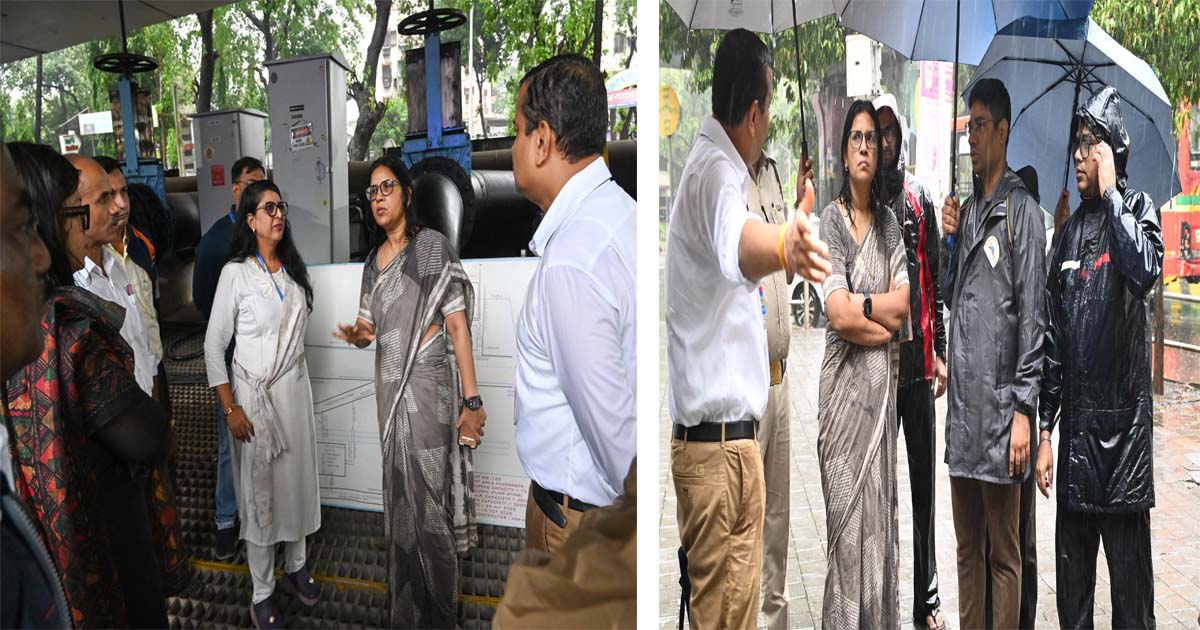
Amidst the ongoing heavy rains in Mumbai, Additional Municipal Commissioner (City) of Mumbai Municipal Corporation (BMC) Smt. Prajakta Varmalongare today (July 6, 2026) visited various parts of Mumbai City Division to take stock of the situation arising out of the rains. She also reviewed in detail the measures being implemented by the Municipal Corporation’s monsoon management machinery. During the visit, she directly interacted with the officers and staff of the concerned departments and issued necessary instructions.
On Monday morning, Lavangare personally inspected the areas including Malabar Hill, Ambivadi (Kala Chowki), Mahim, Maheshwari Adhan (King’s Circle) area, Ravindra Natya Mandir area, Hindmata and other places. He carefully reviewed the rain-related situation, waterlogging hotspots, drainage system in operation, preparedness of emergency response mechanism and civic services provided to the citizens. Furthermore, he directed the concerned authorities to immediately mobilize municipal teams to clear fallen trees or branches during the rain. He also directed all the concerned departments to work together to ensure that the rain does not cause any disruption to traffic or the daily life of the citizens. He also directed the ward-level officials and staff to remain constantly alert and ensure that all operational systems function at full capacity. He issued instructions to prioritize immediate resolution of issues like waterlogging, uprooted trees, drainage issues and other emergencies. He stressed that all departments should work together and take prompt and effective action on every complaint so that the citizens do not face any hardship or inconvenience. Furthermore, Prajakta Verma Lovengare appealed to Mumbaikars to contact the Mumbai Municipal Corporation’s emergency helpline number, 1916, for immediate assistance in emergencies.
Deputy Commissioner (Zone-1) Ms. Chanda Jadhav, Deputy Commissioner (Zone-2) Shri Prashant Sapkale, Assistant Commissioner Smt. Swapnaja Kshirsagar, Assistant Commissioner Shri Gajanan Belle, Assistant Commissioner Shri Arun Kshirsagar and other senior officers and staff of the concerned departments were present during the inspection.
Maharashtra
Monsoon Havoc Across Maharashtra: Mahabaleshwar & Matheran Cut Off, Mumbai–Pune Expressway Hit by Heavy Rain, Raigad and Konkan on High Alert
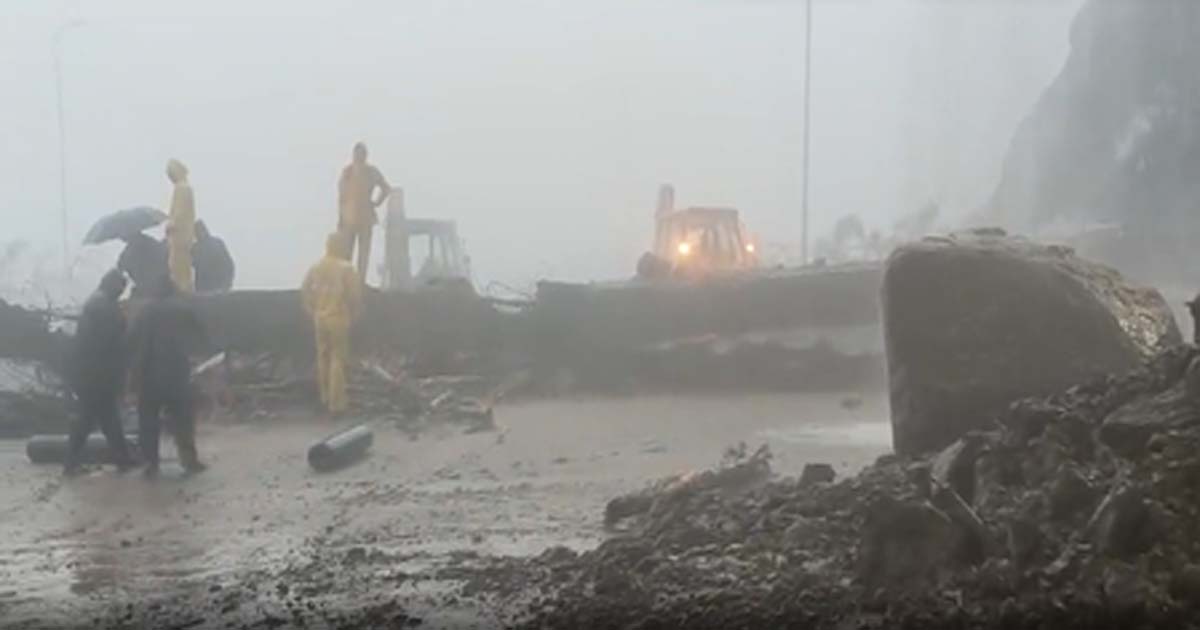
Raigad, July 6: Relentless monsoon rains continued to lash large parts of Maharashtra, severely affecting Raigad district, the Konkan region, Mahabaleshwar, Matheran and the Mumbai–Pune Expressway. Heavy rainfall has led to flooding, landslides, road closures and major travel disruptions, prompting authorities to remain on high alert.
Several routes leading to popular hill stations, including Mahabaleshwar and Matheran, have been affected due to heavy rain, waterlogging and landslide threats. Tourist movement has been significantly impacted as authorities continue to monitor the situation and implement safety measures wherever required.
Traffic on the Mumbai–Pune Expressway has been disrupted at several stretches because of poor visibility, continuous rainfall and slippery road conditions. Motorists have been advised to avoid unnecessary travel through ghat sections and drive with extreme caution.
Raigad district has witnessed rising river levels, overflowing streams and localized flooding in low-lying villages. Disaster response teams and local authorities remain deployed in vulnerable areas to respond swiftly to any emergency.
Across the Konkan region, continuous rainfall has caused waterlogging, damage to rural roads and interruptions to transportation in several villages. Authorities are keeping a close watch on landslide-prone locations and riverbanks as the rain continues.
Emergency response teams, police, fire services and district disaster management authorities remain on standby across the affected regions. Rescue equipment and emergency personnel have been positioned at key locations to ensure immediate response if required.
Residents and travellers have been advised to avoid unnecessary journeys, stay away from rivers, waterfalls and landslide-prone areas, and follow official safety instructions until weather conditions improve. Authorities continue to monitor the evolving monsoon situation and remain prepared for rescue and relief operations wherever necessary.
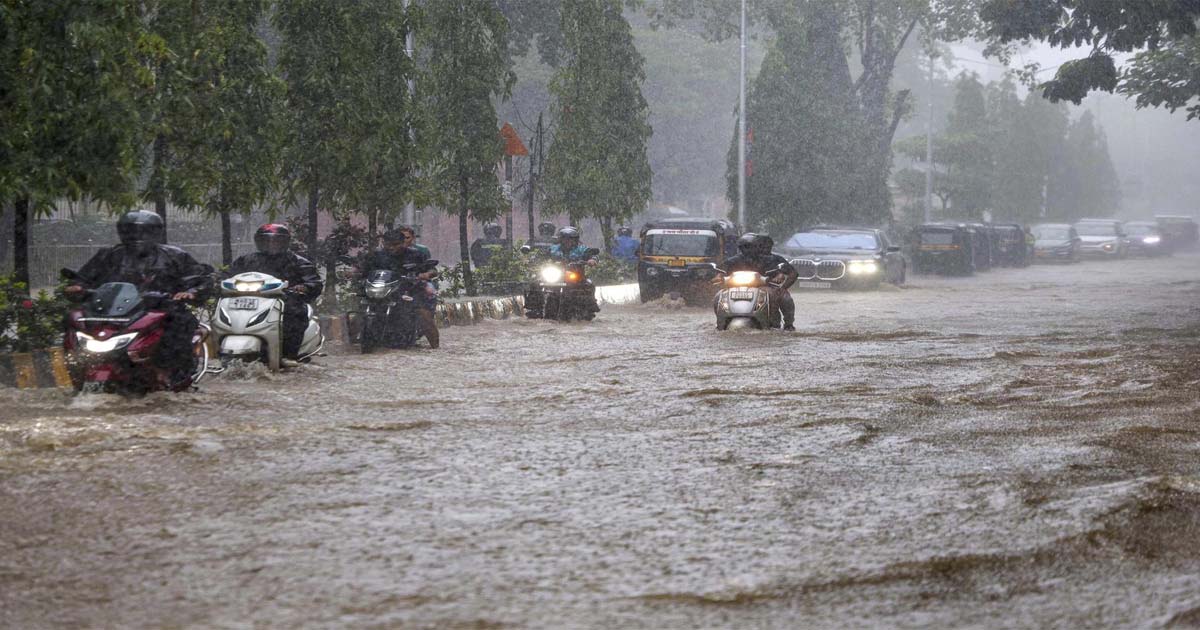
Mumbai, July 6: Heavy monsoon showers continued to batter Mumbai, Thane and surrounding areas on Monday, leading to widespread waterlogging, traffic congestion and disruptions to rail and road transport. Several low-lying areas witnessed flooding after continuous rainfall since late Sunday night, affecting normal life across the Mumbai Metropolitan Region.
The India Meteorological Department (IMD) has warned of continued heavy to very heavy rainfall in Mumbai, Thane and nearby districts, urging residents to remain cautious as strong winds and intense showers are expected to persist through the day.
Commuters faced delays on suburban railway services due to waterlogging and adverse weather conditions. Road traffic moved slowly on several major routes as vehicles navigated flooded stretches, while civic teams worked to clear blocked drains and remove fallen tree branches. Authorities also monitored vulnerable locations prone to flooding and landslides.
Emergency response teams from civic agencies, disaster management authorities, police, and the fire brigade remained deployed across Mumbai and Thane to respond to weather-related incidents. Residents living in low-lying areas have been advised to stay alert and avoid unnecessary travel unless essential.
Air and rail passengers have been advised to check the latest status of their journeys before leaving for stations or airports, as intermittent delays and service adjustments may occur depending on weather conditions.
Authorities have appealed to citizens to stay away from waterlogged roads, open drains, seafronts and areas with weakened structures during periods of intense rainfall. Disaster management teams continue to monitor the evolving situation while civic agencies remain on standby for emergency response across the region.

Suspicious passenger apprehended at Delhi Jama Masjid Metro Station after trying to flee during screening

Tiger Shroff attack: Bihar family denies accused is their son

Bollywood in the Crosshairs After Firing at Tiger Shroff; Legal Action Initiated Against Bishnoi Gang, Three Shooters Arrested

E-Office System Implemented in Mumbai Municipal Corporation; 14,000 Users to Be Integrated in Phases to Make Administration More Transparent and Efficient

Bihar MLC election: Three FIRs filed against Anant Singh, Jan Suraaj candidate Anuj Singh

Rahul, Cong ecosystem want to force regime change: BJP after Neha Bora praises B’desh Gen-Z protest

BJP pays tribute to ex-President Abdul Kalam, recalls his enduring influence on generations of India’s youth

Attack on democratic rights: INDIA Bloc leaders on detentions of anti-ECI protestors

INDIA bloc begins protest march against ECI

Maha Congress stages agitation against Gyanesh Kumar
-

 Crime4 years ago
Class 10 student jumps to death in Jaipur
-

 Maharashtra2 years ago
Mumbai Local Train Update: Central Railway’s New Timetable Comes Into Effect; Check Full List Of Revised Timings & Stations
-

 Maharashtra2 years ago
Mumbai To Go Toll-Free Tonight! Maharashtra Govt Announces Complete Toll Waiver For Light Motor Vehicles At All 5 Entry Points Of City
-

 Maharashtra2 years ago
False photo of Imtiaz Jaleel’s rally, exposing the fooling conspiracy
-

 National News2 years ago
Ministry of Railways rolls out Special Drive 4.0 with focus on digitisation, cleanliness, inclusiveness and grievance redressal
-

 Maharashtra2 years ago
Maharashtra Elections 2024: Mumbai Metro & BEST Services Extended Till Midnight On Voting Day
-

 National News2 years ago
J&K: 4 Jawans Killed, 28 Injured After Bus Carrying BSF Personnel For Poll Duty Falls Into Gorge In Budgam; Terrifying Visuals Surface
-

 Crime2 years ago
Baba Siddique Murder: Mumbai Police Unable To Get Lawrence Bishnoi Custody Due To Home Ministry Order, Says Report