
National News
PM wishes people on Poila Boishakh, Vishu

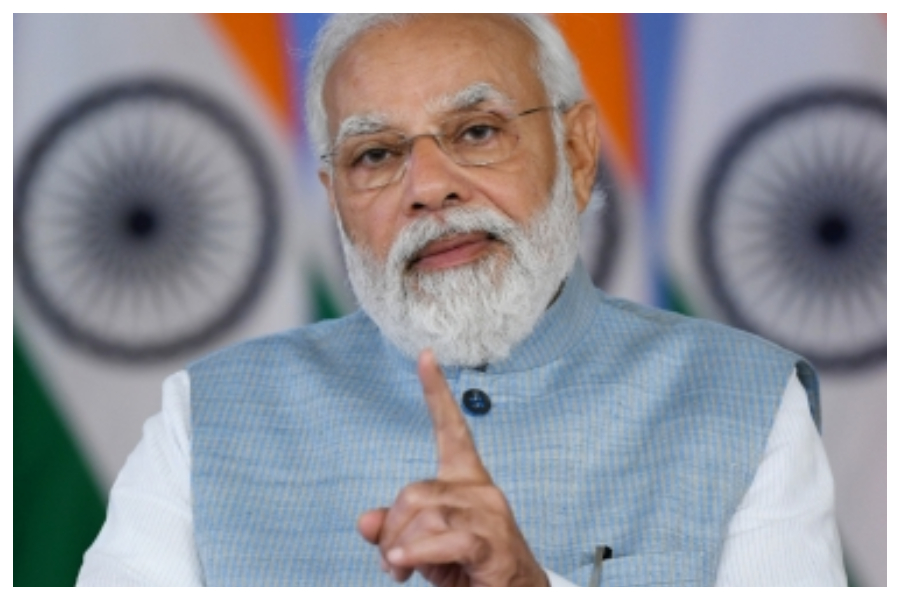
Prime Minister Narendra Modi on Friday greeted people on Poila Boishakh and Vishu.
In a tweet, Prime Minister Modi said: “Greetings on Pohela Boishakh. This special occasion manifests the outstanding Bengali Culture. I hope that the coming year brings with it joy, peace and prosperity. May all your wishes be fulfilled.”
Prime Minister Modi also conveyed his best wishes on the occasion of Vishu, especially to the Malayalis all over the world. The Prime Minister said in a tweet: “Best wishes on the special occasion of Vishu, especially to the Malayalis settled all over the world. I pray for a year filled with utmost happiness and good health.”

Entertainment
Delhi HC issues summons on Kangana Ranaut’s plea seeking protection of personality rights

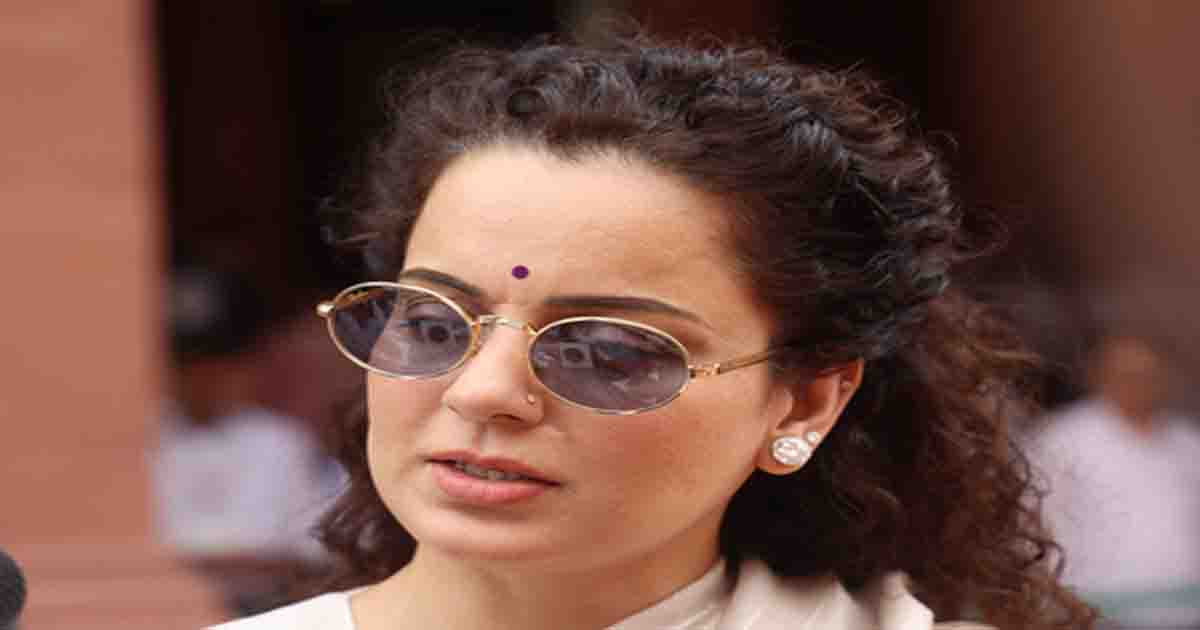
New Delhi, Oct 8: Actress and BJP MP Kangana Ranaut has approached the Delhi High Court seeking protection of her personality and publicity rights against the alleged unauthorised use and misuse of her identity, including through pornographic and obscene content posted across digital platforms.
A single-judge Bench of Justice Vikas Mahajan issued summons in the suit and also issued notice on the interim injunction application filed by the actress.
During the proceedings, counsel appearing for Ranaut submitted that she was aggrieved by pornographic and obscene content posted against her on social media.
The High Court asked Ranaut’s counsel to provide the names of the defendants against whom a takedown order was being sought, indicating that an appropriate order may be passed on the interim injunction application after the details are furnished.
It also directed the actress’ counsel to file a revised memo of parties after certain defendants were removed from the proceedings.
The matter has now been listed for further hearing on February 3, 2027.
The development comes amid a growing number of personality rights disputes before the Delhi High Court involving allegations of AI-generated impersonation, deepfakes, fake endorsements and unauthorised commercial exploitation of public figures’ identities.
In recent months, former cricketer Gautam Gambhir, former India captain Sunil Gavaskar, spiritual leader Sri Sri Ravi Shankar, actors Arjun Kapoor, Allu Arjun, Nagarjuna, Varun Dhawan, Kajol, Aishwarya Rai Bachchan and Abhishek Bachchan, singer Jubin Nautiyal, filmmaker Karan Johar, podcaster Raj Shamani, Congress MP Shashi Tharoor and actor Naga Chaitanya have secured or sought court protection against the unauthorised use of their identity, likeness or AI-generated imitations.
The Delhi High Court had recently passed an interim order directing the removal of certain objectionable online content featuring Bollywood actress Tabu while hearing her suit seeking protection of her personality and publicity rights against the unauthorised use of her identity across digital platforms.
Crime
‘Selling without prescription’: Gujarat cops raid two medical stores, seize over 18,000 tablets
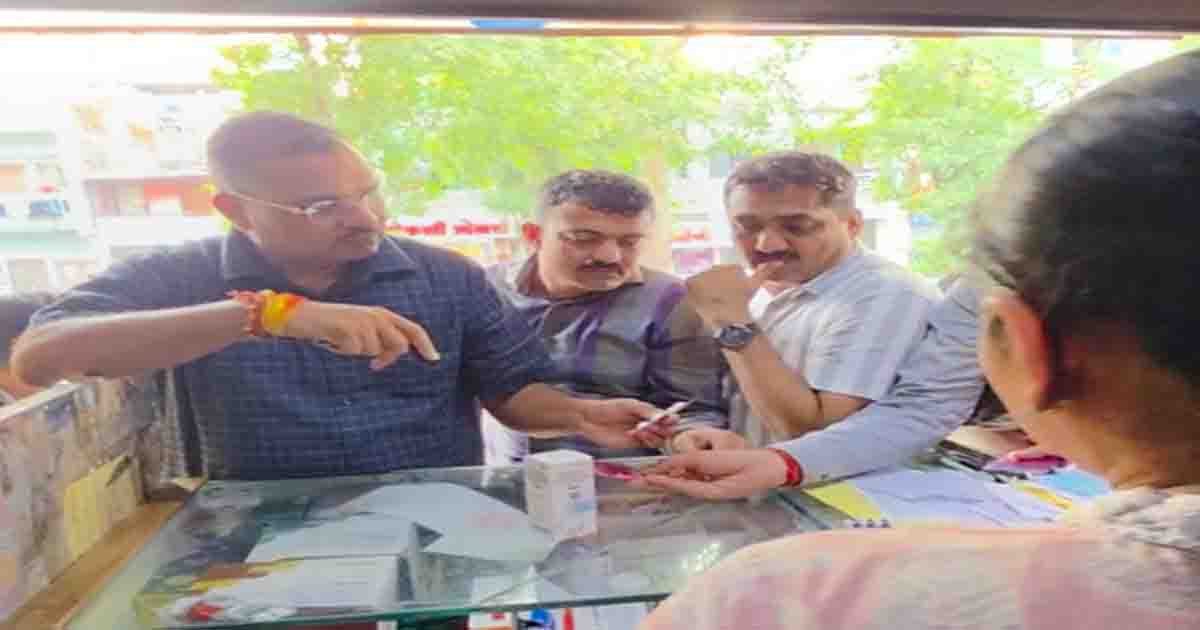
Surat, Oct 8: The Surat City’s Special Operations Group (SOG), along with the Food and Drugs Department, in Gujarat, raided two medical stores in the Salabatpura-Mandarwaja area for allegedly selling medicines used for intoxication without doctors’ prescriptions and seized 18,316 tablets and three bottles of codeine syrup valued at Rs 2.75 lakh.
The action was carried out on Wednesday at Smit Sai and Daruwala Shivshakti medical stores located at Halpati Colony on the 80-foot road from Kinnari towards Bhathena.
According to the SOG, the action followed instructions from Surat Police Commissioner Wabang Jamir to identify medical stores allegedly selling intoxicating syrups and tablets without prescriptions, and in violation of regulations.
The police said such medicines could be misused for intoxication, including by young people.
SOG Deputy Commissioner of Police Rajdeepsinh Nakum supervised the operation, while SOG Police Inspector A.S. Sonara formed separate teams to keep watch on medical stores suspected of selling medicines used for intoxication.
The SOG said it received information that intoxicating medicines were being sold without doctors’ prescriptions at two medical stores in the Salabatpura-Mandarwaja area.
Following the information, SOG personnel conducted the raids along with Food and Drugs Inspectors G.U. Upadhyay, Jeelben Gameti and Pinalben Vavaiya.
During inspections, the Food and Drugs Department found stocks of medicines that were allegedly being kept in violation of regulations and could be used for intoxication.
The seized stock comprised 1,440 Pyeevon Sas Plus tablets, 144 Spas Tracenp tablets, 6,920 Spasmo Proxyvon tablets, 750 Apcolam tablets, 3,840 Calic tablets, 5,200 Prehabalin tablets and 20 Pregout Kit tablets. In addition, three bottles of codeine syrup were recovered.
“The total number of tablets seized was 18,316, while the combined value of the seized medicines and syrup was estimated at Rs 2,75,068,” the SOG said.
The Food and Drugs Department has begun further investigation into the stock recovered from both medical stores.
The police said that if the medicines are found to have been kept or sold illegally, legal action will be taken against the licence holders and operators of the two medical stores.
The SOG said the operation was undertaken as part of efforts to identify medical stores involved in the unauthorised sale of medicines that are liable to be misused for intoxication.
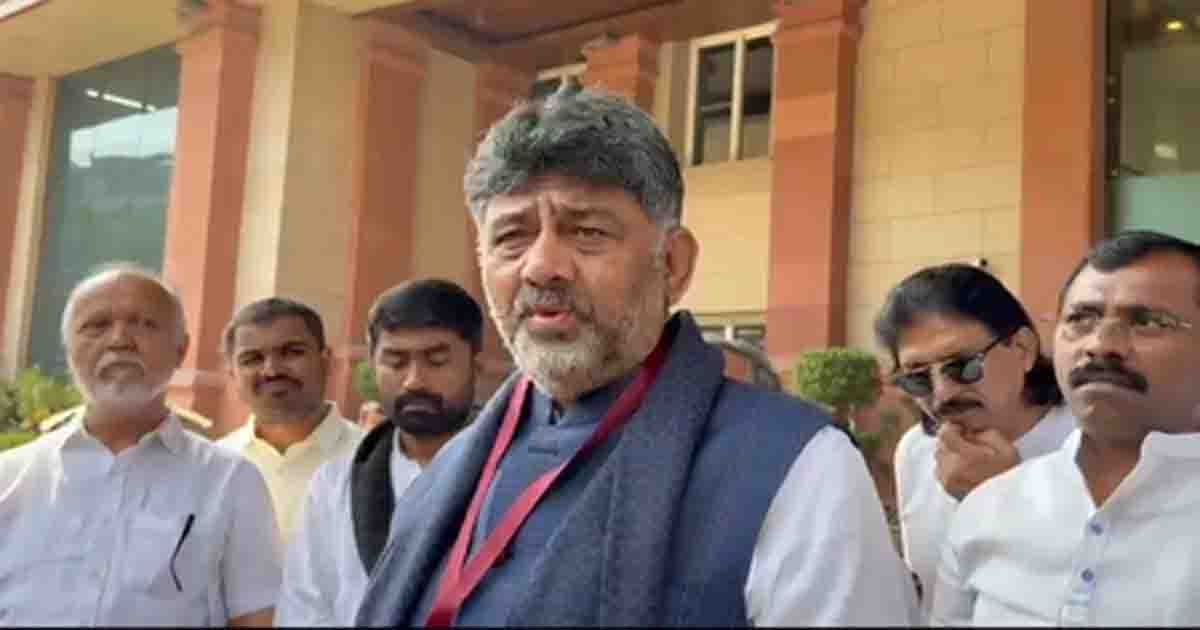
New Delhi/Bengaluru, Oct 8: Karnataka Chief Minister D.K. Shivakumar on Thursday claimed that an attempt was made to trap him through a sting operation after he became CM and said he had photographs and documents to substantiate his allegations.
Addressing reporters in Delhi, CM Shivakumar said several people had approached him after he assumed office and claimed that he knew who was behind the alleged sting operations.
“An attempt was made to trap me after I became the Chief Minister. A few people approached me. I have photographs. I know who the father of these sting operations is,” he said.
Referring to a Kannada proverb about thieves behaving smartly after committing a crime, even as their act is evident, Shivakumar said he was aware of the people involved and had informed the police about the developments.
“I know all of them. I have informed the police and kept all the documents regarding certain persons approaching me after I became the Chief Minister,” he said.
The Chief Minister said he could not reveal all details of the matter, but claimed he knew how the people approached him, whom they had met and who was behind the alleged operation.
“They came to discuss some matter. How they came and approached me, who they met, I know every detail. Who is planning all of this, I know,” he said.
Shivakumar said he had instructed officials to remain cautious as government officers could be trapped unnecessarily in such operations.
“I do not want to answer to other persons. I have asked my officers to be careful, as our officers are trapped unnecessarily. So, I have given a word of caution,” he said.
He further claimed that there were three circles of people around him and alleged that some persons had been hired as part of the alleged operation.
“I have three circles around me. They have hired some people. A few leaders have done it, and I have exact information,” Shivakumar said.
The Chief Minister alleged that he himself had been targeted as part of an attempt to launch sting operations and said similar operations were also being conducted against others.
“They have targeted me, and they want to start the sting operations from me. I have all the proof to prove it. I do not speak just like that. I have all the proof. I am talking about targeting me after I became the Chief Minister,” he said.
Shivakumar also claimed he knew who was behind the alleged sting operations and who was financing them.
“They are also carrying out stings on others. I know who is behind it and who is financing the sting operations,” he said.
It may be noted that the issue of possible sting operations targeting Congress ministers came to the forefront after CM Shivakumar allegedly expressed apprehension at a Cabinet meeting that the BJP and JD(S) could target the ministers and conduct sting operations against them.
Union Minister for Heavy Industries and Steel H.D. Kumaraswamy on Wednesday questioned CM Shivakumar over the alleged sting operations against Congress ministers, saying Shivakumar himself had warned his Cabinet colleagues to be cautious about their movements and interactions.
Karnataka Bharatiya Janata Party (BJP) President B.Y. Vijayendra on Wednesday alleged that Congress has a history of conducting sting operations and using them to blackmail people, and said this could be confirmed by speaking to the party’s own Ministers and legislators.
Senior BJP leader and Leader of Opposition in the Karnataka Legislative Assembly R. Ashoka on Wednesday claimed that CM Shivakumar was worried about alleged sting operations targeting Congress ministers because he had been involved in such activities earlier.

28 structures affected by the Ghatkopar road widening project demolished.

Delhi HC issues summons on Kangana Ranaut’s plea seeking protection of personality rights

‘Selling without prescription’: Gujarat cops raid two medical stores, seize over 18,000 tablets

India’s WTO fisheries ratification a pragmatic step with focus on fair Phase 2

38-year-old man dies in police custody in Navi Mumbai

Gift to President Putin part of PM Modi bid to globally display India’s heritage

PM Modi’s warm camaraderie with Putin, Xi on full display at BRICS Summit

Complaint against Netflix & Mukesh Chhabra for inappropriate language on ‘India’s Got Latent 2’

INDIA bloc begins protest march against ECI

Maha Congress stages agitation against Gyanesh Kumar
-

 Crime4 years ago
Class 10 student jumps to death in Jaipur
-

 Maharashtra2 years ago
Mumbai Local Train Update: Central Railway’s New Timetable Comes Into Effect; Check Full List Of Revised Timings & Stations
-

 Maharashtra2 years ago
Mumbai To Go Toll-Free Tonight! Maharashtra Govt Announces Complete Toll Waiver For Light Motor Vehicles At All 5 Entry Points Of City
-

 Maharashtra2 years ago
False photo of Imtiaz Jaleel’s rally, exposing the fooling conspiracy
-

 National News2 years ago
Ministry of Railways rolls out Special Drive 4.0 with focus on digitisation, cleanliness, inclusiveness and grievance redressal
-

 Maharashtra2 years ago
Maharashtra Elections 2024: Mumbai Metro & BEST Services Extended Till Midnight On Voting Day
-

 National News2 years ago
J&K: 4 Jawans Killed, 28 Injured After Bus Carrying BSF Personnel For Poll Duty Falls Into Gorge In Budgam; Terrifying Visuals Surface
-

 Crime2 years ago
Baba Siddique Murder: Mumbai Police Unable To Get Lawrence Bishnoi Custody Due To Home Ministry Order, Says Report