
National News
Parvesh emerges giant killer by defeating Kejriwal; Sisodia also loses in Jangpura

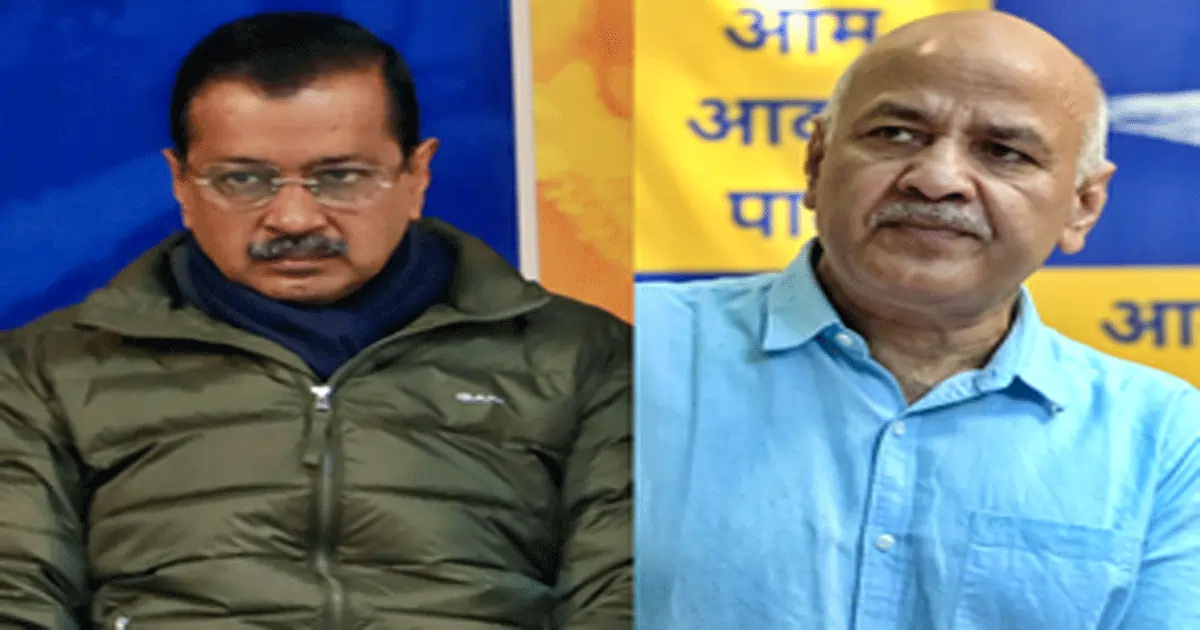
New Delhi, Feb 8: After tight fights, AAP National Convenor Arvind Kejriwal and former Delhi Deputy Chief Minister Manish Sisodia lost from the New Delhi and Jangpura Assembly constituencies respectively, on a day which saw the ruling party’s rout in the city.
Talking to mediapersons, Sisodia congratulated Tarvinder Singh Marwah of the BJP and conceded defeat. In the last round of counting, Sisodia was trailing by 572 votes.
After beating Kejriwal, BJP’s Parvesh Verma spoke to Home Minister Amit Shah over the phone. His victory margin over Kejriwal was almost equal to the nearly 3,000 votes garnered by Congress candidate Sandeep Dikshit.
The BJP leaders remained tightlipped about its Chief Ministerial candidate after the party achieved a majority with over 45 seats in a 70-member Assembly which has 36 as the majority mark.
Sisodia, described as the brain behind the AAP’s education revolution, had shifted to the Jangpura seat from Patparganj from where he had won the 2020 election.
Earlier, as the Election Commission trends indicated a BJP majority in the Delhi Assembly elections on Saturday, a pall of gloom descended over the AAP’s office while celebrations broke out at the BJP headquarters.
Other AAP leaders Satyendar Jain and Saurabh Bharadwaj were also trailing.
Earlier in the day, Chief Minister Atishi exuded confidence in the AAP’s return to power and called the election a battle between good and evil, while Bharadwaj predicted that the AAP would win at least 40-45 seats.
Reacting to the trends, BJP MP Manoj Tiwari said: “We can see the blessings of the people of Delhi. We are confident that the tally will remain the same till the end.”
An off-shoot of an anti-corruption campaign of Anna Hazare in 2011, ‘Brand Kejriwal’ proved to be fourth time unlucky after winning three successive Delhi Assembly elections.
The AAP’s fourth attempt at capturing the ‘Dilli Darbar’ failed amid a strong anti-incumbency, poor performance of MLAs, and the party chief’s growing faith in turncoats from other parties.


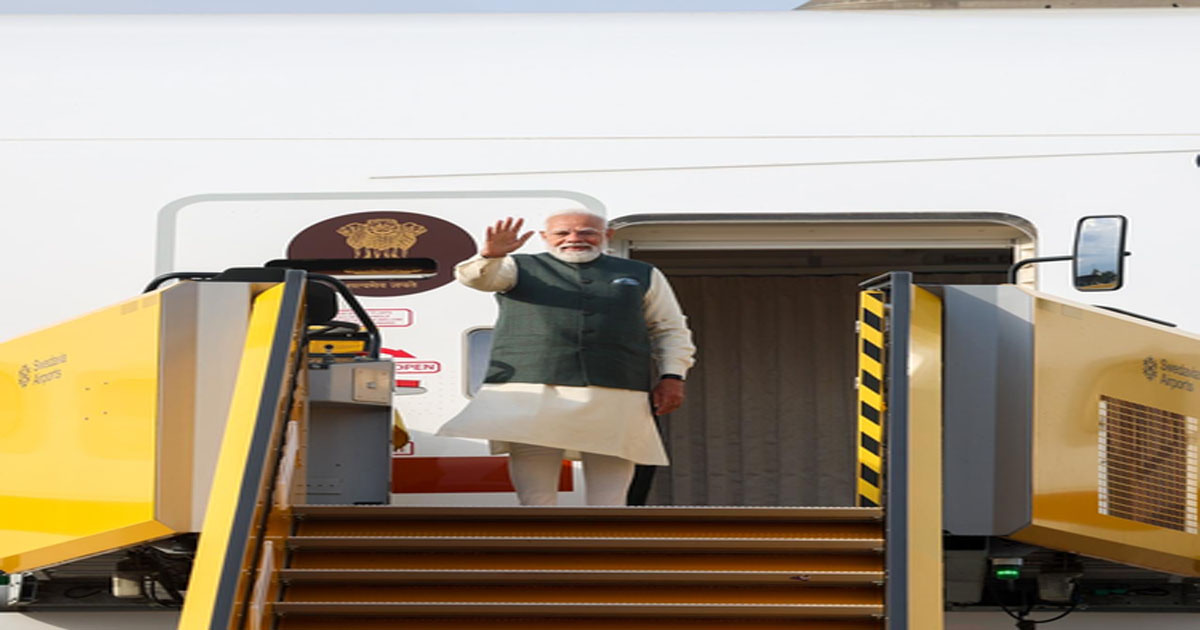
Gothenburg, May 18: Prime Minister Narendra Modi departed from Gothenburg on Monday after successfully concluding his visit to Sweden, during which he elevated the bilateral ties between the two countries to a Strategic Partnership. He is now en route to Norway for the fourth leg of his five-nation tour.
In a post on X, the Ministry of External Affairs (MEA) said, “A visit advancing innovation, sustainability and strategic cooperation. PM Narendra Modi departed from Gothenburg for Oslo after a productive visit marked by the elevation of India-Sweden ties to a Strategic Partnership. The visit opened a new chapter in India-Sweden ties.”
Prime Minister Modi arrived in Sweden on Sunday for a two-day official visit aimed at strengthening bilateral ties between the two nations.
Earlier in the day, Prime Minister Modi thanked the people and the Government of Sweden for the warmth and friendship.
The Sweden visit was marked by several important outcomes that will add new momentum to relations.
“From elevating our ties to a Strategic Partnership, launching the Joint Innovation Partnership 2.0 and the India-Sweden Technology and Artificial Intelligence Corridor, to setting an ambitious goal of doubling bilateral trade in the next five years, the discussions were highly productive,” PM Modi said in a post on X.
During his visit, PM Modi also addressed the European Round Table for Industry (ERT) in Gothenburg.
The Prime Minister said his speech focused on the growing convergence between India and Europe, the opportunities emerging from the India-European Union Free Trade Agreement (FTA), and India’s reform-driven economic growth journey.
He also held wide-ranging conversations with the business leaders in Sweden on how economic linkages between India and Sweden can be enhanced, particularly in futuristic technologies, R&D, AI, security and healthcare.
During the visit, PM Modi was also conferred with the ‘Royal Order of the Polar Star, Degree Commander Grand Cross’ in recognition of his exceptional contribution to India-Sweden relations and his leadership in deepening cooperation between the two countries.
Prime Minister Modi and his Swedish counterpart, Ulf Kristersson, also exchanged special commemorative gifts honouring the enduring legacy of Rabindranath Tagore, highlighting the deep cultural ties between India and Sweden.
PM Modi is now heading to Oslo, where he will hold discussions focusing on strengthening the bilateral cooperation.
He will participate in the 3rd India-Nordic Summit and hold bilateral engagements with Norwegian leaders.
The visit marks PM Modi’s first trip to Norway and the first visit by an Indian Prime Minister to the country in 43 years. During the visit, he is scheduled to call on King Harald V and Queen Sonja, besides holding bilateral talks with Norwegian Prime Minister Jonas Gahr Store.
The Prime Minister will also address the India-Norway Business and Research Summit along with the Norwegian Prime Minister.
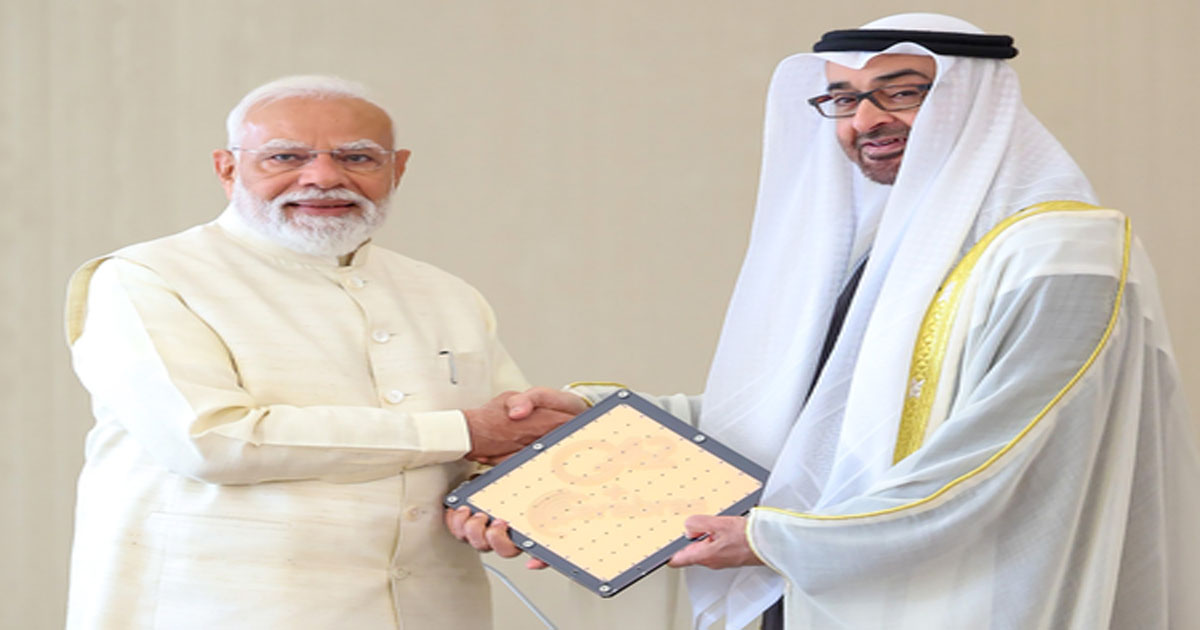
New Delhi, May 15: India and the United Arab Emirates signed key agreements, during the visit of Prime Minister Narendra Modi on Friday, on a framework for the bilateral strategic defence partnership, the supply of LPG and strategic petroleum reserves, and an investment to the tune of $5 billion US dollars in Indian Infrastructure and RBL Bank and Samman Capital.
An agreement was also signed for setting up a ship repair cluster at Vadinar.
Speaking during delegation-level talks in Abu Dhabi, Prime Minister Narendra Modi said, “India stands shoulder-to-shoulder with the UAE in every situation, and it will continue to do so. For the restoration of peace and stability, India will extend all possible cooperation.”
He said it was important that the Strait of Hormuz remains “free and open” and added that international laws must be respected.
The Prime Minister thanked UAE President Mohamed bin Zayed Al Nahyan for strengthening the India-UAE comprehensive strategic partnership and said bilateral cooperation had gained greater importance in the current global situation.
PM Modi said both sides had agreed during the UAE President’s January visit to India to qualitatively upgrade relations and had already made significant progress in a short span.
“I extend heartfelt gratitude to you for taking our comprehensive strategic partnership to new heights. During your visit to India in January, we agreed to qualitatively upgrade our relations. Even in such a small duration, we have made significant progress in all matters. In the kind of situation we have at hand today, the importance of India-UAE strategic cooperation has vastly increased. In the time to come, we will go ahead together in every area,” he observed.
PM Modi said the impact of the conflict in West Asia was being felt globally and stressed that dialogue and diplomacy remain the best way to resolve issues.
The Prime Minister arrived in the UAE earlier in the day and received a ceremonial welcome. Later, he held bilateral talks with UAE President Mohamed bin Zayed Al Nahyan, popularly known as MBZ.
Prime Minister Narendra Modi began his five-nation tour from May 15 to 20, covering the UAE, the Netherlands, Sweden, Norway and Italy. The visit aims to deepen India’s strategic and economic partnerships across key sectors, including energy, defence, technology, green transition and trade.
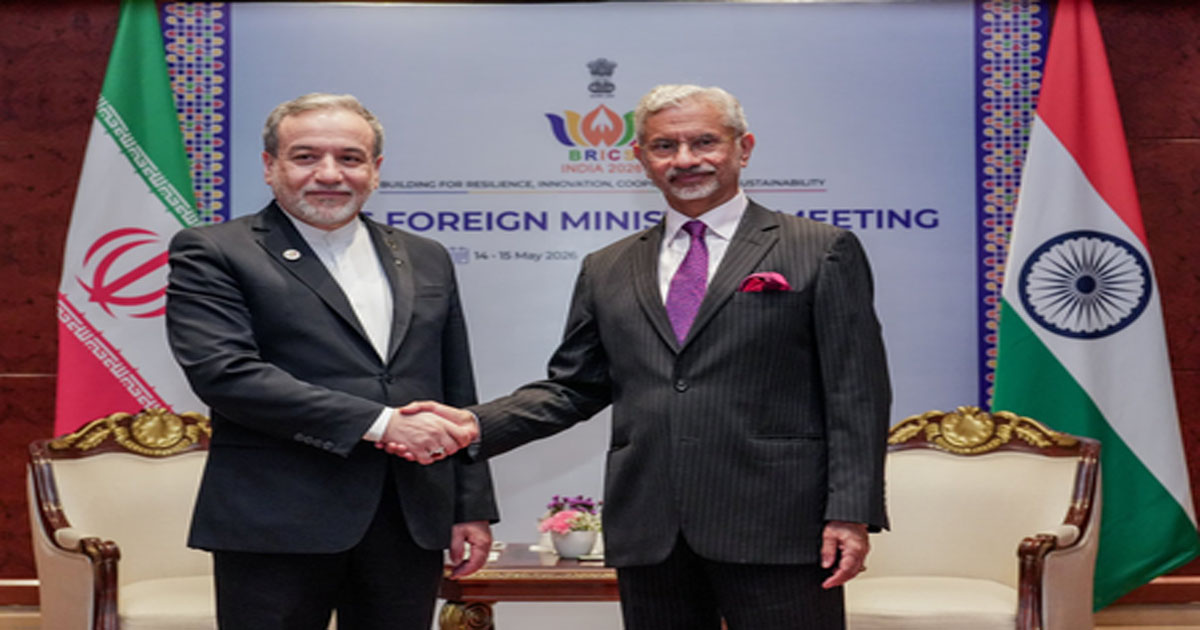
New Delhi, May 15: External Affairs Minister (EAM) S Jaishankar on Friday met his Iranian counterpart Seyed Abbas Araghchi in New Delhi, where the two leaders exchanged views on the evolving situation in West Asia and its wider implications, along with bilateral matters of mutual interest.
EAM Jaishankar also welcomed Araghchi’s participation in the BRICS Foreign Ministers’ Meeting being hosted in New Delhi under India’s 2026 chairship.
Following the meeting, EAM posted on X : “Had a detailed conversation with FM Abbas Araghchi of Iran this morning in Delhi. Discussed the situation in West Asia and its implications. Also exchanged views on bilateral issues of mutual interest. Appreciate his participation in BRICS India 2026.”
Earlier on Thursday, Prime Minister Narendra Modi also met Iranian Foreign Minister on the sidelines of the BRICS Foreign Ministers’ Meeting in New Delhi.
The meeting marked the first high-level diplomatic engagement involving India since the Iran war began.
Meanwhile, EAM Jaishankar on Thursday highlighted the fragile security environment in West Asia, stating that the persistent tensions in the region, along with threats to shipping routes and energy infrastructure, remain a matter of global concern.
Delivering the national statement at the BRICS Foreign Ministers’ Meeting in New Delhi under India’s 2026 chairship, the EAM said, “The conflict in West Asia merits particular attention. Continuing tensions, risks to maritime traffic, and disruptions to energy infrastructure highlight the fragility of the situation. Safe and unimpeded maritime flows through international waterways, including the Strait of Hormuz and the Red Sea, remain vital for global economic well-being.”
He also reaffirmed India’s “strong commitment” to the purposes and principles of the United Nations Charter.
“Respect for sovereignty and territorial integrity must remain the foundation of international relations. Dialogue and diplomacy are the only sustainable means of resolving conflicts,” the EAM said.
In his address at the BRICS Foreign Ministers’ Meeting on Thursday, Araghchi urged the global community to condemn “violations of international law” by the United States and Israel and take action against “warmongering”, thereby bringing an end to the impunity of those who violate the UN Charter.
He stated that Iran has been subjected to “brutal and unlawful aggression” by the US and Israel.
“The attacks on my people have been justified with false claims that run counter to the informed assessments of the International Atomic Energy Agency and even America’s own intelligence community. The truth is that Iran — like many other independent nations — is the victim of illegal expansionism and warmongering. These are ugly things which have no place in today’s world,” the Iranian Foreign Minister stated.
Marking Tehran’s first high-level diplomatic outreach since the conflict in West Asia began, Araghchi arrived in New Delhi on Wednesday for a three-day official visit.
The escalating tensions in West Asia have also rattled global energy markets, with oil and gas prices surging after Iran effectively blocked the Strait of Hormuz — the strategic shipping corridor between the Persian Gulf and the Gulf of Oman that carries nearly 20 per cent of the world’s oil and LNG (liquefied natural gas) supplies.

Unmanned electric boats deployed at Gateway of India and Budhwar Park to remove floating waste in the sea

Palghar Truck Crash: 13 Killed, 25 Injured As Wedding Vehicle Rams Container On Mumbai-Ahmedabad Highway

The Municipal Corporation and the Railway Administration should work together to make Mumbai flood-free, directs Standing Committee Chairman Prabhakar Shinde

Dangerous Love Triangle In Mira-Bhayandar: Youth Kidnapped, Brutally Beaten, & Burned With Cigarettes Over Affair With Same Girl

West Bengal ashram bombing: Two accused arrested from Borivali

Maharashtra Shock: 22-Year-Old Arrested For Exploiting & Blackmailing Multiple Women In Kolhapur; Love Jihad Angle Suspected

Google to invest up to $40 billion in Anthropic amid global AI race

27 Years After Gangster Sadiq Kalia’s Encounter By Daya Nayak, His Nephew Arrested For Alleged Revenge Killing In Mumbai

Chembur Police Arrest Four For Trying To Sell Elephant Tusks Worth ₹3.5 Crore; Forest Department Confirms Seizure

India, New Zealand set to sign FTA for improved market access on April 27
-

 Crime4 years ago
Class 10 student jumps to death in Jaipur
-

 Maharashtra2 years ago
Mumbai Local Train Update: Central Railway’s New Timetable Comes Into Effect; Check Full List Of Revised Timings & Stations
-

 Maharashtra2 years ago
Mumbai To Go Toll-Free Tonight! Maharashtra Govt Announces Complete Toll Waiver For Light Motor Vehicles At All 5 Entry Points Of City
-

 Maharashtra2 years ago
False photo of Imtiaz Jaleel’s rally, exposing the fooling conspiracy
-

 National News2 years ago
Ministry of Railways rolls out Special Drive 4.0 with focus on digitisation, cleanliness, inclusiveness and grievance redressal
-

 Maharashtra2 years ago
Maharashtra Elections 2024: Mumbai Metro & BEST Services Extended Till Midnight On Voting Day
-

 National News2 years ago
J&K: 4 Jawans Killed, 28 Injured After Bus Carrying BSF Personnel For Poll Duty Falls Into Gorge In Budgam; Terrifying Visuals Surface
-

 Crime2 years ago
Baba Siddique Murder: Mumbai Police Unable To Get Lawrence Bishnoi Custody Due To Home Ministry Order, Says Report