
National News
Parliament proceedings | Lok Sabha passes Bills to replace British-era criminal laws

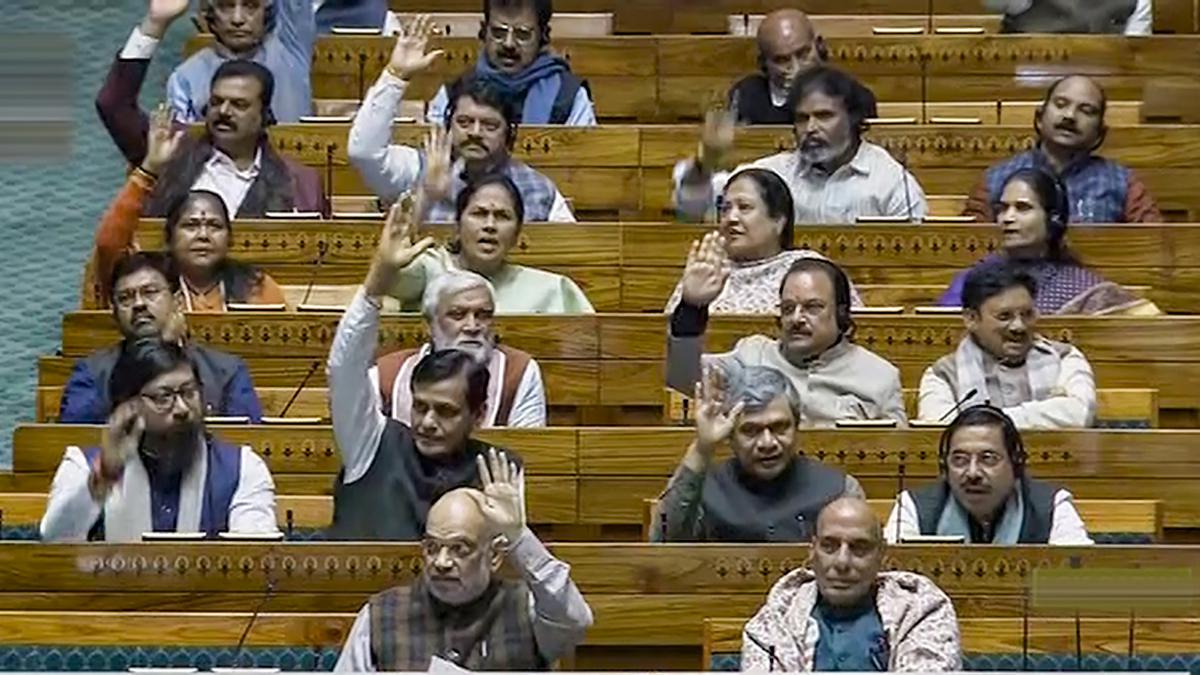
The Lok Sabha on Wednesday passed three amended Bills that seek to repeal and replace criminal laws which date back to colonial times. This criminal law reform brings terrorism offences into a general crime law for the first time, drops the crime of sedition, and makes mob lynching punishable by death.
The Bharatiya Nyaya (Second) Sanhita Bill (BNSS) will replace the Indian Penal Code, 1860; the Bharatiya Sakshya (Second) Bill (BSS) will replace the Indian Evidence Act, 1872; and the Bharatiya Nagarik Suraksha (Second) Sanhita Bill (BNSSS) will replace the Code of Criminal Procedure, 1898. All three were discussed and passed with a voice-vote, in the absence of the majority of Opposition members from INDIA bloc parties, as 97 of them have been suspended during this session.
Home Minister Amit Shah said that the three Bills stressed justice rather than punishment, and have been designed to last for the next century, keeping technological advancements in mind. “This is a pure Indian law after removing all the British imprints. As long as we are in power, we cannot become a police State,” the Minister said.He moved an amendment to the BNSS, which will exclude doctors from criminal prosecution for death due to medical negligence, and will make hit-and-run accident cases punishable by ten years imprisonment.
‘No sympathy for terrorists’
Noting that more than one lakh people have been killed in terror attacks across the country over the past 75 years, Mr. Shah said that the BNSS had, for the first time, defined terrorism and included it as a separate category in the general crime law.
Also read | The Bharatiya Nyaya Sanhita needs a relook
“Some members pointed out that UAPA [the Unlawful Activities Prevention Act] already exists. But in places where they were in power, they never invoked UAPA and those who committed acts of terrorism escaped under the provisions of general law,” Mr. Shah said. “We have shut the doors for such people to escape punishment by including terrorism in the criminal law. Terrorism is the biggest enemy of human rights. Such people should get the harshest of punishment. This is not Congress or British rule, how can you defend terrorists?” he asked.
Mr. Shah insisted that there was no scope for misuse of the terror provisions in the BNSS, but claimed that there was undue fear which made some Opposition MPs oppose the laws. “I insist that this fear should persist. There should be no sympathy for people who commit terrorist acts,” he said.
Earlier in the debate, Shiromani Akali Dal (SAD) leader Harsimrat Kaur Badal, while speaking about Punjabi youth who took to militancy swayed by emotions, claimed that the two men who had jumped inside the Lok Sabha chamber on December 13 had also been affected by their emotions on the issues of unemployment, Manipur violence, and farmers’ rights. The two men, along with four associates, have been booked under UAPA, among other charges. The SAD leader also flagged the absence of a majority of the Opposition members, saying that key Bills should not be passed in such a manner.
Rajdroha vs deshdroha
The Home Minister said that sedition has been repealed in the new law. “We have replaced an individual with the country. Rajdroha (sedition or offence against the government) has been replaced with deshdroha (offence against the nation or country). Gandhi, Tilak, Patel all went to jail under this particular British law, yet it was never scrapped by the Opposition when they were in power. It continued all these years,” he said.
“[AIMIM MP Asaduddin] Owaisi ji is thinking that we have merely changed the name of sedition. I want to say that this is an independent country. Nobody will be sent to jail for criticising the government, but you cannot say anything against the country or do anything against the interests of the country. If you harm the flag or the property of the country, you will be sent to jail,” Mr. Shah said.
Also read |Revised criminal law bills: Key changes explained
‘Muslims, Dalits will be hurt’
Earlier, Mr. Owaisi said that the new laws would impact minority and underprivileged communities the most, adding that they did not have any safeguards against police excess and fabricated evidence. “Most undertrial prisoners are Adivasi, Dalits and Muslims. The conviction rate of Muslim inmates is 16% and their population is 14%. As many as 30% detenues in jails are Muslims. 76% backward class, Dalits and religious minorities are on death-row. You are reforming [the law] for the powerful; this will not benefit the poor,” Mr. Owaisi said.
He pointed out that Clause 187 of the BNSSS permits police custody of up to 90 days, as against the 15-day custody allowed till now. The law also prevents any third party from filing mercy petitions on behalf of convicts on death-row.
Mr. Owaisi added that it was an irony that people accused of terror charges themselves were also speaking in Parliament on the Bill. The BJP MP from Bhopal, Pragya Singh Thakur, faces charges under UAPA, with regard to her alleged involvement in the 2008 Malegaon blast where six people were killed. She spoke during the debate on the Bill, claiming that the British-era laws had been misused to torture her in police custody for 13 days.
‘Definition of terror is too broad’
Krishna Devarayalu Lavu of the YSR Congress also objected to the clause permitting 90 days of police custody. He noted that recently, three contentious farm laws had been withdrawn after farmers staged a peaceful protest. “They protested so their rights can be taken care of. If you invoke sections pertaining to attack on sovereignty of the country, it does not make any sense. The definition of terrorist acts is too broad,” the YSR Congress MP said.
Mr. Shah, however, insisted that the total police custody would only be 15 days. “If, after the first seven days of police questioning, someone gets admitted in hospital, the person will have to appear before the police for another eight days after recovering or getting discharged. Meanwhile, courts can also grant bail,” he said.

Crime
Suspicious passenger apprehended at Delhi Jama Masjid Metro Station after trying to flee during screening

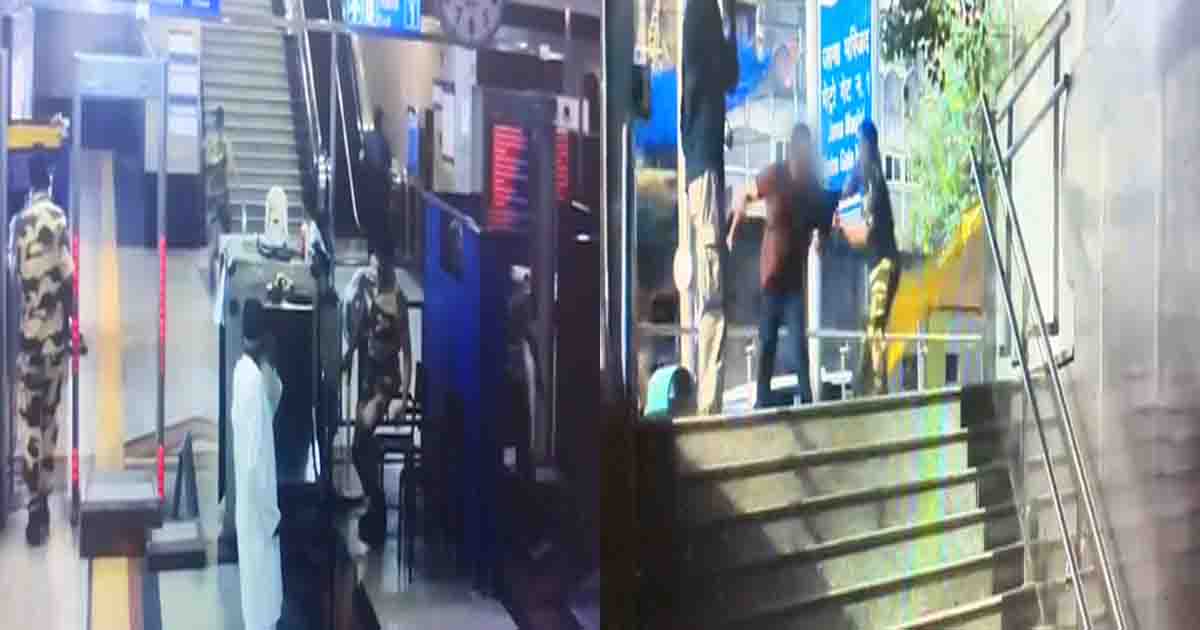
Alert personnel of the Central Industrial Security Force (CISF) apprehended a passenger at Delhi’s Jama Masjid Metro Station after he allegedly attempted to flee when a suspicious object was detected during his baggage screening.
According to the CISF, the incident came to light when the passenger’s baggage was being screened through an X-ray Baggage Inspection System (XBIS). During the examination, personnel noticed a dense and suspicious object on the scanner screen.
Sensing something unusual, the security personnel attempted to examine the matter further. However, the passenger allegedly tried to escape from the screening area, according to CISF.
Displaying promptness and alertness, CISF personnel immediately chased him and apprehended him near the station’s exit gate before he could leave the premises.
A subsequent examination of his belongings led to the recovery of an unidentified semi-solid substance concealed inside a stitched portion of his undergarment, the CISF said.
According to reports, the passenger reportedly claimed to be a non-resident Indian (NRI) residing in Kuala Lumpur, Malaysia.
Following the recovery, the CISF handed over the passenger, along with his belongings and the suspected substance, to the police for further investigation.
The nature of the semi-solid substance and the reason behind its concealment remain unclear. Police are investigating the matter to establish the identity of the substance and determine the circumstances surrounding the incident.
The CISF’s swift intervention prevented the passenger from leaving the station without further examination.
The force said its personnel remain alert during the screening of passengers and their baggage to ensure compliance with security protocols and prevent any potential threat to metro commuters. Further action in the case will depend on the findings of the investigation, said the police officials.

Amid campaigning for the biennial elections for eight MLC seats on October 23 in Bihar, police have registered three FIRs in connection with alleged violation of election rules during a roadshow in the Mokama Assembly constituency of Patna district.
The roadshow was held on Sunday. The cases have been registered against local MLA Anant Singh and Jan Suraaj candidate Anuj Singh, according to police sources.
Of the three cases, two were registered at Barh police station and one at Mokama police station in Patna district.
The police are investigating the alleged violations and examining the circumstances surrounding the roadshow.
According to police sources, the action followed complaints of violations of the Model Code of Conduct and other applicable regulations during the Member of Legislative Council (MLC) election-related event.
The allegations concern compliance with rules governing political roadshows and public campaigning.
However, the specific allegations against each leader and the legal sections invoked in the FIRs have not yet been independently confirmed.
The registration of the cases has triggered political discussions in the Mokama and Barh areas, where election-related activities have intensified.
During the MLC election period, candidates and political parties are required to comply with the Model Code of Conduct and applicable rules governing public meetings, roadshows, permissions and traffic management.
Authorities can initiate legal action when alleged violations are reported.
However, the filing of an FIR does not establish guilt. The allegations against Anant Singh and Anuj Singh will be subject to investigation and the due process of law.
Police said further action would be taken on the basis of the evidence collected and the findings of the investigation.
Additional details are awaited.
Anant Singh, the JD(U) MLA from Mokama in Patna district, has openly extended his support to Jan Suraaj candidate Anuj Singh and is campaigning against his own party’s official nominee, Neeraj Kumar, in the upcoming MLC election.
Anant Singh said his decision to support Anuj Singh stemmed from a personal dispute with Neeraj Kumar. He clarified that his move had nothing to do with his political relationship with the JD(U).
The election for eight Legislative Council seats is scheduled to be held on October 23, with counting of votes and announcement of results set for October 27.
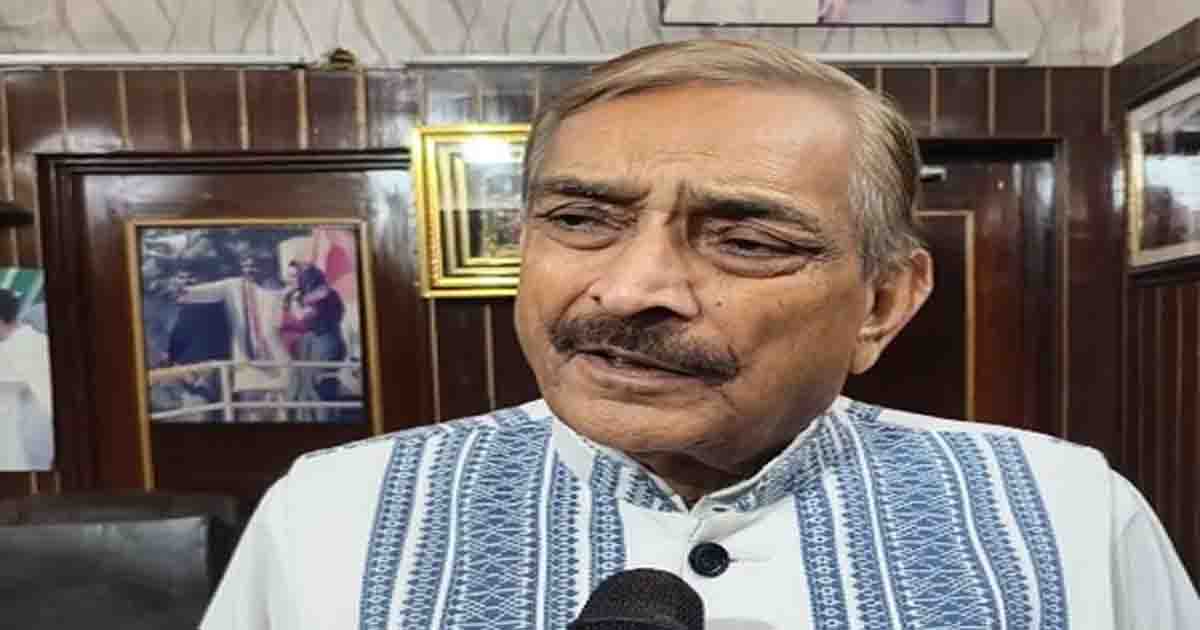
Congress MP Pramod Tiwari on Monday hit back at AIMIM chief Asaduddin Owaisi over his recent remarks, accusing him of acting as an agent of the Bharatiya Janata Party (BJP).
Tiwari claimed that election results demonstrated how Owaisi’s party had contributed to splitting minority votes, prompting him to describe the AIMIM chief and the BJP as “twin brothers”.
The exchange comes amid political preparations for the 2027 Assembly elections in Uttar Pradesh, with parties sharpening their positions and trading allegations ahead of the electoral contest.
Addressing a gathering in Uttar Pradesh’s Rampur, Owaisi had declared that he would “never make a Nehru, a Gandhi, or a Yadav” his leader. He also stressed the need to provide greater opportunities to young people from the Muslim community.
“Muslim youth have as much potential as people from other communities… However, they are not given a platform,” Owaisi had said, adding that the AIMIM would provide them with opportunities to move forward.
Responding to the AIMIM chief’s remarks, Congress MP Tiwari accused him of working to divide opposition votes in favour of the BJP.
Speaking to media, Tiwari said, “What standing does Owaisi have to even suggest someone like a Gandhi or a Nehru? His sole function, whether intentional or otherwise, is to divide the minority vote at the behest of the BJP. I can say with full confidence that this individual works for the BJP, as evidenced by election outcomes.”
Tiwari further cited electoral results in Maharashtra and Bihar to support his allegations, claiming that the AIMIM’s electoral performance had helped the BJP and its allies by splitting votes that could otherwise have benefited other candidates.
“In Maharashtra, while his party won four seats, it also caused other candidates to lose in 22 constituencies by splitting the vote, ultimately paving the way for a BJP-led government. He did something similar in Bihar … The results clearly show that he operates as an agent for the BJP. Owaisi and the BJP are twin brothers,” he added.
This comes as political parties begin gearing up for the 2027 Uttar Pradesh Assembly elections.
Tiwari also commented on the controversy surrounding the Special Intensive Revision (SIR) of electoral rolls being conducted by the Election Commission of India (ECI).
He argued that protecting citizens’ voting rights was essential and called for a change in government through the democratic process.
“The government in the country must be changed. The nation’s economic situation and foreign policy have both failed. The public wants relief from inflation and unemployment, and a change in government is essential to safeguard the right to vote. We want to change the government democratically through elections, and for that right to vote must be safeguarded,” Tiwari said.

Suspicious passenger apprehended at Delhi Jama Masjid Metro Station after trying to flee during screening

Tiger Shroff attack: Bihar family denies accused is their son

Bollywood in the Crosshairs After Firing at Tiger Shroff; Legal Action Initiated Against Bishnoi Gang, Three Shooters Arrested

E-Office System Implemented in Mumbai Municipal Corporation; 14,000 Users to Be Integrated in Phases to Make Administration More Transparent and Efficient

Bihar MLC election: Three FIRs filed against Anant Singh, Jan Suraaj candidate Anuj Singh

Rahul, Cong ecosystem want to force regime change: BJP after Neha Bora praises B’desh Gen-Z protest

BJP pays tribute to ex-President Abdul Kalam, recalls his enduring influence on generations of India’s youth

Attack on democratic rights: INDIA Bloc leaders on detentions of anti-ECI protestors

INDIA bloc begins protest march against ECI

Maha Congress stages agitation against Gyanesh Kumar
-

 Crime4 years ago
Class 10 student jumps to death in Jaipur
-

 Maharashtra2 years ago
Mumbai Local Train Update: Central Railway’s New Timetable Comes Into Effect; Check Full List Of Revised Timings & Stations
-

 Maharashtra2 years ago
Mumbai To Go Toll-Free Tonight! Maharashtra Govt Announces Complete Toll Waiver For Light Motor Vehicles At All 5 Entry Points Of City
-

 Maharashtra2 years ago
False photo of Imtiaz Jaleel’s rally, exposing the fooling conspiracy
-

 National News2 years ago
Ministry of Railways rolls out Special Drive 4.0 with focus on digitisation, cleanliness, inclusiveness and grievance redressal
-

 Maharashtra2 years ago
Maharashtra Elections 2024: Mumbai Metro & BEST Services Extended Till Midnight On Voting Day
-

 National News2 years ago
J&K: 4 Jawans Killed, 28 Injured After Bus Carrying BSF Personnel For Poll Duty Falls Into Gorge In Budgam; Terrifying Visuals Surface
-

 Crime2 years ago
Baba Siddique Murder: Mumbai Police Unable To Get Lawrence Bishnoi Custody Due To Home Ministry Order, Says Report