
International News
Pakistan’s ban fails: Dhurandhar turns into underground sensation


New Delhi, Dec 18: The ban on Dhurandhar by Pakistan and some Gulf nations has not affected its run at the box office. The movie is showing no signs of slowing down, but the ISI has a major problem back in Pakistan.
The movie, which deals with the 1999 Khandahar hijacking, Mumbai 26/11 attacks and also the Lyari gang wars, has not gone down well with the Pakistan establishment, and all attempts have been made to block it. However, the ISI has completely lost control over the digital space and attempts at a blackout have failed miserably.
At least 2 million illegal downloads of the film have been reported in Pakistan in just two weeks. It has gone on to become the most pirated movie in Pakistan, beating 2.0 and Raees. The ban in Pakistan may have cost the movie makers Rs 50-60 crore, but the message about Pakistan being a complete terror state has been sent across Pakistan.
Although it makes no difference to the Pakistanis about what their country is, it is a psychological win for India, which has managed to spread the message despite the movie being banned. The Pakistanis are in particular upset about the portrayal of Lyari. The establishment is so desperate to counter this narrative that it has decided to fast-track a film about Lyari showing the place in a good light.
“Indian movie Dhurandhar is yet another example of negative propaganda by the Indian film industry against Pakistan, especially targeting Lyari. Lyari is not violence — it is culture, peace, talent, and resilience. Next month, Mera Lyari will release, showing the true face of Lyari: peace, prosperity, and pride. #MeraLyari,” Sindh’s Senior Provincial Minister for Information, Sharjeel Inam Memon said on X.
The ISI, despite monitoring the internet relating to the movie, has completely failed to take control. Torrents and piracy links are all over the internet, which are being used to download the movie.
The Dark Web experts in the country are using the servers in Sri Lanka, Nepal and Malaysia to ensure that the Pakistanis are able to download the film illegally and watch it. The Pakistanis are downloading the movie through Telegram channels, underground streams and also the VPN. The very fact that it has gone on to become the most pirated film to date only shows that the ISI has failed to control the situation, and all attempts to blackout the movie have fallen flat.
Officials say that this surge in the number of downloads indicates the curiosity that the people in Pakistan have about the movie.
While some may not agree with the narrative of the film, many are appreciative of the acting in the movie. Many Pakistanis are creating reels and memes on social media, it has come to light.
The social media accounts linked to both the ISI and ISPR have been using smaller clips in the movie to mock the narrative India has set. They are trying to pass off the content with false narratives against India.
The agencies say that there are attempts by the ISI-linked social media handles to manipulate the content to suit the local narrative. Experts say that the manner in which the movie Mera Lyari is being fast-tracked for a January release and the way in which the ISI is desperately trying to block out the film suggest that the Pakistanis are on the defensive.
The fact that the curiosity around the film is growing with each passing day and the rate at which it is being illegally downloaded only shows that the ISI has failed in its actions, the expert also points out.
The Pakistan Peoples Party (PPP) has also filed a legal challenge in a Karachi court questioning the images of the late Benazir Bhutto being used. The petition seeks an FIR against the cast and crew of the movie Dhurandhar.
The film’s star cast is led by Ranveer Singh, who plays Hamza, an Indian spy who infiltrates Pakistan’s Lyari to dismantle terror networks, which are backed by the ISI. The cast also includes Akshaye Khanna, Sanjay Dutt, R. Madhavan, Arjun Rampal and Rakesh Bedi.

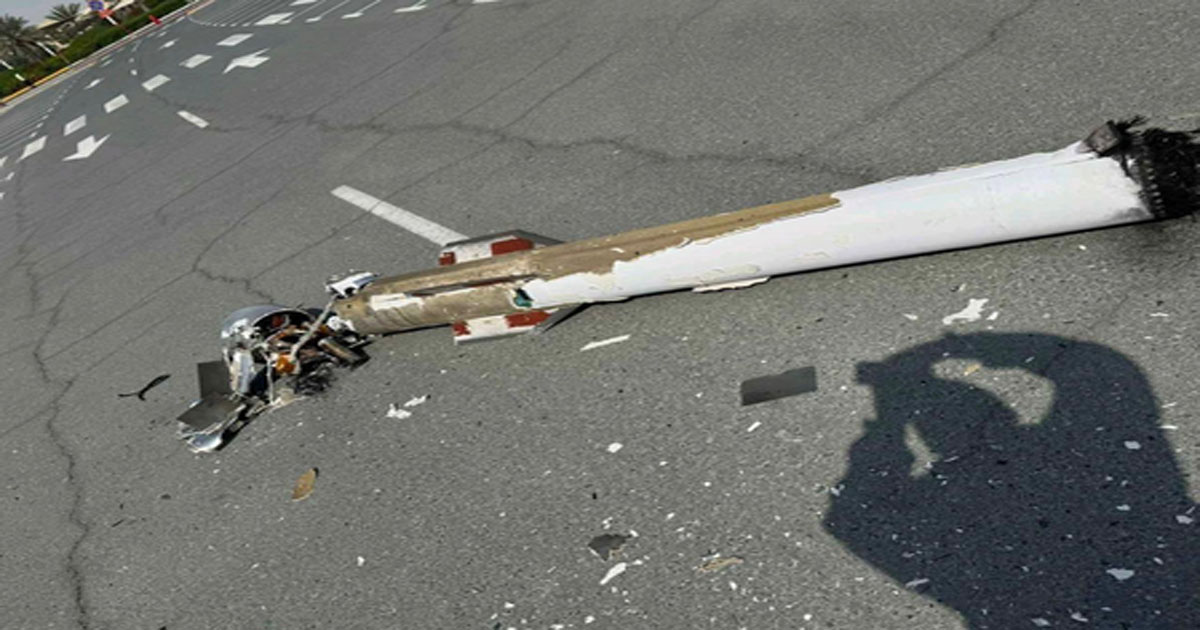
Abu Dhabi, March 26: One Indian national was killed and another injured as two people died and three suffered injuries after the debris of a ballistic missile fell in UAE’s Abu Dhabi on Thursday following a successful interception by the country’s air defence systems.
“As part of the ongoing follow-up to the previously reported incident caused by falling debris following the successful interception of a ballistic missile by air defence systems, the incident has resulted in the deaths of two individuals of Pakistani and Indian nationality, and in injuries ranging from serious to moderate sustained by three individuals of Emirati, Jordanian and Indian nationality,” the Abu Dhabi Media Office wrote on X.
“The public is advised to obtain information only from official sources and to avoid spreading rumours or unverified information,” it added.
Earlier in the day, Abu Dhabi Media Office had said that authorities had responded to an incident involving falling debris in Sweihan street after the missile was intercepted by air defence systems.
“Abu Dhabi authorities have responded to an incident involving falling debris in Sweihan street, following the successful interception of a ballistic missile by air defence systems. The incident resulted in the deaths of two unidentified individuals, three injuries, and damage to a number of cars. Further updates will be provided in due course,” Abu Dhabi Media Office posted on X.
“The public is advised to obtain information only from official sources and to avoid spreading rumours or unverified information,” it added.
The ongoing conflict in West Asia began on February 28 following the strikes carried out by Israel and the US on Iran, which resulted in the killing of Iran’s Supreme Leader Ayatollah Ali Khamenei and top military officials. In response, Iran has launched drone and missile attacks targetting the US and Israeli facilities, regional capitals and allied forces in West Asia.
Earlier in the day, UAE’s Ministry of Defence said that its air defences were responding to incoming missile and drone threats from Iran. It advised people to adhere to the safety and security instructions issued by the authorities.
In a statement shared on X, UAE’s Ministry of Defence said, “UAE air defences are currently responding to incoming missile and drone threats from Iran. MOD asserts that the sounds heard are the result of the Air Defence Systems intercepting missiles and drones.”
Washington, March 25: Top American lawmakers and experts have warned that the country’s heavy reliance on foreign critical minerals, especially those from China, poses a direct threat to national security, and called for urgent steps to build resilient domestic supply chains.
At a House subcommittee hearing on Wednesday, Congressman Paul Gosar said the “very security of our nation relies heavily on a steady input” of minerals essential for defence systems, electronics and advanced technologies. He pointed to copper, rare earths and lithium as key inputs for fighter jets, missiles and batteries.
Gosar warned that the US remains heavily reliant on imports. “We import half of our supply of 20 of the 60 minerals… and we are entirely reliant on the importation of 13,” he said, adding that China dominates global processing and refining capacity.
Lawmakers from both parties agreed that the supply chain vulnerability has strategic implications. Representative Jared Huffman said the issue was not just about resources but governance, alleging that billions in federal investments lacked transparency and oversight.
Expert witnesses told the panel that China has effectively “weaponised” mineral supply chains. Gracelin Baskaran said the key question was no longer whether China controls critical minerals, but how quickly the US can build alternative supply chains.
“The question is what the United States does about it,” she said, calling for coordinated industrial policy and stronger alliances to secure supply.
Geologist Simon Jowitt said the US has “huge unrealised mineral potential” but remains underexplored due to limited geoscientific data and slow permitting. He stressed that exploration is the foundation of any supply chain and can deliver significant economic returns.
Jowitt also underscored the need for a full domestic ecosystem. “There’s no point in just having mineral deposits without having an entirety of a supply chain,” he said, arguing that processing and refining must accompany mining to ensure security.
National security expert Abigail Hunter highlighted structural challenges, noting that supply chains take years to build while disruptions can occur “overnight”. She said China’s control over processing creates a “choke point” that allows it to influence global markets rapidly.
“Capacity must be built in advance,” Hunter said, warning that relying on imports during crises could leave US defence systems vulnerable.
At the same time, watchdog groups raised concerns about government investment strategies. Faith Williams said federal equity stakes in mining firms could create conflicts of interest and reduce transparency.
“Corruption or the appearance thereof is bad for business,” she said, cautioning that unclear rules could distort markets and increase costs for taxpayers.
Despite political divisions, there was broad agreement that critical minerals underpin both economic growth and military capability. Lawmakers cited their role in everything from semiconductors and smartphones to advanced weapons systems.
The hearing also highlighted the economic stakes. Mining contributes billions to the US GDP and supports nearly two million jobs, with wages significantly above the national average.
Experts said solutions would require a combination of domestic production, allied cooperation and demand-side policies. Baskaran urged creating a “market of 2.6 billion consumers” among US allies to counterbalance China’s dominance.
The issue has gained urgency amid rising geopolitical tensions and growing demand for minerals driven by clean energy, defence modernisation and digital infrastructure, placing supply chain resilience at the centre of US strategic planning.
International News
‘We allowed India to pass through Hormuz’: Iran says 5 ‘friendly’ nations get safe passage

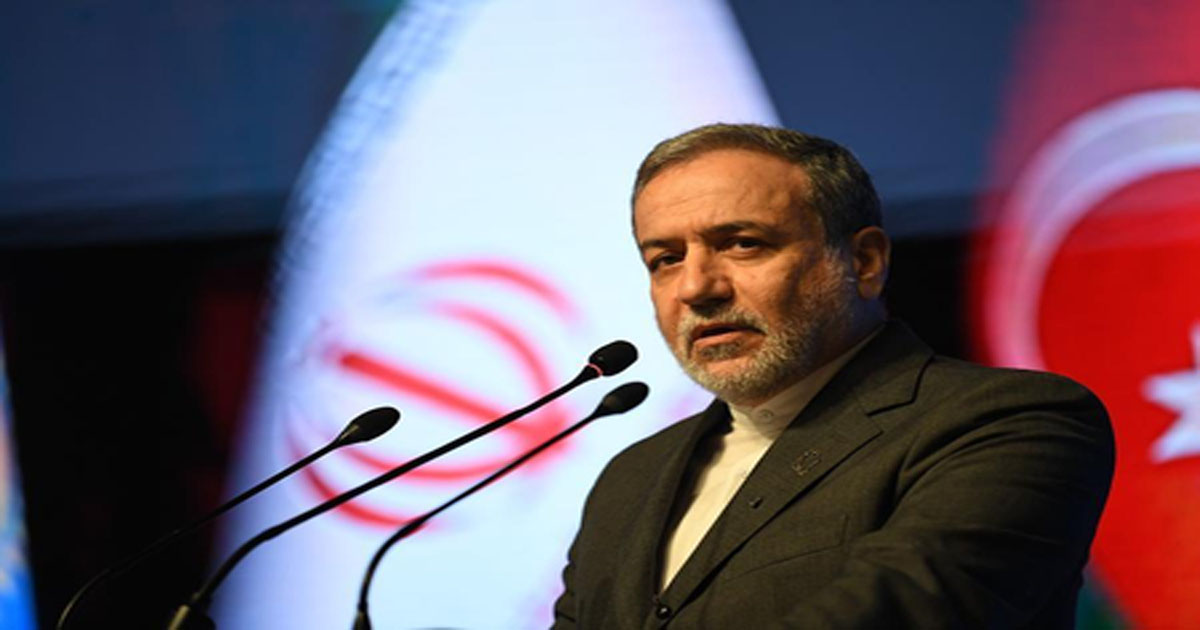
Tehran, March 26: As the conflict in West Asia continues to escalate, Iran has announced that it will not impose restrictions on vessels belonging to five “friendly” countries, including India, allowing them to pass through the strategically crucial Strait of Hormuz even as access remains limited for others.
Along with India, ships from Russia, China, Pakistan and Iraq have been granted safe passage through the key maritime chokepoint despite the ongoing conflict in the region.
In an interview with Iranian state television, Foreign Minister Abbas Araghchi clarified that the Strait of Hormuz has not been completely shut and that certain countries with which Iran maintains friendly relations have been exempted from restrictions.
“There is no reason to allow the enemy to pass through the strait. We have permitted certain countries that we consider friendly to pass through; we allowed China, Russia, India, Iraq, and Pakistan to transit,” Araghchi was quoted as saying by Iran’s official news agency.
At the same time, he indicated that vessels linked to countries seen as adversaries or those involved in the ongoing conflict would not be allowed passage. He said ships from the United States, Israel and certain Gulf nations playing a role in the current crisis would not be given clearance to transit through the strait.
Araghchi also expressed satisfaction over Iran’s control over the vital waterway, stating that the country has demonstrated its authority in the region after decades.
He noted that when Iran initially announced a partial blockade of the Strait of Hormuz, many observers had dismissed it as a bluff. However, he said that subsequent developments have underscored Iran’s capability to enforce its position and assert control over one of the world’s most critical energy transit routes.

Mumbai: BMC Diverts ₹90 Crore From Mithi River Works To Ghatkopar–Mankhurd Link Road Flyover Extension, Opposition Seeks Audit

UAE: Indian national among two killed by falling debris of intercepted missile

Mira-Bhayandar Crime: 40-Year-Old Housekeeper Brutally Stabbed To Death Inside Residential Complex In Kashimira, Probe Underway

China’s grip on key minerals sparks US alarm; lawmakers demand swift supply-chain fixes

Mumbai: Controversy while removing the idol of Lord Shiva in Malad! Slogans were raised from both sides, case registered, situation peaceful, security tightened

Married Mumbai Woman Mocked In Andheri Society Over ‘Lift Kissing’ CCTV Video, Files Police Complaint

Mumbai: JBCN International School In Borivali Gets Bomb Threat, Search Reveals Hoax, Students Safe

Mahayoti’s big gift to the people of Mumbai… Now there is no tax for houses up to 500 square feet, the Municipal Corporation has increased this limit to 700 square feet.

LPG Crisis In Maharashtra: Cyber Crime On Rise Amid Shortage, 2 Women Lose ₹4 Lakh In ‘Gas Update’ Online Scam In Kalyan-Dombivli

Rashmika Mandanna-Vijay Deverakonda Wedding: Virosh Turn Modern Day Prince & Princess For Their Dreamy Sangeet Ceremony
-

 Crime4 years ago
Class 10 student jumps to death in Jaipur
-

 Maharashtra1 year ago
Mumbai Local Train Update: Central Railway’s New Timetable Comes Into Effect; Check Full List Of Revised Timings & Stations
-

 Maharashtra1 year ago
Mumbai To Go Toll-Free Tonight! Maharashtra Govt Announces Complete Toll Waiver For Light Motor Vehicles At All 5 Entry Points Of City
-

 Maharashtra2 years ago
False photo of Imtiaz Jaleel’s rally, exposing the fooling conspiracy
-

 National News1 year ago
Ministry of Railways rolls out Special Drive 4.0 with focus on digitisation, cleanliness, inclusiveness and grievance redressal
-

 Maharashtra1 year ago
Maharashtra Elections 2024: Mumbai Metro & BEST Services Extended Till Midnight On Voting Day
-

 National News2 years ago
J&K: 4 Jawans Killed, 28 Injured After Bus Carrying BSF Personnel For Poll Duty Falls Into Gorge In Budgam; Terrifying Visuals Surface
-

 Crime1 year ago
Baba Siddique Murder: Mumbai Police Unable To Get Lawrence Bishnoi Custody Due To Home Ministry Order, Says Report