
Business
Over 14 bn eSIM devices to be shipped by 2030, smartphones to lead


More than 14 billion eSIM devices are likely to be shipped between 2021 and 2030, covering all form factors, a new report has shown.
Smartphones will lead the charge in terms of eSIM-capable device shipments over the next five years.
There are several form factors such as hardware-based eSIM (eUICC), iSIM (iUICC), nuSIM and Soft SIM.
Almost three in four cellular devices shipped in 2030 will sport an eSIM, according to Counterpoint Research.
In 2021, more than 350 million hardware eSIM-capable devices were shipped across a host of categories such as smartphones, smartwatches, tablets, IoT modules and connected cars.
In the next five years, hardware-based eSIM (eUICC) will remain the dominant eSIM form factor and will account for more than half of the shipments.
“In 2022, we will witness the onset of iSIM (iUICC) form factor, which is a SIM integrated into the chipset (SoC) and offers a multitude of benefits,” said the report.
eSIM uptake is poised to grow across a gamut of connected devices over the next decade, thanks to the flexibility, cost efficiency, security and other myriad benefits offered by the embedded technology.
“The iSIM (iUICC) form factor will grow the fastest as the industry stakeholders move forward together to offer end-to-end support from the SIM enablement and management perspective later this year,” said Research Vice President Neil Shah.
The first set of mainstream iSIM adoption will be seen across IoT applications driven by leading IoT chipset and module players.
Beyond 2027, iSIM is projected to take over as the dominant SIM form factor, with the shipments of iSIM-capable devices poised to scale to 7 billion units between 2021 and 2030, the report noted.
“The anticipated launch of eSIM-only iPhone should act as an inflection point for the industry with other OEMs expected to follow suit soon after,” said research analyst Ankit Malhotra.


India’s strong economic growth trajectory and the implementation of the India-EFTA Trade and Economic Partnership Agreement (TEPA) are creating significant opportunities for Norwegian investors, particularly in manufacturing, renewable energy, infrastructure, financial services and the digital economy, according to industry insights.
With GDP growth projected to remain around 6.5 per cent annually through 2030, India is widely expected to become the world’s third-largest economy by the end of the decade, according to EY India report.
Analysts attribute this outlook to strong domestic consumption, rising investments, ongoing infrastructure development and reforms aimed at improving the ease of doing business.
The India-EFTA TEPA, which came into effect in October 2025, is being viewed as a major milestone in India-Norway economic relations.
The agreement seeks to promote trade liberalisation, facilitate investment flows and deepen cooperation in areas such as innovation, sustainability and advanced technologies.
The pact includes investment commitments of $100 billion over 15 years and is expected to support the creation of one million direct jobs in India, aligning with the country’s broader goals of expanding manufacturing capacity and strengthening its position in global value chains.
Industry experts believe the agreement creates a strong framework for Norwegian companies to expand their presence in India by combining Norway’s expertise in technology, sustainability and capital-intensive industries with India’s large market and growth ambitions.
Several sectors have been identified as priority areas for collaboration, including manufacturing, renewable energy, oil and gas, maritime services, seafood processing, information and communication technology (ICT), fintech and financial services. These industries are expected to benefit from increasing bilateral cooperation under the TEPA framework.
The rapid expansion of India’s digital economy and digital payments ecosystem is also creating opportunities for Norwegian companies seeking exposure to one of the world’s largest and fastest-growing consumer markets.
At the same time, India’s policy measures aimed at attracting foreign investment are expected to provide a supportive environment for long-term investors, as per the report.
Business
Delhi protests put business worth Rs 400 crore at daily risk, exposure may reach Rs 4,000 crore in 10 days: CAIT

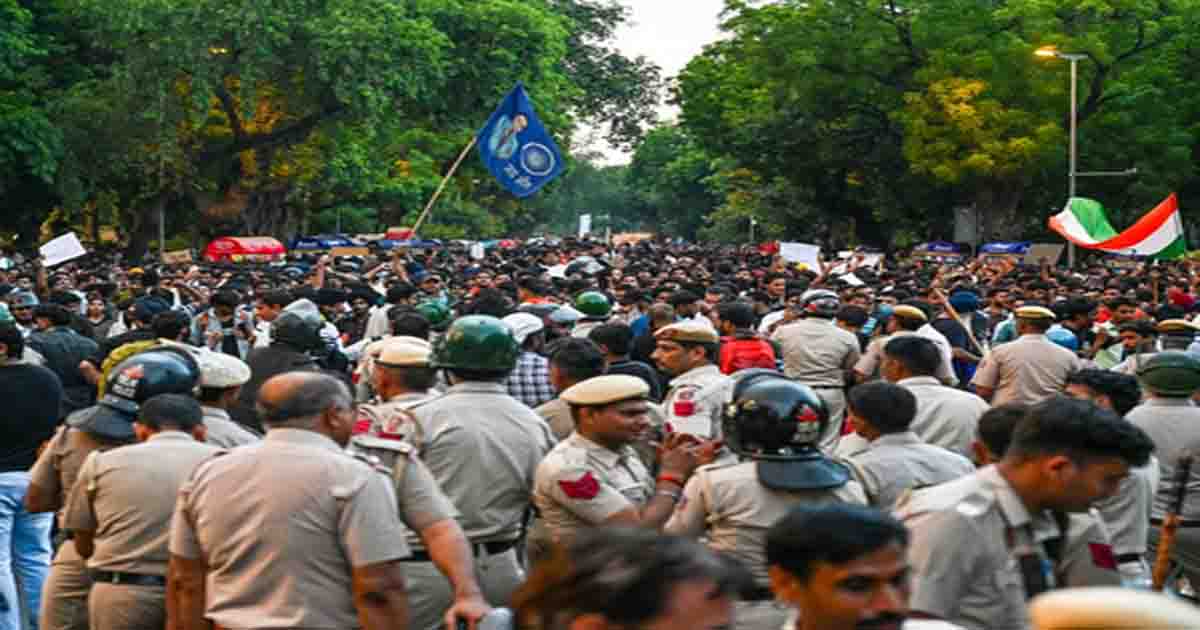
Protests in Delhi could put business transactions worth over Rs 400 crore at risk every day, with the potential exposure reaching Rs 4,000 crore over ten days if disruptions persist, Confederation of All India Traders (CAIT) Secretary General and Chandni Chowk MP Praveen Khandelwal said on Sunday.
Expressing concern over the economic impact of prolonged protests, Khandelwal said disruptions to traffic, transportation, customer movement and market accessibility could significantly affect the capital’s commercial activities, particularly during the crucial festive and wedding season.
He clarified that the figures represent indicative estimates of business activity at risk and not verified actual losses.
According to Khandelwal, Delhi’s estimated average daily business turnover stands at approximately Rs 2,200 crore. Even a 10 per cent decline in business activity could affect transactions worth Rs 220 crore daily, while a 15 per cent decline could put Rs 330 crore at risk. If the disruption reduces business activity by 20 per cent, the amount at risk could rise to Rs 440 crore per day.
Based on these estimates, the cumulative exposure could approach Rs 4,000 crore over ten days if disruptions continue at the higher end of the projected range.
Khandelwal emphasised that while the Constitution guarantees citizens the right to freedom of speech and peaceful assembly, traders must also be able to conduct their businesses and earn their livelihoods without avoidable disruptions.
“Delhi is not merely the national capital; it is one of the country’s most important centres of wholesale distribution, retail trade and commercial activity. Its markets connect manufacturers, distributors, retailers and consumers across India. Any prolonged disruption in Delhi therefore has a cascading impact on supply chains, business transactions and livelihoods far beyond the city,” Khandelwal said.
“The right to protest and the right to trade are both integral to a functioning democracy. Protecting one should not mean disregarding the other. The larger public interest demands a responsible approach in which democratic expression, the rule of law, economic activity and the livelihood of millions of people are all duly respected,” Khandelwal noted.

Salespersons at ration shops run by cooperative societies will receive an incentive of Rs 2 for every kilogram of onions sold under an initiative aimed at controlling retail prices and ensuring access to quality produce at reasonable rates.
The incentive was announced in a procedural order issued by Registrar of Cooperative Societies, Latha. It recognises the additional responsibilities undertaken by salespersons handling onion distribution alongside their regular ration shop duties.
According to the order, onions were procured in three phases from the National Agricultural Cooperative Marketing Federation of India (NAFED) and the National Cooperative Consumers’ Federation of India (NCCF). The procurement was undertaken to help check rising onion prices in the open market. The onions are being sold to the public through ration shops operated by cooperative societies.
The arrangement is intended to make quality onions available at fair prices while using the existing cooperative distribution network to reach consumers.
Under the order, the incentive payable to each salesperson will depend on the quantity of onions sold. The prescribed rate is Rs 2 per kilogram, linking payment directly to the volume handled through sales at the participating shops.
The Registrar’s order lists several additional tasks associated with the initiative. These include receiving onion consignments, storing the produce, sorting it, weighing quantities for customers, conducting sales and maintaining the related sales accounts. These responsibilities involve work beyond the routine distribution of ration commodities.
The incentive is intended to encourage salespersons to undertake the additional duties required to carry out onion sales through cooperative outlets. The amount due to eligible salespersons will be credited directly to their bank accounts through the Electronic Clearing Service (ECS), according to the order.
Payments will therefore be made through bank transfers based on the quantity sold. The measure combines consumer relief with an incentive for the staff responsible for implementing the sales programme.
While the procurement and distribution arrangement seeks to contain the impact of higher market prices, the additional payment acknowledges the work involved at the retail level. The order specifies a uniform incentive rate for onion sales conducted through the participating cooperative ration shops.

FairPoint: The protests are loud, but where is the money coming from?

Elephant seriously injures mahout, creates panic in Varanasi Ramnagar; over 200 police personnel deployed

CM Adhikari to meet families of Kolkata stampede victims on October 20-21

CBI questions Urmila Sanawar in connection with Ankita Bhandari murder case

Akshay Kumar meets Uttarakhand CM Pushkar Singh Dhami, talk about film Policy in the state

Rahul, Cong ecosystem want to force regime change: BJP after Neha Bora praises B’desh Gen-Z protest

BJP pays tribute to ex-President Abdul Kalam, recalls his enduring influence on generations of India’s youth

Attack on democratic rights: INDIA Bloc leaders on detentions of anti-ECI protestors

INDIA bloc begins protest march against ECI

Maha Congress stages agitation against Gyanesh Kumar
-

 Crime4 years ago
Class 10 student jumps to death in Jaipur
-

 Maharashtra2 years ago
Mumbai Local Train Update: Central Railway’s New Timetable Comes Into Effect; Check Full List Of Revised Timings & Stations
-

 Maharashtra2 years ago
Mumbai To Go Toll-Free Tonight! Maharashtra Govt Announces Complete Toll Waiver For Light Motor Vehicles At All 5 Entry Points Of City
-

 Maharashtra2 years ago
False photo of Imtiaz Jaleel’s rally, exposing the fooling conspiracy
-

 National News2 years ago
Ministry of Railways rolls out Special Drive 4.0 with focus on digitisation, cleanliness, inclusiveness and grievance redressal
-

 Maharashtra2 years ago
Maharashtra Elections 2024: Mumbai Metro & BEST Services Extended Till Midnight On Voting Day
-

 National News2 years ago
J&K: 4 Jawans Killed, 28 Injured After Bus Carrying BSF Personnel For Poll Duty Falls Into Gorge In Budgam; Terrifying Visuals Surface
-

 Crime2 years ago
Baba Siddique Murder: Mumbai Police Unable To Get Lawrence Bishnoi Custody Due To Home Ministry Order, Says Report