
International News
‘Not An Endless War’: Netanyahu And Vance Dismiss Fears Of A Long Conflict

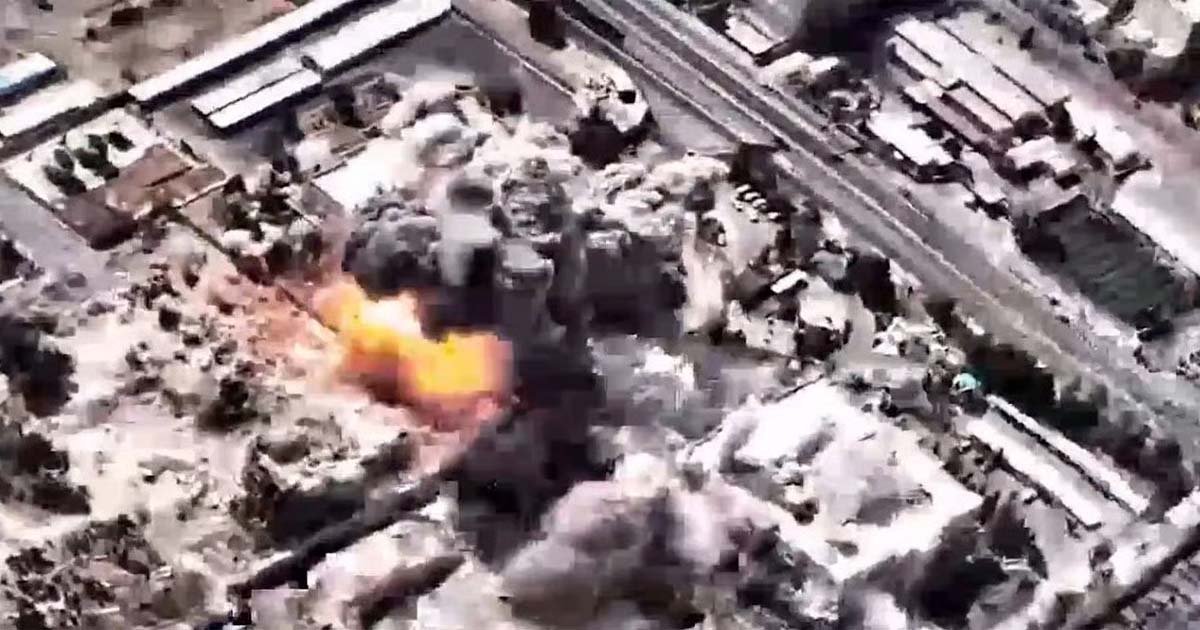
Israeli Prime Minister Benjamin Netanyahu on Tuesday explicitly rejected the idea of a protracted engagement, stating firmly that “this is not an endless war.”
He characterised the military action as a “gateway for peace” and downplayed concerns that forces could become “bogged down in a longer conflict” despite earlier promises of a swift and easy campaign. Netanyahu maintains that rather than a long-term drain on resources, the current military engagement is the “exact opposite of what people are saying” and will instead lead to a rapid opening for new diplomatic breakthroughs.
The prime minister’s vision for the duration of the conflict is tied directly to regional restructuring. He told Fox News that the current hostilities could pave the way for further deals normalising ties between Israel and neighbouring countries. Referring to his previous collaboration with the Trump administration, Netanyahu noted that they “brought forward the Abraham Accords, which were four peace treaties with four Arab countries.” He believes that by “working together against Iran,” the current campaign will serve as a catalyst to “bring many, many more peace treaties” once the immediate military objectives are met.
JD Vance: Avoiding a multi-year conflict
Vice President JD Vance emphasised that this engagement will not mirror the lengthy wars of the past, asserting there is “no way Donald Trump is going to allow this country to get into a multi-year conflict with no clear end in sight and no clear objective.” Vance argued that the duration is tied strictly to a “clearly defined objective,” which he identified specifically as ensuring Iran does not obtain a nuclear weapon. By maintaining this focus, Vance claimed the administration will avoid “the problems we’ve had with Iraq and Afghanistan,” dismissing critics who suggest the President has broken his promise to avoid “endless” foreign wars.
Vance further argued that the decision to attack Iran is fundamentally different from previous US interventions. He contended that the president has “clearly defined what he wants to accomplish,” suggesting that the lack of ambiguity in the mission’s scope will prevent the mission creep that defined previous decades of Middle Eastern conflict. By framing the war as a surgical necessity to stop a “nuclear weapon,” Vance suggested that the timeline is dictated by the destruction of specific capabilities rather than an indefinite occupation or nation-building effort.
Donald Trump: Projections of four to five weeks
President Donald Trump provided the most granular window for the conflict’s duration, saying that the administration “projected four to five weeks” for the initial plan. Speaking from the White House, he clarified that the military had originally allocated four weeks to “terminate the military leadership” of Iran. While the president admitted that the US military has the “capability to go far longer than that” if the situation requires it, he insisted that the mission is currently “ahead of schedule by a lot” following the confirmed deaths of several top Iranian officials and the head of the IRGC.
Trump’s assessment of the timeline is also influenced by what he describes as a shifting threat level. While he claimed that previous strikes had already led to the “obliteration of Iran’s nuclear programme,” he justified the current duration of the war by citing a “growing rapidly and dramatically” ballistic missile programme. He characterised the Iranian government as a “colossal threat to America” that would have soon possessed missiles capable of reaching the United States. Despite predicting more US military personnel deaths, Trump maintains that the “purpose of this fast-growing missile programme” must be dismantled quickly to prevent an “intolerable threat” to the American people.


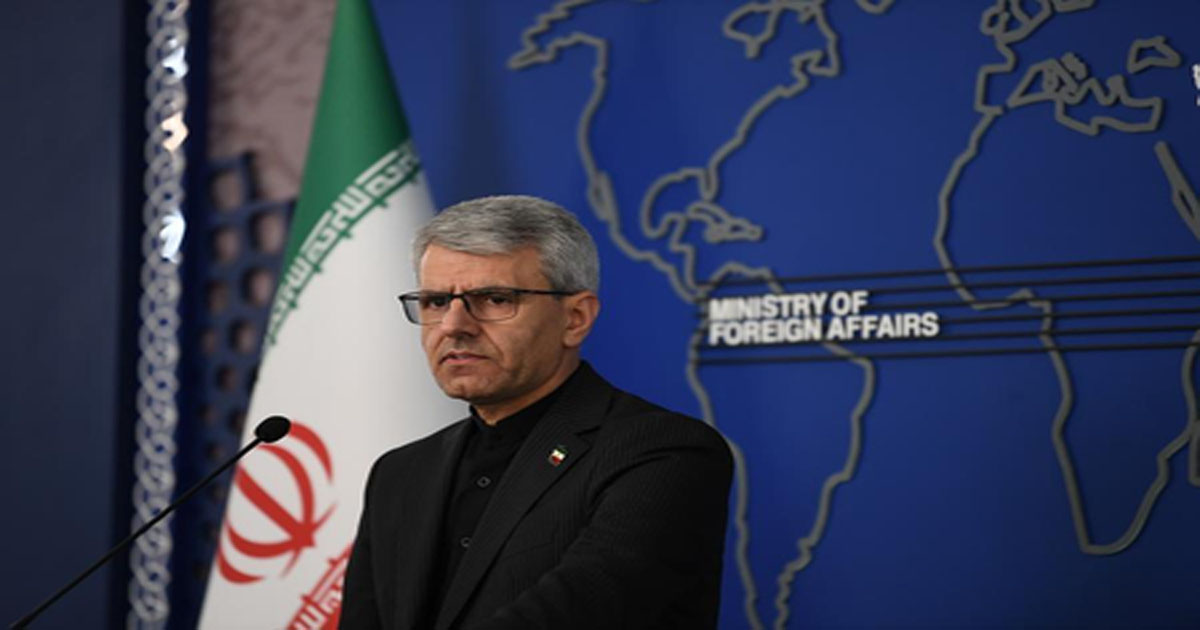
Tehran, April 18: Iran will not transfer its enriched uranium to a foreign country, and sending it to the United States has never been under consideration, Iranian Foreign Ministry spokesman Esmaeil Baghaei said.
Baghaei, speaking on state-run IRIB television, said that recent public statements by Foreign Minister Seyed Abbas Araghchi were made within the framework of the ceasefire between Iran and the United States announced on April 8, not as signals of a new diplomatic opening.
Earlier on Friday, Araghchi said the Strait of Hormuz would remain “completely open” to commercial shipping for the duration of the current truce between Iran and the United States, Xinhua news agency reported.
Baghaei moved to clarify the foreign minister’s position, saying that following a ceasefire in Lebanon on Friday, Tehran chose to apply safe-passage conditions outlined in its agreement with Washington to vessels transiting the strait.
“We have reached no new agreement,” he said. “The ceasefire agreement is the one announced on April 8.”
He accused the United States of failing, from the outset of the truce, to honor a commitment to extend its terms to Lebanon, a provision Iran insists was included in the April 8 agreement. Washington and Jerusalem have rejected that characterization.
Baghaei also warned that Iran would take “countermeasures” if a United States naval blockade of the Strait of Hormuz persisted. He said no talks on extending the ceasefire had taken place, and that mediation efforts led by Pakistan remained focused on ending the conflict and protecting Iran’s interests.
Iran tightened its grip on the strait beginning February 28, when it barred safe passage to vessels belonging to or affiliated with Israel and the United States following joint strikes on Iranian territory. The United States subsequently imposed its own blockade, preventing ships traveling to and from Iranian ports from transiting the waterway after peace negotiations in Islamabad collapsed over the weekend.
Axios reported Friday, citing people familiar with the talks, that a second round of United States-Iran negotiations is expected to take place in Pakistan this weekend, most likely on Sunday.
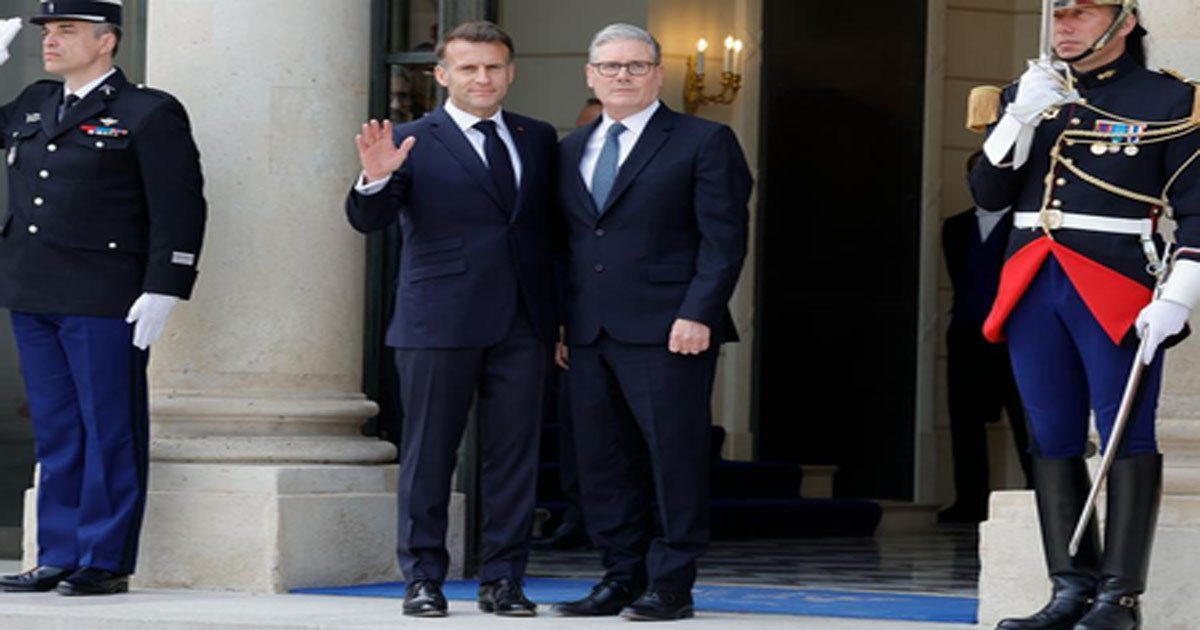
Paris, April 18: French President Emmanuel Macron said that Iran’s announcement of reopening the Strait of Hormuz goes in the right direction.
Macron made the remarks in a joint declaration following a conference co-hosted by France and Britain in Paris on Friday (local time), which brought together 49 countries to discuss securing freedom of navigation in the Strait of Hormuz.
British Prime Minister Keir Starmer, German Chancellor Friedrich Merz and Italian Prime Minister Giorgia Meloni attended the meeting, while officials from across Europe, Asia, Latin America and the Middle East joined by video conference, reports Xinhua news agency.
Macron welcomed the ceasefire in Iran and Lebanon, describing it as a positive development. However, he stressed that it’s necessary to remain vigilant.
“We all oppose any restriction, any agreement regime that would effectively amount to an attempt to privatise the strait, and obviously any toll system,” he said.
He also announced that a neutral, independent mission would be set up to ensure the openness of the Strait of Hormuz, noting that a planning meeting was scheduled for the following week in London.
Starmer, for his part, expressed the hope that talks would resume and a lasting agreement would be reached.
He said France and Britain will lead a multinational mission to safeguard shipping as soon as conditions allow, noting that the mission will be strictly defensive and intended to reassure shipping and support mine-clearing operations.
Around a dozen countries were ready to contribute assets to the defensive mission, Starmer noted.
Meloni said that it was necessary to ensure the absence of mines and guarantee the safety of vessels transiting through the strait in order to reassure the maritime shipping sector, adding that Italy stood ready to deploy its naval units in a strictly defensive posture.
Germany “will participate in the ongoing military planning discussions” and “we would welcome, if possible, participation from the United States,” Merz said.
International News
Netanyahu says Israel to maintain 10-km security zone in southern Lebanon during ceasefire

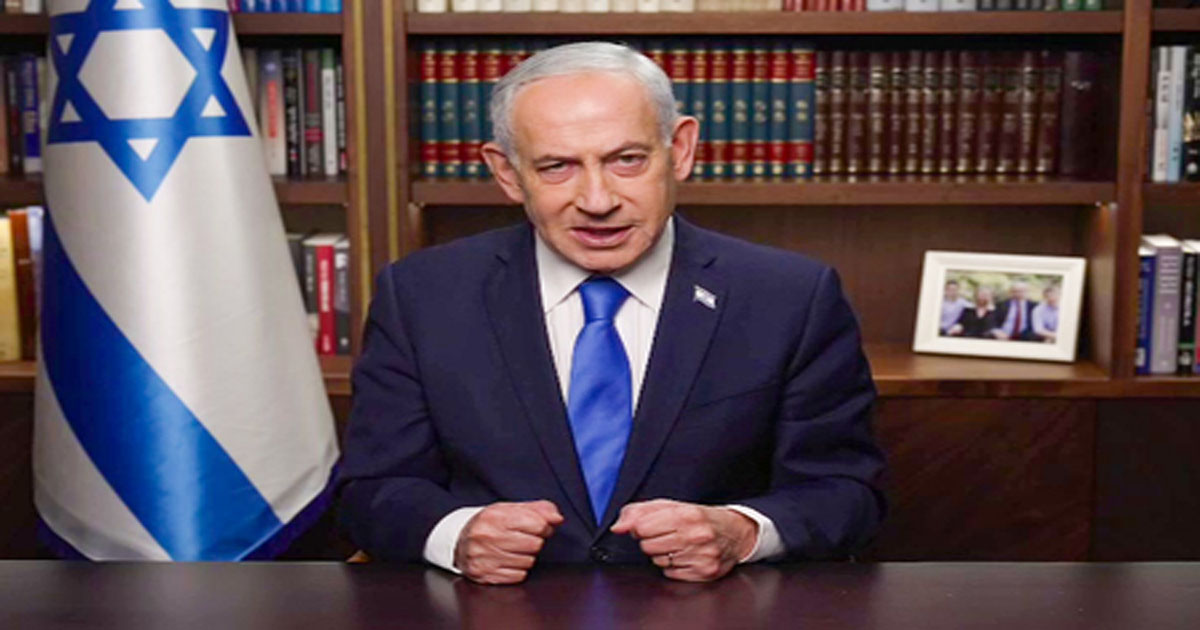
Jerusalem, April 17: Israeli Prime Minister Benjamin Netanyahu said that even after the ceasefire with Hezbollah takes effect, Israel will maintain a 10-km security zone in southern Lebanon.
Netanyahu’s videotaped statement followed US President Donald Trump’s announcement of a ceasefire, agreed to by Netanyahu and Lebanese President Joseph Aoun, set to take effect at 5 p.m. US Eastern Time (2100 GMT).
The Israeli prime minister noted that he had rejected Hezbollah’s demand for an Israeli withdrawal to the international border, and that Israeli forces would remain in a security zone in Lebanon, Xinhua news agency reported.
He argued that this buffer zone would help prevent “invasions” and anti-tank fire into northern Israeli communities.
Netanyahu also said, “We have an opportunity to make a historic peace agreement with Lebanon,” adding that Trump intends to invite him and Aoun to advance such a deal.
He claimed that this opportunity exists because Israel has fundamentally changed the balance of power in Lebanon, noting that Israel has received calls from Lebanon over the past month for direct peace talks.
The prime minister noted that Israel has two main demands in these talks — the disarmament of Hezbollah and a lasting peace agreement.
Turning to Iran, Netanyahu claimed that Trump told him that he was “tremendously determined to continue both the naval blockade and to dismantle Iran’s nuclear capability, what is left of it.”
He described these as “two very important moves that could fundamentally change our security and political situation for years to come.”
Trump on Thursday announced a ceasefire between Israel and Lebanon aimed at bringing a temporary cooling-off along another front linked to the Iran conflict.
He said that after speaking with Israeli Prime Minister Netanyahu and Lebanon’s President Joseph Aoun, the two sides agreed to a 10-day ceasefire beginning at 5 p.m. Washington time.
The ceasefire is expected to pause hostilities that escalated when Israel opened a new front targeting Iran-affiliated Hezbollah.
Lebanon is not directly engaged in a formal war with Israel, but Hezbollah controls large parts of southern Lebanon and has carried out attacks on Israel, prompting retaliatory strikes.

Ayan Shaikh sexual abuse case not love jihad, new conclusion in investigation, Ayan’s life in danger

Naxalites dance to ‘Hadma’ song at Pune Ambedkar Jayanti program, case registered against two BBA students

NESCO Concert Drug Deaths Case: Main Accused Held In Raigad’s Poladpur While Attempting To Flee Towards Goa

Red Fort blast link surfaces as Delhi Police arrests four in multi-state radical module bust

Iran says transferring enriched uranium to US never an option

Dhurandhar 2 Box Office Collection Day 1: Ranveer Singh Starrer Takes An Exceptional Opening; Crosses ₹100 Crore Mark

Mumbai Police Busts Fake Apple Accessories Racket In Ghatkopar, ₹16.33 Lakh Goods Seized; Six Booked

Dhurandhar 2 Box Office Collection Day 9: Ranveer Singh Starrer Earns ₹41.55 Crore On Its Second Friday; Enters ₹700 Crore Club

Bharti Airtel Receives ₹1,74,000 Penalty Notice From DoT For Subscriber Verification Lapses

Mumbai: 28-Year-Old Ghatkopar Woman Killed By Speeding Tanker While Crossing Road, Driver Arrested
-

 Crime4 years ago
Class 10 student jumps to death in Jaipur
-

 Maharashtra2 years ago
Mumbai Local Train Update: Central Railway’s New Timetable Comes Into Effect; Check Full List Of Revised Timings & Stations
-

 Maharashtra2 years ago
Mumbai To Go Toll-Free Tonight! Maharashtra Govt Announces Complete Toll Waiver For Light Motor Vehicles At All 5 Entry Points Of City
-

 Maharashtra2 years ago
False photo of Imtiaz Jaleel’s rally, exposing the fooling conspiracy
-

 National News2 years ago
Ministry of Railways rolls out Special Drive 4.0 with focus on digitisation, cleanliness, inclusiveness and grievance redressal
-

 Maharashtra1 year ago
Maharashtra Elections 2024: Mumbai Metro & BEST Services Extended Till Midnight On Voting Day
-

 National News2 years ago
J&K: 4 Jawans Killed, 28 Injured After Bus Carrying BSF Personnel For Poll Duty Falls Into Gorge In Budgam; Terrifying Visuals Surface
-

 Crime2 years ago
Baba Siddique Murder: Mumbai Police Unable To Get Lawrence Bishnoi Custody Due To Home Ministry Order, Says Report