
National News
Nitish Kumar is ‘mentally unfit’: BJP MLA

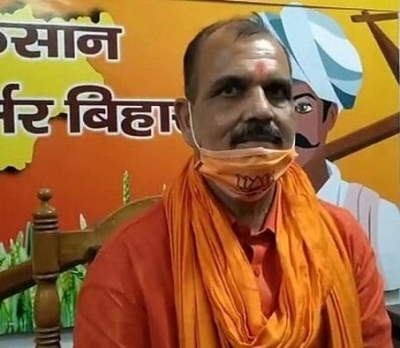
BJP MLA Hari Bhushan Thakur on Tuesday said Bihar Chief Minister Nitish Kumar is “mentally unfit” and “misleading” 13 crore people of the state by giving “wrong” statements.
He demanded that the Bihar government should issue the health card of the chief minister.
“Nitish Kumar on Monday claimed that he was the home minister of the country during the Atal Bihari Vajpayee government. He never became the home minister of the country, still, he is claiming it. Hence, I have urged the authority to check his health status and inform common people of Bihar,” Thakur said.
“Nitish Kumar may have got mentally disturbed after Tejashwi Yadav on Monday claimed that neither he has a wish to become chief minister nor Nitish Kumar has a wish to become prime minister of the country. I want to say that the Prime Minister’s post is not vacant in the country. Still, these two leaders are dreaming of becoming Chief Minister and Prime Minister,” Thakur said.
Atal Bihari Vajpayee served as the prime minister of the country thrice — for 13 days in 1996, 13 months in 1997 to 1998 and five years from 1999 to 2004, and Nitish Kumar served as union railway minister, Surface Transport and Highway Minister and Agriculture Minister of the country but he never became the home minister of the country, Thakur said.

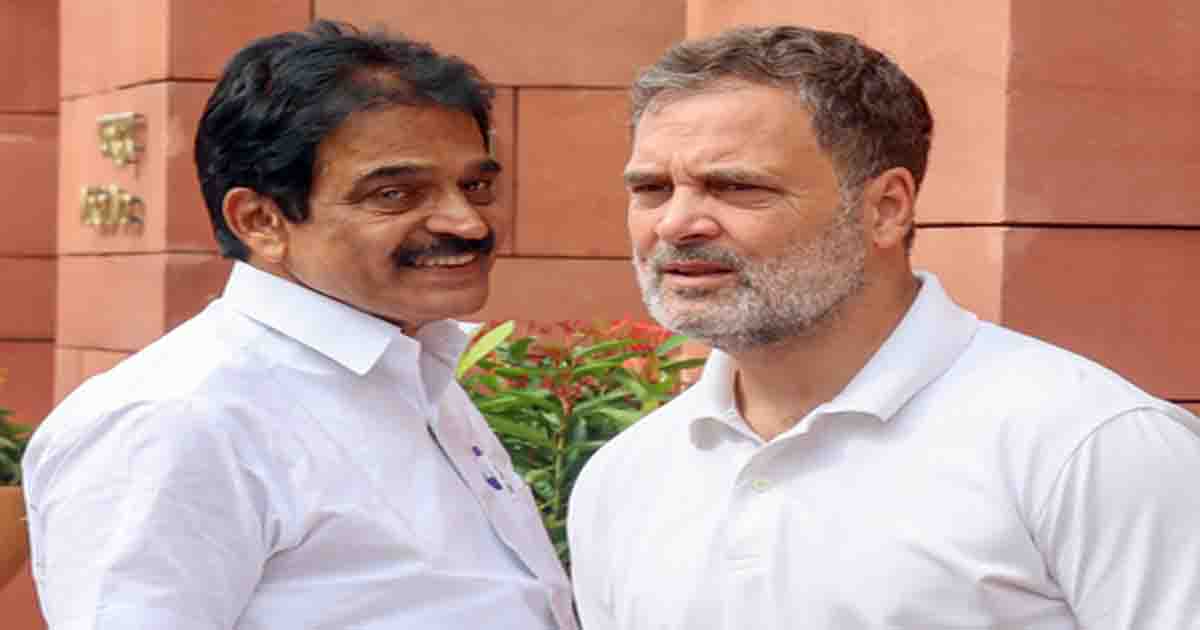
New Delhi, Oct 7: Congress MP K.C. Venugopal on Wednesday dismissed the FIRs registered against Leader of the Opposition in Lok Sabha, Rahul Gandhi, and Congress MP Priyanka Gandhi over protest, saying the party was not afraid of such cases and would continue its fight to protect democracy.
“Let them file thousands of FIRs. Who is bothered about it? Let them do it. We are very much proud that we are fighting to retain the democracy of this country,” Venugopal told reporters as INDIA bloc MPs gathered for a lunch hosted by Congress President Mallikarjun Kharge, a day after the Opposition’s protest against the Election Commission.
His remarks came after the Gandhi siblings were booked on trespassing charges for allegedly entering Akashwani Bhawan in Central Delhi during Tuesday’s protest march against Chief Election Commissioner (CEC) Gyanesh Kumar.
Congress MP Pawan Khera also dismissed concerns over the FIRs, saying they were a “badge of honour” for the party.
“Are we afraid of FIRs? FIRs are a badge of honour. We have to sign something, and we will sign it because the Election Commission wants everyone’s signatures,” Khera said.
“We are here for signing something. The ECI wants signatures from all the people. We will then send the letter,” he added.
Congress MP Deepender Singh Hooda said the Opposition’s fight to protect democracy and the Constitution would continue.
“Look, we have come for lunch now, and we will have lunch. Our fight is continuing to save democracy and the Constitution. I have been informed that an FIR has been registered, in which our name has also been mentioned. We are not people who are afraid of FIRs. They should have understood this by now,” he said.
Rajya Sabha member Kapil Sibal also criticised the Chief Election Commissioner, alleging that the Election Commission had not shown the courage to meet the Opposition leaders.
“You have seen the conduct of this Chief Election Commissioner when he gave time also… They have no courage to meet,” Sibal said.
Kharge has invited INDIA bloc MPs for lunch at Sagar Ratna on Janpath. The MPs are also expected to sign a letter seeking a meeting with CEC Gyanesh Kumar.
The meeting comes a day after Opposition MPs marched from Parliament towards the Election Commission headquarters, demanding a meeting with the election commissioners over allegations of irregularities in the electoral process.
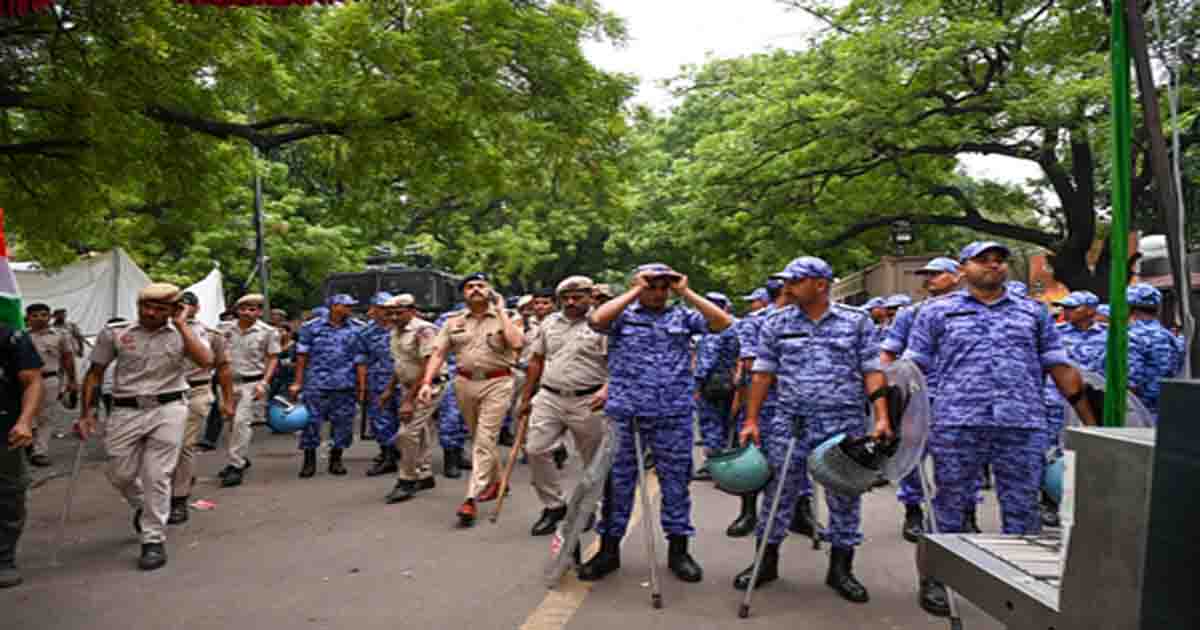
New Delhi, Oct 7: The Delhi High Court on Wednesday directed the government to treat a public interest litigation (PIL) seeking mandatory use of body-worn cameras by Delhi Police and Rapid Action Force (RAF) personnel deployed for crowd control and protest management duties as a representation.
A bench of Acting Chief Justice Nitin Wasudeo Sambre and Justice Arun Bhardwaj directed the government to take a decision within six months on the framing of a standard operating procedure (SOP) concerning the use of body-worn cameras by police and RAF personnel during protests and crowd-control operations.
The High Court passed the order while disposing of a PIL filed by advocate Chahat Raghav in the aftermath of the July 2026 demonstrations at Jantar Mantar involving the Cockroach Janata Party (CJP) and climate activist Sonam Wangchuk.
Senior advocate Akhil Sibal, appearing for the petitioner, submitted that the Delhi Police’s existing framework relies on third-person videographers positioned along the periphery and does not provide an adequate mechanism for contemporaneous recording of actions by personnel deployed for crowd control.
He argued that the availability of technology for body-worn cameras could go a long way in ensuring transparency and fixing accountability during crowd-control operations.
“If technology is available, it can go a long way in fixing accountability whenever required. It is different from facial recognition where there are concerns of surveillance,” the senior counsel argued.
Additional Solicitor General Chetan Sharma, appearing for the Centre, submitted that the petition could be treated as a representation and that a decision would be communicated within six months.
Referring to a Supreme Court judgment and the Delhi High Court rules, ASG Sharma said that a representation was required to be made to the authorities concerned before invoking the PIL jurisdiction.
The Centre also submitted that guidelines were already in place for organising protests and that videography was covered under the existing framework. It said the petitioner could make a representation seeking framing of an SOP for the use of body-worn cameras, which could be considered in accordance with law.
With the government agreeing to consider the issue as a representation and communicate its decision within six months, the High Court disposed of the PIL.
The plea was filed against the backdrop of clashes during the July protests at Jantar Mantar, which resulted in injuries to student protesters as well as more than 50 police and paramilitary personnel.
According to the petition, the events exposed a “systemic vacuum” as there was no rule, regulation, standing order or SOP mandating police or RAF personnel to wear body-worn cameras while deployed on crowd-control duties, or governing the storage, integrity, retention and evidentiary use of such footage. The petitioner said the July 2026 protests had seen allegations of disproportionate use of force by police, while there were also allegations of attacks on police personnel and vandalism by some protesters.
It submitted that a contemporaneous and tamper-proof officer’s-eye recording could help fix accountability for alleged excesses by the police and also provide authenticated evidence to identify and prosecute persons in the crowd who resorted to violence.
The plea further claimed that Delhi Police had itself recognised the need for body-worn cameras during protests as far back as January 2020, but had not translated that recognition into a binding and effective regime. It referred to Delhi Police Standing Order No. L&O/10/2022 concerning regulation of rallies and processions, submitting that the existing framework provides for third-person videography but does not mandate body-worn cameras for personnel engaged in crowd control.
The petition also claimed that Delhi Police had floated a tender for procurement of 1,500 body-worn cameras at a total value of around Rs 7.4 crore, while the CRPF had initiated procurement of 480 such cameras for the RAF. The petitioner sought directions for framing and enforcement of a binding SOP mandating compulsory, always-on body-worn cameras for police and RAF personnel deployed on crowd-control and protest-management duties, along with a data-storage, integrity and evidentiary regime governing the footage.
Entertainment
Cheque bounce cases: Rajpal Yadav offers Rs 2 crore payment; SC expresses displeasure over conduct

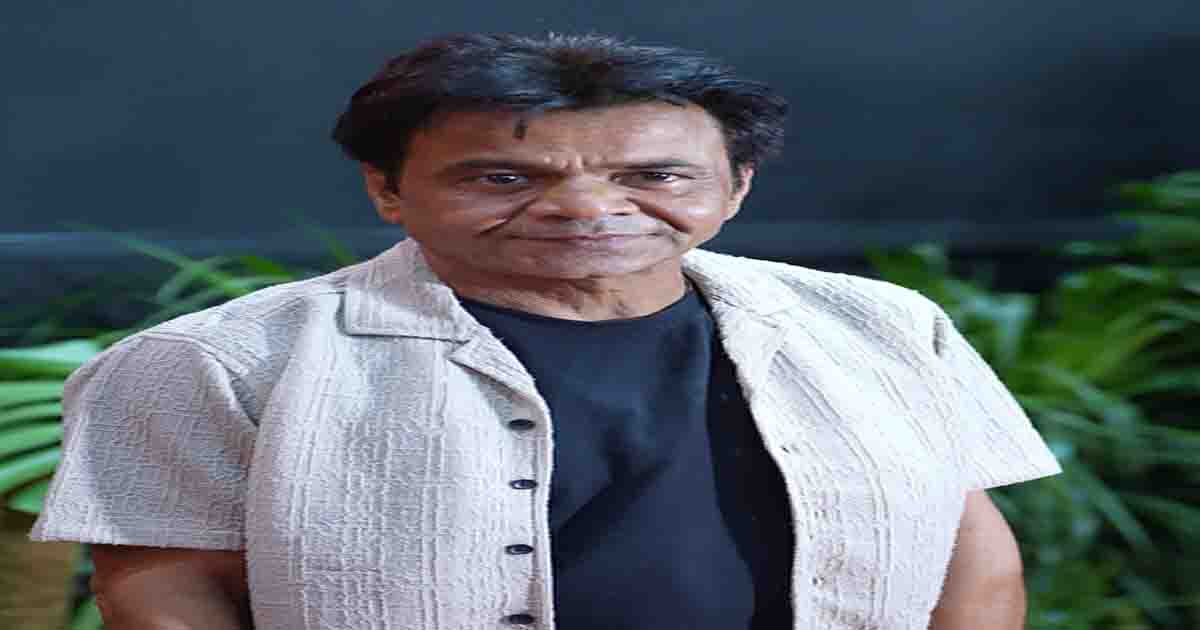
New Delhi, Oct 7: The Supreme Court on Wednesday directed actor and comedian Rajpal Yadav to deposit Rs 1.15 crore with the apex court registry after his counsel submitted that the amount was ready to be deposited immediately, while another Rs 85 lakh would be arranged through a prospective buyer of his ancestral property, as part of arrangements to pay Rs 2 crore in connection with multiple cheque dishonour cases.
A Bench of Chief Justice of India (CJI) Surya Kant and Justices Joymalya Bagchi and V. Mohana was hearing Yadav and his wife Radha Yadav’s pleas challenging the Delhi High Court judgment upholding their conviction in seven cheque dishonour cases under the Negotiable Instruments Act.
During the hearing, the CJI Kant-led Bench was informed that Yadav had arranged Rs 1.15 crore through demand drafts, while a prospective buyer of his ancestral property, who was present in court, was willing to pay another Rs 85 lakh as an advance.
Yadav’s counsel told the top court that the buyer was not presently willing to register the sale documents due to Pitru Paksha and wanted to proceed with the registration after the commencement of Navratri.
The counsel further submitted that the buyer was willing to deposit the Rs 85 lakh by way of a demand draft on Monday. However, the Supreme Court questioned the overall value of the transaction, remarking that the liability was substantially higher than Rs 2 crore.
“What will be the total sale consideration? Because the liability is much more than Rs 2 crore,” the CJI Kant-led Bench asked.
The counsel said the property was valued at more than Rs 30 crore and confirmed that the prospective buyer had the capacity to make the proposed payment.
The complainant’s counsel agreed to the proposal and submitted that if Rs 2 crore was paid immediately, Yadav could be granted additional time to pay the remaining amount.
The CJI Kant-led Bench suggested that Rs 1.15 crore be deposited immediately, with the remaining Rs 85 lakh to be transferred on Monday, after which the top court would lay down a schedule for payment of the balance amount.
During the hearing, the Supreme Court expressed displeasure over Yadav’s conduct in complying with its earlier directions and indicated that it was inclined to enhance his three-month imprisonment sentence to two years.
Justice Bagchi observed that the apex court was not satisfied with Yadav’s conduct and said the accommodation being extended to him was aimed at ensuring that the complainant recovered the money.
The top court’s latest order came after it had, on October 5, found that its September 15 direction had not been complied with. On that occasion, the CJI Kant-led Bench had observed that a photocopy of a purported Rs 50 lakh demand draft was produced with a claim that the draft would reach Delhi the following day. The Supreme Court had then granted a final opportunity to Yadav to pay a total of Rs 2 crore and posted the matter for October 7.
On September 15, the apex court had granted Yadav two weeks as a last opportunity to deposit at least Rs 2 crore, after recording that its earlier direction to deposit Rs 5 crore had not been complied with.
The Supreme Court is hearing Yadav and his wife Radha Rajpal Yadav’s petitions challenging the Delhi High Court judgment upholding their conviction in seven cheque dishonour cases under the Negotiable Instruments Act.
The Delhi High Court had on July 10 upheld Yadav’s conviction while reducing his sentence from six months to three months’ simple imprisonment in each of the seven cases. It had also reduced the fine from Rs 1.60 crore to Rs 1.05 crore in each case, with the substantive sentences directed to run concurrently.
The High Court had taken into account payments already made by Yadav to the complainant, M/s Murli Projects Pvt Ltd., during the pendency of the proceedings. Yadav and his wife have challenged the judgment before the Supreme Court, contending that a subsequent consent agreement between the parties was not properly considered by the courts below.
The petitioners have relied on the Supreme Court’s judgment in M/s Gimpex Private Limited vs Manoj Goel, arguing that the subsequent agreement between the parties ought to have brought an end to the original complaint proceedings.

Let them file thousands of FIRs, who’s bothered about it: K.C. Venugopal

Delhi HC directs govt to decide in 6 months on SOP for body cameras for police, RAF

Cheque bounce cases: Rajpal Yadav offers Rs 2 crore payment; SC expresses displeasure over conduct

Fan murder case: B’luru court issues notices to YouTube, Facebook, Instagram, X

Gujarat woman tied to tree, gang-raped under ‘purification’ guise; nine arrested

Gift to President Putin part of PM Modi bid to globally display India’s heritage

PM Modi’s warm camaraderie with Putin, Xi on full display at BRICS Summit

Corporators of all parties in trouble! Corporators of all major parties including Shiv Sena (UBT), BJP and Congress are facing legal challenges.

Complaint against Netflix & Mukesh Chhabra for inappropriate language on ‘India’s Got Latent 2’

Maha Congress stages agitation against Gyanesh Kumar
-

 Crime4 years ago
Class 10 student jumps to death in Jaipur
-

 Maharashtra2 years ago
Mumbai Local Train Update: Central Railway’s New Timetable Comes Into Effect; Check Full List Of Revised Timings & Stations
-

 Maharashtra2 years ago
Mumbai To Go Toll-Free Tonight! Maharashtra Govt Announces Complete Toll Waiver For Light Motor Vehicles At All 5 Entry Points Of City
-

 Maharashtra2 years ago
False photo of Imtiaz Jaleel’s rally, exposing the fooling conspiracy
-

 National News2 years ago
Ministry of Railways rolls out Special Drive 4.0 with focus on digitisation, cleanliness, inclusiveness and grievance redressal
-

 Maharashtra2 years ago
Maharashtra Elections 2024: Mumbai Metro & BEST Services Extended Till Midnight On Voting Day
-

 National News2 years ago
J&K: 4 Jawans Killed, 28 Injured After Bus Carrying BSF Personnel For Poll Duty Falls Into Gorge In Budgam; Terrifying Visuals Surface
-

 Crime2 years ago
Baba Siddique Murder: Mumbai Police Unable To Get Lawrence Bishnoi Custody Due To Home Ministry Order, Says Report