
International News
Israel strikes southern Lebanon after Hezbollah drone attack

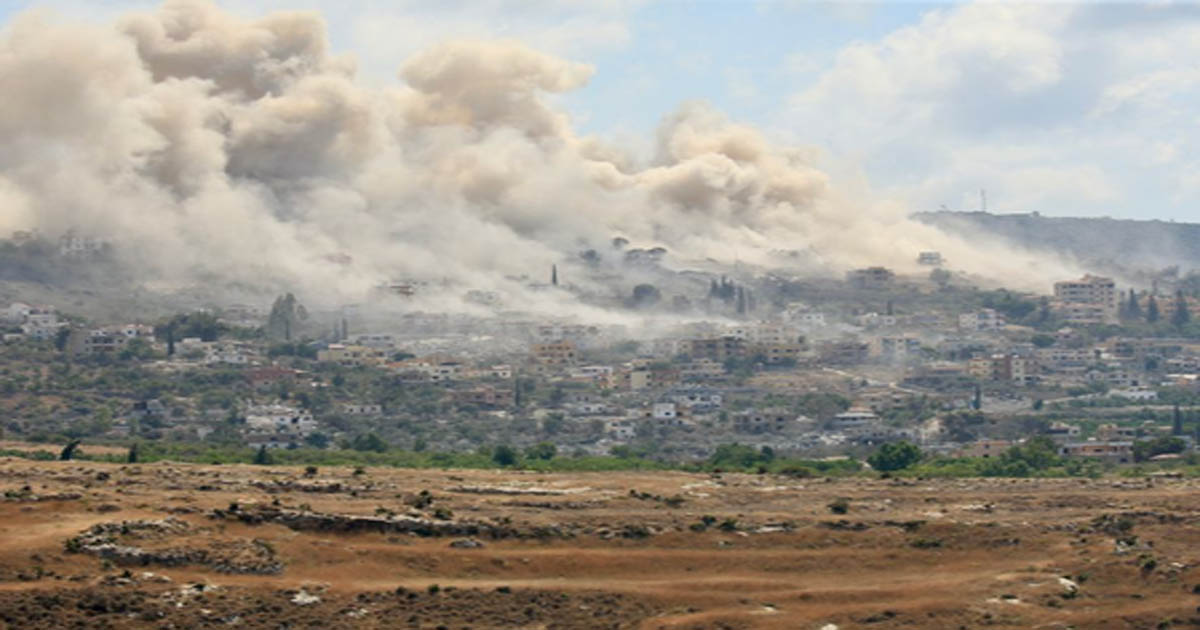
Jerusalem, Sep 2: Israel struck southern Lebanon on Wednesday after Hezbollah launched two explosive drones at Israeli troops, in the latest test of the June ceasefire.
Lebanon’s National News Agency reported Israeli shelling and airstrikes on Nabatieh al-Fawqa, Arab Salim and the Ali al-Taher Ridge, as well as machine-gun fire towards Zawtar al-Sharqiyah.
The Israeli military said in a statement that Hezbollah launched the drones overnight towards its troops in the Ali al-Taher Ridge. The Israeli army shot down one drone with no casualties immediately reported, the statement said, Xinhua news agency reported.
The Israeli military said it had targetted Hezbollah infrastructure in the Nabatieh area and sites it said were used to plan and direct attacks against Israeli troops.
Israeli attacks have killed 4,353 people in Lebanon in the latest round of fighting that began in March, according to a report issued by the Lebanese Emergency Operations Center of the Ministry of Public Health on Tuesday.
A US-brokered ceasefire in June reduced fighting between Israel and Hezbollah, but Israeli strikes in Lebanon have continued. Israeli troops also remain in the territory seized during the latest war.
Israeli military operations continue across southern Lebanon with airstrikes, ground incursions, artillery bombardments, and demolition work, according to Lebanon’s National News Agency (NNA).
On Sunday, Israeli warplanes struck an area between Zawtar al-Sharqiyah and Mayfadoun at around 7 pm, and later another area between Zawtar and Arnoun, while Israeli forces carried out large explosions in Arnoun al-Shaqif and on the outskirts of Yahmar al-Shaqif, NNA said.
It added that Israeli forces conducted a machine-gun sweep from Haddatha toward the outskirts of Aita al-Jabal, while a drone hit the outskirts of Nabatieh al-Fawqa.
In response to the escalating situation, Lebanese Prime Minister Nawaf Salam vowed Sunday that residents displaced from southern Lebanon would return “safely and with dignity.”
Salam said in a statement that the south should not remain an open arena for wars and conflicts decided outside Lebanon, and the state must have sole authority over decisions of war and peace in Lebanon.

General
Venezuelan national arrested near White House with three firearms; says voices told him ‘to kill Trump’

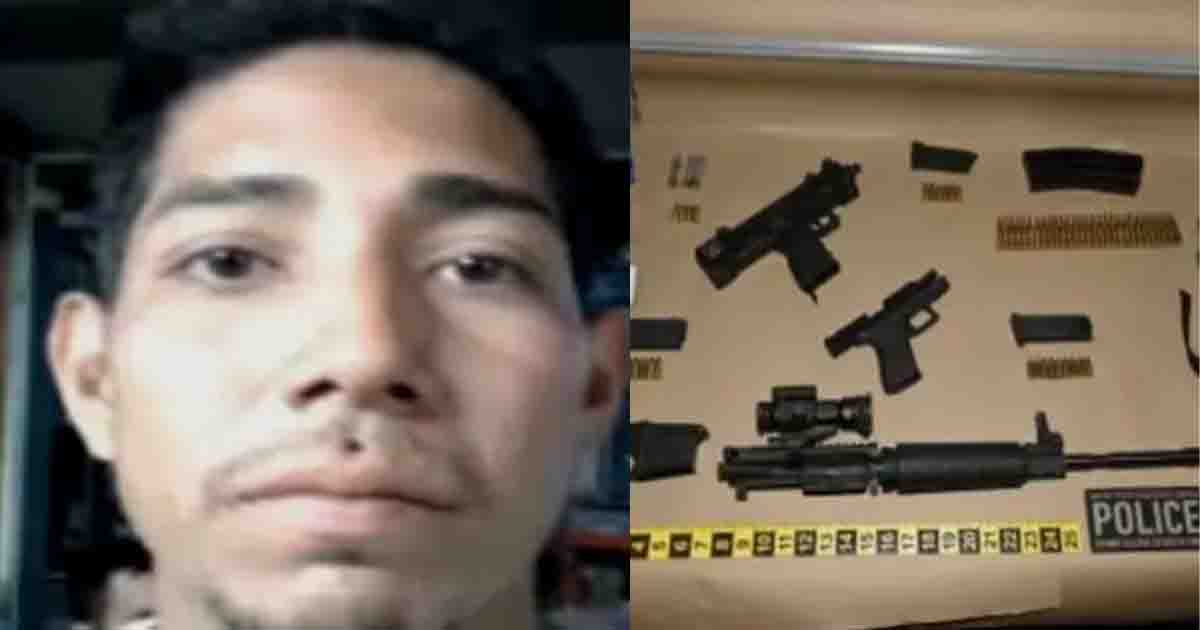
Washington : A 30-year-old Venezuelan national was arrested near the White House after US Secret Service agents discovered three firearms and ammunition inside a stolen vehicle, with the suspect allegedly telling authorities that voices in his head had instructed him to kill President Donald Trump. The arrest took place shortly before midnight on Thursday when a US Secret Service officer, conducting a routine patrol near the White House, spotted a suspicious blue Ford F-150 pickup truck parked on Constitution Avenue. According to a criminal complaint filed in the DC Superior Court, the officer approached the vehicle and asked the man inside whether he was safe and whether he was carrying any weapons.
The suspect, identified as Ronny Yordrix Guanipa Chrinos, reportedly nodded in response to the question about weapons and made a finger-gun gesture. He subsequently stepped out of the vehicle and communicated with investigators using Google Translate. During questioning, Guanipa Chrinos reportedly told officers that he had a gun because someone had attempted to kill him with it and that he had taken it away from that person. He also directed investigators towards a brown bag inside the vehicle. A subsequent search of the stolen pickup truck uncovered an AR-15 rifle, two handguns and ammunition. According to DHS, the suspect allegedly told officers that voices had instructed him to kill President Trump. He appeared before the DC Superior Court on Friday and remains in custody without bond, according to online court records.
DHS identified Guanipa-Chrinos as an undocumented immigrant from Venezuela who entered the United States through Texas in March 2024. US Immigration and Customs Enforcement (ICE) has also lodged an immigration detainer against him. The incident has once again drawn attention to security concerns surrounding the US President and the White House, which remains under heightened security arrangements. Earlier, in April this year, US authorities charged the suspected gunman in the White House Correspondents’ Dinner shooting with attempting to assassinate President Trump, as officials detailed a fast-moving investigation that they said prevented a “massive attack” from unfolding. Acting Attorney General Todd Blanche said that “that horrible act was stopped because of the courage and professionalism of law enforcement”, adding that “the President and all the protectees and participants at the dinner were safe”. The suspect, identified in court documents as Cole Tomas Allen, faced three federal counts: attempted assassination of the President, interstate transportation of a firearm to commit a felony, and discharge of a firearm during a crime of violence.

Riyadh : Union Minister for Parliamentary and Minority Affairs Kiren Rijiju visited the iconic Al Rahmah Mosque in Jeddah, widely known as the Floating Mosque, a historic landmark reflecting Saudi Arabia’s rich Islamic heritage and architectural grandeur. Sharing a glimpse of his visit on Saturday, in a post on X, Rijiju said, “Visited the historic Al Rahmah Mosque in Jeddah, popularly known as the Floating Mosque, situated along the beautiful Red Sea coastline. A remarkable place of spiritual significance and architectural beauty, reflecting the rich Islamic heritage of Saudi Arabia.” Rijiju arrived in Jeddah on Friday for the 6th Haj Conference and Exhibition 2027, where he will participate in signing the bilateral Haj agreement with Saudi Arabia and review preparations to ensure a safe and comfortable Haj journey for Indian pilgrims next year. “Landed in Jeddah, Kingdom of Saudi Arabia, to attend the 6th Haj Conference & Exhibition 2027, participate in the signing of the Bilateral Haj Agreement with the KSA & review preparations for Haj 2027.Was warmly received at the airport by Shri Fahad Suri, Consul General of India in Jeddah.
Looking forward to productive engagements focused on ensuring a smooth, safe & comfortable Haj journey for all Indian pilgrims,” Rijiju posted on X. Last month, India’s Ambassador to Saudi Arabia, Vipul, met Saudi Arabia’s Vice Minister of Hajj and Umrah, Abdulfattah bin Suleiman Al-Mashat, and reviewed preparations for Haj 2027, besides inspecting the Haj Terminal at Jeddah Airport and the Haramain High Speed Railway Station, the Consulate General of India in Jeddah said. “Ambassador of India to Saudi Arabia H.E. Shri Vipul, accompanied by Consul General Shri Fahad Suri and Consul (Haj) Ms. Sadaf Choudhary, met H.E. Dr. Abdulfattah bin Suleiman Al-Mashat, Vice Minister of Hajj and Umrah of the Kingdom of Saudi Arabia, and other senior officials of the Saudi Hajj and Umrah Ministry, on 04 October 2026,” the Consulate posted on X. “The two sides comprehensively reviewed preparations for Haj 2027 and discussed continued close coordination between the Indian Haj Mission and the Ministry of Hajj and Umrah, Saudi Arabia, for the forthcoming Haj 2027,” it added.
As preparations for Haj 2027 gather momentum, the Ambassador, accompanied by the Consul General and the Consul (Haj), also visited the Haj Terminal at Jeddah Airport and the Haramain High Speed Railway Station, the Consulate said in a separate post. “With over 100,000 Indian pilgrims travelling through the Haj Committee of India route, the Haj Terminal and Haramain train services constitute critical operational nodes in their arrival and onward movement during Haj,” it stated. “During the visit, the Ambassador reviewed the facilities, infrastructure and operational arrangements at both locations and interacted with concerned officials on preparations for the forthcoming Haj,” the Consulate added.
International News
700 arrested, Shahzad Bhatti’s terror network seeks comeback with religious pitch
New Delhi : Indian security agencies arrested 700 individuals linked to proscribed terrorist Shahzad Bhatti, stalling major subversion plans including surveillance installations at crowded locations, targeted attacks, and cross-border drug smuggling, officials have said.
Dismantling the Bhatti network was among the most challenging operations undertaken by Indian investigative agencies in recent times.
Despite breaking the primary operational grid, intelligence authorities warned that the terror module is actively attempting a comeback by changing its recruitment strategy.
So far, around 700 people have been arrested on suspicion of working for Bhatti.
The operation carried out by security agencies thwarted several plans hatched by the Bhatti module. These included installing CCTV cameras at sensitive and crowded locations, carrying out targeted killings, and trafficking in drugs and counterfeit currency.
An official said that security agencies had largely dismantled the network, but the cat-and-mouse game with its remaining operatives was continuing.
“To date, over 100 takedown requests of Instagram profiles linked to this network have been sent to Meta. As the profiles are being taken down, over 50 new ones appear. This is, in fact, a big challenge for the agencies,” the official said.
An Intelligence Bureau official said that in this second push that is being made by the Bhatti network, a lot of emphasis is being given on defending religious honour. When the network was first set up, the recruitment was not religious-centric. Youth were recruited from across religions, and money played a very big role.
A youth could be picked up and asked to undertake a task for as little as Rs 5,000. These youth were also shown pictures of Bhatti and his associates posing in front of expensive cars and luxury homes. The handlers sold a dream to the youth, and this worked massively.
In reality, it was just bait, and the Bhatti network never had any plans to fulfil its promises regarding a fancy lifestyle that it made to the youth at the time of recruitment, the official said.
Intelligence agencies tracking Bhatti said that after the first crackdown that led to hundreds of arrests, Bhatti had been shifted to Pakistan. This decision was taken after the Indian government declared him a proscribed terrorist under the provisions of the Unlawful Activities Prevention Act (UAPA).
However, he has travelled to Dubai and Portugal in recent months and remains actively involved in overseeing the module and devising fresh strategies for operations in India.
Another official said Bhatti was now seeking to combine religion, money and lifestyle incentives in his next recruitment drive, with a greater emphasis on religious identity.
“This is a deliberate ploy. By invoking religious sentiments, the amount of money offered to recruits would be relatively small. The idea is to exploit the religious sentiments of young people during the recruitment process,” the official said.
Those youth who would be recruited for paltry amounts, which would be as low as Rs 3,000 to Rs 5,000, are being promised better lives in Dubai, Pakistan or Nepal.
Investigations show that the Bhatti network has prepared fake passports for several youths so that they could escape from India after a big hit-job is carried out, the official added.
“While the religious push would be much higher this time, the overall strategy remains the same — pay less and recruit more. Bhatti does not want to build just a network in India, but wants to create an army of youths who would fight for a religious cause,” officials say.
The module’s operational brief is no longer limited to installing CCTV cameras, trafficking in drugs and circulating counterfeit currency. The network is seeking to expand its reach and intensify its activities. Police have linked the Bhatti network to attacks targeting police personnel in Punjab, the blast outside the Border Security Force (BSF) headquarters in Jalandhar, and a petrol bomb attack on the Rashtriya Swayamsevak Sangh (RSS) headquarters in Jharkhand.
The operations that the network is planning are on similar lines, but the scale would be much larger. Platforms such as Instagram would continue to be used for radicalisation and putting out hate messages against India. Planning and execution of high-intensity attacks would be done extensively on encrypted messaging platforms such as Telegram, an official said.

Lawrence Bishnoi gang member Hari Boxer detained in US; process to bring him to India underway

Nitin Nabin’s remarks on Rahul Gandhi, Akhilesh Yadav trigger political slugfest; BJP, Oppn trade charges

Shruti Haasan tells dad Kamal Haasan on his birthday: You are just the rarest of the rare Appa!

Alia Bhatt, Ranbir Kapoor’s ‘little unicorn ’ Raha turns four, actress shares fun pics from her Bluey-themed party

Man steals gold chain from Mumbai jewellery shop posing as customer, arrested in Delhi; stolen item recovered.

Rahul, Cong ecosystem want to force regime change: BJP after Neha Bora praises B’desh Gen-Z protest

BJP pays tribute to ex-President Abdul Kalam, recalls his enduring influence on generations of India’s youth

Attack on democratic rights: INDIA Bloc leaders on detentions of anti-ECI protestors

Congress trying to protect 3 crore Bangladeshi infiltrators in voter list: HM Shah

Online betting: ED conducts searches at 20 premises in Mumbai, Pune, Hyderabad
-

 Crime4 years ago
Class 10 student jumps to death in Jaipur
-

 Maharashtra2 years ago
Mumbai Local Train Update: Central Railway’s New Timetable Comes Into Effect; Check Full List Of Revised Timings & Stations
-

 Maharashtra2 years ago
Mumbai To Go Toll-Free Tonight! Maharashtra Govt Announces Complete Toll Waiver For Light Motor Vehicles At All 5 Entry Points Of City
-

 Maharashtra2 years ago
False photo of Imtiaz Jaleel’s rally, exposing the fooling conspiracy
-

 National News2 years ago
Ministry of Railways rolls out Special Drive 4.0 with focus on digitisation, cleanliness, inclusiveness and grievance redressal
-

 Maharashtra2 years ago
Maharashtra Elections 2024: Mumbai Metro & BEST Services Extended Till Midnight On Voting Day
-

 National News2 years ago
J&K: 4 Jawans Killed, 28 Injured After Bus Carrying BSF Personnel For Poll Duty Falls Into Gorge In Budgam; Terrifying Visuals Surface
-

 Crime2 years ago
Baba Siddique Murder: Mumbai Police Unable To Get Lawrence Bishnoi Custody Due To Home Ministry Order, Says Report