
International News
NATO dialogue with Sweden, Finland ‘meaningless’: Turkey

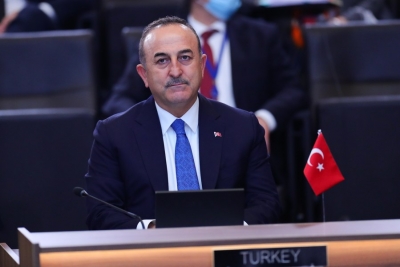
It is “meaningless” to hold a trilateral meeting with Sweden and Finland to discuss their NATO accession process after recent protests in Stockholm, Turkish Foreign Minister Mevlut Cavusoglu has said.
“In this environment, a trilateral meeting is meaningless. It has been postponed because the current environment will overshadow this,” Cavusoglu explained at a joint press conference with visiting Serbia’s First Deputy Prime Minister and Foreign Minister Ivica Dacic on Thursday, Xinhua news agency reported.
“Sweden has to decide. Does it want to join NATO or not? One of the aims of these incidents is to prevent Sweden from joining NATO,” the Turkish minister said, referring to recent protests in the Nordic country, which involves burning of Quran and demonstrations by the supporters of the Kurdistan Workers’ Party (PKK) outlawed by Turkey.
He warned the incident was a “racist attack that has nothing to do with freedom of thought”.
Turkey has postponed a trilateral meeting with Sweden and Finland on their NATO bids slated for February following the burning of a copy of the Quran in Stockholm.
Sweden and Finland submitted their formal requests to join NATO in May 2022, which were initially objected by Turkey, a NATO member, citing their support for anti-Turkish Kurdish organisations and political dissidents.
A month later, Turkey, Sweden and Finland reached a memorandum of understanding (MoU) ahead of the NATO summit held in Madrid.
Under the MoU, Ankara agreed to lift its veto on the NATO bids by Finland and Sweden, which in return pledged to support Turkey’s fight against terrorism and address its “pending deportation or extradition requests of terror suspects expeditiously and thoroughly.”
The Turkish parliament has not ratified the Nordic countries’ NATO bids so far, citing that they have yet to meet Turkey’s requests.

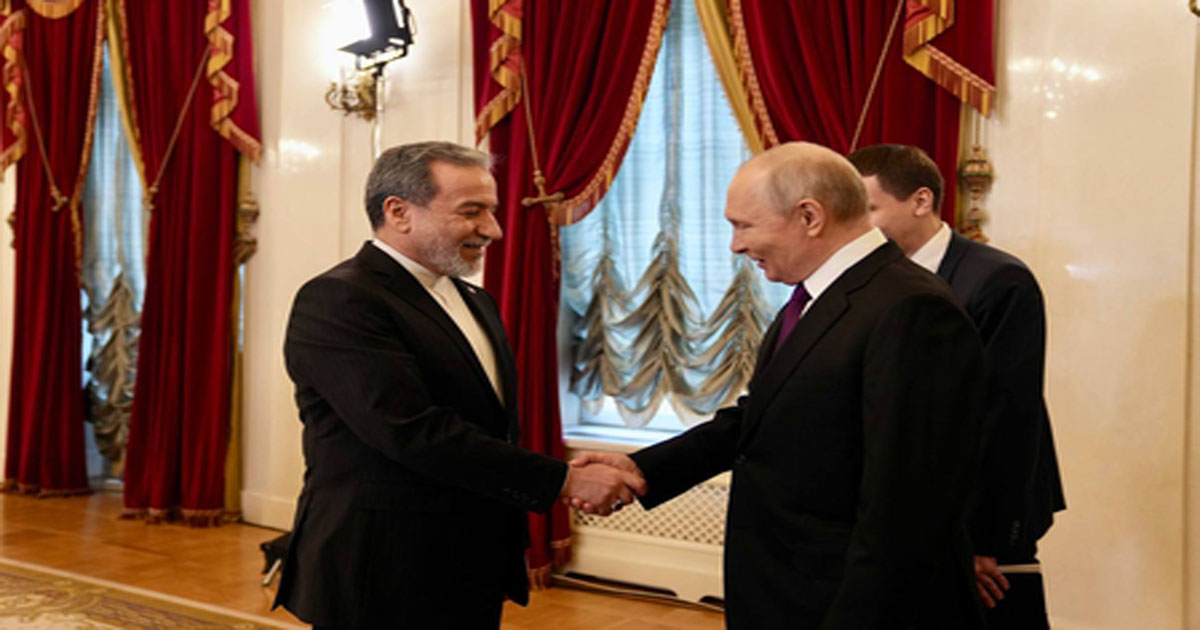
Saint Petersburg, April 28: Iranian Foreign Minister Abbas Araghchi on Tuesday said that Tehran is grateful for Russia’s solidarity and support for diplomacy as the war with the United States continues to escalate.
Araghchi on Monday called on Russian President Vladimir Putin in Saint Petersburg as the Kremlin reiterated its support for bringing peace to West Asia. He also held talks with his Russian counterpart, Sergey Lavrov.
Taking to X, Araghchi said, “Pleased to engage with Russia at the highest level as the region is in major flux. Recent events have evidenced the depth and strength of our strategic partnership. As our relationship continues to grow, we are grateful for solidarity and welcome Russia’s support for diplomacy.”
Putin on Monday reiterated Russia’s support for peace in Iran.
“For our part, we will do everything that serves your interests, the interests of all the peoples of the region, to ensure that this peace is achieved as quickly as possible. You know our position well,” Russia’s Tass news agency quoted Putin as saying during the meeting with the visiting Iranian minister.
Putin stated that the people of Iran are fighting “courageously and heroically” for their sovereignty. He expressed hope that the people of Iran will overcome this “difficult period of trials and peace will come”. He also expressed Moscow’s readiness to bolster its ties with Tehran.
During the meeting, Araghchi conveyed the wishes of Iran’s Supreme Leader, Mojtaba Khamenei and President Masoud Pezeshkian to Putin. He mentioned that people of Iran, through their courage, were able to resist “US aggression”.
He expressed gratitude to Putin and Russia for their support of Iran and stated that the ties between Iran and Russia share a “strategic partnership at the highest level” and will develop “regardless of everything that happens,” Tass reported.
Earlier in the day, Araghchi arrived in Russia’s St Petersburg to hold talks with President Putin. Upon arrival in St Petersburg, Araghchi was received by Russian officials and Iran’s Ambassador to Russia, Kazem Jalali, Iran’s Islamic Republic News Agency (IRNA) reported.
Speaking to IRNA, Jalali said Araghchi’s visit is part of “close consultations” between Iran and Russia as the two nations have similar approaches to regional and international issues. He further said that the Presidents of Iran and Russia have held three phone calls since the conflict began on February 28.
Araghchi arrived in Russia after concluding his visit to Oman amid the ongoing tensions in West Asia.
Iran and the US reached a two-week ceasefire starting on April 8. Later, the two nations held the first round of talks on April 11-12 aimed at ending the conflict. However, the talks collapsed after 21 hours of negotiations.
International News
Iran’s FM Araghchi arrives in St Petersburg to hold talks with Russian President Putin

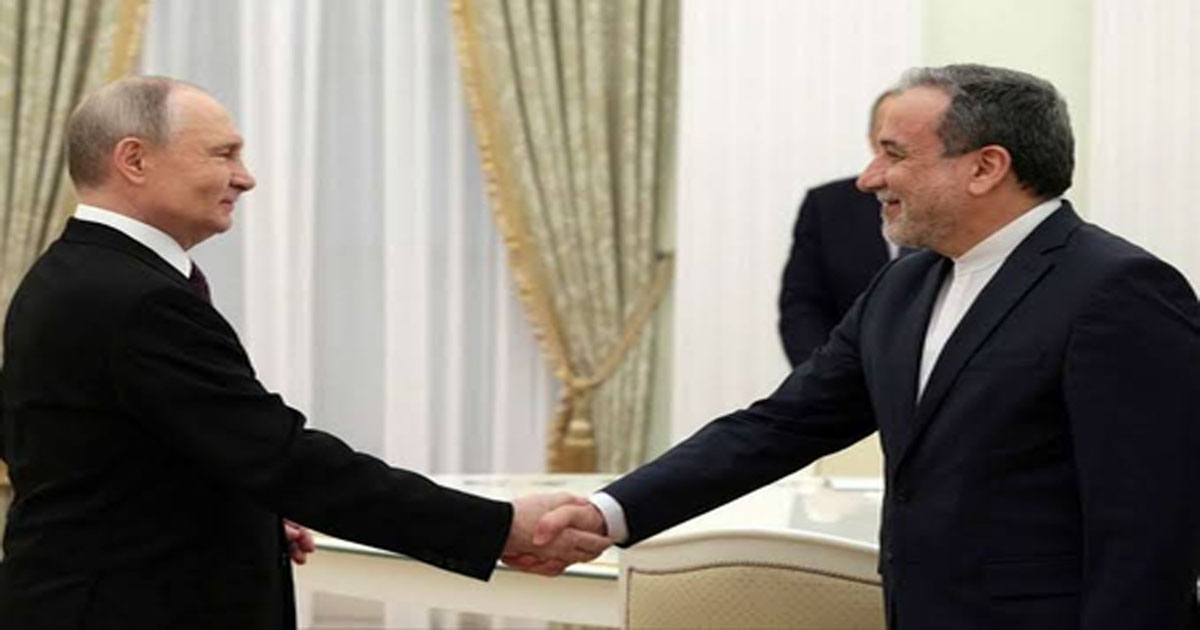
Moscow, April 27: Iran’s Foreign Minister Abbas Araghchi arrived in Russia’s St Petersburg on Monday to hold talks with President Vladimir Putin, local media reported on Monday.
Upon arrival in St Petersburg, Araghchi was received by Russian officials and Iran’s Ambassador to Russia, Kazem Jalali. According to Jalali, Araghchi and President Putin are set to hold talks in St Petersburg on Monday, Iran’s Islamic Republic News Agency (IRNA) reported.
Speaking to IRNA, Jalali said discussions between Araghchi and President Putin will focus on developments after the joint strikes by the US and Israel against Iran.
Jalali said Araghchi’s visit is part of “close consultations” between Iran and Russia as the two nations have similar approaches to regional and international issues. He further said that the Presidents of Iran and Russia have held three phone calls since the conflict began on February 28.
Araghchi arrived in Russia after concluding his visit to Oman amid the ongoing tensions in West Asia.
Earlier, the Iranian FM held a meeting with Oman’s Sultan Haitham bin Tariq, discussing bilateral ties, regional developments, and ongoing diplomatic efforts to resolve the regional crisis.
During the meeting, Araghchi briefed Oman’s Sultan about Iran’s stance on the latest developments of the conflict. He expressed appreciation for Oman’s support for dialogue and promoting efforts aimed at enhancing security and stability in the region, especially considering the current regional challenges, Iran’s Press TV reported.
Sultan Haitham highlighted Oman’s stance on advancing mediation efforts that would increase the chances of reaching sustainable political solutions and mitigate the impact of crises on the people of the region. He stressed the importance of using dialogue and diplomacy to resolve issues.
In a statement on X, Iran’s Foreign Ministry spokesperson Esmaeil Baqaei stated: “We are in Muscat for an official visit to the Sultanate of Oman — FM Araghchi’s first to the region following the recent US-Israeli aggression, which has impacted the broader region. Iran continues to place great importance on its relations with Persian Gulf states and remains committed to strengthening mutual trust and constructive cooperation. The Oman–Iran relationship stands as a testament to Iran’s genuine pursuance of respectful and mutually beneficial relations with its neighbours in the South.”
The tensions in West Asia escalated after the US and Israel carried out a joint military operation against Iran on February 28. The joint military strikes killed Supreme Leader, Ayatollah Ali Khamenei, triggering a large-scale military operation by Iran against Israel and the US bases in the Gulf nations. The conflict also led to the closure of the Strait of Hormuz, which triggered a global energy crisis.
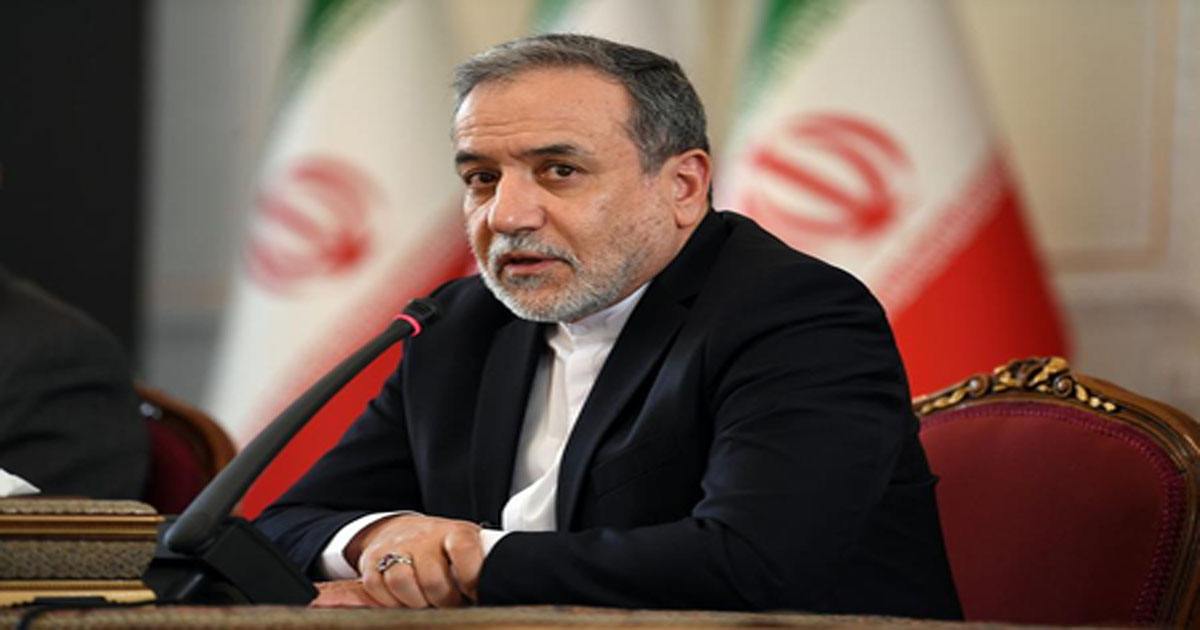
Washington, April 27: Iran has presented the United States with a new proposal to reopen the Strait of Hormuz and end the war, while postponing nuclear negotiations to a later stage, according to a report, which cited a US official and two sources familiar with the matter.
According to US media outlet Axios, the proposal aims to break the current stalemate in the negotiations and bypass the internal disagreements within the Iranian leadership over the scope of nuclear concessions it is willing to make.
“But lifting the blockade and ending the war would remove President Trump’s leverage in any future talks to remove Iran’s stockpile of enriched uranium and convince Tehran to suspend enrichment — two primary war objectives for Trump,” the report said.
Meanwhile, citing three US officials, the report further noted that the US President is expected to hold a Situation Room meeting on the conflict on Monday (local time) with his top national security and foreign policy team.
The sources told Axios that Trump’s team would discuss the stalemate in the talks and potential next steps.
In an interview with Fox News on Sunday (local time), Trump signalled that he wants to continue the naval blockade to halt Iran’s oil exports, with an aim that it will get Tehran to give up in the coming times.
“When you have vast amounts of oil pouring through your system … if for any reason this line is closed because you can’t put it into containers or ships … what happens is that line explodes from within. … They say they only have about three days before that happens,” Trump was quoted as saying in the interview with Fox News by Axios.
This comes as tensions between the US and Iran deepened after the Islamabad talks ended without progress.

Fire Breaks Out Near Hancock Bridge In Mumbai Mazgaon; 7–8 Hutments Affected

Maharashtra Shock: 22-Year-Old Arrested For Exploiting & Blackmailing Multiple Women In Kolhapur; Love Jihad Angle Suspected

Murderous attack or lone wolf attack on two security guards in Mira Road, Nayanagar, Kirit Somaiya accuses Nayanagar Jihad

Welcome Russia’s support for diplomacy: Iranian FM after meeting Putin, Lavrov

Big Win For India! Dawood Ibrahim’s Close Aide Salim Dola Deported To Delhi After Istanbul Arrest; Mumbai Police Likely To Get Custody

Mumbai Local Train Tragedy: Fatal Accident Reported At Bhayandar Station’s Platform No 1 – Disturbing Video Surfaces

Iran-Israel Conflict Hits India’s Real Estate: Supply Disruptions & Rising Costs Delay Project Possessions

‘Son Falsely Implicated, We Are Well-Educated’: Father Of Accused Tausif Attar Defends Son After Skullcap, Namaz Coercion Allegations Rock TCS Nashik

Bhiwandi Police Busts Vehicle Theft Gang, Arrests Three, Recovers 58 Stolen Motorcycles Worth ₹10.60 Lakh

Mumbai: Pan-India Hawala Trail Exposes Chilling Conspiracy Behind Rohit Shetty House Firing Case
-

 Crime4 years ago
Class 10 student jumps to death in Jaipur
-

 Maharashtra2 years ago
Mumbai Local Train Update: Central Railway’s New Timetable Comes Into Effect; Check Full List Of Revised Timings & Stations
-

 Maharashtra2 years ago
Mumbai To Go Toll-Free Tonight! Maharashtra Govt Announces Complete Toll Waiver For Light Motor Vehicles At All 5 Entry Points Of City
-

 Maharashtra2 years ago
False photo of Imtiaz Jaleel’s rally, exposing the fooling conspiracy
-

 National News2 years ago
Ministry of Railways rolls out Special Drive 4.0 with focus on digitisation, cleanliness, inclusiveness and grievance redressal
-

 Maharashtra1 year ago
Maharashtra Elections 2024: Mumbai Metro & BEST Services Extended Till Midnight On Voting Day
-

 National News2 years ago
J&K: 4 Jawans Killed, 28 Injured After Bus Carrying BSF Personnel For Poll Duty Falls Into Gorge In Budgam; Terrifying Visuals Surface
-

 Crime2 years ago
Baba Siddique Murder: Mumbai Police Unable To Get Lawrence Bishnoi Custody Due To Home Ministry Order, Says Report