
disaster
Myanmar hit by 112 aftershocks following devastating earthquake

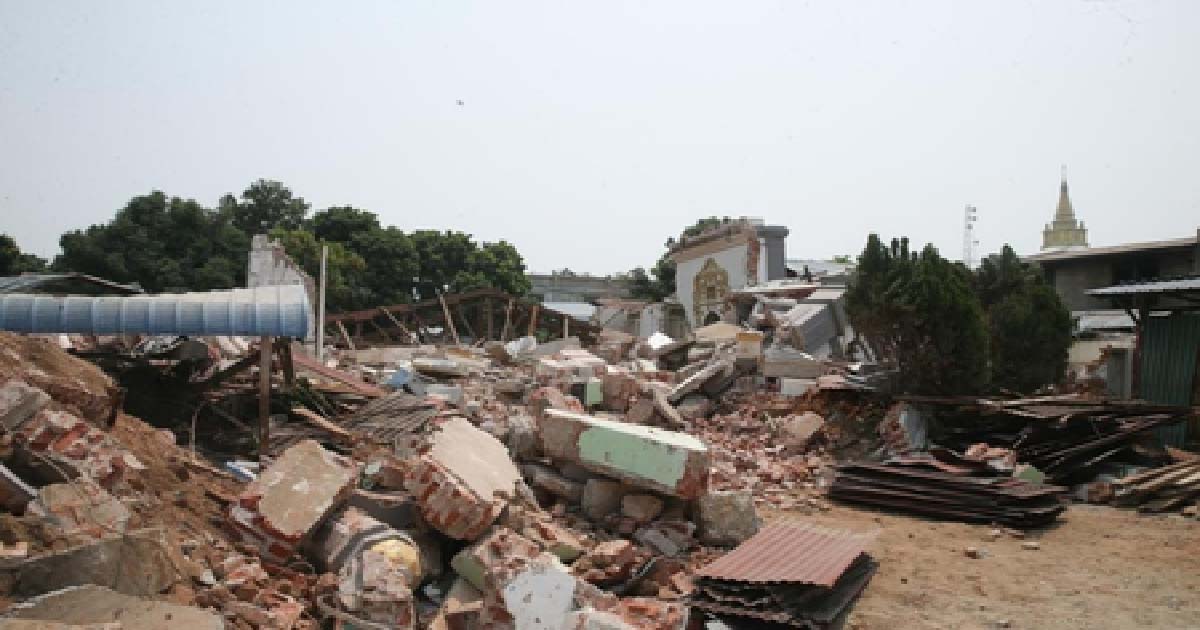
Yangon, April 10: As of Thursday, Myanmar has experienced 112 aftershocks ranging from magnitudes of 2.8 to 7.5, according to the country’s Department of Meteorology and Hydrology.
The aftershocks followed a devastating 7.9-magnitude earthquake that struck the country on March 28.
The death toll from Myanmar’s earthquake reached 3,649 as of 6 pm local time on Wednesday, the Information Team of Myanmar’s State Administration Council reported.
In addition, 5,018 people were injured and 145 remained missing due to the earthquake, the report said.
The massive earthquake has also damaged 6,730 mobile communication stations, the state-run daily The Mirror reported on Wednesday.
As of April 6, 5,999 stations have been restored, while 731 stations are under repair, it said.
Additionally, 15 Myanmar post offices temporarily suspended operations due to the earthquake but resumed services on March 31, it added.
Meanwhile, the state-run Global New Light of Myanmar reported on Thursday that the 2025 Myanmar New Year’s Ata Thingyan Festival will be celebrated peacefully without music or dance.
This year marks the first celebration of Thingyan since its inclusion in the United Nations Educational, Scientific and Cultural Organization (UNESCO) Representative List of Intangible Cultural Heritage of Humanity, Xinhua news agency reported quoting the report.
According to the Yangon City Development Committee’s Engineering Department, construction of the water festival pavilion and the Thingyan Walk being built in front of Yangon City Hall has been suspended and cancelled, it said.
The cancellations follow the powerful earthquake that struck Myanmar on March 28, resulting in numerous casualties and injuries, as well as significant damage to buildings, it added.
This year, the Ata Thingyan Festival will run from April 13 to 16. The traditional Myanmar New Year’s Day will fall on April 17.


Kathmandu, Oct 11: At least four hydropower projects in the Budhi Gandaki River basin in western Gorkha district have been affected by massive floods that struck early Sunday morning, the Independent Power Producers’ Association, Nepal (IPPAN) said.
The latest floods, reminiscent of the devastating floods in the Bhote Koshi and Trishuli rivers on August 26, swept away parts of several settlements and damaged bridges, roads and infrastructure at hydropower project sites in the Budhi Gandaki River basin and its tributaries.
In a statement, IPPAN, an association of private-sector power developers in Nepal, said four hydropower projects along the Budhi Gandaki River and its tributary streams, with a combined installed capacity of 412.09 MW, had been affected.
According to IPPAN, the main camp area of the 341-MW Budhi Gandaki Hydropower Project was swept away by the floodwaters. Some construction equipment at the project, which is under construction, was also washed away.
Some houses in the camp area of the 24.5-MW Dobhan Khola Hydropower Project were damaged, while a Bailey bridge near the project site was swept away, IPPAN said.
The floods also damaged a Bailey bridge supporting construction work at the 30.59-MW Yaru Khola Hydropower Project, while construction materials and equipment were washed away.
An access road and the bridge connecting the project site of the 16-MW Machha Khola Hydropower Project were also damaged, according to IPPAN.
At a time when Nepal aspires to become a major hydropower exporter in South Asia, the latest disaster highlights the vulnerability of the country’s clean energy infrastructure to sudden floods, landslides and other climate-related hazards.
The devastating floods in the Bhote Koshi and Trishuli rivers on August 26 caused extensive damage to hydropower projects, solar energy facilities, electricity transmission infrastructure and transport networks. The energy sector, particularly hydropower projects, was among the hardest hit.
The August 2026 floods affected 12 hydropower projects and one solar power project, including 281.1 MW of operational capacity and 395.02 MW under construction, according to the World Bank’s Global Rapid Post-Disaster Damage Estimation (GRADE).
Damage to transmission lines and substations also disrupted the transmission of 149.6 MW of electricity to the national grid, bringing the total affected capacity to approximately 430.7 MW, or 10.6 per cent of Nepal’s total installed hydropower and solar capacity at the end of fiscal year 2025-26, which ended in mid-July, according to the report.
The August disaster claimed 1,455 lives, while 5,285 people remained missing, according to the National Disaster Risk Reduction and Management Authority.
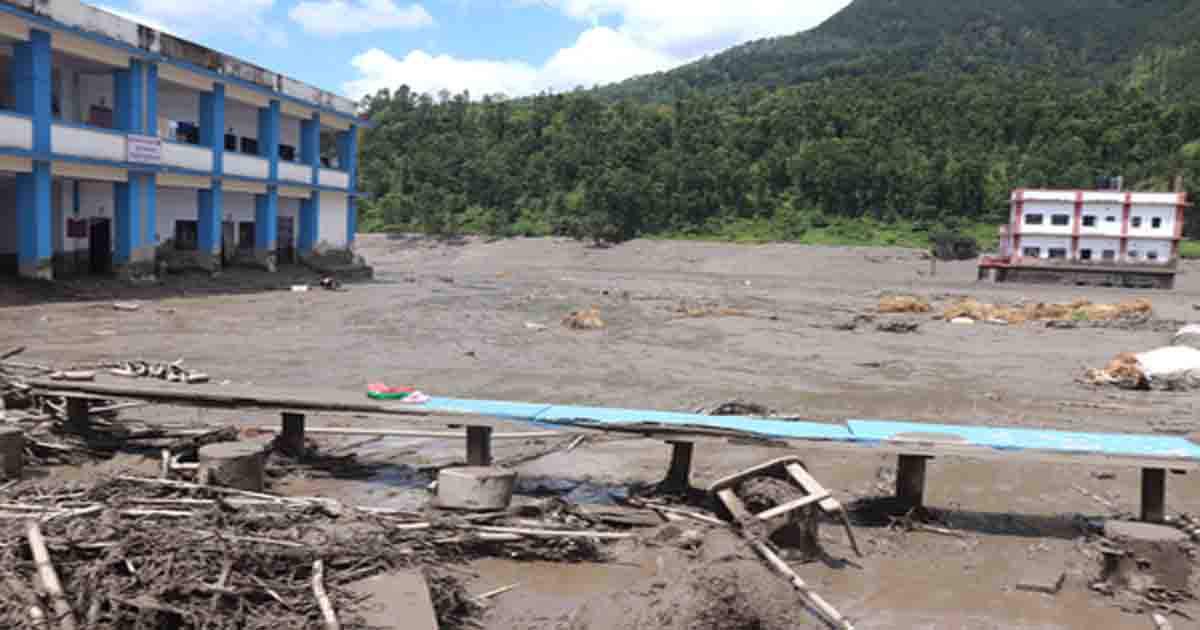
Kathmandu, Oct 6: The devastating August floods in Nepal are expected to have a material negative impact on the country’s economic prospects in the short term, the World Bank said on Tuesday as it lowered its economic growth projection for the Himalayan nation.
The global development lender said Nepal’s economic growth is projected to slow to 3.7 per cent in the current fiscal year 2026-27, which began in mid-July, from the 4.2 per cent projected in April, reflecting disruptions to industry and services.
In its report titled Nepal Development Update: Building Back Differently for the Future, released on Tuesday, the World Bank said the August 2026 floods are expected to affect Nepal’s economy through four primary transmission channels: energy, transportation, trade and tourism.
“Agriculture and banking and insurance are also channels through which the economy would be affected, but with relatively lower potential impact,” it said.
According to the bank’s report, energy, particularly hydropower, is the most critical transmission channel. The floods affected 12 hydropower projects, including seven operational projects with a combined capacity of 256.1 MW and five projects under construction with a combined capacity of 395.02 MW, as well as a 25 MW solar facility.
“Damage to transmission infrastructure disrupted an additional 149.6 MW, bringing total affected generation and transmission capacity to approximately 430.7 MW, equivalent to 10.6 per cent of Nepal’s FY26 installed hydropower and solar capacity,” the bank said.
Transportation and trade are other key transmission channels, given the concentration of Nepal’s international and domestic trade along a limited number of corridors, according to the World Bank.
As many as 1,455 people have been confirmed dead and 5,285 remain missing to date following the disaster, which destroyed communities and infrastructure along the Bhotekoshi and Trishuli river corridors, according to the National Disaster Risk Reduction and Management Authority.
According to the Rapid Disaster Needs Assessment (RDNA) report prepared by a joint technical team of the National Planning Commission and the National Disaster Risk Reduction and Management Authority, the recent floods are estimated to have caused physical damage worth 274.48 billion Nepali rupees (about 1.93 billion US dollars), while overall losses and damages have reached 408.28 billion rupees (about 2.87 billion US dollars).
The preliminary assessment suggests that more than 723 billion rupees will be required for the reconstruction and recovery of affected infrastructure and assets. The Nepali government is now working on a Post-Disaster Needs Assessment involving a more extensive assessment of the damage.
The World Bank said industry is expected to be the main drag on growth, reflecting extensive damage to hydropower, solar energy, electricity transmission and transport infrastructure, which will constrain electricity generation and production and disrupt the movement of goods.
“For instance, it took nearly a year to fully restore generation at the 111 MW Rasuwagadhi Hydropower Project, which was severely damaged by the July 8, 2025, Bhotekoshi (Lhende River) flood,” it said.
The same project has once again been badly affected by the August floods.
“This illustrates the potential for flood-related damage to disrupt electricity supply and impose substantial reconstruction costs,” the global development lender said.
“Hydropower construction in areas not directly affected by the flood is expected to continue, although projects could face higher insurance premiums, financing reassessments, and cost overruns,” it added.
“Services are expected to be affected through disruptions to trade, transport, tourism, and financial activity, while agricultural losses are expected to have limited effects on aggregate output but significant impacts on livelihoods in affected areas,” the bank said in the report.
Tourism is expected to face a potentially prolonged impact, reflecting both physical disruptions and heightened perceptions of travel risks, according to the report.
It said more than 200 hotels and restaurants were damaged across the affected districts, while access to major trekking and pilgrimage destinations—including Langtang, Gosaikunda and the Kailash Mansarovar corridor—has been disrupted.
However, economic activity is expected to gradually recover in fiscal year 2027-28 as reconstruction activity begins to gain momentum and damaged infrastructure and productive capacity are progressively restored, the bank said.
disaster
Nepal floods: 1455 confirmed dead, 5285 still missing as search and rescue operations wrap up

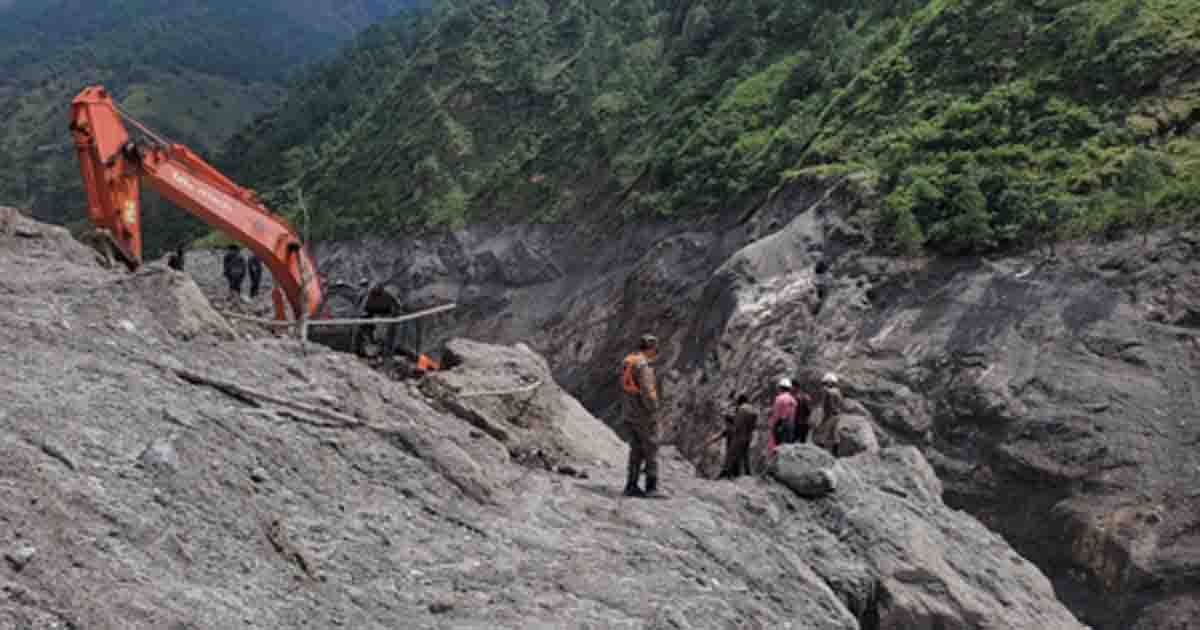
Kathmandu, Oct 5: The Nepali government has decided to call off the search and rescue operations launched following the deadly floods that struck the country on August 26, as hopes of finding survivors have faded, the Prime Minister’s Secretariat said on Monday.
Forty days after floods in the Bhotekoshi and Trishuli rivers devastated communities and infrastructure along the river corridors, the government has now prioritised reconstruction and rehabilitation efforts.
The decision was taken based on recommendations from district security committees, district disaster management committees, the Executive Committee of the National Disaster Risk Reduction and Management Authority, and findings from field inspections, the Prime Minister’s Secretariat said.
A total of 1,455 people have been confirmed dead and 5,285 remain missing following the disaster till date, according to the National Disaster Risk Reduction and Management Authority.
The meeting also decided to recommend a budget of NPR 559.18 billion ($3.62 billion) to the Ministry of Finance for 504 plans and programmes aimed at reconstructing and rehabilitating areas affected by the August 26 disaster and other monsoon-related disasters.
According to the Rapid Disaster Needs Assessment (RDNA) report prepared by a joint technical team of the National Planning Commission and the National Disaster Risk Reduction and Management Authority, the recent floods are estimated to have caused physical damage worth NPR 274.48 billion, while overall losses and damages have reached NPR 408.28 billion.
The preliminary assessment suggests that more than NPR 723 billion will be required for the reconstruction and recovery of affected infrastructure and assets. Now, the Nepali government has been working on a Post-Disaster Needs Assessment with an extensive assessment of damages.
The council directed the National Disaster Risk Reduction and Management Authority to recommend additional budgetary arrangements once details are received for projects whose cost estimates have not yet been determined or which have yet to be prioritised.
Prime Minister Balendra Shah said disaster management efforts had been carried out through coordination among the federal, provincial and local governments, adding that reconstruction and rehabilitation would also proceed through the same mechanism.
The meeting expressed sorrow over the loss of lives and property caused by the Bhotekoshi-Trishuli floods and other monsoon-related disasters. It paid tribute to those who lost their lives and expressed condolences to their bereaved families.
The council also thanked security personnel, elected representatives, civil servants, private-sector organisations, volunteers and media personnel involved in search, rescue, relief and rehabilitation operations, as well as donor countries and development partners that assisted during the crisis.

Illegal firecrackers worth Rs 50 lakh seized from Jama Masjid shop, 2 persons arrested

DRI seizes gold worth Rs 8.98 crore after high-speed chase near Visakhapatnam

Oppn to meet CJI tomorrow, govt created atmosphere of fear ahead of youth agitation: Kharge

Rejected by people in Bengal, Mamata Banerjee in Delhi to keep herself relevant: Dilip Ghosh

More massive floods in Nepal affect 4 hydropower projects

Gift to President Putin part of PM Modi bid to globally display India’s heritage

PM Modi’s warm camaraderie with Putin, Xi on full display at BRICS Summit

INDIA bloc begins protest march against ECI

Complaint against Netflix & Mukesh Chhabra for inappropriate language on ‘India’s Got Latent 2’

Maha Congress stages agitation against Gyanesh Kumar
-

 Crime4 years ago
Class 10 student jumps to death in Jaipur
-

 Maharashtra2 years ago
Mumbai Local Train Update: Central Railway’s New Timetable Comes Into Effect; Check Full List Of Revised Timings & Stations
-

 Maharashtra2 years ago
Mumbai To Go Toll-Free Tonight! Maharashtra Govt Announces Complete Toll Waiver For Light Motor Vehicles At All 5 Entry Points Of City
-

 Maharashtra2 years ago
False photo of Imtiaz Jaleel’s rally, exposing the fooling conspiracy
-

 National News2 years ago
Ministry of Railways rolls out Special Drive 4.0 with focus on digitisation, cleanliness, inclusiveness and grievance redressal
-

 Maharashtra2 years ago
Maharashtra Elections 2024: Mumbai Metro & BEST Services Extended Till Midnight On Voting Day
-

 National News2 years ago
J&K: 4 Jawans Killed, 28 Injured After Bus Carrying BSF Personnel For Poll Duty Falls Into Gorge In Budgam; Terrifying Visuals Surface
-

 Crime2 years ago
Baba Siddique Murder: Mumbai Police Unable To Get Lawrence Bishnoi Custody Due To Home Ministry Order, Says Report