
Maharashtra
Mumbaikars Object To BMC’s New Iconic Buildings Policy, Alleging It Is Exclusionary, Commercialised And Centrally Controlled

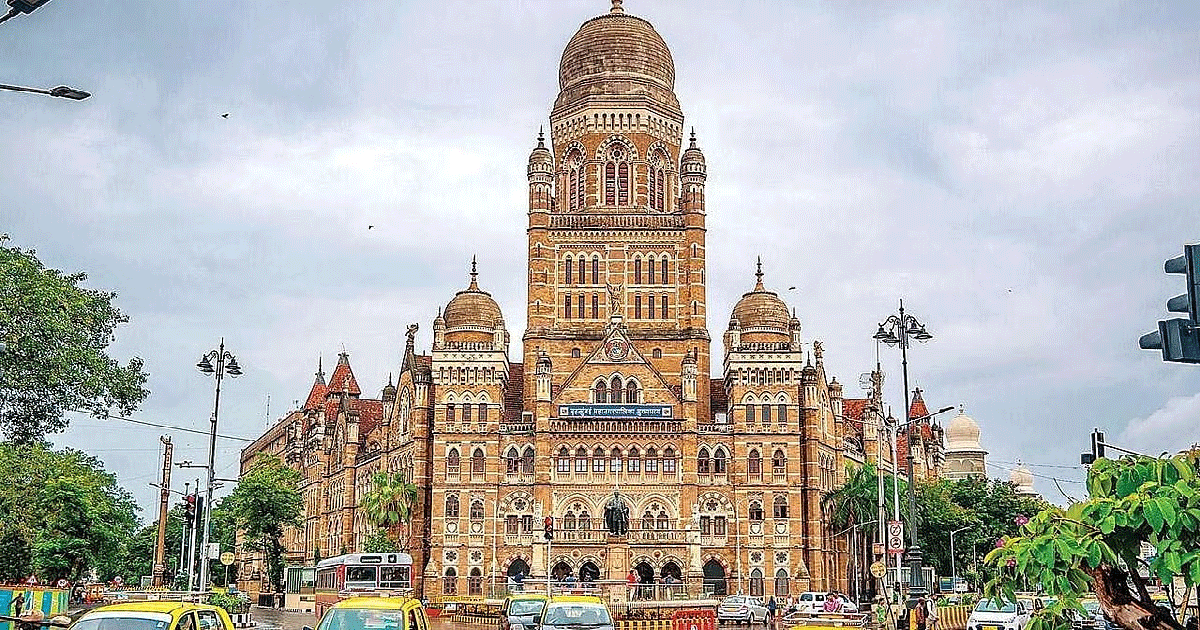
Mumbai: Mumbaikars have objected to the new proposed regulation in the Brihanmumbai Municipal Corporation (BMC)’s iconic buildings policy alleging that it is built on an aesthetic of spectacle, a logic of commercialisation, and a structure of centralised control.
The proposed regulation has been alleged to be exclusionary towards Mumbai’s known heritage buildings and the lack of a mechanism to regulate the policy’s impact of overwhelming the surrounding.
On June 24, BMC invited suggestions and objections from Mumbaikars on a new regulation 33(27) to the iconic building policy that aims to shape the city’s skyline. BMC claimed that once implemented, the policy will regulate and encourage the development of structures with distinctive architectural styles, aimed at reinforcing Mumbai’s global image as a city with unique and diverse architecture.
While Mumbaikars have acknowledged the ambition of the policy, they have claimed that the policy warrants serious reconsideration. In an online petition marked to the chief engineer of the development plan (DP) department, an anonymous citizens’ group with the name ‘Save Mumbai’s Iconic Buildings’ has raised significant concerns relating to equity, heritage, governance, and sustainability claiming that it warrants serious reconsideration.
The petition, launched on Friday, alleged that the proposed policy defines iconic as exclusionary and biased towards commercial spectacle. It highlighted that the requirement of minimum 40% of the building to be open to the public for a fee, disqualifies the city’s vast stock of residential heritage buildings, including the chawls of Girgaon, the bungalows of Gamdevi and the art deco apartments of Marine Drive.
It also raised concerns against the encouragement of commercialised access alleging that it will turn public engagement into a paid experience, deepening social exclusion.
“These are structures that define the everyday life and cultural identity of the city. They are iconic not because they contain cafes or galleries, but because they are repositories of memory, community, and architectural lineage. By privileging fee-based access and high-visibility aesthetics, the policy effectively erases living heritage from our urban imagination,” read the petition.
The letter alleged that the governance framework of the policy is deeply inadequate, elaborating that the scrutiny committee lacks defined membership criteria, transparency mechanisms or a process of public accountability. It suggested the framework like Mumbai’s heritage committee, which includes civil society experts, architects, and historians
It also added that along with reshaping the city’s skyline, the policy also needs a mechanism to regulate its impact. It suggested that Mumbai urgently requires a New York-like skyline review process that evaluates how proposed structures affect sightlines, scale, and heritage precincts. It also raised concerns about applying the same rule to the entire city and bypassing of the wards in the decision-making process.
“It is a critical fact that this policy, like many others before it, continues to treat Mumbai as a monolith, applying the same rules to vastly different neighbourhoods. The new proposed regulation imposes a uniform citywide framework, ignoring the fact that decentralised planning is essential to a city as diverse and layered as ours. Planning must be devolved to the ward or precinct level, allowing for area-specific review and genuine citizen participation. Without decentralisation, heritage will always be at the mercy of distant, disconnected authorities.”
Urging the civic body to withdraw the draft, the petition alleged that the policy is environmentally unsound as it promotes illuminated facades and high-rise construction with no requirement for environmental review or sustainability standards.
It added that these iconic buildings risk generating increased heat, carbon emissions, and pressure on coastal microclimates while there is no mention of tree protection, energy efficiency, or carbon offset.

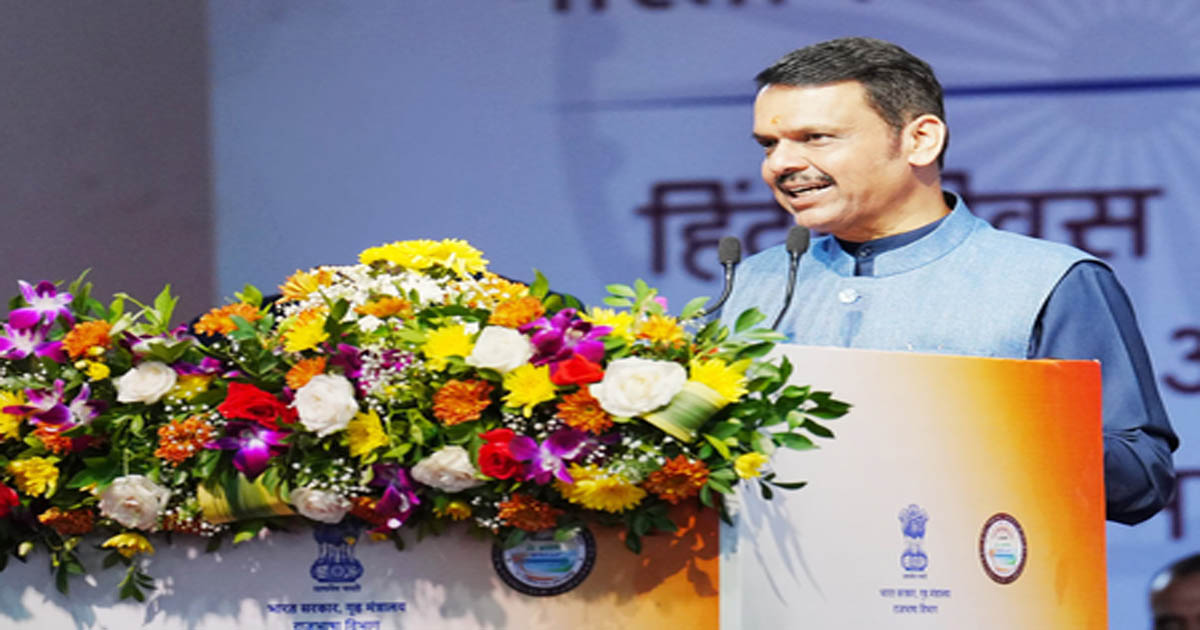
Navi Mumbai, Sep 14: Maharashtra Chief Minister Devendra Fadnavis on Monday praised Prime Minister Narendra Modi’s commitment to Indian languages, stating that hearing the Prime Minister speak Hindi on global platforms fills the nation with pride.
He was speaking at the Hindi Diwas celebration and the 6th All India Official Language Conference organised in Navi Mumbai, an event attended by Union Home Minister Amit Shah.
Addressing the gathering, CM Fadnavis apologised for his late arrival before highlighting the significance of hosting the national convention in Maharashtra. He noted that while such conferences were once mere formalities, Home Minister Amit Shah spearheaded the effort to rotate them across different states.
Reflecting on language policy history, Fadnavis pointed out that Hindi was widely used for official work during the British era before both Hindi and English were designated as official languages in 1963. He stated that since PM Modi assumed office, mother tongues and official regional languages have received unprecedented respect across the country.
“You must learn your mother tongue, and the New Education Policy (NEP) ensures this by promoting education in local languages alongside additional Indian languages,” CM Fadnavis said.
Recalling history, he noted that former Prime Minister Atal Bihari Vajpayee, then an opposition leader, was among the first to address the United Nations in Hindi. He added that writer Munshi Premchand played a pivotal role in making conversational Hindi acceptable for official work.
Addressing the conference, Home Minister Amit Shah emphasised the importance of regional languages, asserting that Marathi deserves deep respect. He highlighted that Prime Minister Narendra Modi’s administration granted classical language status to Marathi.
HM Shah praised Maharashtra’s diversity, describing it as the most multilingual state in India.
Quoting freedom fighter and social reformer Vinoba Bhave, he noted, “If I had not used Hindi, I could not have reached every village in Kashmir, Assam, and Kerala with the revolutionary message of Bhoodan and Gramdan. It was the official language that enabled me to communicate with people across the nation.”
Reiterating the central government’s focus on language preservation through the New Education Policy, the Home Minister emphasised that foundational learning in one’s mother tongue is essential for a child’s holistic growth.
Describing Maharashtra as the land of Veer Savarkar, he emphasised that Savarkar was not only a freedom fighter and social reformer but also one of the most learned linguists of his time. He built upon Lokmanya Tilak’s call for the purification of the Marathi language and coined numerous words that were previously absent in Indian languages—words that found natural acceptance in Marathi and other national languages.
HM Shah added that the Ministry of Home Affairs honoured Savarkar’s linguistic legacy in Hindi through the ‘Shabd Sindhu’ initiative.
Maharashtra
Mumbai Crime Branch Major Crackdown: Two Arrested for Illegal Drug Sale, 12.81 Kg of Drugs Seized

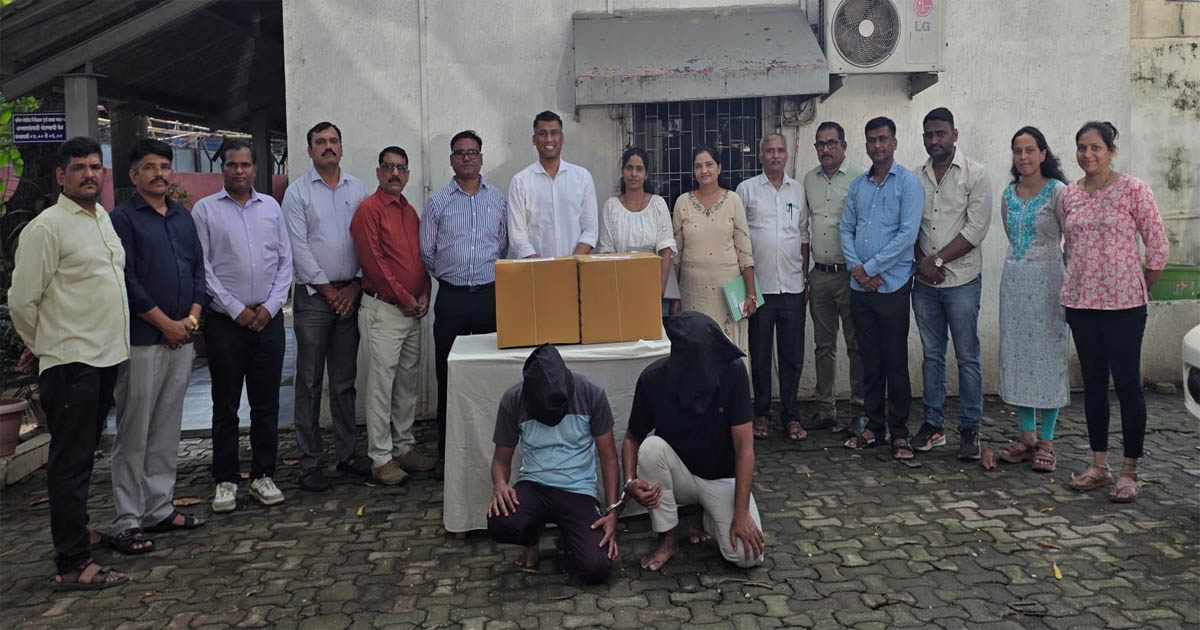
In a major operation, the Mumbai Crime Branch arrested two drug peddlers found selling Nitrazepam tablets. Acting on a tip-off received by Unit 6 on September 9, a Crime Branch team laid a trap and apprehended the two accused near the Trombay Transport Office—located on the southbound service road of the Panvel-Sion Highway in Trombay, Mumbai. Authorities seized 21,000 Nitrazepam tablets—weighing a total of 12.81 kg and valued at ₹64,05,000—which the accused were intending to sell illegally for recreational use. The arrested individuals have prior cases registered against them under the NDPS Act; specifically, a case has been registered against both under Sections 8(c), 22(c), and 29 of the NDPS Act, 1985. The arrested men are aged 44 (resident of Shivaji Nagar, Govandi, Mumbai) and 50 (resident of Kausa, Mumbra, Thane district).
This operation was carried out by a team from Unit 6 under the guidance of Mumbai Police Commissioner Deven Bharti, Joint Commissioner of Police (Crime) Anil Kumbhare, Additional Commissioner of Police (Crime) Krishnakant Upadhyay, Deputy Commissioner of Police (Detection) Datta Nawathe, and Assistant Commissioner of Police (D-East) Dharmapal Bansode. The team comprised Police Inspector Bharat Ghonge (In-charge, Unit 6), Police Inspector Sushant Sawant, Woman Sub-Inspector Chaudhary, Woman Sub-Inspector Mashire, Police Sub-Inspector Desai, Police Havaldars Wankhede, Khedkar, Bhalerao, and Chamgar, Police Constables Panchal, Shaikh, Bodhare, and Sasane, and Woman Police Constable Khotod.
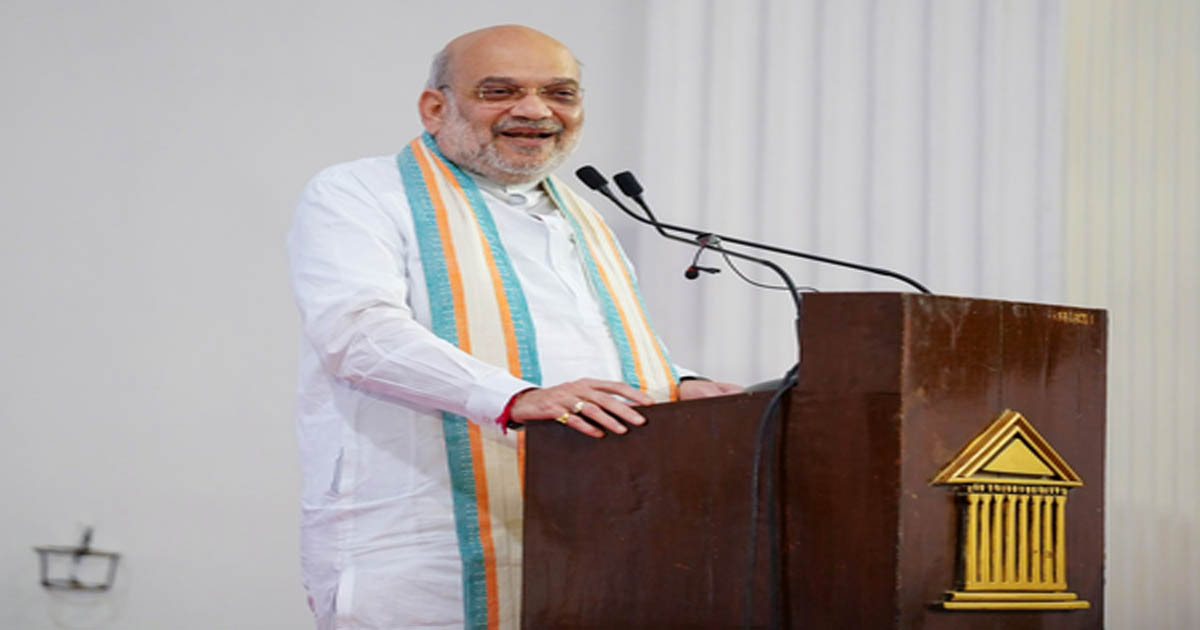
Mumbai, Sep 14: Union Home Minister Amit Shah will address the inaugural session of Hindi Diwas 2026 and the sixth All India Official Language Conference in Mumbai on Monday.
Inspired by Prime Minister Narendra Modi’s vision, the event will highlight the vibrant relationship of Hindi with Maharashtra’s rich linguistic, cultural, and literary traditions, the official said in a statement.
Maharashtra Chief Minister Devendra Fadnavis, Deputy Chief Ministers Eknath Shinde and Sunetra Pawar, several Members of Parliament, distinguished guests from various fields, scholars, litterateurs, educationists, and senior officials from various departments and Ministries of the Central government will also be present on this occasion.
The Department of Official Language of the Ministry of Home Affairs (MHA) has been organising All India Official Language Conferences every year since 2021.
During the inaugural session of the two-day programme, the ‘Rajbhasha Gaurav’ and ‘Rajbhasha Kirti’ Awards for the year 2025–26 will be presented by the Union Home Minister, the official statement said.
The institutions and individuals who have undertaken outstanding work and made noteworthy contributions in the field of Official Language will be honoured with these awards, it added.
Several important books and publications will also be launched during the inaugural session and other sessions. These include a special commemorative issue of the Department of Official Language’s journal ‘Rajbhasha Bharati’, centred on the National Song ‘Vande Mataram’; ‘Bharatiya Gyan Tantra: Srot aur Swaroop’; ‘Shiv Anadi Hain, Anant Hain’; and ‘Andheron Se Ujalon Tak’, a compilation of writings by prison inmates.
A special attraction of this year’s conference will be a special discussion session centred on the National Song ‘Vande Mataram’.
Joydeep Chattopadhyay will also have a special presence at the programme. He is a fifth-generation descendant of Bankim Chandra Chattopadhyay, the author of ‘Vande Mataram’.
A special session will also be organised at the Conference on the role of Town Official Language Implementation Committees (TOLICs/NARAKAS).
NARAKAS is a strong and empowered unit that takes forward the implementation of Official Language Hindi at the grassroots level.
A special exhibition is also being organised at the conference venue, in which stalls will be put up by various institutions, organisations, banks and ministries, the statement said.

Yemen Houthis claim major missile, drone attack on Saudi air base

PM Modi speaking Hindi globally fills us with pride: CM Fadnavis

Iran says Oman meeting postponed at Saudi Arabia’s request

Meeting between Iran, Gulf states scheduled in Oman postponed

India‑UAE ties grow into a model for BRICS collaboration: Report

Four more Indian nationals rescued in Nepal, 120 cross safely from China: MEA

Nepal floods: First batch of 106 stranded Maharashtra tourists reaches India; 84 more expected today (Ld)

Gift to President Putin part of PM Modi bid to globally display India’s heritage

India, Brazil sign ICT MoU to deepen digital, telecom cooperation

Maharashtra: 17-year-old boy dies by suicide on Raksha Bandhan after emotional social media posts
-

 Crime4 years ago
Class 10 student jumps to death in Jaipur
-

 Maharashtra2 years ago
Mumbai Local Train Update: Central Railway’s New Timetable Comes Into Effect; Check Full List Of Revised Timings & Stations
-

 Maharashtra2 years ago
Mumbai To Go Toll-Free Tonight! Maharashtra Govt Announces Complete Toll Waiver For Light Motor Vehicles At All 5 Entry Points Of City
-

 Maharashtra2 years ago
False photo of Imtiaz Jaleel’s rally, exposing the fooling conspiracy
-

 National News2 years ago
Ministry of Railways rolls out Special Drive 4.0 with focus on digitisation, cleanliness, inclusiveness and grievance redressal
-

 Maharashtra2 years ago
Maharashtra Elections 2024: Mumbai Metro & BEST Services Extended Till Midnight On Voting Day
-

 National News2 years ago
J&K: 4 Jawans Killed, 28 Injured After Bus Carrying BSF Personnel For Poll Duty Falls Into Gorge In Budgam; Terrifying Visuals Surface
-

 Crime2 years ago
Baba Siddique Murder: Mumbai Police Unable To Get Lawrence Bishnoi Custody Due To Home Ministry Order, Says Report