
National News
Bomb threats to two Delhi schools, police launch search operations

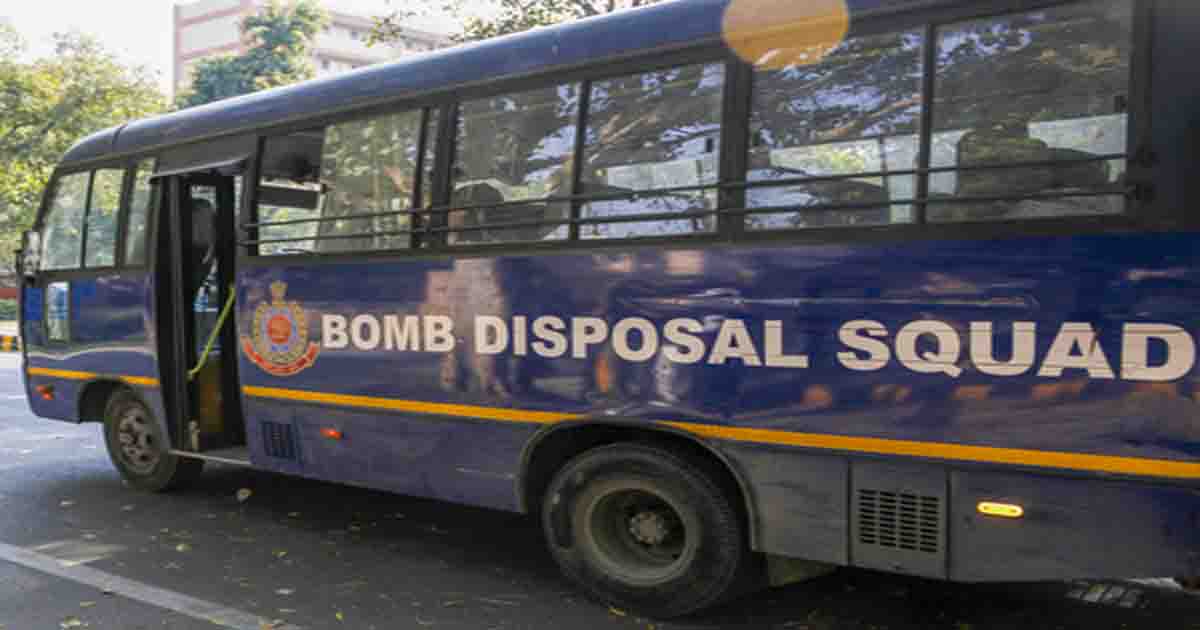
Several schools in the national Capital received bomb threats on Friday, prompting the Delhi Police and fire department to launch search operations. No suspicious objects or incriminating evidence have been found so far, and investigations are underway.
According to the Delhi Police, Venkateshwar Public School in Rohini and Salwan Public School in Mayur Vihar were among the institutions that received threats. The fire department received calls regarding the two schools at around 9.37 a.m. and 9.57 a.m., respectively.
Police said the threat received by Salwan Public School in Mayur Vihar mentioned a possible bomb attack on October 30.
Following the alerts, police teams and fire department personnel rushed to the schools and initiated security checks. The premises were thoroughly searched as a precautionary measure. However, no suspicious objects or materials were found during the initial searches.
The investigation is currently underway to establish the origin and credibility of the threats.
Earlier, on October 12, several schools in Noida, adjacent to Delhi, received bomb threats via email, triggering panic and heightened security measures. The institutions included Apeejay School, Step by Step School and Delhi Public School (DPS) GBN in Sector 16.
Following the threats, the police and local administration were alerted, and security checks were immediately initiated at the affected schools.
Bomb disposal squads, dog squads, anti-sabotage teams and fire brigade personnel were deployed to conduct comprehensive searches of the school premises.
According to the Gautam Buddh Nagar Police, personnel from the respective police stations took immediate action and coordinated with other security agencies. Various areas of the schools were searched with the assistance of bomb disposal squads and dog squads, while anti-sabotage teams and fire brigade personnel also participated in the security checks.
However, no suspicious objects or materials were recovered during the searches.
Repeated bomb threats targeting schools in Delhi and the surrounding National Capital Region have raised concerns among law enforcement agencies, school administrations, students and parents.
Such threats often trigger emergency security protocols and disrupt regular academic activities, prompting authorities to conduct thorough investigations to ensure the safety of students and staff.

Adani Power Ltd — India’s largest private thermal power generator — on Friday reported a 141.5 per cent year-on-year jump in consolidated profit after tax (PAT) to Rs 7,019.32 crore for the second quarter of FY27, compared to Rs 2,906.46 crore in Q2FY26.
Total reported revenue rose 39.4 per cent to Rs 19,950.60 crore from Rs 14,307.79 crore a year ago, while reported EBITDA jumped 45.7 per cent to Rs 8,743.22 crore.
On a continuing operations basis, revenue from operations grew 29.8 per cent to Rs 17,014.06 crore, while continuing EBITDA was up 18.5 per cent to Rs 6,320.97 crore.
Apart from that, PAT nearly doubled to Rs 11,885.92 crore from Rs 6,211.59 crore in H1 FY27, while reported revenue rose 36 per cent to Rs 39,272.90 crore.
Commenting on the results, CEO S B Khyalia said, “Adani Power continues to grow from strength to strength, achieving newer milestones in profitability and project execution. The primacy of domestic coal-based power in meeting India’s long-term power needs has become clearer every day.”
On industry trends, the company said India’s power demand grew 11.5 per cent to 502 BU in Q2 FY27, with coal and lignite-based generation accounting for 66 per cent of supply. Peak demand reached 270 GW, up 18 per cent year-on-year.
The company sold 26.4 billion units (BU) in Q2 FY27, up from 23.7 BU a year ago. Plant Load Factor (PLF) improved to 70.1 per cent from 62.8 per cent, while operating capacity stood at 18,150 MW.
Meanwhile, power sales under PPAs grew 29.7 per cent to 23.4 BU, with tariff realisation improving 12.7 per cent to Rs 6.4/kWh.
Merchant and short-term realisation improved 33.1 per cent to Rs 7.2/kWh, though volumes were 43 per cent lower due to incremental tie-ups of open capacity in medium-term contracts.

Samajwadi Party’s Maharashtra President and MLA Abu Asim Azmi on Friday said the BJP’s days were numbered, claiming that people across the country were fed up with it and expressing confidence that his party would win the 2027 Uttar Pradesh Assembly elections.
Speaking to reporters, Azmi said his party was preparing its electoral strategy and hoped the BJP would have to relinquish power.
“Their days are numbered. The entire country is fed up with them. Only a few days remain, so let them say whatever they want. The Samajwadi Party is certain to win the 2027 elections. We are preparing our strategy, and we hope they will have to step down and leave their positions,” he said.
Criticising the BJP government in Uttar Pradesh, Azmi alleged that the state was facing serious law and order problems and that people from different sections of society were struggling.
“What can they even say? Look at the condition they have brought Uttar Pradesh to. The law and order situation here is terrible. Can’t they see what is happening? Everyone is worried. They (the BJP) have created an atmosphere of lawlessness, and there is no rule of law left. Farmers are distressed, young people are struggling, schools are shutting down, and people are being made to suffer,” he said.
Earlier in the day, Samajwadi Party leader Ram Gopal Yadav also expressed confidence in his party’s performance in the biennial Uttar Pradesh Legislative Council elections, citing favourable voter responses in several constituencies.
After casting his vote in Etawah, Yadav said the response was in favour of the SP in Etawah, Firozabad, Agra, and Aligarh. He expressed confidence that both party candidates would emerge victorious, naming Akash Agarwal as the candidate for the Teachers’ constituency and expressing optimism about the party’s prospects in the Graduates’ constituency as well.
Meanwhile, polling was underway for 11 seats in the Uttar Pradesh Legislative Council.
A total of 152 candidates are contesting six seats in the Teachers’ constituencies and five in the Graduates’ constituencies. Authorities have established 2,697 polling stations for approximately 14.28 lakh eligible voters. Polling will continue until 4 p.m., while counting is scheduled for October 27.
Elections are not being held in Kanpur, Kanpur Dehat and Unnao, where the terms of the respective MLCs extend until 2029.
The Uttar Pradesh Assembly elections are expected to be held in February-March 2027 to elect all 403 members of the state Legislative Assembly.
Business
Centre expects anti-cancer drug prices to fall 20-70 per cent under proposed trade margin cap


The Centre has told the Supreme Court that capping trade margins on anti-cancer medicines at 30 per cent of their maximum retail price (MRP) is expected to save patients around Rs 2,500 crore annually, with the proposed measure likely to reduce the MRP of such drugs by 20 to 70 per cent.
In an affidavit filed before the apex court in a pending plea seeking regulation of medicine prices, the Union government, through the Department of Pharmaceuticals, said it had decided to rationalise trade margins on anti-cancer drugs after extensive consultations with stakeholders and an assessment of the potential impact on the availability and affordability of medicines.
The proposed cap was intended to curb excessive trade mark-ups while retaining a reasonable margin for distributors and retailers, adding that an expert committee had been constituted to recommend the list of anti-cancer medicines to which the measure would apply, it said.
The Ministry of Health and Family Welfare constituted the committee on October 9 under the chairmanship of the Director General of Health Services, and it is expected to submit its report within 10 to 15 days.
“The trade margin is to be capped at 30 per cent of the MRP, on the same lines as was done in the TMR of 2019. The objective is to retain a reasonable trade margin while preventing excessive margins,” the affidavit stated.
The Centre said the list would cover drugs approved for the treatment of cancer, except inexpensive medicines, and could be periodically updated in view of market developments and public health considerations.
According to the affidavit, the National Pharmaceutical Pricing Authority (NPPA) would place the committee’s recommendations before its authority for deliberation and appropriate directions, following which it would issue a price notification and instructions to manufacturers to ensure that the benefits were passed on to patients.
The government said the proposed measure was expected to reduce out-of-pocket expenditure for cancer patients, improve affordability and accessibility of medicines, and bring greater transparency to the prices actually paid by consumers.
The affidavit was filed in response to a public interest litigation by Dr Sanjay Kulshrestha, which raises concerns over medicine pricing and the need for effective regulation of trade margins in the pharmaceutical sector.
The Centre maintained that a comprehensive statutory and policy framework was already in place to regulate drug prices, including the Drugs (Prices Control) Order, 2013, and that the government had been taking calibrated steps to address excessive margins without compromising the availability of essential medicines.
The government also referred to its earlier intervention in 2019, when the NPPA imposed a 30 per cent trade margin cap on 42 selected non-scheduled anti-cancer medicines.
According to the affidavit, the measure resulted in a reduction in the MRP of 526 brands and generated annual savings of approximately Rs 984 crore for patients, based on information provided by companies.
The Centre said the earlier intervention provided a policy precedent for extending trade margin rationalisation to a broader range of non-scheduled anti-cancer medicines.
However, it stressed that such interventions required careful consideration of their impact on different stakeholders, including small and medium pharmaceutical manufacturers, distributors and retailers, particularly those operating in remote areas.
The affidavit said some industry associations had expressed concerns that extending the cap could affect employment and medicine distribution in remote regions, given the dependence of smaller manufacturers on local traders and multiple distribution channels.
“Implementation of Trade Margin Rationalisation (hereinafter TMR) affects different stakeholders differently and, hence, requires extensive consultation with all stakeholders and a well-calibrated approach,” the affidavit stated.
The Centre said higher trade margins could sometimes be necessary for low-value medicines, drugs requiring specialised storage or handling, fragile products and medicines with low turnover, as retailers might otherwise find it commercially unviable to stock them.
It added that differences in distribution costs and market conditions had to be taken into account while framing a broader regulatory approach.
The government further referred to measures taken under its extraordinary powers under Paragraph 19 of the DPCO, 2013, including the capping of prices of certain diabetes and cardiovascular medicines, the fixation of ceiling prices for coronary stents and knee implants, and the regulation of trade margins on oxygen concentrators and other medical devices during the Covid-19 pandemic.
It also highlighted initiatives such as the Pradhan Mantri Bhartiya Janaushadhi Pariyojana, which provides generic medicines through around 19,000 Jan Aushadhi Kendras, and AMRIT pharmacies, which offer discounts on essential and life-saving medicines.
The affidavit said the government remained conscious of the need to balance affordability, accessibility and availability while regulating medicine prices.
“The Government has, in the public interest, been taking calibrated and consultative steps, including by invoking its extraordinary powers under Paragraph 19 of the DPCO, 2013, to curb excessive trade margins without compromising the availability of medicines,” it stated.

Adani Power Q2 profit jumps 141 pc to Rs 7,019 crore on strong demand

BJP’s days are numbered, SP certain to win 2027 UP elections: Abu Azmi

Centre expects anti-cancer drug prices to fall 20-70 per cent under proposed trade margin cap

Delhi Police cracks two home burglary cases with arrest of two men; stolen jewellery, Rs 42,670 recovered

Maha MLC polls: Voting underway for five seats; Mahayuti, MVA both assert wins

Rahul, Cong ecosystem want to force regime change: BJP after Neha Bora praises B’desh Gen-Z protest

BJP pays tribute to ex-President Abdul Kalam, recalls his enduring influence on generations of India’s youth

Attack on democratic rights: INDIA Bloc leaders on detentions of anti-ECI protestors

INDIA bloc begins protest march against ECI

Maha Congress stages agitation against Gyanesh Kumar
-

 Crime4 years ago
Class 10 student jumps to death in Jaipur
-

 Maharashtra2 years ago
Mumbai Local Train Update: Central Railway’s New Timetable Comes Into Effect; Check Full List Of Revised Timings & Stations
-

 Maharashtra2 years ago
Mumbai To Go Toll-Free Tonight! Maharashtra Govt Announces Complete Toll Waiver For Light Motor Vehicles At All 5 Entry Points Of City
-

 Maharashtra2 years ago
False photo of Imtiaz Jaleel’s rally, exposing the fooling conspiracy
-

 National News2 years ago
Ministry of Railways rolls out Special Drive 4.0 with focus on digitisation, cleanliness, inclusiveness and grievance redressal
-

 Maharashtra2 years ago
Maharashtra Elections 2024: Mumbai Metro & BEST Services Extended Till Midnight On Voting Day
-

 National News2 years ago
J&K: 4 Jawans Killed, 28 Injured After Bus Carrying BSF Personnel For Poll Duty Falls Into Gorge In Budgam; Terrifying Visuals Surface
-

 Crime2 years ago
Baba Siddique Murder: Mumbai Police Unable To Get Lawrence Bishnoi Custody Due To Home Ministry Order, Says Report