
Maharashtra
Mumbai startup develops India’s first universal gene test for infectious disease


Mumbai-based health-tech startup HaystackAnalytics has developed the first of its kind universal infectious diseases (ID) gene test to identify existing and emerging infections, the company said on Monday.
The company is supported by the Department of Science and Technology, as well as several private healthcare players.
To identify infections, the company deploys Next-Generation Sequencing (NGS) technology and Artificial Intelligence (AI), and also provides information on drug resistance to support and identify correct treatment options for patients.
The new Universal Infectious Diseases test will be rolled out with their current partners in a phased manner over the next three months, the company said in a statement.
It will initially be targeted at identifying and treating sepsis in Intensive Care Unit (ICU) patients, but gradually be made available to anyone suffering from a fever of unknown origin, by eradicating the need to conduct multiple tests.
The test comes at an opportune time, as Covid-19 pandemic highlights the need for better diagnostic technologies, appropriate antibiotic use, and the renewed importance of infection prevention strategies.
“The test enables rapid (within hours) and comprehensive (covering nearly all known bacterial and fungal pathogens) screening in a near to point of care deployment. Leveraging the power of next generation sequencing and AI, the team of scientists and engineers at Haystack has been able to eliminate the need for a redundant and expensive battery of tests, with a single test,” Dr. Anirvan Chatterjee, Co Founder and CEO of HaystackAnalytics, said.
“Our single point focus is to prevent each and every death caused due to treatable infections. Genomics has the potential to reduce trial and error in disease management and bring equality of access to high quality healthcare,” he added.
In the past, HaystackAnalytics had partnered with various diagnostic centers and over 20 hospitals including AIIMS, to introduce their sequencing-based clinical products for Tuberculosis and Covid in the past.
It is while working on two of the most debilitating infectious diseases — Tuberculosis and Covid — the company said it recognised the true burden of inaccurate diagnosis of infections in India and the world.
While the novel coronavirus infected and killed millions of people across the globe, there are various other infectious diseases that continue to plague India.
In particular, India accounts for the largest number of sepsis cases (11.3 million) and sepsis-related deaths (2.9 million) in the world, as per a global study published in the Lancet in 2020.
Despite having a wide range of antibiotics and antifungal medicines, sepsis is a life-threatening organ failure. It occurs when the body ends up injuring its own tissues and organs, in response to an infection, leading to shock, disability, multi-organ failure, and even death if left untreated in the early stages.
“A large proportion of these deaths can be avoided by early and accurate identification of the pathogen causing the infection. Haystack’s UID test has been developed to solve this exact problem,” Chatterjee said.

Maharashtra
Mumbai: SIM card used in cyber fraud, case registered against SIM card agents from Nagpara and Andheri


Mumbai: The Cyber Cell of the Mumbai Crime Branch has now claimed to have registered a case against such SIM card sellers whose SIM cards were used in fraud. The Crime Branch has registered a case against five SIM card sellers. During the investigation of the Mumbai Crime Branch in the fraud case, it was found that the accused used to procure SIM cards through agents and shopkeepers for cyber fraud and these numbers were used for fraud. These SIM card sellers used to misuse the documents of the customers from their shop and if the customer asked for a SIM card, they would get one, two or three SIM cards issued on his document and then these people used these SIM cards for their own benefit and provided them to the absconding accused in cyber crimes. The Cyber Cell has registered a case against the accused Muhammad Sultan Muhammad Hanif, Zeeshan Kamal, who sold SIM cards from Nagpara under other sections of the ID Act. Similarly, a case has been registered against Daya Shankar Bhagwan Shukla, Pradeep Kumar Burnalwala, Neeraj Shivaram for illegally selling SIM cards. This action has been taken by DCP Cyber Cell Parshottam Karad on the instructions of Mumbai Police Commissioner Devin Bharti. The Cyber Cell has appealed to the public to check their mobile number on the Sanchar Saathi app. If they find any other number in their name, they should report it and in this matter, the public can also file a complaint on the Sanchar Saathi app.

Mumbai: ( By Kamar Ansari )
A major irregularity involving land records has surfaced in Maharashtra, raising serious concerns about the misuse of legal provisions and the security of property ownership across the state. The issue is believed to have affected a significant number of families, particularly in rural and semi-urban areas.
The controversy centers around the alleged misuse of a provision under the Maharashtra Land Revenue Code that is meant strictly for minor corrections in official land records, such as clerical or typographical errors. Instead, this provision was reportedly used to make substantial and unauthorized changes to land ownership entries.
Officials suspect that in several cases, land ownership details were altered without proper verification or legal procedure, leading to disputes and possible illegal transfers. These actions have caused anxiety among landowners, many of whom fear losing their rightful property due to manipulated records.
In response to the situation, the state government has ordered a comprehensive audit of land record changes carried out under the concerned provision over the past few years. Authorities across districts have been directed to review mutation entries and verify the authenticity of all such changes.
Preliminary assessments indicate that the issue may not be limited to isolated incidents, but could point to a wider pattern of administrative lapses or deliberate manipulation. The audit aims to identify the scale of the problem and fix accountability.
Government officials have assured that strict action will be taken against those found responsible, including possible disciplinary and criminal proceedings. Efforts are also expected to be made to restore original ownership records wherever irregularities are confirmed.
The investigation is ongoing, and authorities have stated that protecting the rights of affected citizens and ensuring transparency in land administration will remain a priority.
Maharashtra
Maharashtra Infra Update: JNPT Linked Expressway Connecting Mumbai-Pune -Goa Routes Moves Ahead, Bids Open April 16
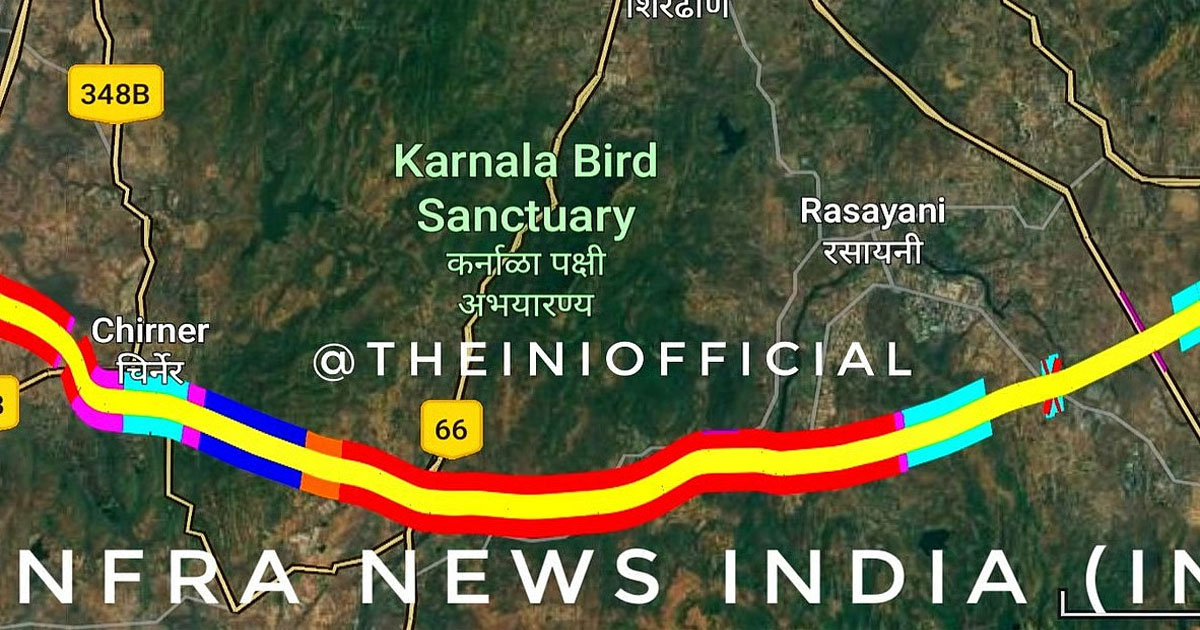
The proposed Pagote Chouk Expressway in Maharashtra has moved a step closer to execution, with the National Highways Authority of India initiating the process for Coastal Regulation Zone clearance. The development marks a key milestone for the greenfield infrastructure project aimed at strengthening connectivity between Jawaharlal Nehru Port and major national highways.
At the same time, construction bids for the project are scheduled to open on April 16, 2026, signalling progress in the pre-construction phase.
The 29.3 kilometre six lane expressway is designed to provide a direct, access controlled route between JNPT Port and key arterial roads including NH48, the Mumbai Pune Expressway, and the Mumbai Goa highway. The corridor is expected to ease congestion on existing routes and streamline the movement of goods and passenger traffic.
The project is particularly significant for freight movement from the port, offering faster and more efficient connectivity to inland regions.
The expressway will include a mix of complex engineering structures to navigate the terrain. Plans include six major bridges, five minor bridges, four viaducts, and two tunnels measuring 1.9 kilometres and 1.57 kilometres respectively.
These elements are aimed at ensuring seamless travel while maintaining speed and safety standards across the corridor.
The project has a targeted completion timeline of 30 months from the start of construction. Once operational, it is expected to significantly reduce travel time between Mumbai and Pune.
Motorists travelling from Pune will be able to exit the Mumbai Pune Expressway shortly after the Khalapur toll plaza and reach the Chirle interchange of Atal Setu in around 20 minutes. The development is likely to bring both cities closer while boosting regional connectivity and economic activity.

Mumbai: SIM card used in cyber fraud, case registered against SIM card agents from Nagpara and Andheri

Large-Scale Land Record Irregularities in Maharashtra Spark Statewide Audit

‘Dhurandhar 2 Is A Pakistani Film, Why Show It To People Of Hindustan?’ Samajwadi Party MLA Abu Azmi Slams Ranveer Singh Starrer Movie

‘Saw People Facing Shortage, Felt Deeply Concerned’, Says Consulate General of Iran In Mumbai Amid LPG Crisis; Calls India ‘Friend & Partner’

Maharashtra Infra Update: JNPT Linked Expressway Connecting Mumbai-Pune -Goa Routes Moves Ahead, Bids Open April 16

Married Mumbai Woman Mocked In Andheri Society Over ‘Lift Kissing’ CCTV Video, Files Police Complaint

Mumbai: JBCN International School In Borivali Gets Bomb Threat, Search Reveals Hoax, Students Safe

Mumbai Local Train Update: Mega, Jumbo Blocks Announced On Central, Harbour & Western Lines On February 22; Check Time & Route Here

Mahayoti’s big gift to the people of Mumbai… Now there is no tax for houses up to 500 square feet, the Municipal Corporation has increased this limit to 700 square feet.

Mumbai Crime Branch Issues LOC Against Lawrence Bishnoi Aide Harry Boxer For Threatening Actor Ranveer Singh
-

 Crime4 years ago
Class 10 student jumps to death in Jaipur
-

 Maharashtra1 year ago
Mumbai Local Train Update: Central Railway’s New Timetable Comes Into Effect; Check Full List Of Revised Timings & Stations
-

 Maharashtra1 year ago
Mumbai To Go Toll-Free Tonight! Maharashtra Govt Announces Complete Toll Waiver For Light Motor Vehicles At All 5 Entry Points Of City
-

 Maharashtra1 year ago
False photo of Imtiaz Jaleel’s rally, exposing the fooling conspiracy
-

 National News1 year ago
Ministry of Railways rolls out Special Drive 4.0 with focus on digitisation, cleanliness, inclusiveness and grievance redressal
-

 Maharashtra1 year ago
Maharashtra Elections 2024: Mumbai Metro & BEST Services Extended Till Midnight On Voting Day
-

 National News1 year ago
J&K: 4 Jawans Killed, 28 Injured After Bus Carrying BSF Personnel For Poll Duty Falls Into Gorge In Budgam; Terrifying Visuals Surface
-

 Crime1 year ago
Baba Siddique Murder: Mumbai Police Unable To Get Lawrence Bishnoi Custody Due To Home Ministry Order, Says Report