
Maharashtra
Mumbai: Sewri–Worli Elevated Road Back On Track As Prabhadevi Rehabilitation Hurdle Finally Cleared


Mumbai: After months of delay and mounting local opposition, the Mumbai Metropolitan Region Development Authority (MMRDA) has announced that a key hurdle affecting the construction of the Sewri–Worli elevated road has finally been resolved, allowing the long-stalled project to regain momentum.
The deadlock over the rehabilitation of residents from two residential buildings in Prabhadevi, whose demolition was essential for the alignment of the elevated corridor, has been largely settled. While the proposal had initially met stiff resistance from residents, progress was achieved after negotiations under the Maharashtra Housing and Area Development Authority (MHADA) rehabilitation policy.
As per MMRDA, five of the 38 affected residents have opted to accept monetary compensation in exchange for their homes. Meanwhile, 30 residents have already been handed possession of alternative MHADA housing, with the remaining allotments currently in various stages of processing. Officials said the rehabilitation exercise, which had been a major impediment to construction activity, is now nearing completion.
The Sewri–Worli elevated road project, envisioned to provide faster access to Atul Setu from South Mumbai, was originally expected to be completed by now. However, work came to a standstill due to complications surrounding the rehabilitation of residents across 19 buildings along the alignment. A particularly sensitive issue involved the road’s passage over railway tracks and the 125-year-old Prabhadevi bridge, which was found to be structurally inadequate and in need of reconstruction.
To address traffic and safety requirements, the MMRDA had earlier proposed demolishing the old bridge and constructing a modern double-decker structure in its place. Under the original plan, the lower deck would continue to serve existing traffic, while the upper deck would allow vehicles from South Mumbai to directly access Atul Setu. However, this design would have required the demolition of 19 surrounding residential buildings, triggering strong opposition from local residents.
Facing sustained protests and public pressure, the MMRDA revisited the design. Officials said the revised plan was finalised after extensive technical and social impact assessments, resulting in a realignment that spared 17 of the 19 buildings initially marked for demolition. Ultimately, the demolition of only two buildings was deemed unavoidable to ensure the project’s viability and safety standards.
Residents of the affected buildings had earlier staged protests against the proposed demolitions, citing concerns over displacement and inadequate rehabilitation. With the latest breakthrough, MMRDA officials maintain that the concerns of the majority of residents have now been addressed, enabling construction activity on the elevated corridor and the redesigned bridge to move ahead.
The authority said it will continue to coordinate with residents and MHADA to complete the remaining rehabilitation formalities, while pushing to fast-track construction on what is seen as a critical infrastructure link aimed at easing congestion between South Mumbai and the eastern suburbs.

Maharashtra
Maha: State Board approves Wildlife Sanctuary status for two reserves; notifies 14 new conservation reserves

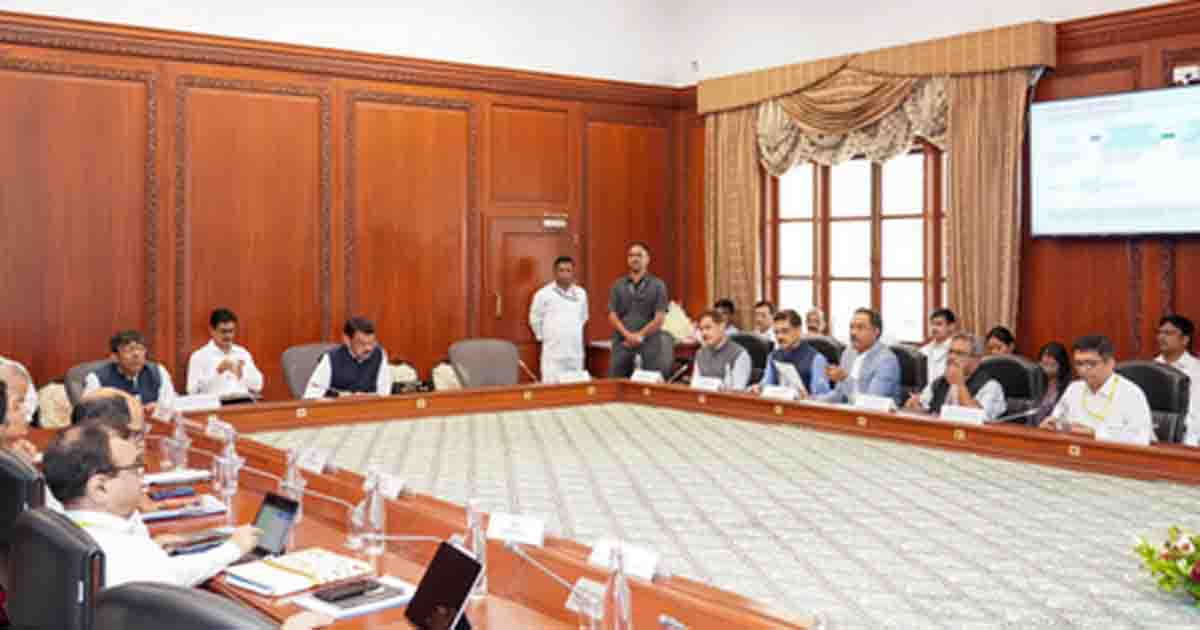
In a major push toward wildlife preservation and habitat protection across Maharashtra, the State Board for Wildlife (SBWL), chaired by Chief Minister Devendra Fadnavis, on Monday approved key environmental proposals during its 26th official meeting.
Among the landmark decisions made, the board granted Wildlife Sanctuary status to two key forest pockets and formally approved proposals for 14 new Conservation Reserves spanning seven districts.
The new Wildlife Sanctuary status has been accorded to Kolamarka Conservation Reserve (Gadchiroli district), which is widely renowned as a vital habitat for endangered Asiatic wild buffaloes (Bubalus arnee).
Kolamarka has officially been upgraded to a Wildlife Sanctuary. Further, approval was granted to expand the existing Tansa Wildlife Sanctuary by incorporating 588.767 hectares of private and revenue land from six villages (Ogda, Khodde, Tirmal, Pachghar, Phansad, and Amle) to make the sanctuary human-settlement-free.
Proposals for 14 new conservation reserves spread across Pune, Raigad, Nashik, Nandurbar, Thane, Palghar, and Chandrapur districts received official board clearance. These reserves include Velhe Mulshi (Pune / Raigad), Bhorgirigad (Pune), Lonavala (Pune / Raigad), Dindori (Nashik), Surgana (Nashik), Taharabad (Nashik), Chinchpada (Nandurbar), Alibaug (Raigad), Ghera Manikgad (Raigad), Gumatara (Thane), Jawhar (Palghar), Asherigad (Palghar), Dhamani (Palghar) and Ekara (Chandrapur).
Further, the State Board for Wildlife declared 100.139 sq. km area in Koka Wildlife Sanctuary as Critical Wildlife Habitat and 255.79 sq. km area in Jaakwadi Bird Sanctuary as Critical Wildlife Habitat.
It was also decided that maintenance, silt removal, and dam repair works inside wildlife sanctuaries must be permanently integrated into the respective Management Plans within 3 months.
Wildlife officials are to be notified in advance instead of seeking fresh administrative approvals for every project.
Clearances were granted for essential civic and infrastructure projects (irrigation, drinking water, roads, bridges, power transmission, medical units, and underground optical fibre cables) across protected zones, eco-sensitive areas, and tiger corridors. Discussions were held on declaring Human-Wildlife Conflict as a Natural Disaster under the Disaster Management Act, establishing quiet zones in tiger reserves (core/buffer/ESZ), and formulating relocation policies for villages in buffer zones.
The CM instructed officials to evaluate staffing requirements, deputations, and vacant positions within one month to shift notified sanctuaries from Regional Forest/Forest Development Corporation Maharashtra control to the dedicated Wildlife Wing.
Maharashtra
Raj Thackeray slams urban planning, traffic crisis in Navi Mumbai; says he awaits power in Maharashtra
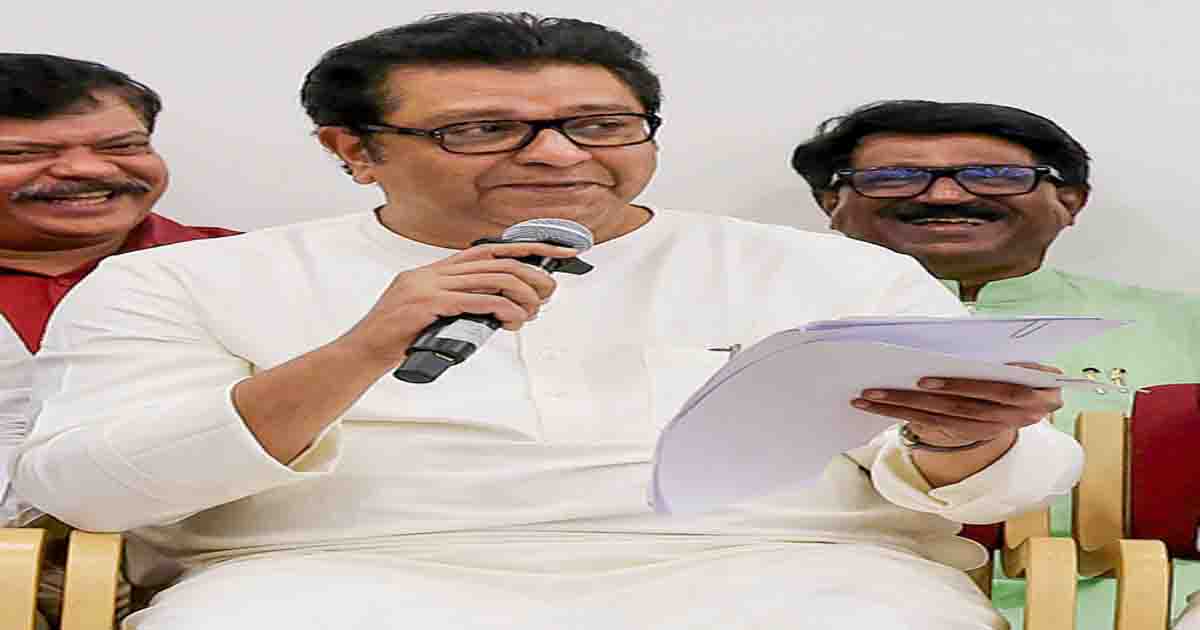
Maharashtra Navnirman Sena (MNS) President, Raj Thackeray, on Monday launched a scathing attack on the state’s crumbling urban infrastructure and worsening traffic management, stating that he is eagerly waiting for the day the people of Maharashtra hand over power to him.
Addressing a commercial vehicle transport convention and transporters’ rally in Navi Mumbai, Raj Thackeray criticised the lack of civic discipline, poor city planning, and flawed execution of e-challan systems, warning that the state’s traffic crisis will soon spiral out of control.
Raj Thackeray warned that the traffic problems plaguing urban areas have already reached alarming proportions and are bound to get much worse due to a total lack of structured boundaries or civic rules. While clarifying that he is not opposed to the e-challan system, he criticised the arbitrary manner in which fines are levied. He argued that e-challans should strictly be camera-monitored rather than issued manually on the spot by personnel.
Raj Thackeray accused authorities of drafting development plans out of “friendship with builders” rather than consulting experts or implementing proper town planning.
Pointing out that roads should ideally cover around 15 per cent of a region’s total area, he noted that areas originally built for 50 people now house 500 without adequate parking infrastructure. He remarked that bridges and roads are often engineered to break down within two years so that repair contracts can be continuously issued.
“Looking at the traffic in this country gives me a glimpse of its present and future. We neither know how to drive vehicles nor how to park them,” Thackeray remarked. In a sarcastic critique of modern traffic management, he noted that cities now have automated traffic signals, yet human traffic constables are still deployed right beside them because nobody trusts motorists to obey rules.
Sharing an unheeded suggestion he previously made to the Chief Minister, Deputy Chief Minister and the Brihanmumbai Municipal Corporation (BMC) Commissioner, Thackeray proposed colour-coding footpaths (red and black for strict ‘no parking’ zones, yellow and black for designated parking areas).
However, he lamented that lack of public implementation renders such ideas useless. Thackeray warned that cities lack long-term vision. If suburban railway systems—which carry millions of daily commuters in regions like Navi Mumbai—ever collapse, the sudden influx of private vehicles onto the roads would completely gridlock the city, trapping residents inside their homes.
He criticised the haphazard growth of towers and colonies lacking adequate public spaces like playgrounds, gardens, or sustainable water supplies, questioning whether this chaotic urbanisation can truly be called “discipline.”
Concluding his address with a direct political assertion, Thackeray declared that bringing discipline to Maharashtra’s transit and urban sectors does not require “rocket science,” but rather political will. “I really look forward to seeing when the people of Maharashtra hand over power to me. Bringing discipline to these kinds of things is not rocket science; it just takes the will to do it,” Thackeray said, drawing loud applause from the audience of transporters and party workers.
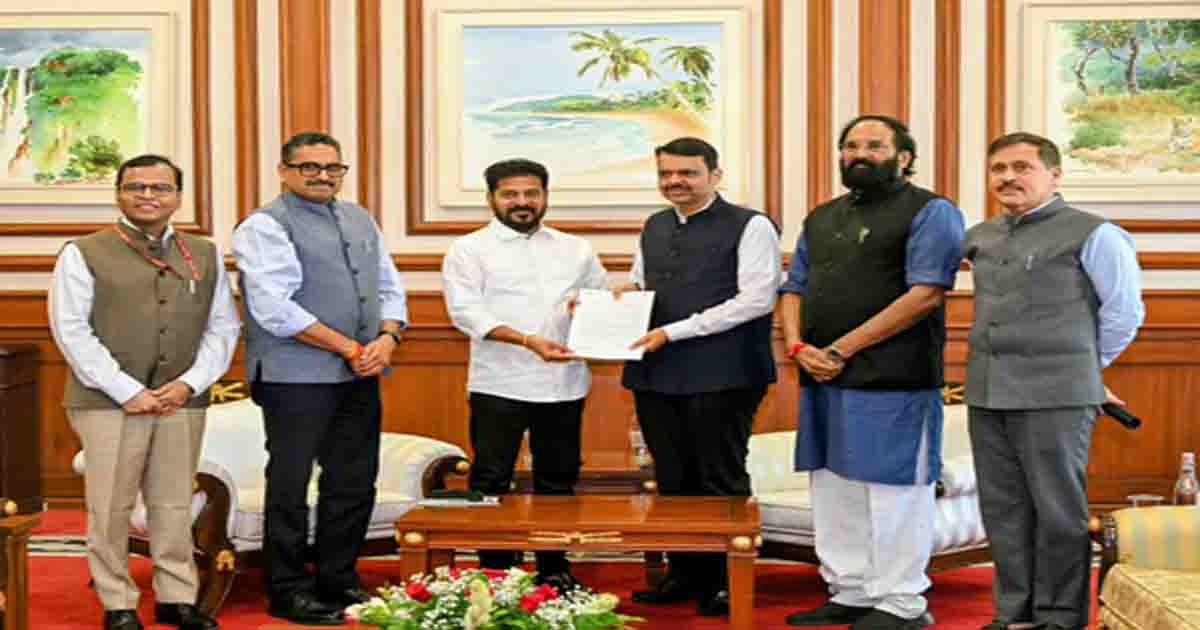
Maharashtra Chief Minister Devendra Fadnavis on Monday announced that the state will conduct an independent assessment of the proposed height increase of Telangana’s Thummidihetty irrigation project, ensuring that local interests are safeguarded while maintaining cooperative inter-state relations.
The decision came following a high-level meeting where a delegation led by Telangana Chief Minister A Revanth Reddy and Irrigation Minister Uttam Kumar Reddy formally requested Maharashtra’s concurrence to raise the project’s height from 148 meters to 152 meters.
Highlighting Maharashtra’s tradition of resolving neighbouring states’ issues through cooperation, CM Fadnavis stated that the state holds a positive stance on aiding Telangana, provided it causes no detriment to Maharashtra’s citizens.
However, CM Fadnavis noted that previous approvals revealed that actual submergence areas exceeded initial projections. Consequently, the government has mandated a joint committee comprising the Chief Secretaries and Irrigation Secretaries of both states to conduct a thorough technical evaluation.
The joint study will examine the impact of relocated project sites on submergence areas, the inclusion of relevant wildlife sanctuaries and the extent of required non-riverbed land.
Furthermore, any discrepancies or technical objections raised by Telangana regarding Maharashtra’s study will be reviewed jointly by officials from both states, with expert consultations brought in if necessary.
The Chief Minister clarified that matters concerning water allocation and statutory clearances fall within the purview of the Central Water Commission (CWC). Maharashtra will officially submit its stance based on factual findings once the CWC seeks the state’s feedback. Final decisions on the project will proceed following the independent technical review and subsequent discussions.
The Tummidihetti project, which was originally a key component of the Dr B R Ambedkar Pranahita-Chevella project, is located across the Pranahita River (a tributary of the Godavari) at Tummidihetti village in Koutala mandal, Kumram Bheem Asifabad district (formerly Adilabad district) of Telangana.
It is designed to irrigate approximately 200,000 acres in drought-prone areas across the erstwhile Adilabad district and aims to harness and lift water from the Pranahita River to fulfil regional irrigation needs.
Telangana is pushing for a barrage height of 152 meters (which would account for about 2,300 acres of potential submergence) to maximise water utilisation and gravity flow, while discussions continue regarding lower structural options like 150 meters to minimise land submergence in neighbouring Maharashtra.
The meeting was attended in person and via video conferencing by Maharashtra Water Resources Minister Girish Mahajan, Telangana Irrigation Minister Uttam Kumar Reddy, Maharashtra Chief Secretary Rajesh Agarwal, Telangana Chief Secretary Sanjai Jaju, Additional Chief Secretary to the Chief Minister Lokesh Chandra, Principal Secretary Srikar Pardeshi, Water Resources Department Principal Secretary Eknath Davle, Secretaries Jayant Borkar and Prakash Misal, alongside other senior officials from both states.

Income Tax Dept nudges taxpayers owning undeclared properties in UAE

Delhi BJP protests near Kharge official residence over remark on PM Modi

Maha: State Board approves Wildlife Sanctuary status for two reserves; notifies 14 new conservation reserves

Nepali gang arrested for murder of retired IPS officer’s wife in Hyderabad

Raj Thackeray slams urban planning, traffic crisis in Navi Mumbai; says he awaits power in Maharashtra

Rahul, Cong ecosystem want to force regime change: BJP after Neha Bora praises B’desh Gen-Z protest

Attack on democratic rights: INDIA Bloc leaders on detentions of anti-ECI protestors

BJP pays tribute to ex-President Abdul Kalam, recalls his enduring influence on generations of India’s youth

INDIA bloc begins protest march against ECI

Maha Congress stages agitation against Gyanesh Kumar
-

 Crime4 years ago
Class 10 student jumps to death in Jaipur
-

 Maharashtra2 years ago
Mumbai Local Train Update: Central Railway’s New Timetable Comes Into Effect; Check Full List Of Revised Timings & Stations
-

 Maharashtra2 years ago
Mumbai To Go Toll-Free Tonight! Maharashtra Govt Announces Complete Toll Waiver For Light Motor Vehicles At All 5 Entry Points Of City
-

 Maharashtra2 years ago
False photo of Imtiaz Jaleel’s rally, exposing the fooling conspiracy
-

 National News2 years ago
Ministry of Railways rolls out Special Drive 4.0 with focus on digitisation, cleanliness, inclusiveness and grievance redressal
-

 Maharashtra2 years ago
Maharashtra Elections 2024: Mumbai Metro & BEST Services Extended Till Midnight On Voting Day
-

 National News2 years ago
J&K: 4 Jawans Killed, 28 Injured After Bus Carrying BSF Personnel For Poll Duty Falls Into Gorge In Budgam; Terrifying Visuals Surface
-

 Crime2 years ago
Baba Siddique Murder: Mumbai Police Unable To Get Lawrence Bishnoi Custody Due To Home Ministry Order, Says Report