
General
Mumbai News: Over 6K Potholes Filled; Thousands More Need Repair, Says BMC Opposition Leader

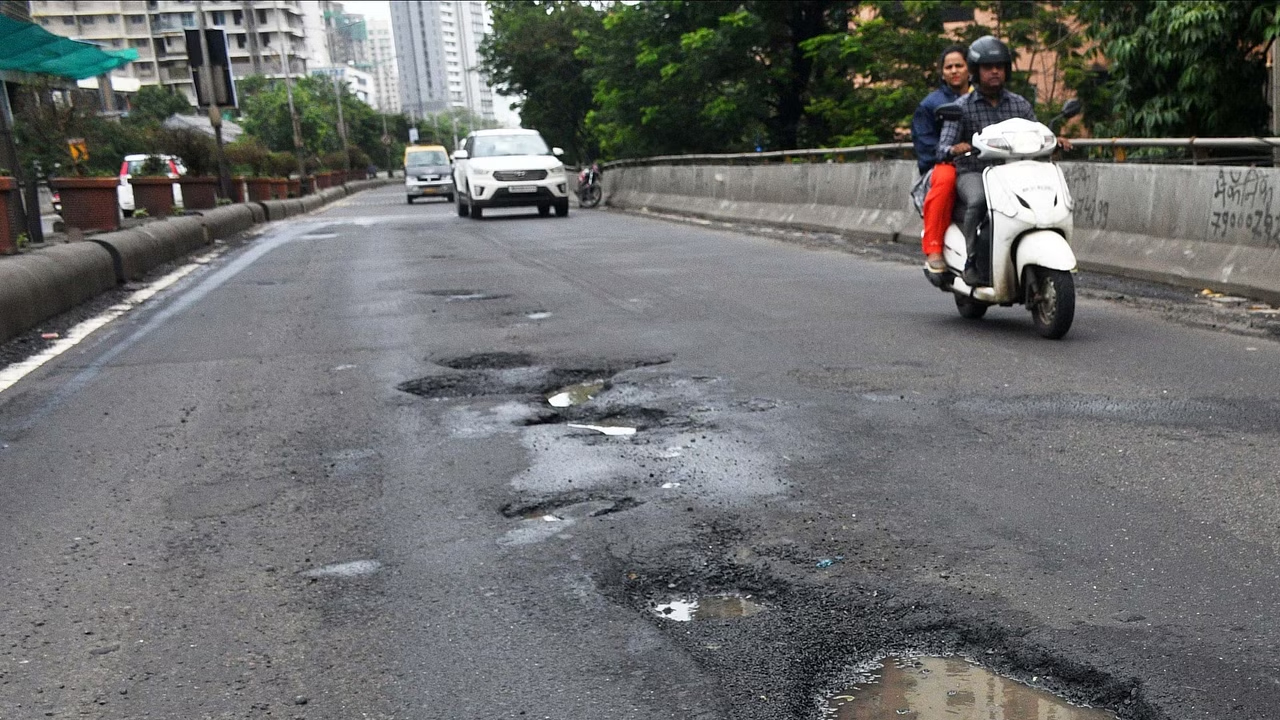
Mumbai: The Municipal Corporation of Greater Mumbai (MCGM) claims to have filled up 6,045 potholes across the metropolis from April 1 to July 24. However, there are several thousands more which need filling up and it is not clear when that will happen.
Ravi Raja, a former leader of the opposition in the BMC, said, “The potholes come up with great regularity because the original work itself is shoddy. If the contractors selected by the MCGM had done a good job initially, there would have been no potholes. These potholes are proof of massive corruption in the civic corporation.”
Where has all the money gone?
“In May-June, the MCGM had floated a tender for ₹250 crore for pothole filling and gave ₹2 crore to each ward for the same. Where has all the money gone? There are more than 16,000 potholes in the city,” Raja added.
Following heavy rains, thousands of potholes have cropped all over the city and suburbs like in the past years. These not only slow down vehicular traffic, but also pose a major danger to pedestrians.
“Parel flyover is a disgrace to the city and no one in the BMC appears to be bothered about it. The problem had started even before the rains. So it is wrong to blame the potholes here on the rains,” said Chandrakant Mhatre, a local citizen. The Lalbaug and Sion flyovers are fast catching up with Parel flyover in terms of potholes and uneven surfaces.
The BMC has carried out several experiments on roads to make the city pothole-free but without much success. Till date, 512 metric tonne of dry mix has been provided to 24 administrative wards in the city to fill up the craters. However, the work carried out by the contractors is shabby, complain activists.
The city witnessed heavy rains last week and that has increased the number of bad patches. The civic body has received several complaints about potholes from citizens through websites, mobile apps, social media and toll-free numbers. Additional municipal commissioner, P Velrasu, has started inspecting the work along with senior civic officials of the road department at several places in the city from Sunday.
BMC uses M-60 and reactive asphalt to fill up potholes
The BMC is using rapid hardening of concrete (also known as M-60) and reactive asphalt to fix potholes this year. After taking a review, he instructed the officials to fill all the bad patches on all the roads, including the eastern and western express highway and eastern freeway up on priority.
“Several teams have been formed for co-ordination to detect bad patches and get them filled in the proper manner on war-footing. Contractors have also been appointed in seven zones for two years to get the bad patches repaired.
However, the citizens and activists are not convinced by the BMC’s claims. “The civic body is spending crores but their work is shabby,” said Nikhil Desai, an activist from Matunga. “The BMC experiments with several different technologies but it gets washed out with heavy rain,” said Vinod Gholap, a resident of Malad. Godfrey Pimenta, an activist from Andheri.”
Funds allotted for potholes
Potholes filled from April 1 to July 24: Total 6,045
Funds to fill potholes
₹125 crore at zonal level
₹2 crore each for 24 administrative wards
Material used: 512 metric tonne dry cold mix
Road network in city: 2050km
Asphalt road: 1058km
Concrete road:1056km


Maharashtra
Municipal Commissioner directed to complete work on Bhandup Water Purification Project to ensure safe water supply to Mumbai

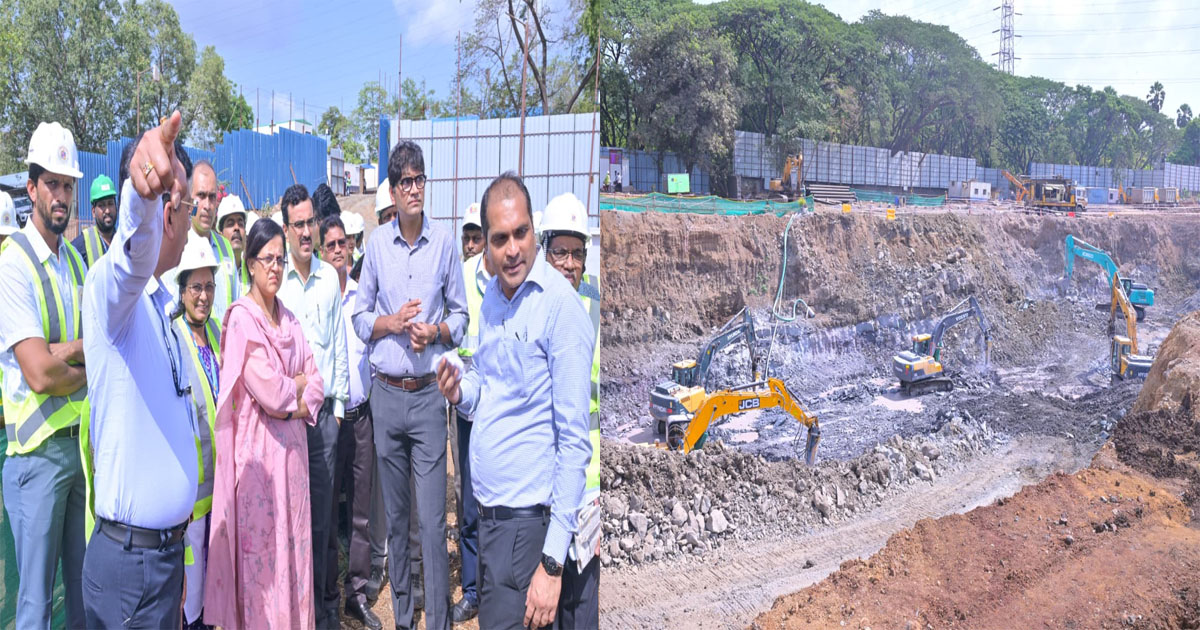
The state-of-the-art 2,000 million litres per day (MLPD) water treatment plant to be set up at the Bhandup Complex will significantly enhance the efficiency, transparency and resilience of the Mumbai Metropolitan Region’s water supply system. The project will help Mumbaikars get better quality, safe and sustainable drinking water as per national and international standards. Considering the growing population of the Mumbai Metropolitan Region, the pace of urbanisation, the growth of the industrial and commercial sector, as well as the increasing demand for water in the future, it is a key infrastructure project for Mumbai’s long-term water security. Municipal Commissioner Ashwini Bhide has directed that all necessary steps be taken to expedite all civil, structural, electrical, mechanical and process engineering works related to this water treatment project and complete the project ahead of schedule. A state-of-the-art Water Treatment Plant (WTP) with a capacity of 2,000 million litres per day (MLD) is being set up by the Mumbai Municipal Corporation (BMC) at Bhandup Complex. The water treatment project is expected to be completed by July 2028. Municipal Commissioner Ashwini Bhide visited the site of the water treatment project today (June 17, 2026) and inspected it. He also reviewed the progress.
Additional Municipal Commissioner (Project) Abhijit Bangar, Deputy Commissioner (Municipal Commissioner’s Office) Prashant Gaikwad, Deputy Commissioner (Special Engineering) Parshottam Malwade, Deputy Commissioner (Engineering) Shri. Shashank Bhoor, Chief Engineer (Water Supply Project) Chandrakant Choudhary, Chief Engineer (Mumbai Sewerage Project) Ashok Mengade, Chief Engineer (Bridges) Rajesh Mulla along with concerned engineers and officers were present on the occasion. There are two main systems for supplying water to Mumbai. From one of them, through the Tansa-Vitarna system, water from Tansa, Modak Sagar, Madhya Vitrna and Upper Vitrna dams is brought to the Bhandup Complex by gravity through water channels. This water is purified at the water purification centre in the Bhandup Complex. About 2500 million litres of water is supplied to the people of Mumbai daily through water reservoirs located at various locations. The 1910 million litres per day water purification project in the Bhandup Complex was built about 43 years ago. As the project has become structurally weak, a new water treatment project is being set up with a capacity of 2,000 million litres per day (MLD). The new water treatment project will process 2,000 million litres per day (MLD) of water. This water treatment project is crucial to increasing the capacity of the Bhandup Complex, which supplies water to the western and eastern suburbs of Mumbai.
Municipal Commissioner Ashwini Bhide said that the new water treatment project on 7.4 hectares of land in the Bhandup Complex will replace the existing project, which is the largest in Asia. It will help provide clean water to Mumbai. Its main objective is to meet the growing demand for water and replace the old project, which has reached the end of its life. Currently, soil testing, excavation, site clearance, relocation of power lines, tree planting, etc. are in full swing. Along with the construction works, mechanical, electrical and instrumentation work has also been started in parallel. The project works should be completed expeditiously by making additional manpower and machinery available. Instructions have been given to plan for excavation, radar transportation. Overall, the Brihanmumbai Municipal Corporation is committed to bridging the gap between the demand and supply of water for Mumbaikars. Bhandup Sewage Treatment Plant to be functional by October 2026.
The work of the 215 million litres per day (MLD) capacity sewage treatment plant project in Bhandup is in the final stages. Municipal Commissioner Ashwini Bhide inspected the work today (June 17, 2026). Bhide directed that the project be fully implemented by October 2026.
In view of environmental protection in Mumbai, the Brihanmumbai Municipal Corporation is setting up sewage treatment plants at a total of 7 locations. Under this, the work of Sewage Treatment Plant project is underway in Bhandup. Under this, the construction work of Primary Treatment Unit, Primary Clarifier, Continuous Sequencing Batch Reactor Tank, Air Blower Building and Digesters etc. has been completed. Mrs. Bhide inspected all the works and took detailed information.
Municipal Commissioner Ashwini Bhide said that the state-of-the-art Sewage Treatment Plant with a capacity of 215 million litres per day in Bhandup will be an important milestone for the Mumbai Metropolitan Region.
Maharashtra
Eknath Shinde’s Operation Tiger was successful… Uddhav Thackeray’s rebellion in Shiv Sena UBT, Sanjay Raut is angry
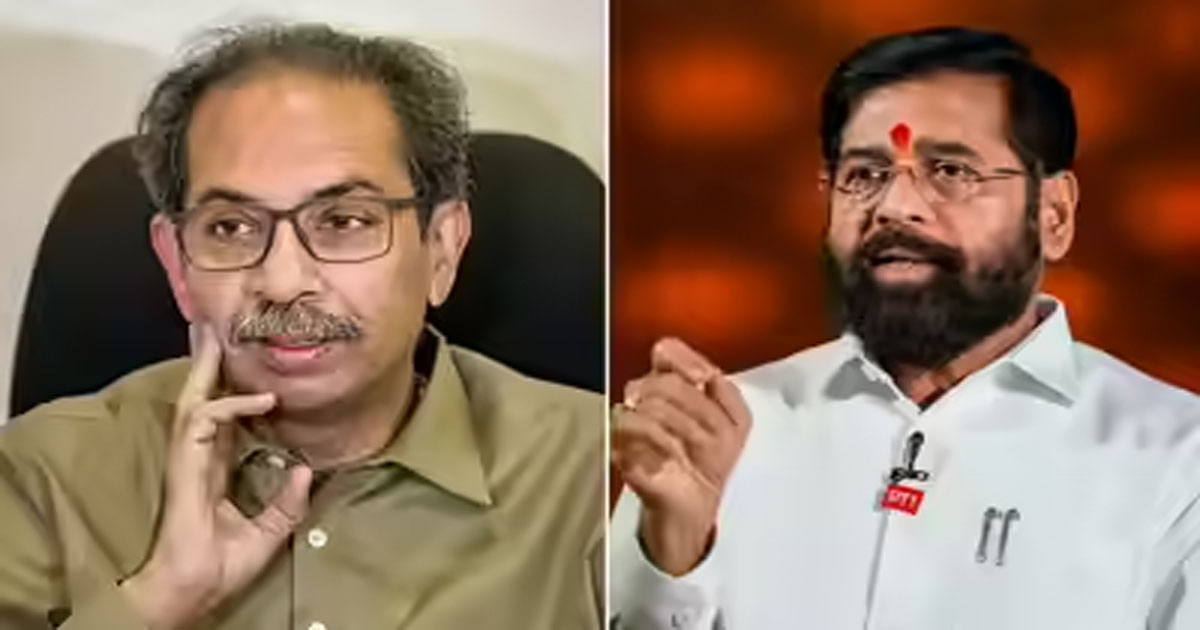
Mumbai: Operation Tiger has been successful. Shinde Sena has succeeded in forcing 6 MPs of Shiv Sena UBT to form another group, after which the rebellion has started again in UBT. The independent group has also been approved by the Lok Sabha Speaker. Now these 6 MPs can soon merge with Shiv Sena Shinde Party. After Operation Gaigar, Uddhav Thackeray group MP Sanjay Raut addressed a press conference and said that despite what Uddhav Thackeray did not do for these MPs, these people have acted dishonestly. This is dishonest. It is said that the rebel MPs are camped in Delhi and will merge with the Shinde group in the next two days. The operation in the state has been going on for the past several days and in June, a meeting of the India Alliance was also held in Delhi. In this meeting, Home Minister Amit Shah gave the green signal to Operation Tiger. The rebel MPs of the Thackeray group have been accommodated in a five-star hotel in Delhi. On Sunday, Uddhav Thackeray also held a meeting of his MPs in which five MPs attended the online meeting, due to which no one suspected them. This is the second biggest split in the Shiv Sena. After the rebellion of the Shiv Sena MPs, the Shiv Sena has become completely weakened. These rebel MPs include Sanjay Deshmukh, Ayut Mahal, Sanjay Jadhav, Parbhani, Sanjay Dina Patel, Mumbai, Nagesh Patil, Hingoli, Amarraje, Nimbalkar, Dhara Shiv. There is resentment in Shiv Sena after the rebellion of these MPs. Sanjay Raut is angry with them. He says that Uddhav Thackeray did so much for them but these people became dishonest.
Maharashtra
Muslim students deprived of government schemes… Only Hindu candidates are accepted for drone pilot training scheme: Raees Sheikh
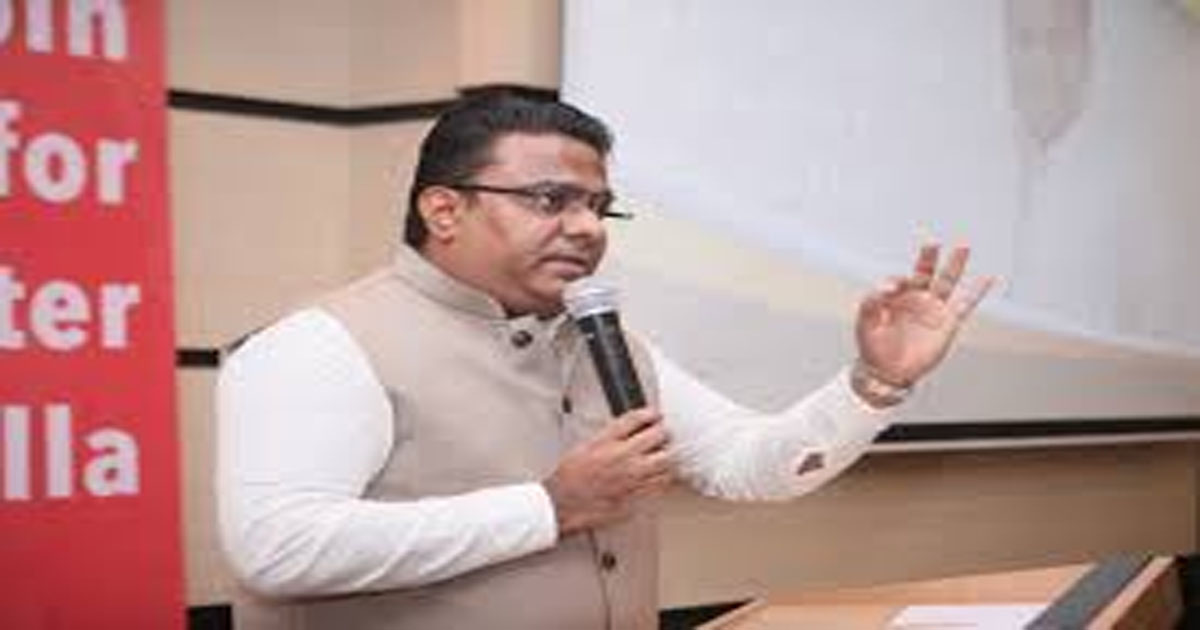
Mumbai: Raising the issue of Muslim youth and students being deprived of the government’s ‘Amrit’ institute schemes, Samajwadi Party MLA from Bhiwandi East Raees Sheikh has said that applications are being accepted for the drone pilot training programme of the institute run by the state government’s Other Backward Classes Welfare Department, while online applications from Muslim candidates are not being accepted. In his letter to Minister Atal Seo and the Chief Executive Officer of Maharashtra Research, Advancement and Training (AMRUT) Institute, MLA Raees Sheikh said that the Amrit Institute has invited applications till June 30 for drone pilot training which is aimed at candidates from Economically Weaker Sections (EWS) of the open category. “However, when applicants try to fill the online form, they are required to provide information about their religion and caste. The portal offers caste options only for Hindu communities, which prevents Muslim applicants from successfully submitting their applications.” Sheikh said he had received several complaints regarding this issue. Pointing out that the Amrit Institute aims to serve the economically weaker sections in the open category, he said that as an autonomous government institution, the founding government resolution (August 22, 2019) of Amrit does not mention any specific religion. It aims to work for different communities in the open category. Therefore, restricting applications in this manner is against the rules, he claimed. The Maharashtra government has set up several institutions for different social groups, including Barati, Aarti, Sarathi, Mahajyoti, Marti, and Amrit. While each institution may focus on a specific target group, it can be limited to a certain extent. They also provide training opportunities to and benefits to other communities. Sheikh added that unemployment is currently a major concern for youth of all castes and religions across the state. He said, “The Amritsar should not interpret the rules in such a way that Muslim youth are deprived of skilling opportunities. Minister Atul Sivaji, who heads the Other Backward Bahujan Welfare Department, should ensure that Muslim youth are not excluded from these training programmes.”

Municipal Commissioner directed to complete work on Bhandup Water Purification Project to ensure safe water supply to Mumbai

Eknath Shinde’s Operation Tiger was successful… Uddhav Thackeray’s rebellion in Shiv Sena UBT, Sanjay Raut is angry

Muslim students deprived of government schemes… Only Hindu candidates are accepted for drone pilot training scheme: Raees Sheikh

Maharashtra Freedom of Religion Bill 2026: Important seminar in Mumbai on constitutional rights and minority concerns, Justice Abhay Thapsay and legal experts express their views

‘It shows toolkit mindset’, BJP blasts Cong, Rahul over organising stir ahead of NEET re-exams

Trump, Netanyahu hold phone talks after Iranian missile fire: Israeli state media

Virar Citizens Protest Demolition Drive In Arnala; Police Block Lal Bawta March, Sit-in Held On Road

Indian equity markets trade higher as Iran-Israel tensions ease

Israel captures strategic Beaufort Castle in southern Lebanon

Rubio says Hamas disarmament key to Gaza rebuild
-

 Crime4 years ago
Class 10 student jumps to death in Jaipur
-

 Maharashtra2 years ago
Mumbai Local Train Update: Central Railway’s New Timetable Comes Into Effect; Check Full List Of Revised Timings & Stations
-

 Maharashtra2 years ago
Mumbai To Go Toll-Free Tonight! Maharashtra Govt Announces Complete Toll Waiver For Light Motor Vehicles At All 5 Entry Points Of City
-

 Maharashtra2 years ago
False photo of Imtiaz Jaleel’s rally, exposing the fooling conspiracy
-

 National News2 years ago
Ministry of Railways rolls out Special Drive 4.0 with focus on digitisation, cleanliness, inclusiveness and grievance redressal
-

 Maharashtra2 years ago
Maharashtra Elections 2024: Mumbai Metro & BEST Services Extended Till Midnight On Voting Day
-

 National News2 years ago
J&K: 4 Jawans Killed, 28 Injured After Bus Carrying BSF Personnel For Poll Duty Falls Into Gorge In Budgam; Terrifying Visuals Surface
-

 Crime2 years ago
Baba Siddique Murder: Mumbai Police Unable To Get Lawrence Bishnoi Custody Due To Home Ministry Order, Says Report