
Maharashtra
Mumbai News: BMC Pushes Ahead With ‘Civic Health Collaboration Model’, Outsourcing Dialysis, MRI, CT Scan & Blood Bank Services

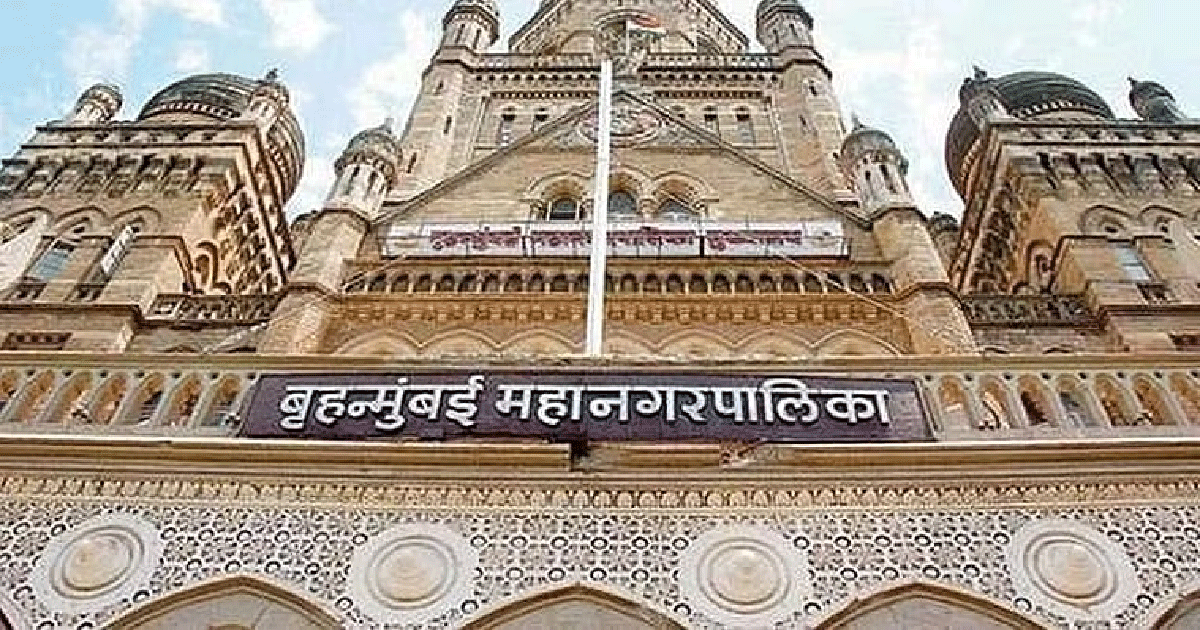
Mumbai: Despite strong opposition from residents and health activists, the Brihanmumbai Municipal Corporation (BMC) is pressing ahead with the privatisation of key hospital services. In its latest move, the civic body has invited tenders for setting up dialysis units, cath labs, MRI and CT scan facilities, and even a blood bank for transfusion patients in various peripheral hospitals through private operators.
New Model Replaces PPP for Hospital Services in Peripheral Facilities
This time, however, the outsourcing will be done under a new ‘Civic Health Collaboration Model’ instead of the earlier public-private partnership (PPP) framework.
Under this model, the civic body will rent out space in its peripheral hospitals to private operators, who will run these services and charge patients as per agreed rates. However, there is no clarity on the minimum number of patients to be referred daily from BMC hospitals for these facilities.
A senior official from the BMC’s Health Department admitted the model is not significantly different from the earlier PPP arrangement. “It is similar to the PPP model, where patients still have to pay for these services,” the official said.
The peripheral hospitals where this model will be implemented include Rajawadi Hospital in Ghatkopar, MT Agarwal in Mulund, Dr Ambedkar Hospital in Kandivli, Bhabha Hospitals in Bandra and Kurla, and Bhagwati Hospital in Borivali.
Dialysis at Rs 500 per Session for BMC Patients; Government Scheme Rates Apply
Under the new model, the civic body will set up dialysis centres at its peripheral hospitals in Borivali, Mulund, Ghatkopar, and Kandivali for a period of 10 years, with the option of two extensions of 10 years each. BMC patients will be charged Rs 500 per dialysis session, while those covered under government schemes will be billed as per approved rates.
Similarly, MRI and CT scan facilities will be established at Dr. Babasaheb Ambedkar Hospital, Kandivali (West), Khurshidjee Behramjee Bhabha General Hospital, Bandra (West), Harilal Bhagwati Municipal Hospital, Borivali, and M.T. Agrawal Municipal Hospital, Mulund. The civic body will provide dedicated space for these services on an annual rental basis.
Activists Warn of Commercialisation, Lack of Patient Referral Safeguards
However, the tender documents do not specify the service charges or the minimum number of BMC-referred patients to be served daily. “Without such clarity, the private operator could run the facility for commercial purposes, catering to patients from outside hospitals,” warned a health activist.
Health activists have questioned whether the civic body — which operates 212 health posts, 192 dispensaries, 30 maternity homes, and five specialised hospitals, including four medical colleges and major hospitals in the city — is steadily moving towards the privatisation of key healthcare services. “We have already seen doctors being appointed on contract, and even an unregistered doctor working in the ICU of V.N. Desai Hospital,” one activist said.

Maharashtra
Mumbai: Municipal Commissioner praises engineers of Project Department for work on shifting high voltage power towers in Bhandup

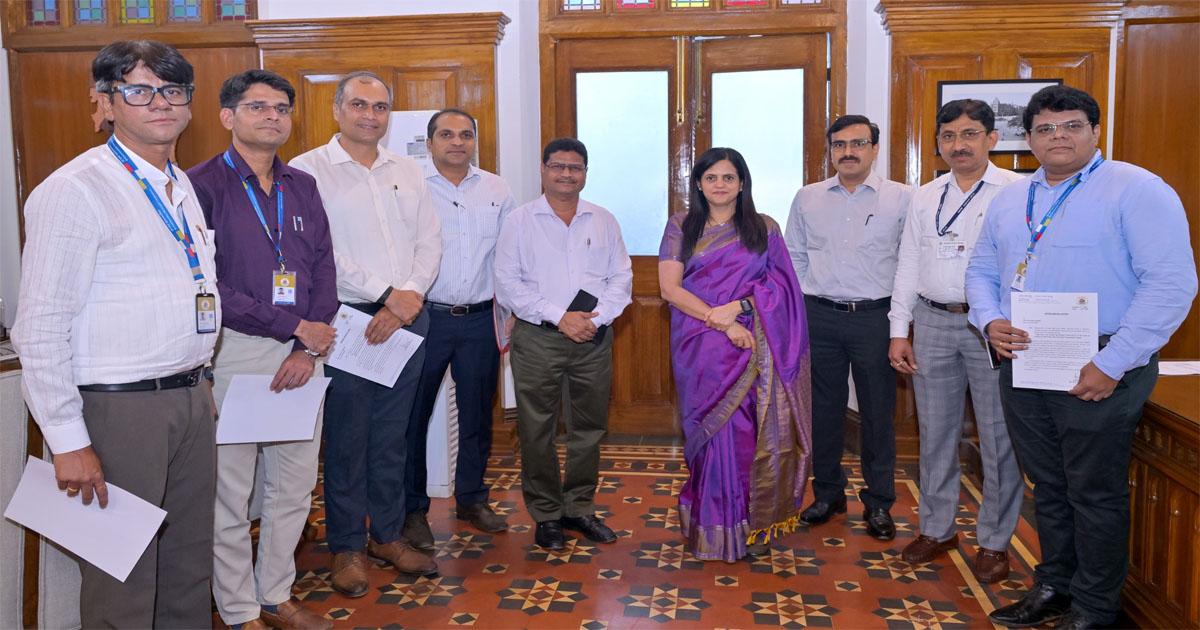
A project to purify 2000 million litres of water per day is being set up by the Mumbai Municipal Corporation in the Bhandup Complex, Mumbai. Under this project, the engineers of the Water Supply Project Department have saved the Municipal Corporation about Rs 20,000. Rs 7.48 crore in the work of shifting high voltage power towers. Taking note of this remarkable achievement, Municipal Commissioner Ashwini Bhide presented certificates of appreciation to the concerned engineers at the Municipal Corporation Headquarters today (June 19, 2026).
Executive Engineer Rajesh Kapdanis, Assistant Engineer Rishikesh Vartak, Second Engineer Gururaj Iwale, Second Engineer Subodh Nakhrekar are included in this. Deputy Commissioner (Municipal Commissioner Office) Prashant Gaikwad, Deputy Commissioner (Special Engineering) Parshottam Malwade, Chief Engineer (Water Supply Project) Chandrakant Choudhary were present on the occasion.
The 2000 million litres per day Water Treatment Project (WTP) at Bhandup Complex is going to be one of the largest water treatment projects in Asia. Based on modern technology, the project is being developed in a minimum footprint and as per the concept of zero waste water discharge. Since the Extra High Voltage (EHV) power transmission lines of M/s Tata Power Company Limited pass through the proposed project site, it was necessary to relocate these towers. Accordingly, the Municipal Corporation has initiated the process of shifting these power transmission lines from Tata Power Company.
Tata Power Company has submitted an estimated cost of Rs. 14.70 crore including goods and services tax for this work. As per the provisions of the agreement, the necessary advance has been paid to the project contractor M/s Welspun Enterprises Limited. As per the relocation plan, 5 new towers were erected in an area of about 500 metres in length to relocate the existing 3 high voltage towers. The work of shifting of power transmission lines was successfully completed in February 2026. 2 out of the 3 old towers have been completely removed. Under the guidance of Additional Municipal Commissioner (Projects) Abhijeet Bangar, the engineers of the Water Supply Project Department during the execution of the work noticed that the estimated cost submitted by Tata Power Company was relatively high. Accordingly, the engineers of the Water Supply Project Department re-evaluated the cost based on the actual work done for shifting of high voltage towers. The applicable rebates and payment of the salvage value of the removed towers were continuously followed up. Thereafter, Tata Power Company has approved the refund of an amount of Rs. 5 crore 76 lakhs. The Mumbai Municipal Corporation has completed the submission of the financial statement of the actual cost. In addition, the Municipal Corporation will also get the amount of the salvage value of the removed towers. In total, the actual cost of the work of shifting of high voltage towers is Rs. 6 crore 69 lakhs. Direct savings of Rs. 12 crore 46 lakhs as against Rs. 5 crore 76 lakhs initially paid. In addition, as per the provisions of the agreement, the Municipal Corporation has achieved financial savings of about Rs. 100000. Rs. 7 crore 48 lakhs on account of 10% overheads and profit of the contractor as well as GST amount. In addition, further financial savings are expected in the form of salvage value of the removed towers.
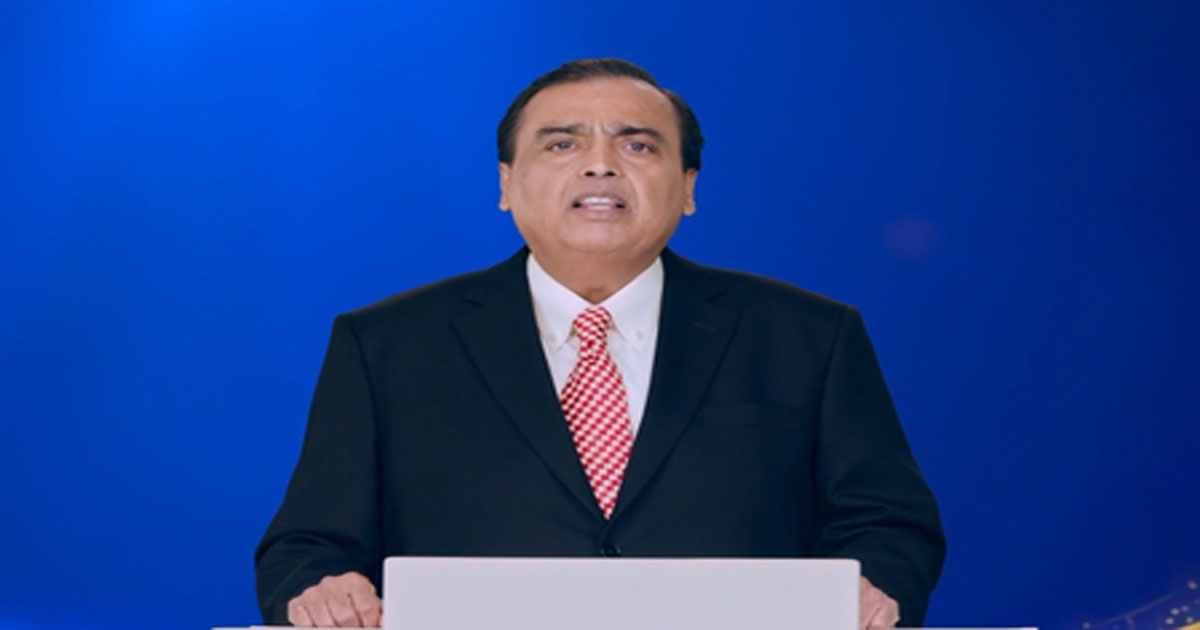
Mumbai, June 19: Reliance Industries Ltd (RIL) Chairman Mukesh Ambani on Friday outlined five major value creation pathways for the Group to create a diversified growth architecture spanning energy, materials, digital infrastructure, artificial intelligence, consumer businesses, and global exports.
Addressing Reliance shareholders, Ambani said: “First, the O2C business, the mainstay of Reliance so far, will increase earnings as soon as the geopolitical situation improves. Simultaneously, and more importantly, we are reinventing this business to create a new revenue stream less vulnerable to external volatility. We will convert all the crude oil we process into new materials ─ carbon fibre, speciality materials, green chemicals, and much more. This new vision will drive margin expansion and lay the foundation for our oil-to-chemicals-and-new materials business.”
He further stated that the second pathway comprises the new energy business, which has entered the phase of accelerated commissioning and early revenues. The integrated solar manufacturing and advanced battery platform will achieve one of the world’s lowest costs of RTC green power. It will also enable the world’s most competitive green hydrogen and green chemicals ecosystem.
Besides, the underground coal gasification business has immense growth potential, and the CBG business is ready to be scaled up as the world’s largest bioenergy business, he added.
Ambani identified the third path of growth as Reliance Intelligence, with AI becoming a multi-trillion-dollar business globally. “Reliance Intelligence will lead this business in India. The infrastructure for it is being built at breakneck speed, and it will fully operationalise over the next couple of years,” he remarked.
The Reliance Chairman listed the FMCG business as a new multi-billion-dollar growth engine with plans to grow it into India’s largest FMCG company, and among the biggest in the world.
“It is already among the top few players in various categories and is expanding globally. It recently entered Europe and Africa and will enter many more global markets going forward. Our FMCG growth path is neatly aligned to that of Reliance Retail. Both are anchored in our plan to create India’s most advanced manufacturing platform and a distribution and exports platform with tens of thousands of small, medium and large partners,” he maintained.
Ambani highlighted exports as the fifth path of the group’s growth. “Reliance has long been India’s largest merchandise exporter, with a proven globally competitive world-class platform for energy and materials exports. Leveraging this experience, Reliance aims to become an anchor institution for developing a globally competitive, multi-sector export hub, with a target to enable $125-150 billion in exports by 2032. In this way, we will enlarge global markets for Made in India brands,” he observed.
Hiring the best talent for this new venture has already begun. This scalable platform will strengthen India’s export ecosystem and external economic resilience. This ambition is not only about creating a larger Reliance. It is about creating a stronger India, Ambani added.
Maharashtra
Potholes on Mumbai roads should be filled according to scientific methods and set standards : Additional Municipal Commissioner
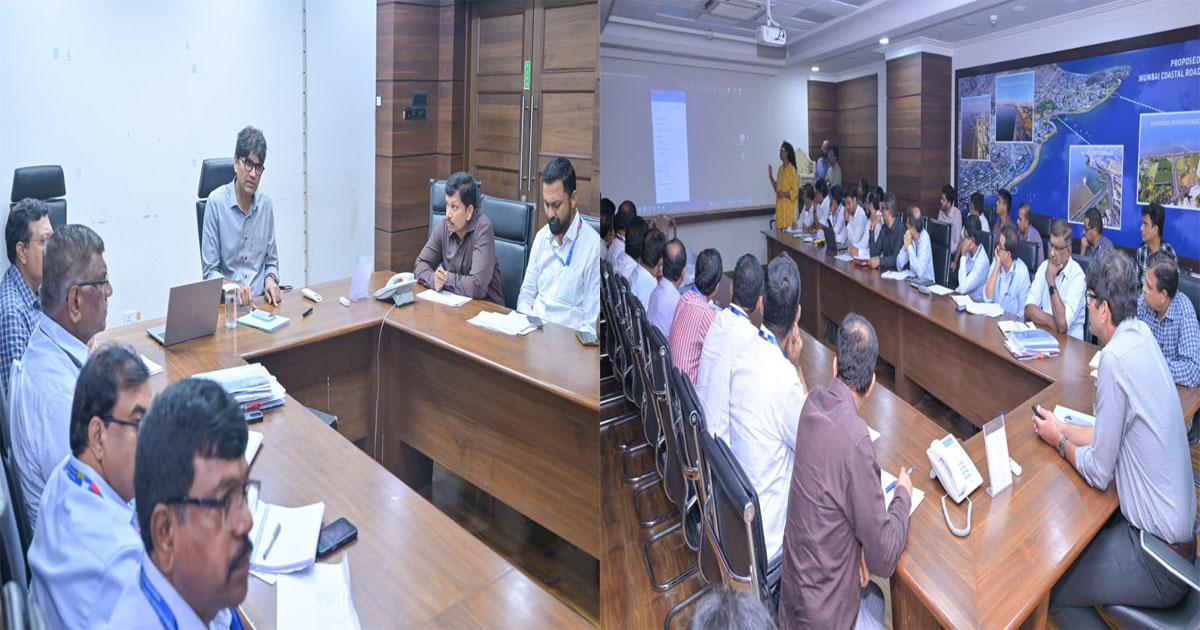
Cement concreting of about 1700 km of roads in Mumbai Metropolitan Region has been completed, and concreting of the remaining roads is in progress. Due to this comprehensive initiative, the number of potholes on the roads and the problems arising from them have significantly reduced during this monsoon season. This has also resulted in huge savings in the cost of filling the potholes. To effectively deal with the problem of potholes arising during the monsoon season on the roads within the municipal limits, the engineers of the road department should work with more vigilance and responsibility. Every complaint received regarding potholes should be disposed of within 24 hours. The bad patches should be brought to the fore immediately. Additional Municipal Commissioner (Projects) Abhijit Bangar directed that the engineers concerned should ensure that the potholes on the roads are filled with high quality by the contractors appointed as per the zone, following the prescribed technical standards and scientific methodology. Bangar also clarified that the secondary engineers appointed on a bat-by-bat basis should regularly visit the roads in their area on two wheels, know the current condition of the roads and ensure immediate action for necessary repairs. A meeting of the Assistant Engineers of the Roads and Transport Department was held at the Municipal Headquarters in which a detailed review of the progress of pre-monsoon works, preparations and necessary measures was taken. At that time, Additional Municipal Commissioner (Projects) Abhijeet Bangar gave various instructions. Deputy Commissioner (Infrastructure) Girish Nikam, Chief Engineer (Roads) Mr. Engineers including Mantiya Swamy were present.
Additional Municipal Commissioner (Projects) Abhijeet Bangar said that the Municipal Corporation has started a road concreting program to solve the problem of potholes on the roads / make the roads pothole-free. Under this, concreting of about 1700 km of cement roads has been completed. The concreting of the remaining roads will be done after the monsoon. Therefore, in future, more and more roads will be cemented and the problem of potholes will definitely reduce. Apart from this, there will be cost savings as well.
If the trench dug for utility channels is not refilled as per the technical standards, then during the monsoon, water enters the road structure. Due to which the strength of the road decreases and the process of road collapse starts. Keeping this in mind, various steps are being taken by the Mumbai Municipal Corporation to avoid inconvenience to the citizens. It is guaranteed that a pothole filled once using mastic will not open again. Accordingly, the Municipal Corporation has appointed zone-wise contractors for the maintenance of the roads. Engineers should periodically review their manpower, machinery and material stock. In particular, the availability of mastic cookers, pothole filling schedule, mastic cooker rounds should be coordinated. It should be strictly ensured that potholes on the roads are filled as per the laid down technical standards and scientific methods. Bangar directed that the potholes should be filled when they are small in size (6 inches). Bangar said that along with the road engineers, 227 secondary engineers have been appointed in the municipal corporation for a total of 227 bats (one for each electoral ward). These secondary engineers should inspect the roads in their assigned section daily and if any potholes are found, they should be filled immediately using a rectangle. They should go around on a two-wheeler and inspect the roads in their work area. The complaints of potholes should be coordinated through the central system and the department office and resolved in a timely manner. Instead of waiting for complaints, potholes should be recorded and filled on their own. The Municipal Corporation is responsible for both the Eastern Expressway (18.6 km – Mulund to Shiv) and the Western Expressway (27.6 km – Dahisar Checkpoint to Mahim) in Mumbai. Along with this, the responsibility of the Eastern Freeway (17 km) also falls on the Municipal Corporation. The Road Department should take full care that there are no potholes on these three highways. Other government authorities in Mumbai should also take proper care of the roads under their jurisdiction, and the Municipal Corporation administration should follow suit so that the potholes are filled immediately, Bangar also said. If potholes occur on the roads within the Defect Liability Period (DLP), no premium should be paid. Moreover, the project roads and roads should be filled free of cost by the contractor concerned within the Defect Liability Period (DLP) as per the terms and conditions of the tender within a limited time frame. The Municipal Corporation should not pay any compensation/premium for filling these potholes. Because the condition of maintenance/upkeep is included in the contract itself. On the contrary, if the number of potholes on the roads has increased during the period of liability for defects, then punitive action should be taken, Bangar said, explaining the project roads, defects and emphasised on improving the road.

Mumbai: Municipal Commissioner praises engineers of Project Department for work on shifting high voltage power towers in Bhandup

Govt removes domicile certificate requirement for SC, OBC scholarships to ease access

Mukesh Ambani unveils 5-way roadmap to propel RIL’s growth ahead

Delhi HC adjourns Salman Khan’s plea against release of ‘Kala Hiran’ till July 1

Potholes on Mumbai roads should be filled according to scientific methods and set standards : Additional Municipal Commissioner

G7 Summit: PM Modi, Prez Trump discussed West Asia, India-US trade deal & bilateral cooperation across sectors: MEA

Trump, Netanyahu hold phone talks after Iranian missile fire: Israeli state media

Indian equity markets trade higher as Iran-Israel tensions ease

Rubio says Hamas disarmament key to Gaza rebuild

Israel captures strategic Beaufort Castle in southern Lebanon
-

 Crime4 years ago
Class 10 student jumps to death in Jaipur
-

 Maharashtra2 years ago
Mumbai Local Train Update: Central Railway’s New Timetable Comes Into Effect; Check Full List Of Revised Timings & Stations
-

 Maharashtra2 years ago
Mumbai To Go Toll-Free Tonight! Maharashtra Govt Announces Complete Toll Waiver For Light Motor Vehicles At All 5 Entry Points Of City
-

 Maharashtra2 years ago
False photo of Imtiaz Jaleel’s rally, exposing the fooling conspiracy
-

 National News2 years ago
Ministry of Railways rolls out Special Drive 4.0 with focus on digitisation, cleanliness, inclusiveness and grievance redressal
-

 Maharashtra2 years ago
Maharashtra Elections 2024: Mumbai Metro & BEST Services Extended Till Midnight On Voting Day
-

 National News2 years ago
J&K: 4 Jawans Killed, 28 Injured After Bus Carrying BSF Personnel For Poll Duty Falls Into Gorge In Budgam; Terrifying Visuals Surface
-

 Crime2 years ago
Baba Siddique Murder: Mumbai Police Unable To Get Lawrence Bishnoi Custody Due To Home Ministry Order, Says Report