
Maharashtra
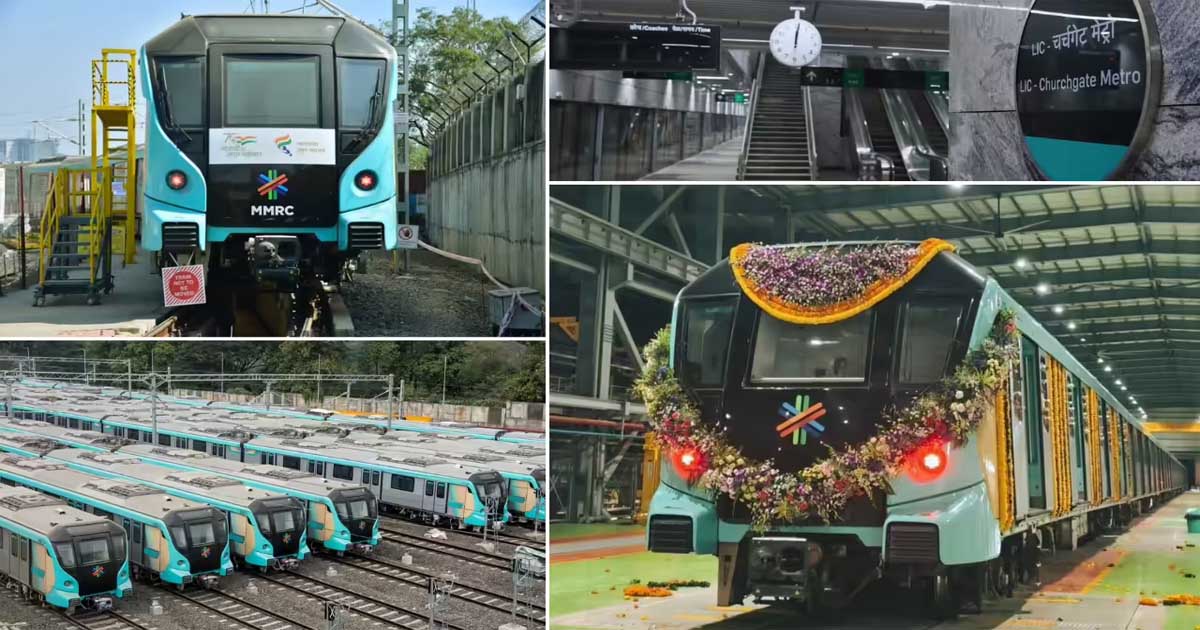
Mumbai Metro Line-3 (Aqua Line) Fully Operational — A New Era of Urban Connectivity Begins

Mumbai, October 2025:
Mumbai has taken a major leap in public transportation with the full launch of the Mumbai Metro Line-3 (Aqua Line) — the city’s first underground metro corridor. Connecting the northern suburbs to South Mumbai, the 33.5-kilometre line aims to transform the way Mumbaikars commute, offering a fast, clean, and comfortable alternative to road and rail congestion.
Route and Connectivity
The Aqua Line runs from Aarey / JVLR in the north to Cuffe Parade in the south, covering 27 underground stations. The line passes through key business and residential areas such as Bandra Kurla Complex (BKC), Dharavi, Siddhivinayak, Worli, Churchgate, CSMT, and Nariman Point.
One of its biggest highlights is direct connectivity to both terminals of Mumbai’s airport — the Domestic and International terminals — making airport travel smoother than ever before.
The entire north–south journey can now be completed in about 45 minutes, a major improvement over the two-hour average by road during peak traffic.
Station Highlights
Some of the prominent stations on the Aqua Line include:
Aarey / JVLR, Seepz, MIDC, Marol Naka, Airport Terminal 1, Airport Terminal 2, BKC, Dharavi, Siddhivinayak, Worli, Haji Ali, Churchgate, and Cuffe Parade.
Each station features modern facilities such as escalators, elevators, digital information screens, and air-conditioned platforms. Entry and exit points are designed for smooth passenger movement, including dedicated access for persons with disabilities.
Technology and Features
- Fully underground corridor, ensuring minimal impact on road traffic.
- 8-coach trains with advanced safety systems and automatic doors.
- Platform screen doors at major stations for enhanced safety.
- Real-time passenger information systems inside trains and stations.
- CCTV surveillance, emergency communication systems, and modern fire safety equipment.
- Energy-efficient operations, regenerative braking, and noise reduction design.
- Seamless ticketing system* with QR code tickets, smart cards, and mobile app payments.
Fares and Timings
The fare structure has been designed to stay affordable and distance-based:
| Distance (in km) | Fare (₹) |
|---|---|
| 0 – 3 km | 10 |
| 3 – 12 km | 20 |
| 12 – 18 km | 30 |
| 18 – 24 km | 40 |
| 24 – 30 km | 50 |
| 30 – 36 km | 60 |
| 36 – 42 km | 70 |
| Beyond 42 km | 80 |
Metro services operate from 5:55 AM to 10:30 PM, with trains running every few minutes during peak hours to ensure minimal waiting time.
Benefits for the City
- Time Saving: Travel from the northern suburbs to South Mumbai in less than an hour.
- Reduced Traffic: Expected to ease road congestion and lessen dependence on private vehicles.
- Environmental Impact: Cleaner, electric transit reduces carbon emissions.
- Economic Growth: Improved access to commercial hubs like BKC, Fort, and Nariman Point will support business and real estate growth.
- Passenger Comfort: Air-conditioned coaches, smooth rides, and high safety standards enhance the commuting experience.
A Step Toward a Smarter Mumbai
With Metro Line-3 now fully operational, Mumbai moves closer to a truly integrated transport network, connecting its suburban rail, metro, and bus systems. The Aqua Line is more than just a transport project — it’s a symbol of progress, promising faster, greener, and more efficient mobility for millions of daily commuters.

Mumbai, Oct 8: The Enforcement Directorate (ED) attached immovable properties in Mumbai, Pune and Raigad (Maharashtra) worth Rs 567.45 crore in connection with a Rs 48,000 crore collective investment scheme operated by Pearls Agrotech Corporation Limited (PACL) for development of farm land, an official said on Thursday.
The PACL’s properties were attached by ED’s Delhi Zonal Office under the provisions of the Prevention of Money Laundering Act (PMLA), 2002.
The ED has attached 48 immovable properties held in the names of Prateek Kumar, Ansh Prateek Kumar, and entities namely Beaming Infradevelopers, Ganraj Properties, and Greenfield Estates Limited, having a current market value of Rs 567.45 crore.
With this attachment, the ED has so far attached movable and immovable properties worth around Rs 30,235.21 crore, including assets located in India and abroad.
The ED’s investigation was initiated on the basis of an FIR registered by the Central Bureau of Investigation (CBI) in New Delhi under Sections 120-B and 420 of the Indian Penal Code, 1860, dealing with conspiracy and cheating.
Subsequently, the CBI filed a charge sheet and a supplementary charge sheet against 33 accused for their role in running an illegal investment scheme.
According to the charge sheets, the accused entities and individuals operated a massive illegal collective investment scheme, fraudulently mobilising more than Rs 48,000 crore from lakhs of investors across India under the pretext of sale and development of agricultural land.
Investors were induced to invest through cash down payment and instalment payment plans and were made to sign misleading documents such as agreements, powers of attorney and other instruments.
“In most cases, land was never delivered, resulting in unpaid investor dues of around Rs 48,000 crore,” the ED said.
The ED recorded an Enforcement Case Information Report (ECIR) in the case in 2016 and filed a charge sheet in 2018, followed by six supplementary charge sheets in 2022, 2025 and 2026 against the various accused.
“Prateek Kumar was arraigned as an accused (A-13) in the First Supplementary charge sheet dated August 20, 2022, filed in the case immediately, where cognisance was taken by the Special Court vide order dated September 19, 2022,” the ED added.
Subsequently, an open-ended Non-Bailable Warrant (NBW) was issued against Prateek Kumar by the Special Court on April 9, 2025.
These entities are beneficially owned and controlled by Prateek Kumar.
The investigation revealed that these immovable properties were purchased using funds diverted from PACL, which had originally collected money from gullible investors, thereby constituting proceeds of crime.

Kanpur, Oct 8: A woman in Uttar Pradesh’s Kanpur has accused her husband of giving her triple talaq and said on Thursday that she was ousted from their family home after 16 years of marriage and two children. The victim has alleged that her husband was having an affair with a woman living in the same area.
The woman named Afreen has claimed that she caught her husband red-handed cheating on her on July 7 with another woman.
“It has happened multiple times. I have tried to explain and communicate many times; he didn’t agree. Even when I caught him that day, we got into a huge fight. All the relatives were called. When confronted, he said that ‘she is everything to me; I will divorce you. I will stay with her; I will marry her,'” she said, quoting her husband.
The woman also alleged that she was physically abused.
“He used to torment the children and me. He used to beat me up and did not provide for me. I was physically abused, but I persevered through it, thinking that it should not affect my family, my children.”
She said that she was married for 16 years and has two teenage children.
“I have been married for 16 years, and I have two sons. One is 13; the other is 15. His husband’s family did not take any action and just asked me to wait and have patience. I did too, thinking my family would be torn apart,” Afreen added.
According to the woman, at around 9:30 p.m. on August 12, her husband pronounced triple talaq in front of their two sons and threw her out of the house. She subsequently lodged a complaint at Chaman Ganj police station.
Police have registered an FIR under provisions related to dowry harassment, assault, an illicit relationship, and the Muslim Women (Protection of Rights on Marriage) Act.
Speaking on the matter, Kanpur Deputy Commissioner of Police (DCP) (Central), Atul Srivastava, said, “An FIR has been registered in the Chamanganj police station against the accused. Investigations are ongoing in the matter.”
Incidentally, the woman complained that her initial complaints were not being registered by the police, and the FIR was only filed recently in October.
However, when asked, the DCP said mediation was initially being attempted in the matter. After the issue of triple talaq came to light, an FIR was registered immediately.
The woman demanded that her husband should be arrested as soon as possible.
Crime
2021 Antilia bomb-scare: Bombay HC expresses surprise over Vaze’s high-end cars, long stay in hotel

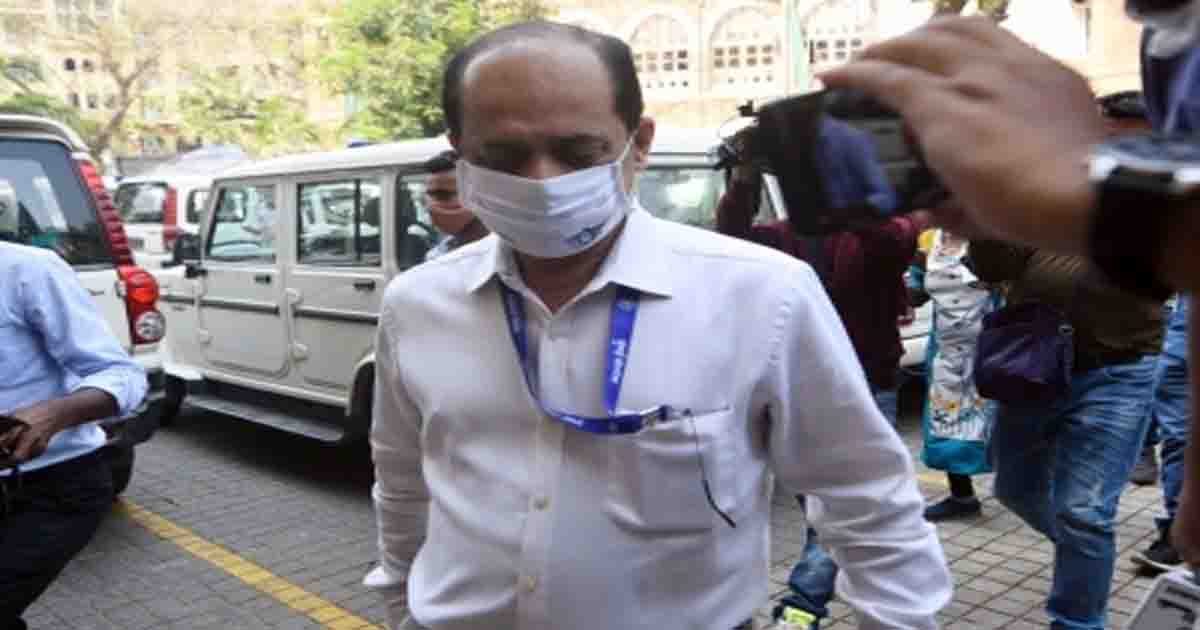
Mumbai, Oct 8: The Bombay High Court on Thursday expressed surprise over the lifestyle, including the use of high-end cars, of former Assistant Police Inspector Sachin Vaze, who is currently in judicial custody in the 2021 Antilia bomb-scare case and Mansukh Hiran murder case, a lawyer said.
A bench of Justices Girish Kulkarni and Neela Gokhale also flagged Vaze’s extended stay of about 100 days in a room booked at the Oberoi hotel, asking how an officer of the rank of Assistant Police Inspector could afford to drive high-end vehicles.
The High Court said that these aspects of Vaze’s financial situation, conduct, and professional record are relevant to assessing the charges against him.
The bench was hearing an appeal filed by the National Investigation Agency (NIA), challenging a September 29 order of a special court granting bail to Vaze.
The High Court last week granted interim stay on the bail order, resulting in Vaze remaining in judicial custody.
Additional Solicitor General Anil Singh, representing the NIA, shared with the High Court witness statements that mentioned that Vaze used expensive and luxury vehicles while he was an Assistant Police Inspector.
During the hearing, Anil Singh read out a witness statement, which said that Vaze travelled in a black Mercedes and asked those accompanying him to turn off their mobile phones.
The court then asked whether the Mercedes belonged to Vaze and whether there was any evidence that the vehicle was registered in his name.
After the NIA responded in the affirmative, the court asked whether it was normal for an Assistant Police Inspector to own such an expensive car.
The court remarked, “Since we have not yet seen an Assistant Police Inspector driving a Mercedes…”
The court also sought information from the NIA regarding Vaze’s other vehicles and reviewed a list of five vehicles he used while serving as Assistant Police Inspector.
This list included a white BMW, a black Volvo, a white Mercedes, a white Toyota Land Cruiser Prado, and another black Mercedes.
Seeing the number of vehicles, the court said, “He (Sachin Vaze) owns five vehicles…”
The court noted that, according to statements submitted by the NIA, Vaze travelled in a high-end Mercedes to the Mumbai Police Commissioner’s office and the Maharashtra Chief Minister’s residence, ‘Varsha’.
NIA’s lawyer Anil Singh also told the court that Vaze had stayed at a seven-star hotel in South Mumbai for around 100 days.
The court asked how a police officer, earning a monthly salary of around Rs 90,000 at the time, could afford such an expensive lifestyle.
The NIA said that these vehicles owned and used by Vaze are being linked to alleged extortion in the case.
Vaze is an accused in the Antilia bomb scare case, where an SUV laden with explosives was recovered near industrialist Mukesh Ambani’s Mumbai residence in February 2021.
The High Court asked the NIA the reasons for opposing Vaze’s bail that was granted with stringent conditions, partly due to the fact that he has been in custody for more than five years now.
The NIA lawyer said Vaze could tamper with witnesses and destroy evidence.
“He (Vaze) was earlier charged in a fake encounter case. He was a police officer who had the duty of protecting the public. But he himself indulged in criminal activities where he not just tried to instil fear and terror but he murdered a person,” Singh said.

‘Chief Minister should contest election from here’: Akhilesh Yadav’s dare to Adityanath in Ayodhya

PACL investment fraud: ED attaches properties worth Rs 567 crore in Mumbai, Pune

Kanpur woman given triple talaq after 16 years of marriage, demands husband arrest

2021 Antilia bomb-scare: Bombay HC expresses surprise over Vaze’s high-end cars, long stay in hotel

NHRC seeks report from Delhi Police over women journalists’ sexual harassment allegations

Gift to President Putin part of PM Modi bid to globally display India’s heritage

PM Modi’s warm camaraderie with Putin, Xi on full display at BRICS Summit

Complaint against Netflix & Mukesh Chhabra for inappropriate language on ‘India’s Got Latent 2’

INDIA bloc begins protest march against ECI

Maha Congress stages agitation against Gyanesh Kumar
-

 Crime4 years ago
Class 10 student jumps to death in Jaipur
-

 Maharashtra2 years ago
Mumbai Local Train Update: Central Railway’s New Timetable Comes Into Effect; Check Full List Of Revised Timings & Stations
-

 Maharashtra2 years ago
Mumbai To Go Toll-Free Tonight! Maharashtra Govt Announces Complete Toll Waiver For Light Motor Vehicles At All 5 Entry Points Of City
-

 Maharashtra2 years ago
False photo of Imtiaz Jaleel’s rally, exposing the fooling conspiracy
-

 National News2 years ago
Ministry of Railways rolls out Special Drive 4.0 with focus on digitisation, cleanliness, inclusiveness and grievance redressal
-

 Maharashtra2 years ago
Maharashtra Elections 2024: Mumbai Metro & BEST Services Extended Till Midnight On Voting Day
-

 National News2 years ago
J&K: 4 Jawans Killed, 28 Injured After Bus Carrying BSF Personnel For Poll Duty Falls Into Gorge In Budgam; Terrifying Visuals Surface
-

 Crime2 years ago
Baba Siddique Murder: Mumbai Police Unable To Get Lawrence Bishnoi Custody Due To Home Ministry Order, Says Report