
Crime
Mumbai: Matunga Police File FIR Against Vikram Solar, Vikram Capital In ₹1,050-Crore Fraud Case

Mumbai: The Matunga police have registered a criminal case, following a court directive, against two firms operating in the solar energy and financial services sectors, Vikram Solar (VSL) and Vikram Capital Management Pvt Ltd (VCMPL), along with 11 of their directors. The accused have been charged with criminal conspiracy and fraud.
About The Case
According to the FIR, the complaint was filed by Nilang Navneet Shah, a 50-year-old businessman and director at Seklink Technologies and Realty Pvt Ltd, a Mumbai-based firm with global operations in technology and realty. Shah alleges that he was defrauded by the directors of the Vikram group of companies under the pretext of a solar module export deal to a US-based buyer, Kopia Power Devco.
The FIR names Vikram Solar Ltd and Vikram Capital Management Pvt Ltd, along with their directors Dnyanesh Chaudhary, Krishna Kumar Maskara, Vikram Swaroop, Probir Roy, Neha Agarwal, Ratnabali Kakkar, Subramani Krishnappa, Ewan Saha, Ulpi Gupta, Siddhnath Pradhan, and Parikshit Chiripal.
In January 2022, Shah was introduced to Dnyanesh Chaudhary through a mutual acquaintance at an office in Dadar East. Chaudhary is a director in both Vikram Solar Ltd and Vikram Capital Management Pvt Ltd. Subsequently, Shah was introduced to other directors of the two companies and multiple meetings were held regarding a proposed business collaboration.
According to the complaint, Chaudhary proposed a business model where Vikram Solar would supply solar photovoltaic modules, and Shah’s Seklink would help facilitate exports to overseas buyers like Kopia Power. The parties agreed on a tripartite agreement signed on January 4, 2023, promising Shah a 12% margin on the deal amounting to Rs 76 crore (approximately $9.6 million). In May 2022, Kopia reportedly issued a purchase order worth $131 million (approx. Rs 1,050 crore) to Vikram Solar and made a 20% advance payment of Rs 210 crore.
Shah claims this critical information was not shared with him, and that the Vikram companies allegedly manipulated the paperwork postdated to misappropriate the funds. As per Shah, Vikram Capital which was not originally part of the Kopia deal was wrongfully introduced as the distributor for the export, and Shah was misled into signing older, backdated agreements that enabled the Vikram group to misuse the Standby Letter of Credit (SBLC) issued for the export transaction.
Instead of using the SBLC funds for producing and exporting PV modules to the US buyer, the accused allegedly diverted the funds to bolster their bid under the Government of India’s Production Linked Incentive Scheme (PLI – Tranche II), for domestic solar manufacturing. When Shah demanded his 12% margin as agreed, he was promised payment via a postdated cheque. Krishna Kumar Maskara, a director at Vikram Solar, reportedly issued a cheque (No. 677119 dated November 4, 2023) as a guarantee.
However, the cheque bounced twice, once on November 7, 2023, and again on January 29, 2024, with the bank citing a “stop payment” instruction by the drawer. In a further twist, Vikram Solar later claimed the cheque had been lost or stolen, which Shah asserts is a blatant attempt to cover up the “fraud”. Shah, realising the extent of the alleged fraud, filed a written complaint with Matunga police station and moved the 30th Court in Kurla.
The court has since directed the police to register a criminal case. Following court orders, the Matunga police have registered a case under the Indian Penal Code Sections 120(B) (criminal conspiracy), 406 (criminal breach of trust), 409 (criminal breach of trust by public servant, or by banker, merchant or agent), 417 (cheating), 418 (cheating with knowledge), and 420 (cheating and dishonestly inducing delivery of property)

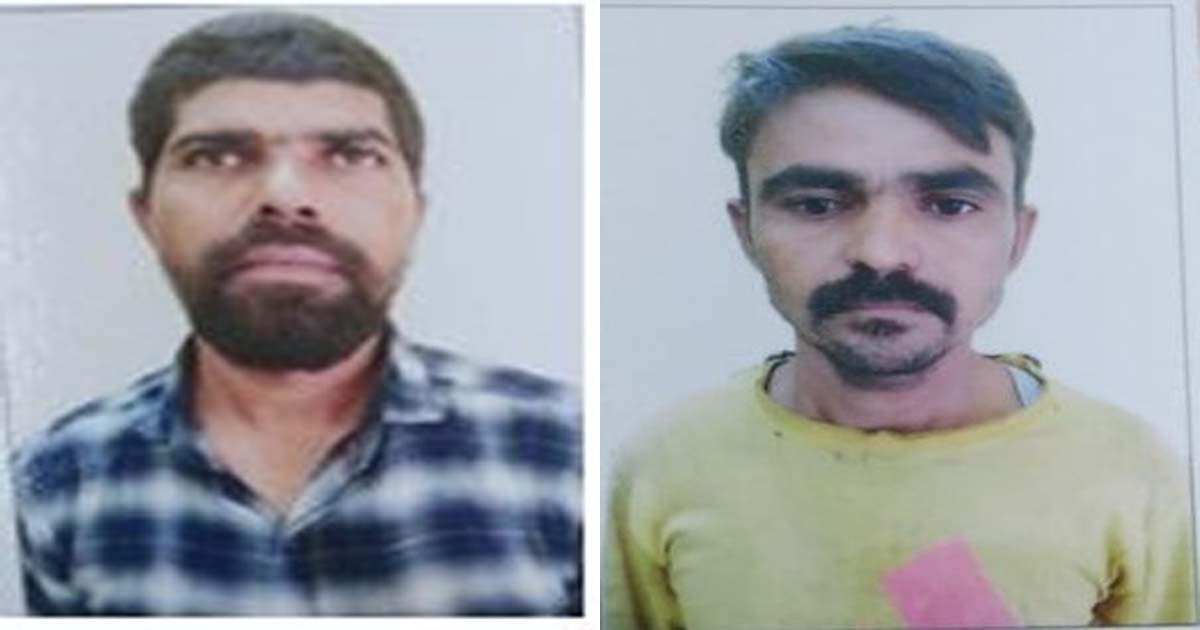
New Delhi, Sep 9: The Narcotics Control Bureau (NCB) has secured the conviction of two drug traffickers in connection with the seizure of 1,127 kg of Ganja in Maharashtra, in a major success in its efforts to combat drug trafficking and further the vision of a ‘Drug-Free India’.
The Additional Sessions Judge, Special NDPS Court, Biloli, Nanded, Maharashtra, on September 8, convicted two accused persons, Gokul Narayan Rajput and Sunil Yadav Mahajan, in connection with the seizure made by the NCB Mumbai Zonal Unit.
The case pertains to the interception of a truck bearing registration number MH-26-AD-2165 on November 15, 2021, near Manjram village in Naigaon taluka of Nanded district, Maharashtra. During a search of the vehicle, NCB officers recovered 49 bags containing 1,127 kg of Ganja. The contraband, along with the truck and other articles, was seized in accordance with the law.
Rajput, the driver of the truck, and Mahajan, the co-driver, were arrested in connection with the case. The prosecution established before the court that both accused were in conscious possession of a commercial quantity of Ganja and had failed to provide a satisfactory explanation for their possession.
After examining the evidence and material on record, the court held that the prosecution had proved the offence beyond reasonable doubt under Section 20(b)(ii)(C) of the Narcotic Drugs and Psychotropic Substances (NDPS) Act, 1985.
The court subsequently convicted both accused and sentenced each of them to 10 years of rigorous imprisonment (RI) and imposed a fine of Rs 1 lakh. In case of default in payment of the fine, each accused will undergo an additional six months of rigorous imprisonment.
The court also ordered the confiscation of the truck and other relevant seized articles in accordance with the provisions of the NDPS Act, subject to the statutory process.
The conviction underscores the NCB’s commitment to effective investigation and prosecution of drug trafficking cases and its resolve to dismantle drug trafficking networks, thereby contributing to the vision of a ‘Drug-Free India’.
The NCB has also appealed to citizens to support its fight against drug trafficking. Information related to the sale, trafficking or distribution of narcotic drugs can be shared by calling the MANAS-National Narcotics Helpline toll-free number, 1933. The identity of the informer will be kept confidential.
Crime
Delhi Assembly, Sardar Patel Vidyalaya, several govt offices receive bomb threats; checking on


New Delhi, Sep 8: The Delhi Assembly, Sardar Patel Vidyalaya (SPV) and several government establishments in the national capital received bomb threats through email on Tuesday, officials said, prompting security agencies to immediately activate standard operating procedures and launch extensive checks at the affected locations.
The threats were reported during the morning hours, following which security agencies and emergency response teams were rushed to the locations as a precautionary measure. Officials said the areas were secured and detailed anti-sabotage checks were initiated to rule out any possible security threat.
Teams from the Delhi Police, bomb detection and disposal squads, dog units, and the Delhi Fire Services reached the locations and cordoned off the concerned areas as part of the standard security protocol followed after receipt of a bomb threat.
So far, nothing suspicious has been found at any of the locations searched by the security teams, officials said. The premises are being checked thoroughly, and authorities are continuing to monitor the situation as part of the precautionary arrangements.
Further investigation into the email and the source of the threat is underway.
The latest threat has come amid existing security concerns surrounding the Delhi Assembly, which has received similar bomb threats in the past.
Earlier, on August 14, multiple locations in Delhi, including the Delhi High Court, had received bomb threats, prompting heightened security arrangements in the national capital ahead of Independence Day.
The Delhi High Court had received the threat through email, with the message warning of an alleged blast at the court at 2.11 p.m. on August 15. The email was titled ‘BOMB Blast Delhi High Court @ 2:11PM’ and specifically mentioned the timing of the purported explosion.
The same email had also threatened explosions at district courts in Delhi at 3:11 p.m. on August 15, adding to security concerns in the national capital ahead of the Independence Day celebrations.
In addition to the High Court, five other locations had received bomb threats through phone calls. These included Jamnagar House, Jhandewalan Building, the MB Road Saket office, Terminal 3 of the Indira Gandhi International (IGI) Airport, and the Sub-Divisional Magistrate (SDM) office in Delhi Cantonment.
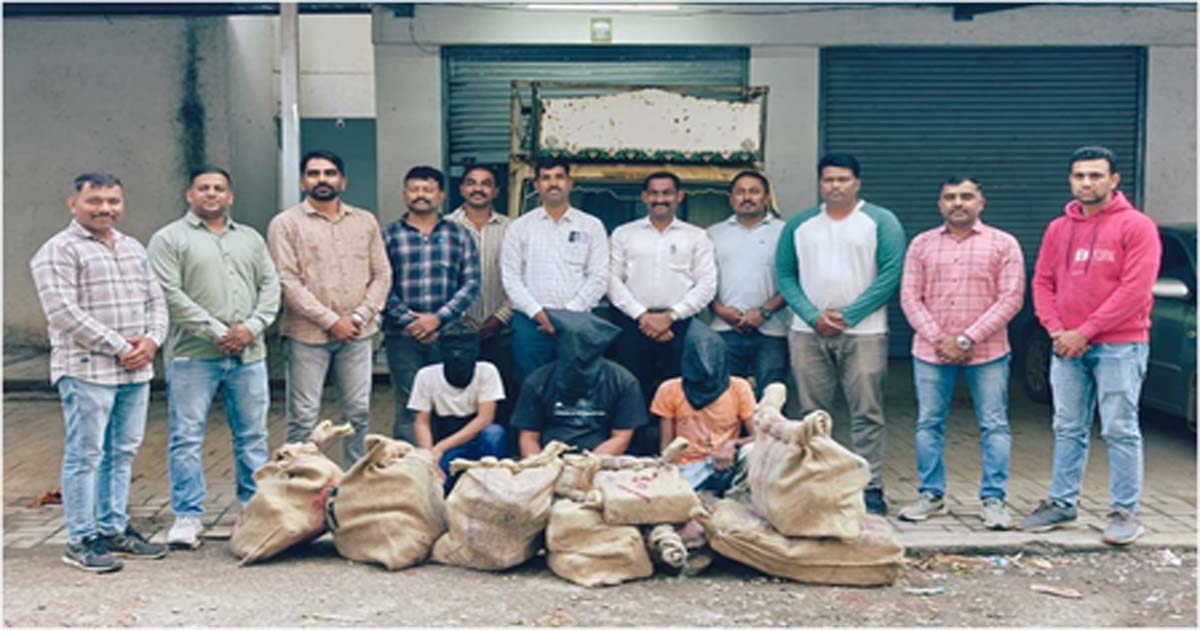
Pune, Sep 8: Pune Crime Branch has busted an inter-state gang involved in stealing transformers and copper wires from them in and around the city, arresting three accused and recovering stolen property worth Rs 12.73 lakh, officials said on Tuesday.
According to police, the Unit 7 team was conducting patrols when Constable Vinayak Salve received confidential information that some people involved in transformer thefts would arrive in the Wadegaon area of Haveli taluka.
Acting on the information, Police Inspector Wahid Pathan directed PSI Rahul Kolpe to verify the information and initiate legal action. A trap was subsequently laid at Wadegaon, where police intercepted a goods tempo bearing registration number MH-12-GT-6675 on Sunday.
Three men travelling in the vehicle were detained and questioned. They were identified as Mohammed Sahebjaan Mangrekhan, 30, Adarsh Chandraprakash Pandey, 22, and Chandrasen Shivratan Dharia, 28. Police said all three are originally from Uttar Pradesh and were residing in Pune district.
During questioning, the accused confessed to stealing copper wires from eight transformers over the past five to six months. The thefts reportedly took place in Wadegaon, Ashtapur, Sangvi Sandas, Nhavi Sandas, and Hingangaon areas under the jurisdiction of Lonikand Police Station.
Police said the arrests helped solve eight cases registered at Lonikand Police Station under Section 324(4) of the Bharatiya Nyaya Sanhita and Section 136 of the Indian Electricity Act.
The three accused were arrested, and further investigation is underway to determine whether other people were involved in the gang and identify where the stolen copper material was being sold.
Earlier, on May 27, Pimpri-Chinchwad Police had arrested three members of a gang involved in 48 cases of electricity transformer theft across Pune district.
Chakan North police had cracked the case while investigating the theft of copper wires from a transformer installed at Nexus Healthcare in Biradwadi village, Khed taluka. The theft reportedly took place between May 15 and 16.

Maharashtra SIR: Congress MLA seeks deadline extension for electoral roll corrections

Sugar prices curb: Maharashtra sugarcane crushing season set to begin on Oct 15

MPSC aspirant’s death by suicide in Pune amid paper leak row sparks outrage

Nepal: Gen-Z uprising days treated differently by political parties

Pandya included as Padikkal and Gaikwad to captain India A against Australia A

Four more Indian nationals rescued in Nepal, 120 cross safely from China: MEA

Nepal floods: First batch of 106 stranded Maharashtra tourists reaches India; 84 more expected today (Ld)

India, Brazil sign ICT MoU to deepen digital, telecom cooperation

Maharashtra: 17-year-old boy dies by suicide on Raksha Bandhan after emotional social media posts

Sensex ends flat, Nifty gains marginally as oil surge, US-Iran tensions weigh
-

 Crime4 years ago
Class 10 student jumps to death in Jaipur
-

 Maharashtra2 years ago
Mumbai Local Train Update: Central Railway’s New Timetable Comes Into Effect; Check Full List Of Revised Timings & Stations
-

 Maharashtra2 years ago
Mumbai To Go Toll-Free Tonight! Maharashtra Govt Announces Complete Toll Waiver For Light Motor Vehicles At All 5 Entry Points Of City
-

 Maharashtra2 years ago
False photo of Imtiaz Jaleel’s rally, exposing the fooling conspiracy
-

 National News2 years ago
Ministry of Railways rolls out Special Drive 4.0 with focus on digitisation, cleanliness, inclusiveness and grievance redressal
-

 Maharashtra2 years ago
Maharashtra Elections 2024: Mumbai Metro & BEST Services Extended Till Midnight On Voting Day
-

 National News2 years ago
J&K: 4 Jawans Killed, 28 Injured After Bus Carrying BSF Personnel For Poll Duty Falls Into Gorge In Budgam; Terrifying Visuals Surface
-

 Crime2 years ago
Baba Siddique Murder: Mumbai Police Unable To Get Lawrence Bishnoi Custody Due To Home Ministry Order, Says Report