
Maharashtra
Mumbai 26 July 2005 Floods: When City Was Submerged With 944 mm Of Rain In 24 Hours Leaving 914 Dead, Thousands Displaced

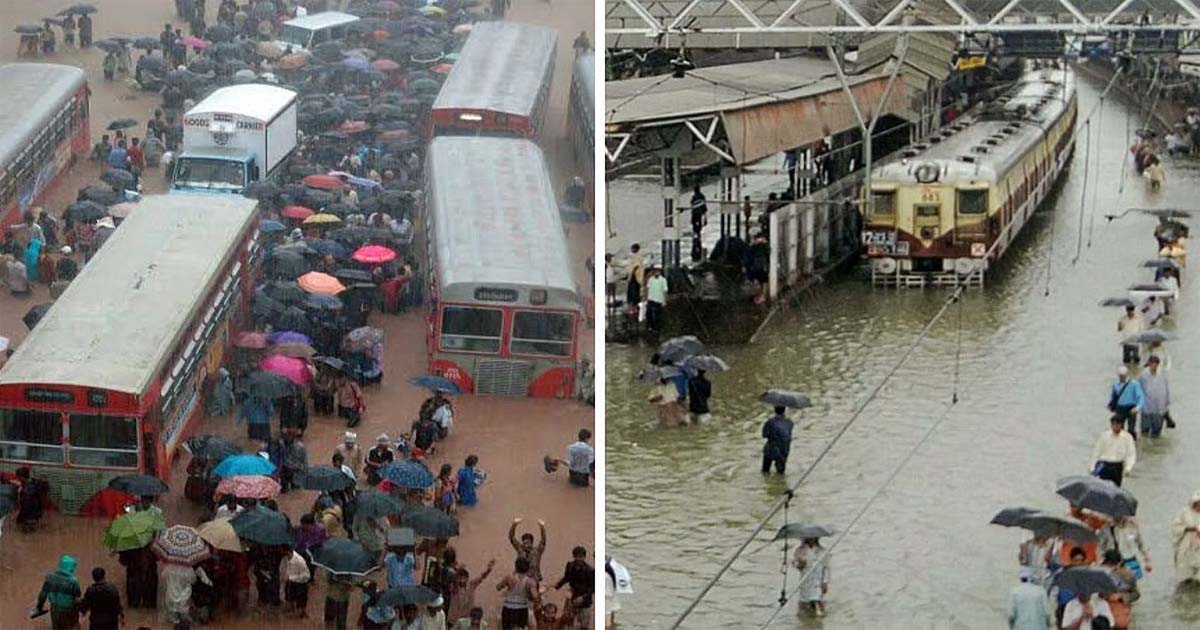
Every year, the monsoon season disrupts life across Indian cities with heavy rainfall, waterlogging and traffic chaos. But July 26, 2005, stands out as a day that etched itself into Mumbai’s history as one of its darkest and most devastating.
On that day, Mumbai received an unprecedented 944 mm of rain in just 24 hours, nearly half of its annual average. Between 8 am and 8 pm alone, 644 mm poured down. It remains the eighth-highest 24-hour rainfall ever recorded anywhere in the world. The city, unprepared for such intensity, was brought to a grinding halt.
Internet Flooded With Old Visuals, Still Haunting Mumbaikars
Several netizens took to social media to share haunting visuals from the 2005 Mumbai floods, recalling the day when the city came to a complete standstill. Many described it as an unforgettable chapter in Mumbai’s history, marked by chaos, resilience and unity.
While some reflected on the overwhelming scale of the disaster, others remembered how the crisis revealed the undying spirit of Mumbai, with strangers helping each other and communities coming together in the face of adversity.
Mumbai’s Lifeline Took Serious Hit, 52 Local Trains Damaged
As floodwaters rose, roads vanished beneath torrents of water. Local trains, the city’s lifeline, stopped completely, with tracks submerged and 52 trains damaged. Thousands were stranded in stations, schools and offices overnight. Low-lying areas like Dharavi and the Bandra-Kurla Complex were heavily inundated, while vehicles were swept away or immobilised.
The scale of disruption was staggering. Over 37,000 auto-rickshaws, 4,000 taxis, 900 BEST buses and 10,000 trucks and tempos were either damaged or rendered unusable. Even the skies were no refuge. For the first time ever, Mumbai’s airports shut down, with Chhatrapati Shivaji International Airport and the Juhu airstrip closed for more than 30 hours. More than 700 flights were cancelled or delayed, creating nationwide ripples in air traffic.
Over 900 Killed, Property Worth ₹5.5 Billion Destroyed
The economic loss was estimated at Rs 5.5 billion (around 100 million USD). But the cost in human lives and suffering was far greater. According to official reports, 914 people lost their lives, many due to drowning, electrocution and landslides. More than 14,000 homes were destroyed, leaving thousands without shelter, food or drinking water.
Communication networks also failed. Around 5 million mobile users and 2.3 million landline connections went dead for several hours, hampering emergency rescue operations. Emergency services were overwhelmed, as the city grappled with a disaster it had never imagined.
The 2005 floods served as a harsh wake-up call, exposing Mumbai’s vulnerability to extreme weather. In the years since, the government has worked on improving disaster preparedness, such as creating specialised disaster management units, upgrading early warning systems and installing floodgates and dewatering pumps at critical points.
Yet, even two decades later, as visuals from 2005 resurface each year, a haunting question persists: Is Mumbai truly prepared to face another flood of that magnitude?

Maharashtra
Azmi’s unique protest… Wearing a mask, he reached Nagpur Assembly with a banner demanding effective action to end toxic air pollution in Mumbai, SMS company

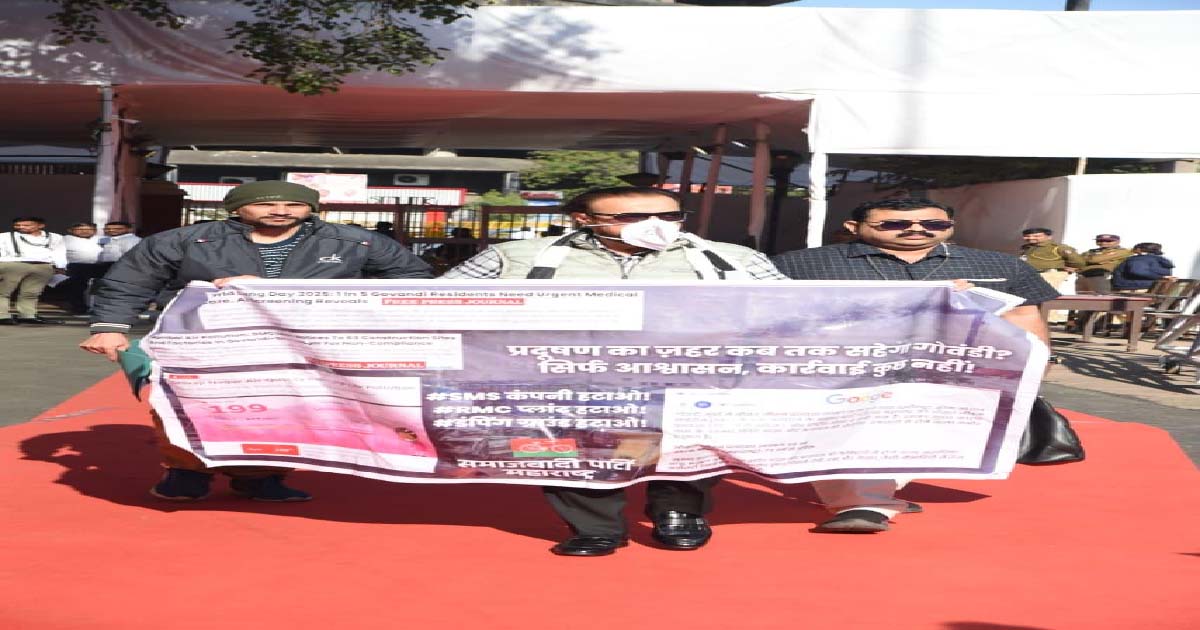
Mumbai: Air pollution and toxic atmosphere are common in Mankhurd Shivaji Nagar. The people of Shivaji Nagar and Govindi are facing toxic fumes every day. Successive governments have neglected this area because it is a poor neighbourhood.
On the second day of the winter session of the Assembly today, the Samajwadi Party (SP) made a clear demand.
It has demanded the immediate closure of the SMS company, RMC plant, and dumping ground and made it clear to the government that it should stop playing with the lives of the common man.
The government should take effective steps to eliminate this toxic air pollution. Abu Asim Azmi said that due to the SMS company in Govandi, the average age of people has increased to 39 years and diseases are spreading due to burning waste and chemical materials in it, so it should be banned immediately. He further said that clean sanitation and other facilities should be available in Govandi and such a factory should be closed so that the people can live a healthy life. Abu Asim Azmi protested against the toxic air outside the Nagpur Assembly in a very unique way by holding a banner and wearing a mask.
Maharashtra
Increase in crime incidents in Mankhurd Shivaji Nagar, demand for action against drug dealers and drug users, Abu Asim demands in Nagpur Assembly
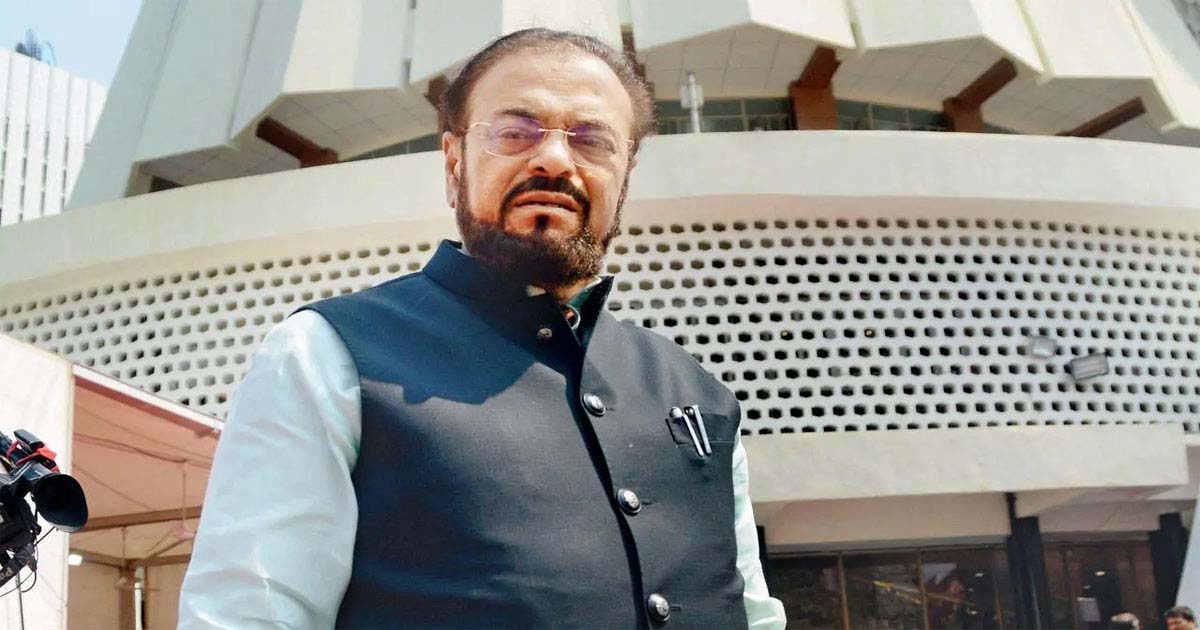
Mumbai: Due to the increase in crime incidents in Mumbai’s Mankhurd Shivaji Nagar, the law and order situation is dire. Due to the shortage of police manpower, it is difficult to control crimes. Three murders have been committed here in three months. The increasing incidents of crime. Maharashtra Samajwadi Party leader and MLA Abu Asim Azmi, while addressing the Nagpur winter session, expressed concern and said that he demanded an increase in the police manpower and the establishment of a new police station in Shivaji Nagar so that criminal elements can be curbed. Along with this, he has also demanded action against drug and drug addicts here. Abu Asim Azmi told the House on a notice seeking attention that there has been an increase in murders, attempted murders and robberies last month. A 24-year-old coconut vendor was murdered over a money transaction. The second murder was committed due to personal enmity and the third murder was committed due to drug dealing. The police are investigating this case in connection with drugs. Mankhurd Shivaji Nagar is a poor area. The law and order situation here is bad due to drug addicts and drug dealers. The population here has also increased immensely. Whenever a road expansion or other project is started somewhere, people are rehabilitated here. That is why there is a shortage of police here. Even after setting up a bat post, there is no police in it because there is a shortage of police manpower. In such a situation, Azmi has demanded that police be deployed here.
Maharashtra
Mumbai: Hajra, wife of builder Riaz in Kurla, accused of illegal abortion, Kherwadi police registers case against mother

Mumbai: An incident has come to light in Mumbai in which a case has been registered against a mother for illegally aborting a pregnancy. Kherwadi police have registered a case of abortion against the second wife of Kurla builder Riaz Shah. On December 7, Riaz Shah’s son filed a complaint in which it was stated that Hajra Shah had miscarried a 24-month-old child. The abortion was done using contraception in 2024 and on the complaint of this illegal act, the police have registered a case against Hajra and her brother Ashfaq under sections 88, 91, 238 of the BNS. This is the first case of its kind in which a case has been registered against the mother for wasting contraception. In 2024, when Riaz Shah asked his wife where the child was, she said that she had miscarried and that she had done the autopsy of the newborn in the Kurla Sunni graveyard and her brothers Ashfaq and Imran Lado knew about this. When Riaz checked in the graveyard, no record of the newborn was found, after which the police registered a case of misleading and aborting the child. Junaid Riaz Shah has filed a complaint against Liya. The police are investigating the matter further.

Azmi’s unique protest… Wearing a mask, he reached Nagpur Assembly with a banner demanding effective action to end toxic air pollution in Mumbai, SMS company

Increase in crime incidents in Mankhurd Shivaji Nagar, demand for action against drug dealers and drug users, Abu Asim demands in Nagpur Assembly

Vashi’s Raheja Residency Fire Tragedy: Case Registered Against Building Manager & Fire Service Contractor After 4 Deaths, Including 6-Year-Old Girl

Mumbai: Hajra, wife of builder Riaz in Kurla, accused of illegal abortion, Kherwadi police registers case against mother

BJP dares CM Mamata to protest against DMK MP’s ‘derogatory’ remarks about Vande Mataram writer

Kalyan College Namaz Controversy: SIO Demands Action Against Perpetrators

A powerful explosion near Delhi’s Red Fort… High alert across Delhi after the blast; 8 people killed; forensic team arrives at the scene.

Dharmendra’s Fan, An Auto-Rickshaw Driver, Breaks Down Outside Actor’s Mumbai Home After His Discharge, Says ‘Admired Him Since Childhood

SS Rajamouli Faces FIR For ‘Hurting’ Religious Sentiments Over Controversial Lord Hanuman Remark At Varanasi Event In Hyderabad

Mumbai Local Train Update: Megablock On Central, Harbour, Trans-Harbour & Western Railway Lines On Nov 16; Check Details
-

 Crime3 years ago
Class 10 student jumps to death in Jaipur
-
 Maharashtra1 year ago
Mumbai Local Train Update: Central Railway’s New Timetable Comes Into Effect; Check Full List Of Revised Timings & Stations
-
 Maharashtra1 year ago
Mumbai To Go Toll-Free Tonight! Maharashtra Govt Announces Complete Toll Waiver For Light Motor Vehicles At All 5 Entry Points Of City
-

 Maharashtra1 year ago
False photo of Imtiaz Jaleel’s rally, exposing the fooling conspiracy
-
 National News1 year ago
Ministry of Railways rolls out Special Drive 4.0 with focus on digitisation, cleanliness, inclusiveness and grievance redressal
-
 Maharashtra1 year ago
Maharashtra Elections 2024: Mumbai Metro & BEST Services Extended Till Midnight On Voting Day
-

 National News1 year ago
J&K: 4 Jawans Killed, 28 Injured After Bus Carrying BSF Personnel For Poll Duty Falls Into Gorge In Budgam; Terrifying Visuals Surface
-

 Crime1 year ago
Baba Siddique Murder: Mumbai Police Unable To Get Lawrence Bishnoi Custody Due To Home Ministry Order, Says Report