
National News
Mulayam Singh Yadav: The three-time UP CM was the ‘Dhartiputra’ of national politics

He was known as ‘Dhartiputra’ and remained a true son of the soil. His style of politics was firmly grounded and success and failure did not affect him.
Mulayam Singh Yadav was one of the last of his generation of politicians who kept his values intact and did not corporatize his politics.
For him, the last man in the line remained important – whether it was from his family, his village or his state. He was a friend of friends and even turned his foes into friends.
Mulayam Singh had first contested the Assembly election from Karhal in 1967 on Ram Manohar Lohia’s Samyukta Socialist Party ticket.
Groomed by the likes of Ram Manohar Lohia and Raj Narain, Yadav served eight terms as the member of the state Assembly.
In 1975, during Indira Gandhi’s imposition of the Emergency, Yadav was arrested and kept in custody for 19 months.
He first became a state minister in 1977. Later, in 1980, he became the president of the Lok Dal in Uttar Pradesh which later became a part of the Janata Dal.
In 1982, he was elected leader of the opposition in the Uttar Pradesh Legislative Council and held that post until 1985. When the Lok Dal party split, Yadav launched the Krantikari Morcha party.
Mulayam Singh Yadav first became the chief minister of Uttar Pradesh in 1989.
Being a shrewd politician, he had the uncanny knack of sensing the upheavals in politics.
After the collapse of the V.P. Singh national government in November 1990, Yadav joined Chandra Shekhar’s Janata Dal (Socialist) party and continued in office as the chief minister with the support of the Congress.
His government fell when the Congress withdrew support in April 1991 and Mulayam Singh lost to the BJP in the midterm elections.
In 1992, Yadav founded his own Samajwadi Party and then allied with the Bahujan Samaj Party for the elections to the Uttar Pradesh Assembly, held in November 1993.
The alliance between the Samajwadi Party and Bahujan Samaj Party prevented the return of the BJP to power in the state and Yadav became the chief minister of Uttar Pradesh with the support of Congress and Janata Dal.
Mulayam’s stand on the movement for demanding separate statehood for Uttarakhand was as much controversial as his stand on Ayodhya movement in 1990 was.
The firing on Ayodhya activists and then Uttarakhand activists at Muzaffarnagar on October 2, 1994 remained black spots of his regime.
In 1995, the SP-BSP alliance broke with the infamous State Guest House incident but Mulayam Singh Yadav made sure that his party bounced back to power in 2003.
He was sworn in as the chief minister of Uttar Pradesh for the third time in September 2003.
Yadav contested the 2004 Lok Sabha elections from Mainpuri while he was still Chief Minister of Uttar Pradesh. However, he later resigned from the Lok Sabha and continued as chief minister till 2007 when the SP lost to the BSP in the state elections.
Mulayam Singh Yadav was one of the few politicians who blatantly promoted nepotism and had no qualms about it. At any given time, there were about a dozen family members in politics in Uttar Pradesh.
“He always pushed us into politics and asked us to make a career for ourselves. It was always he who decided what was best for us and took keen interest in our careers,” said one of his nephews.
Mulayam Singh valued his friends deeply. Whether it was Beni Prasad Varma, or Azam Khan or Mohan Singh or Janeshwar Mishra – each one had a special place in his life.
His war with Balram Singh Yadav and Darshan Singh Yadav in Etawah had acquired legendary proportions, but Mulayam, over a period of time, managed to change his equations and both became his friends.
Mulayam shared a love-hate relationship with the media. His famous ‘Halla Bol’ agitation against some newspapers grabbed national headlines.
However, Mulayam made sure that his individual relationship with journalists never deteriorated. Even if he ticked off a scribe for his writing, he made sure to call out to him and mend fences at the earliest.
For party workers, he remained their beloved ‘Netaji’ – one who was always approachable and available.
“I do not remember a single occasion when I went to meet Mulayam Singh and came back without doing so. He remembered even the smallest party worker by name and it was this that endeared him to everyone,” said a senior party MLA.
Mulayam Singh Yadav was one chief minister who enjoyed full loyalty from his bureaucrats. He took tough decisions and his officers implemented them. In fact, many claim that the politicisation of bureaucracy began only after Mulayam became the chief minister.
In the past five years, after Akhilesh Yadav took over the reins of the party, Mulayam had withdrawn into a shell.
The changing dynamics in the party reduced the stream of visitors into a trickle and Mulayam – for the first time, became a lonely man.
“He would often ask us if there was anyone waiting to meet him. He loved going to the party office and relished the hustle-bustle there. At home, he had almost nothing to do and this bothered him,” said one of his close staff members.
Mulayam was disturbed by the recent happenings in his family — daughter-in-law Aparna joining the BJP, the split between son Akhilesh and brother Shivpal. He made no public mention of it but it was clear that he was deeply affected by what was happening.
The demise of his second wife Sadhana Gupta Yadav in July this year, sources say, left Mulayam distressed and lonely and this led to a deterioration in his physical condition.


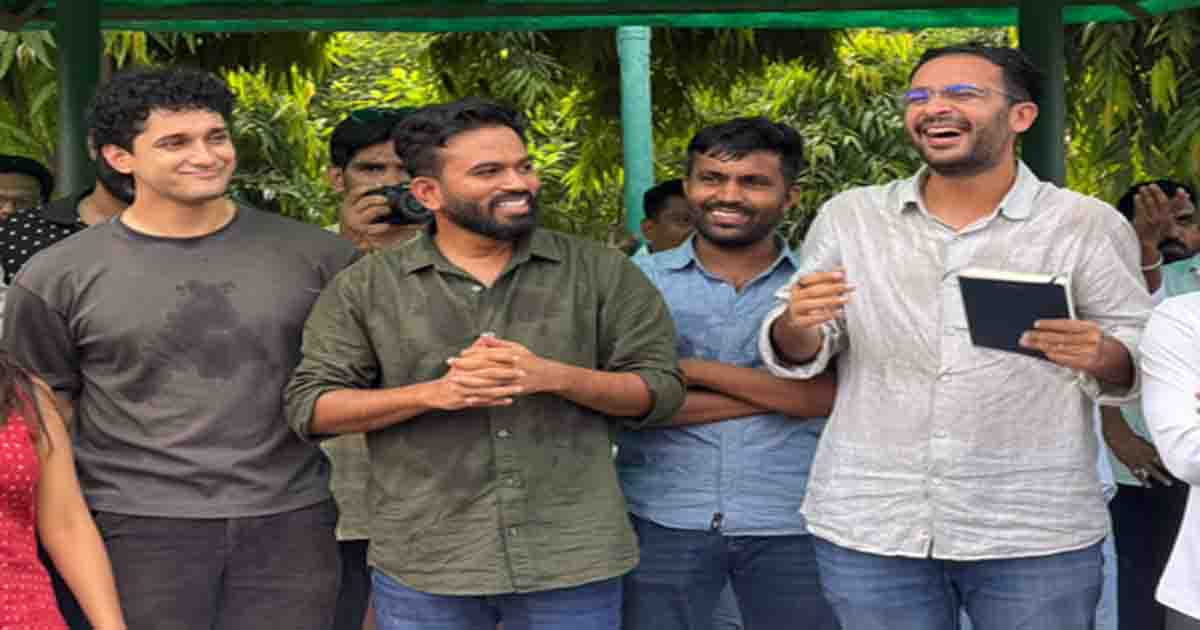
When American singer Mary Millben made an explosive claim about the Delhi protests, alleging that the Cockroach Janata Party (CJP) was being funded by “select US donors”, it did not come entirely as a surprise to those who had already been questioning the source of money behind the protests.
Questions have been raised for some time about the funding of these activities. The scale of the arrangements at some protests has also drawn attention. From frequent air travel and expensive cars to food, ice cream, cakes and drinks being served in abundance during the July Jantar Mantar protest, the expenditure appeared substantial. At one point, the crowds being served numbered in the hundreds. There have also been reports of parties at expensive hotels.
All this raises a basic question: who is paying for these activities, and where is the money coming from?
The CJP maintains that it is self-funded by its founding team and does not accept political donations. Its founder, Abhijeet Dipke, has faced questions about the funding. At a press meet in Mumbai on October 1, he dismissed the relevance of such queries, asking what disclosing the funding would have to do with alleged irregularities in the Election Commission.
He also declared that he wore shoes worth Rs 30,000 and was not ashamed of it because he could afford them.
There is nothing wrong with wearing expensive shoes if one can afford them. But that is not the point. Personal spending and financing an organisation are two different matters. The question is not about the price of Dipke’s shoes, but about the money being spent on organising protests and running political campaigns.
If the funding is transparent, a clear explanation should help settle the matter. An aggressive response or a counter-question does not answer it. Questions about money should not automatically be seen as an attempt to silence dissent.
Millben’s remarks have added another dimension to this debate. She is not an elected politician, but an American singer and actor who has performed for five US presidents — George W. Bush, Barack Obama, Donald Trump during his first term, Joe Biden, and Trump during his second term.
In a video message addressed to young Indians, she named billionaire George Soros, alleging that he and his network were funding protests across the world, particularly in countries led by conservative leaders.
“It’s the same person or same group of people, certainly coming from America, that’s funding a lot of these protests across the world, particularly when you have a conservative leader at the top of the ticket or running the government. The name is George Soros, and that whole machine of people are constantly funding a lot of these protests and chaos that’s breaking out across the world,” she said.
Millben, however, has not provided evidence to substantiate this allegation. In an earlier post on X, she described what she believed was a pattern followed by certain US-based donors: targeting conservative leaders, identifying educated people from those countries, radicalising them and funding activities that create chaos.
The CJP was quick to hit back. But the larger question remains. Are protest movements receiving money from sources that are not being disclosed? If so, is that funding lawful, and are the relevant rules being followed?
Senior advocate and former Solicitor General of India Harish Salve has also raised concerns about foreign funding and external interference. In an interview with media, he alleged that some foreign countries, particularly the United States, were unhappy with India and suggested that developments in Nepal, Sri Lanka and Bangladesh pointed to a pattern of external interference.
“I believe that foreign funding is being provided for these efforts and that they are being instigated from abroad. This is my allegation. Some foreign countries, particularly the United States, are not happy with India,” Salve said.
He also questioned the funding of protest activities, referring to YouTubers, Dipke, Saurav Das and people living overseas. Organising protests, he argued, required money, and the source of that money needed to be examined.
These are serious allegations. They should neither be accepted as facts nor dismissed without examination. If there is evidence of unlawful foreign funding or external interference, the government must investigate it.
The protests are taking place at a difficult time for India. The US-Israel attack on Iran and the closure of the Strait of Hormuz have created major economic and strategic challenges. The government has had to deal with the international fallout while attempting to protect the country from its economic consequences. Despite the uncertainties created by US President Donald Trump’s unpredictable policies, India has continued to pursue economic partnerships with other countries and protect its strategic interests.
At such a time, a battle is being fought with the government through social media narratives, protests and confrontations with the police. A few reels of protesters shouting slogans, clashing with police personnel or using abusive language against the Prime Minister may attract millions of views. But online attention is not the same as public support.
India has an electoral system in which governments can be challenged and changed through votes. That is the test which political parties and movements ultimately have to face. Opposing the government is a basic democratic right. Peaceful protests are an essential part of democracy. But the right to protest does not place any organisation beyond questions about its finances. The CJP and other groups should answer legitimate questions about their funding.
Attempts to build narratives and generate chaos may grab headlines and attract attention on social media, but they cannot by themselves bring about regime change in India. More than those who may be operating from foreign countries to influence opinion here, it is those who take the money and carry out such activities who must answer questions.
If any wrongdoing is established, those responsible should be held accountable. Dissent is a democratic right, but it cannot become a licence to mislead.
National News
Elephant seriously injures mahout, creates panic in Varanasi Ramnagar; over 200 police personnel deployed

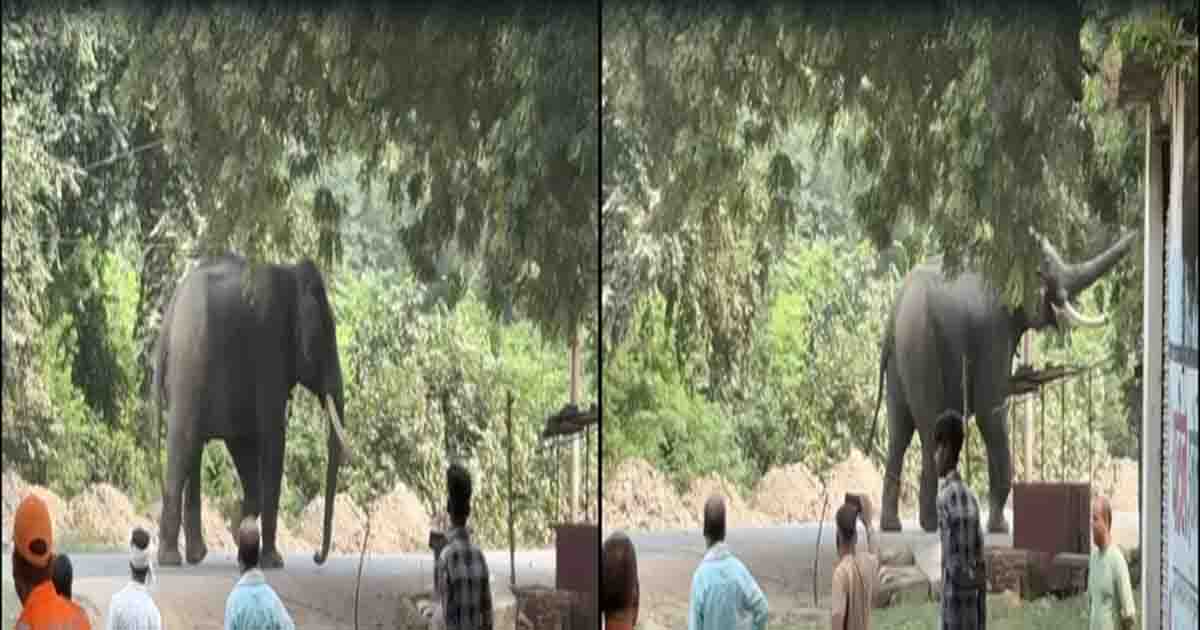
Panic gripped the Panchvati area in Varanasi Ramnagar police station limits on Sunday after an elephant went berserk and triggered chaos in the locality, leaving its mahout seriously injured in an attack.
According to preliminary information shared with the media by officials, the incident occurred in the Panchvati area, where the elephant reportedly became uncontrollable, creating panic among residents and passersby. The situation turned tense as people rushed to safety amid fears of further attacks, said officials.
Soon after receiving information about the incident, teams from the police administration, the National Disaster Response Force (NDRF), and the Forest Department rushed to the spot to contain the situation and prevent any further danger.
More than 200 police personnel, along with administrative officials, were deployed in the area as part of the operation to bring the elephant under control. The teams faced considerable difficulty in managing the animal, given the potential threat to people in the densely populated locality.
After sustained efforts, the teams finally managed to bring the elephant under control and move it towards the forest area. Officials said the situation was currently under control, although security arrangements remained in place to prevent any untoward incident.
As a precautionary measure, residents and other people in the vicinity were being moved away from the spot to ensure their safety. Police personnel and Forest Department officials continued to monitor the situation and remained on alert to respond to any emergency.
The incident triggered considerable concern among the residents, with security personnel maintaining a close watch on the area following the operation.
The condition of the injured mahout and further details about the circumstances that led to the elephant becoming uncontrollable were not immediately available.
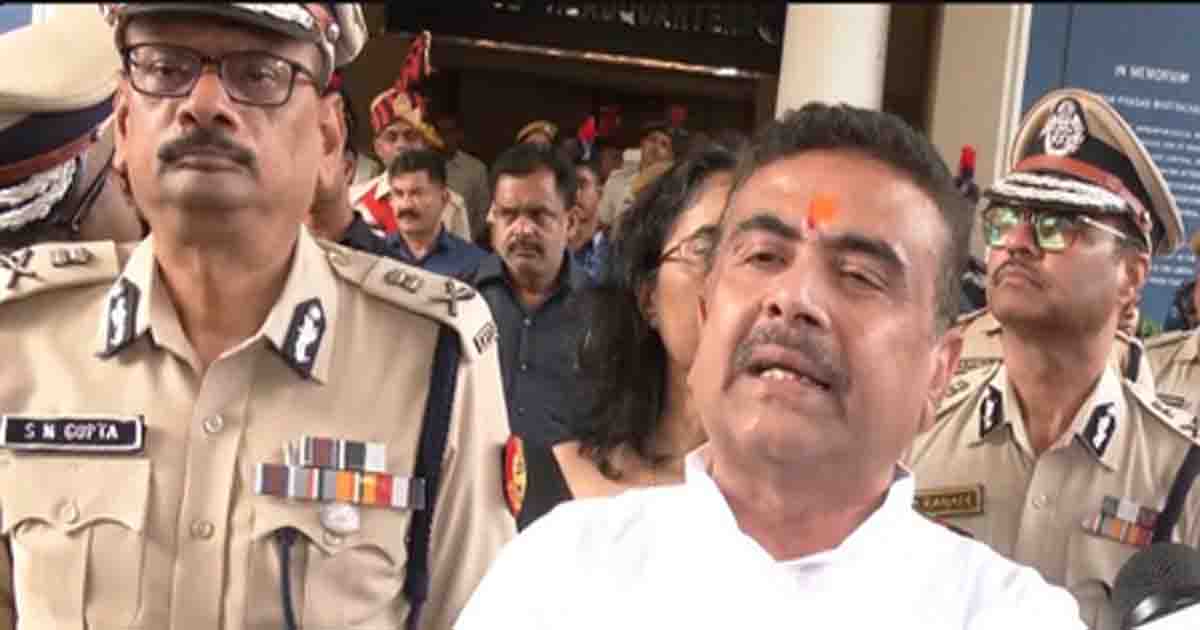
West Bengal Chief Minister Suvendu Adhikari on Sunday chaired a high-level meeting at Bhabani Bhawan and announced that he will visit families of those killed in the Durga Puja pandal stampede to hand over compensation cheques on October 20 and 21.
He also informed that personnel from the Kolkata Police, Kolkata Municipal Corporation (KMC), State Fire Services Department have been kept out of the Special Investigation Team (SIT) to probe their role in the stampede. According to him, one out of 19 dead was from Bihar.
“One of the 19 deceased is from Bihar. The process of handing over the bodies has begun. Two of the injured admitted to the ICU have suffered bone fractures, while the remaining 23 are fit for discharge. I will visit the family of every deceased person within two days and personally hand over the compensation cheque,” said CM Adhikari.
He continued, “After an incident like this, the necessary precautions should be taken. This is a large state with a population of 10.5 to 11 crore, and everyone is celebrating the puja festival. We must ensure the safety of others. The lapses have been reviewed. Of the 19 people who died, 18 were residents of West Bengal. For every deceased person, a team comprising a civil administration official, a police administration official and the local MLA will stay with the family until the cremation.”
On the arrangements at the puja pandal, CM Adhikari said, “These are people (civic volunteers) recruited in 2024-25. They (the administration) hire people every year, and this time they were taken from the old list. No new person was brought in. We have asked for the list, and it should be scrutinised. It would not be right to blame them without examining the facts. It started raining, and the rope was released. There were no proper two-lane arrangements there. A temporary passage had been created using ropes, forming a chain. That chain broke, and everyone got mixed up.”
Elaborating on the steps that have been taken so far following the incident, CM Adhikari said, “Seven individuals have been arrested and are currently in police custody under the provisions of the Bharatiya Nyaya Sanhita (BNS). The Governor visited the hospital, as did the Union Home Minister. I am personally monitoring the situation with the assistance of the Chief Secretary, the Commissioner of Police, the Home Secretary, the Director General of Police (DGP), and others. The entire government is actively engaged. We are not celebrating the holiday, nor are we posting anything on social media. We are not making statements to the press assigning blame to others.”
The Chief Minister further said, “An SIT (Special Investigation Team) is also being formed, which will operate under the leadership of a sitting judge. The Chief Secretary will write to the Chief Justice of the Calcutta High Court. If permission is granted, we will constitute the SIT as soon as possible.”
CM Adhikari added that on October 26, during the Bijaya Sammilani event, the government will pay tribute to the 19 people who lost their lives and cheques of Rs 5 lakh each will also be handed over to the families of the 25 injured people at the same event.
The police on Sunday arrested seven people, including organisers, in connection with the stampede at the Chorebagan Sarbojanin Durga Puja Pandal in Kolkata, which claimed 19 lives.
A large number of devotees were injured following a stampede at the Chorebagan Sarbojanin Durga Puja pandal in north Kolkata as an excessive crowd flocked into the pandal arena to catch a glimpse of the idols. Chaos erupted at the Puja pandal after a portion of the exit gate structure collapsed. The injured were immediately rushed to Calcutta Medical College and Hospital and two other state hospitals. About 17 people were declared brought dead at Calcutta Medical College and Hospital, while 25 injured were admitted for treatment. The death toll reached 19 on Sunday.

FairPoint: The protests are loud, but where is the money coming from?

Elephant seriously injures mahout, creates panic in Varanasi Ramnagar; over 200 police personnel deployed

CM Adhikari to meet families of Kolkata stampede victims on October 20-21

CBI questions Urmila Sanawar in connection with Ankita Bhandari murder case

Akshay Kumar meets Uttarakhand CM Pushkar Singh Dhami, talk about film Policy in the state

Rahul, Cong ecosystem want to force regime change: BJP after Neha Bora praises B’desh Gen-Z protest

BJP pays tribute to ex-President Abdul Kalam, recalls his enduring influence on generations of India’s youth

Attack on democratic rights: INDIA Bloc leaders on detentions of anti-ECI protestors

INDIA bloc begins protest march against ECI

Maha Congress stages agitation against Gyanesh Kumar
-

 Crime4 years ago
Class 10 student jumps to death in Jaipur
-

 Maharashtra2 years ago
Mumbai Local Train Update: Central Railway’s New Timetable Comes Into Effect; Check Full List Of Revised Timings & Stations
-

 Maharashtra2 years ago
Mumbai To Go Toll-Free Tonight! Maharashtra Govt Announces Complete Toll Waiver For Light Motor Vehicles At All 5 Entry Points Of City
-

 Maharashtra2 years ago
False photo of Imtiaz Jaleel’s rally, exposing the fooling conspiracy
-

 National News2 years ago
Ministry of Railways rolls out Special Drive 4.0 with focus on digitisation, cleanliness, inclusiveness and grievance redressal
-

 Maharashtra2 years ago
Maharashtra Elections 2024: Mumbai Metro & BEST Services Extended Till Midnight On Voting Day
-

 National News2 years ago
J&K: 4 Jawans Killed, 28 Injured After Bus Carrying BSF Personnel For Poll Duty Falls Into Gorge In Budgam; Terrifying Visuals Surface
-

 Crime2 years ago
Baba Siddique Murder: Mumbai Police Unable To Get Lawrence Bishnoi Custody Due To Home Ministry Order, Says Report