
National News
Modi slams previous govts for creating water crisis in Bundelkhand


Nov 19 Prime Minister Narendra Modi on Friday lashed out at ‘previous governments in Lucknow and Delhi’ for creating water crisis in the Bundelkhand region.
At a rally that marked the inauguration of the Arjun Sahayak project, the Prime Minister said: “The wait for water is over now. Over four lakh people will get clean drinking water. The people of Mahoba, Banda, Hamirpur and Lalitpur will benefit from this scheme.”
He said that Bundelkhand at one time, was a model for water conservation and management. Rivers like Ken, Betwa, Dhasan made the region famous and prosperous.
“The land of Bundelkhand blessed Lord Ram when he was in exile. However, those who ruled Delhi and UP never worked towards its development. Earlier governments mistreated the region,” he said.
The Prime Minister said that water problem in the region became so acute that people refused to marry their daughters in this area and this led to migration.
“The previous family-oriented government destroyed natural resources and allowed the mafia to prosper. After Yogi Adityanath came to power, the mafia was bulldozed but you should not forget what the previous governments did to you. In their regime, scams and commissions were the order of the day,” he stated.
He said that the previous government showed no interest in the Arjun Sahayak Yojana because they worked to loot and we work to serve. “Some do the politics of problem while we do the politics of solution,” he said.
Modi said that the scheme will give a new lease of life to the Bundelkhand region.
“Over 30 lakh families have benefitted from the ‘nal se jal’ scheme,” he said.
Meanwhile, the Arjuna Sahayak irrigation project worth Rs 2,655 crore, is a significant initiative to alleviate water distress in the districts like Mahoba, Hamirpur and Banda and to bring relief to the farmers of the state.
The mega project on the river Dhasan will not only provide irrigation facilities to over 1.5 lakh farmers of about 168 villages of Mahoba, Banda and Hamirpur but will also facilitate the provision of clean drinking water (potable water) to over 4 lakh families residing in water-scarce regions.
The project will play an important role in benefitting the crop growers along with other projects.
The project, which started nearly a decade ago (2009-10), will not only make Bundelkhand green but its operationalisation will also help in irrigation of around 44,382 hectares of land in the districts of Mahoba, Hamirpur and Banda.
Along with this, 15,104-hectare irrigation capacity will also be restored. In addition, 20 MCM drinking water will also be available to Mahoba from the Kabrai Dam.
Nearly 1,49,755 farmers of 168 villages will be benefitted.
According to the government spokesman, the Arjun Sahayak Project, which was started in the year 2009-10 at a cost of Rs 850 crore, was to be completed in the year 2015.
However, due to the neglect of the previous governments, not only the completion of the project was delayed but also its cost was increased to Rs 2655.36 crore.
The Bundelkhand region, for long, has been facing acute water shortage where most wells and hand-pumps have dried up due to decreasing groundwater levels. The residents in the drought-prone regions were forced to buy basic necessities such as drinking water.
In view of solving the water crisis in such regions, the government completed the Rasin Dam Project (Chitrakoot) Bandai Dam Project (Lalitpur) between March 1, 2020, and March 31, 2021.
In the coming days, projects like Kulpahar and Shahzad of Bundelkhand will serve as a model for the state. These are being connected to the sprinkler system. With this, more irrigation will be done in less water and the yield will also increase.

International News
‘Saw People Facing Shortage, Felt Deeply Concerned’, Says Consulate General of Iran In Mumbai Amid LPG Crisis; Calls India ‘Friend & Partner’

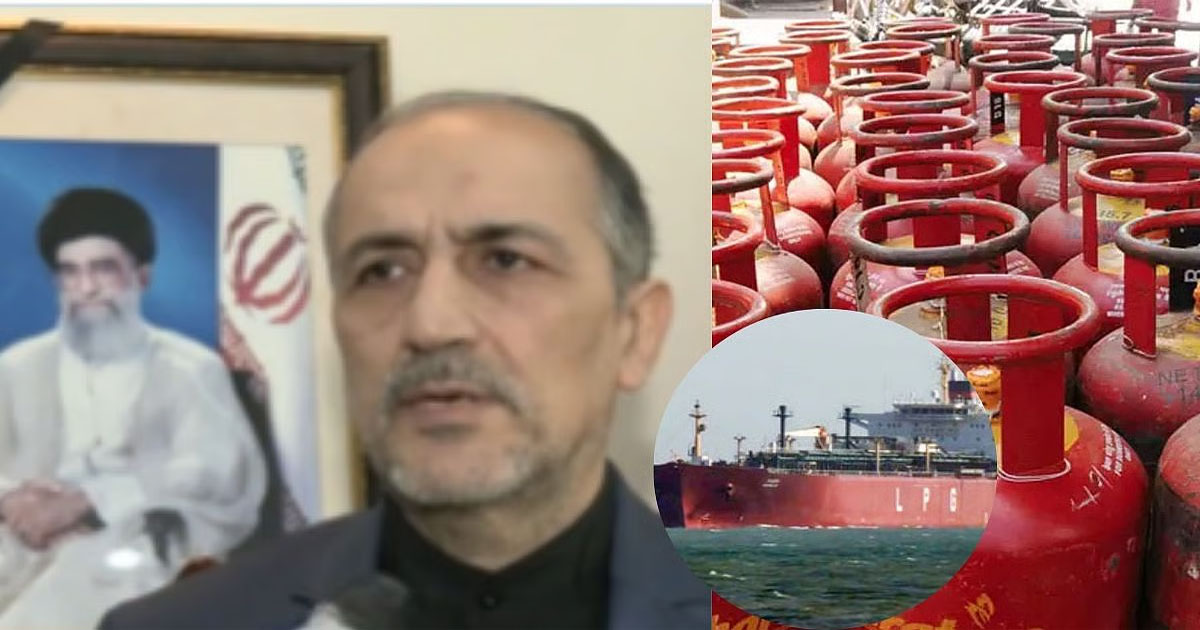
Mumbai: Consulate General of Iran, Saeid Reza Mosayeb Motlagh, on Friday said that Tehran is deeply concerned about India’s LPG crisis. Calling India a “friend and partner,” he added that despite risks in a conflict-like situation, Tehran ensured safe passage for gas carriers to India.
While speaking to media, he said, “The Islamic Republic of Iran has, from the very beginning, shown that it is a friend and partner of India. Personally, as the Consul General of the Islamic Republic of Iran in Mumbai, when I saw people facing a shortage of gas, I felt deeply concerned.”
“As you know, the situation is effectively a war zone, and gas carriers face their own risks; even the smallest impact can lead to serious consequences. However, by the grace of God, Iran was able to provide a safe passage so that these vessels could cross securely. This demonstrates our friendship with India,” he added as quoted by media.
Meanwhile, the Indian-flagged crude oil tanker, Jag Laadki, carrying approximately 80,886 metric tonnes (MT) of crude oil, arrived in Gujarat. Before that, LPG tanker Shivalik, which crossed the war-hit Strait of Hormuz, arrived at Gujarat’s Mundra Port. It roughly carried 40,000 metric tonnes of cooking gas from Qatar. These critical deliveries come at a time when the West Asia conflict caused LPG shortages across India.
India, the world’s third-largest crude importer, sources 88 per cent of its oil needs from abroad. It consumes 5.8 million barrels per day, of which 2.5-2.7 million barrels come from West Asian countries like Saudi Arabia, Iraq, and the UAE via the Strait of Hormuz. The choke point also carries 55 per cent of India’s cooking gas (LPG) and 30 per cent of liquefied natural gas (LNG), used for power, fertilisers, CNG, and household cooking.
Business
LPG Crisis: How A Simple Digital DAC OTP System Is Plugging A Massive Black-Market Loophole
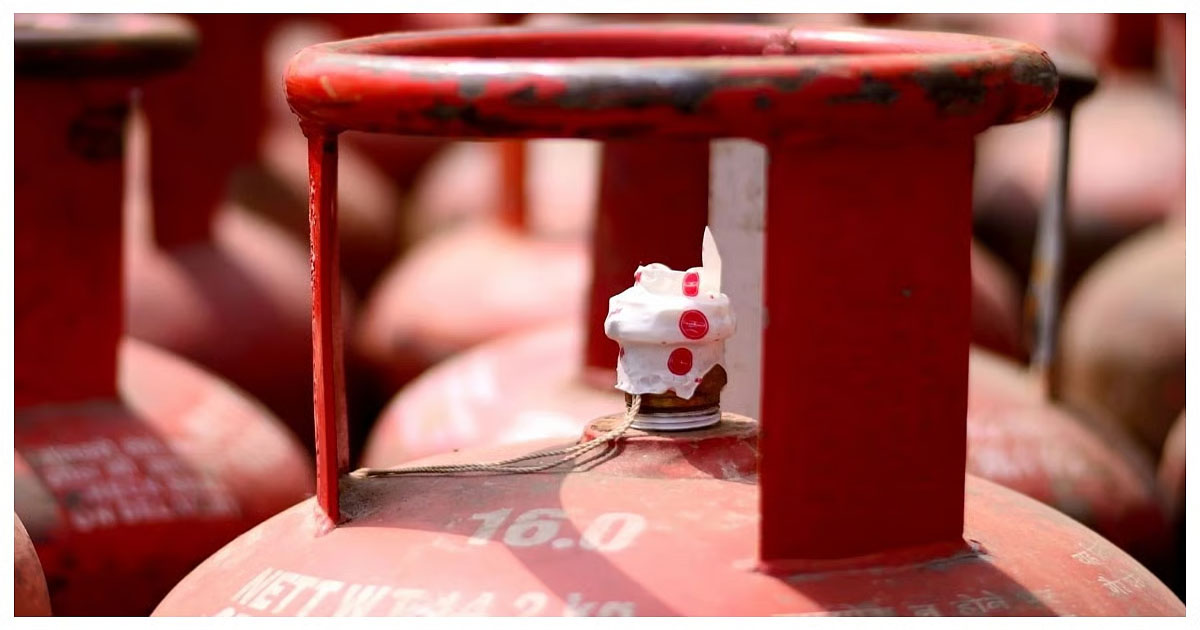
India’s cooking gas distribution network has long been plagued by a quiet crisis – subsidised LPG cylinders meant for households routinely ended up in the black market, diverted by unscrupulous delivery personnel and agents. With the LPG crisis now deepening due to the US-Iran war, the government’s answer to this is deceptively simple – an OTP.
The Delivery Authentication Code (DAC) is a one-time-use code used to verify the legitimacy of home LPG cylinder delivery, ensuring the cylinder reaches the rightful customer. When a booking is made, the customer receives the code on their registered mobile number, which must be shown to the delivery person before the cylinder changes hands.
Ever since the crisis began, the government has significantly scaled up this system, with DAC coverage now reaching nearly 72 percent of deliveries, up from 53 percent earlier. The Ministry of Petroleum and Natural Gas has directed oil companies to ensure the DAC system is used in at least 80 percent of LPG deliveries, making OTP verification mandatory for the majority of cylinders.
Oil Marketing Companies (OMCs) have introduced the DAC system – sent via SMS and shared with delivery personnel – to ensure verified delivery, with IVRS/SMS refill booking also implemented nationwide, providing alerts at key stages including booking, cash memo generation, and delivery.
If distributors fail to meet the DAC requirement, the system flags cylinders as still in the agency’s inventory even though they have been delivered -creating a digital paper trail that exposes irregularities and improves transparency across the supply chain.
Consumers can ensure they receive DAC codes by taking these steps:
– Link your mobile number to your LPG consumer ID via your distributor or the Indane/HP/Bharat Gas app.
– Book via IVRS by calling your provider’s helpline – the DAC is sent automatically via SMS upon booking.
– Update details online at iocl.com or your respective oil company’s portal.
– Visit your distributor with photo ID and consumer ID if SMS is not being received.
– If the OTP does not arrive, customers can show their Aadhaar card as an alternate identity verification to receive the cylinder.
With the government pushing toward an 80 percent DAC compliance target, the system represents a low-cost, high-impact fix to a problem that has cost the exchequer significantly. For millions of households, it also means the subsidised cylinder they paid for will actually reach their doorstep.
New Delhi, March 19: India’s thermal power plants have adequate coal stocks of around 53.41 million tonnes which are adequate for nearly 23 days at the present rate of consumption, and further stocks are also being built up at the pitheads of coal mining companies as a proactive measure to meet any exigency amid the disruption in oil and gas supplies due to the Iran war, the Ministry of Coal said on Thursday.
The pithead coal stock at the mines of Coal India Limited (CIL), which was 106.78 million tonnes (MT) as on April 1, 2025, has grown to about 125.54 MT as on March, 18, 2026. Further, there is around 5.75 MT of coal at the mines of Singareni Collieries Company Limited (SCCL) and another 15.75 MT coal at the mines of captive/commercial mines and about 12 MT in transit and about 5.49 MT in ports and good-shed sidings, according to a statement issued by the ministry.
Coal is continuing to ensure reliable baseload power to support core industries such as steel and cement that underpin the economic growth of the country. The coal production in the country continues at a pace matching the prevailing demands of the consumer and building adequate stocks at the mine-end for maintaining adequate supplies to the consumers as per their requirements, with the continued support of Railways, the statement said.
Coal India Limited is taking adequate measures to ensure the supply of coal to all consumers, including small, medium, and other consumers. As a proactive step, CIL has planned 29 e-auctions in the month of March, offering about 23.56 MT of coal. Out of these 29 auctions, 5 auctions have already been conducted since March 12, wherein 73.1 lakh ton of coal was offered, and 31.96 lakh ton of coal has been booked, indicating adequacy of coal offered in the e-auctions, the statement said.
In addition to this, CIL has also taken necessary action to ensure coal availability to the small, medium and other consumers through the State Nominated Agencies (SNAs) route and requested the state governments to provide the additional coal requirement, which can be met in full to avoid any energy shortages. The coal offtake of the states through the SNAs is being constantly monitored by CIL to ensure that uninterrupted supplies are ensured, the statement said.
The Ministry of Coal is ensuring a performance-driven ecosystem through sustained policy facilitation, robust monitoring mechanisms, and proactive stakeholder engagement. These concerted efforts are aimed at providing reliable coal availability, enabling uninterrupted operations across critical sectors, and effectively meeting the nation’s growing energy demands, the statement added.

Mumbai: SIM card used in cyber fraud, case registered against SIM card agents from Nagpara and Andheri

Large-Scale Land Record Irregularities in Maharashtra Spark Statewide Audit

‘Dhurandhar 2 Is A Pakistani Film, Why Show It To People Of Hindustan?’ Samajwadi Party MLA Abu Azmi Slams Ranveer Singh Starrer Movie

‘Saw People Facing Shortage, Felt Deeply Concerned’, Says Consulate General of Iran In Mumbai Amid LPG Crisis; Calls India ‘Friend & Partner’

Maharashtra Infra Update: JNPT Linked Expressway Connecting Mumbai-Pune -Goa Routes Moves Ahead, Bids Open April 16

Married Mumbai Woman Mocked In Andheri Society Over ‘Lift Kissing’ CCTV Video, Files Police Complaint

Mumbai: JBCN International School In Borivali Gets Bomb Threat, Search Reveals Hoax, Students Safe

Former Arsenal Star Mesut Ozil’s Convoy Gets Involved In Road Accident During Bangladesh Visit

Gold and silver surge on safe haven demand, margin cut

Mumbai Local Train Update: Mega, Jumbo Blocks Announced On Central, Harbour & Western Lines On February 22; Check Time & Route Here
-

 Crime4 years ago
Class 10 student jumps to death in Jaipur
-

 Maharashtra1 year ago
Mumbai Local Train Update: Central Railway’s New Timetable Comes Into Effect; Check Full List Of Revised Timings & Stations
-

 Maharashtra1 year ago
Mumbai To Go Toll-Free Tonight! Maharashtra Govt Announces Complete Toll Waiver For Light Motor Vehicles At All 5 Entry Points Of City
-

 Maharashtra1 year ago
False photo of Imtiaz Jaleel’s rally, exposing the fooling conspiracy
-

 National News1 year ago
Ministry of Railways rolls out Special Drive 4.0 with focus on digitisation, cleanliness, inclusiveness and grievance redressal
-

 Maharashtra1 year ago
Maharashtra Elections 2024: Mumbai Metro & BEST Services Extended Till Midnight On Voting Day
-

 National News1 year ago
J&K: 4 Jawans Killed, 28 Injured After Bus Carrying BSF Personnel For Poll Duty Falls Into Gorge In Budgam; Terrifying Visuals Surface
-

 Crime1 year ago
Baba Siddique Murder: Mumbai Police Unable To Get Lawrence Bishnoi Custody Due To Home Ministry Order, Says Report