
National News
MNS extends support to Shinde faction in Kalyan Dombivli civic body

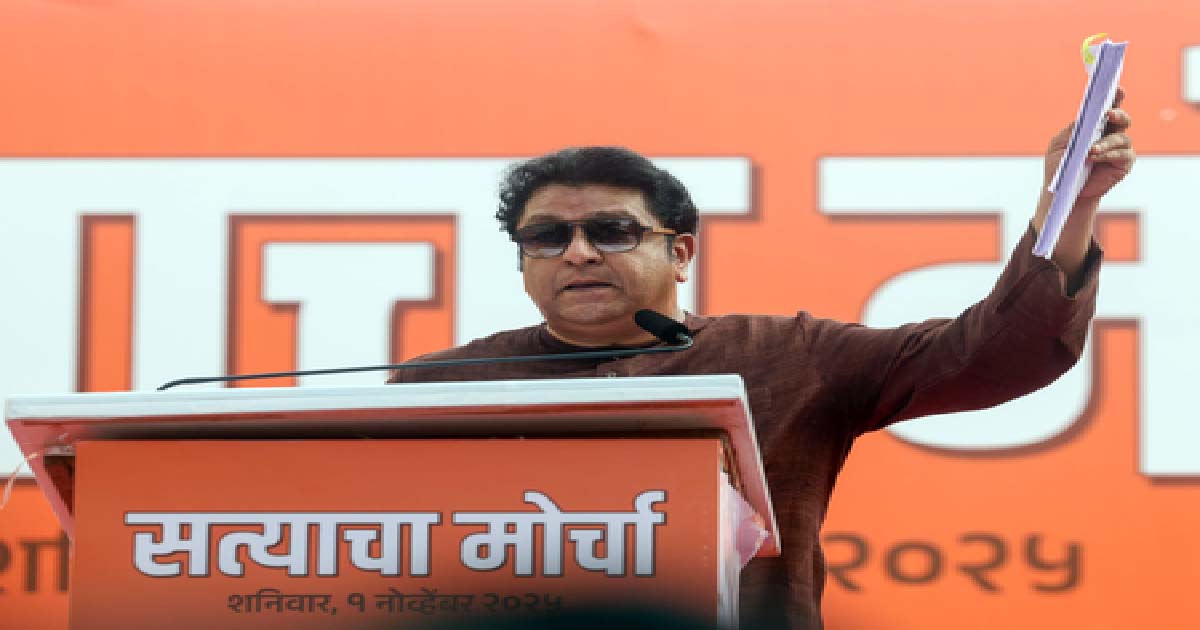
Kalyan, Jan 21: In a dramatic twist following the Kalyan-Dombivli Municipal Corporation (KDMC) elections, the Maharashtra Navnirman Sena (MNS) has extended its support to Eknath Shinde-led Shiv Sena.
Explaining the rationale behind this move, MNS former legislator Raju Patil on Wednesday clarified that the decision was made to ensure political stability and prioritise local development over power struggles.
The Shiv Sena-UBT received a major blow in the wake of the MNS decision to support the Shinde faction in KDMC, as both brothers had contested elections to the Brihanmumbai Municipal Corporation and other civic bodies on a common cause of “safeguarding the interest” of the ‘Marathi Manoos’ and the Marathi identity.
Speaking to the media at Konkan Bhavan after registering the party’s group of corporators, Raju Patil, who met Shiv Sena MPs Shrikant Shinde and Naresh Mhaske, stated, “The game of numbers and the constant threat of switching sides was not coming to an end. This chaos would have likely continued during the upcoming committee elections as well. To bring stability to the city, we decided to support the Shinde-led Shiv Sena.”
Addressing questions about why the MNS chose to join the ruling side, Patil emphasised that the party’s five corporators would be more effective in serving the public from within the government.
“The people of Kalyan-Dombivli are tired of the politics of poaching. Our decision is not for personal gain or selfishness. By being part of the power structure, we can maintain oversight and ensure development work is completed. We are moving forward with a Common Minimum Programme (CMP) focused on public interest,” Patil added.
Patil revealed that the local leadership briefed MNS chief Raj Thackeray on the complex political arithmetic of the region. “Saheb (Raj Thackeray) told us to take whatever decision was necessary based on the local situation. We have acted accordingly,” he said.
Responding to the fact that MNS had contested in alliance with Uddhav Thackeray’s Shiv Sena (UBT) in several areas, Patil noted that local dynamics often differ from state-level alliances.
He pointed out that some corporators had gone missing after the results, prompting concerns for the safety and integrity of their own winning candidates. MNS leader Bala Nandgaonkar said that such alliances take place on the “local level”.
The KDMC election had thrown up a fractured verdict. In the 122-member corporation, the Shiv Sena won 53 seats, narrowly ahead of the BJP, which secured 51. The majority mark stands at 62, making post-poll support crucial.
Speaking to reporters, Shrikant Shinde said the MNS had extended support “for development” and asserted that the Mayor in Kalyan-Dombivli would be from the ruling Mahayuti.
He said there had been no discussion yet on the allocation of posts and that a final decision would be taken by senior leaders.
“We will not sideline the BJP. Discussions will be held between Ravindra Chavan and Eknath Shinde. Even if the Thackeray Sena comes with us, it will be welcomed,” he said.
With the support of five MNS corporators and claims of support from four corporators elected on a Shiv Sena (UBT) ticket, the Shinde-led Shiv Sena has strengthened its position, though it is yet to formally demonstrate majority support.
Of the four Shiv Sena (UBT) corporators whose support is being claimed, two were originally associated with the MNS and had contested the election on the Shiv Sena (UBT) symbol, while the other two had fought on a Shiv Sena (UBT) ticket after being denied nominations by the Shinde-led Sena. The developments have dealt a setback to the Shiv Sena (UBT), which had won 11 seats in the KDMC elections.
During the group registration process at Konkan Bhavan on Wednesday, only seven Shiv Sena-UBT corporators were present, triggering speculation. Party sources later said two of them were in touch with the Shinde camp, while the remaining two had joined the MNS.
In response, the UBT faction registered its own group with the Konkan Divisional Commissioner and submitted a letter seeking disqualification proceedings against the two corporators suspected of aligning with the Shinde-led Shiv Sena, citing defection norms.
Meanwhile, Shiv Sena-UBT corporators Swapnil Kene and Rahul Kot joined the MNS. Both were originally associated with the party, and their induction increased the MNS’ strength in the corporation.


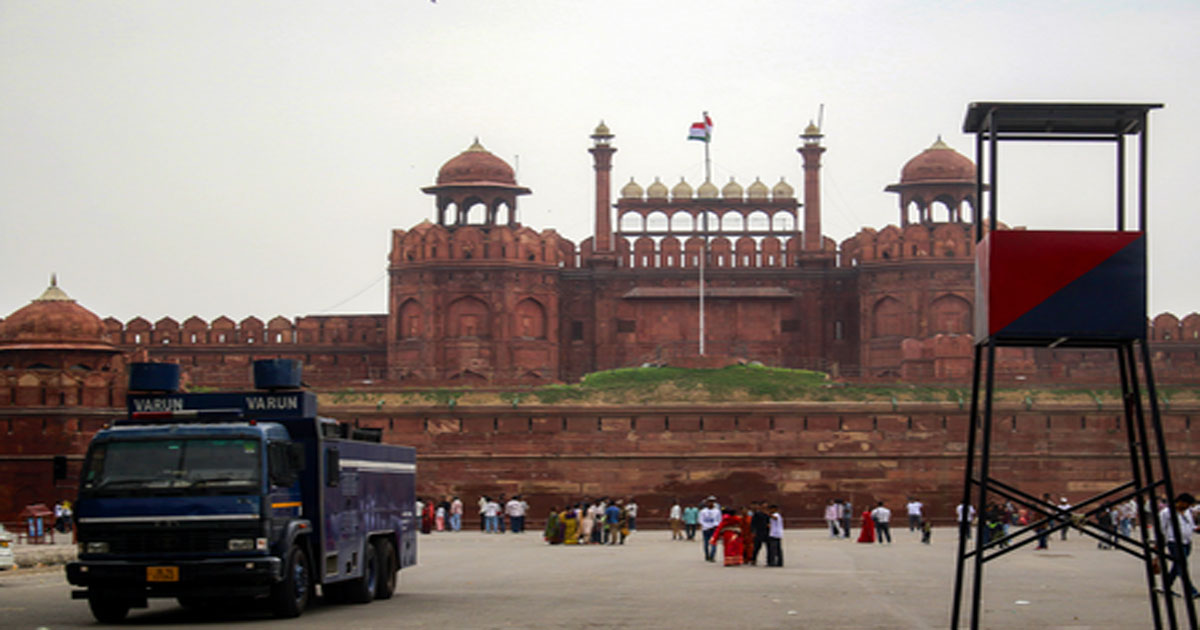
New Delhi, April 18: The Delhi Police Special Cell on Saturday revealed that it had arrested four youths from three states for online radicalising and recruiting others with the aim to establish an Islamic state through ‘jihad’, officials said. According to police, a connection to the Red Fort blast was also established, which had claimed 11 lives and injured several others.
One of the accused had visited various sensitive installations including the Red Fort in Delhi in December 2025. He also posted a photo of the historical place with a black flag atop it to radicalise others, police said.
The official statement highlighted that the youths were radicalised into joining terrorism-related activities. Police have also recovered material used for preparation of Improvised Explosive Devices (IED) from one of them. Along with this, the mobile phones of the accused were also seized.
A team of Delhi Police Special Cell, led by Inspectors Vinay Pal and Manoj Kumar, including ACP Ashish Kumar, arrested the four accused persons from Maharashtra, Odisha and Bihar. An FIR was registered under relevant Sections of BNS, 2023.
Among the arrested youths, Mosaib Ahmad, Jalaluddin Siddiqui and Mohammad Hammad were residents of Maharashtra. While Sheikh Imran belonged to Odisha and Mohammad Sohail hailed from Bihar.
Police confirmed that the accused were part of various closed groups on encrypted social media platforms. They were allegedly engaged in radicalising and recruiting others for establishing Islamic state through ‘jihad’.
The investigation revealed that two members of the module were in the process of collecting locally-sourced material for preparing a remote-controlled IED which could be used for a terrorist attack at an opportune time.
Revealing their modus operandi, officials said that one member of the module was exhorting others to collect weapons and explosives for participating in ‘Ghazwa-e-Hind’. He shared his bank account details on his social media channel for crowd funding in support of ‘jihad’.
Another accused promised to arrange arms training for the members of the module and asked other members to send money for the same.
One of the accused, Mosaib Ahmad, was a part of multiple online radicalised groups. Police said that he assisted co-accused Mohammad Hammad by opening the circuit of a remote-controlled toy car for IED making and sharing its image within a closed group.
Hammad, in turn, shared pictures of ball bearings, nails, remote-controlled toy cars and boxes as material for preparation of IEDs in a closed group. He handed them over to co-accused Mosaib Ahmad, who, being a mechanic by profession, was tasked with assembling the IED.
Born in Bhubaneswar, Sheikh Imran worked as a security guard and delivery boy. In year 2024, he began listening to lectures (takreers) of Tareeq Jameel, Israr Ahmed, Zakir Naik etc. and gradually developed radical beliefs. He joined his associates through social media. Investigators found that Imran discussed targeting Ram Mandir, Parliament and military installations. He was the one who recced the Red Fort.
A plumber by profession, Mohammad Sohail was also influenced by Israr Ahmed. He created multiple social media accounts and exhorted youth in the name of ‘jihad’. In March 2026, he incited followers of his channel to collect weapons and explosives for ‘Ghazwa-e-Hind’ and even shared bank details to collect money.
New Delhi, April 17: A high-level government committee, supported by the Petroleum and Natural Gas Regulatory Board (PNGRB), has recommended removing excise duty on Compressed Natural Gas (CNG) to lower prices and promote consumption of the green fuel to meet India’s target of achieving a 15 per cent share of natural gas in the fuel mix by 2030.
The key recommendations include removing the 14 per cent excise duty to make CNG a more attractive fuel option and also lowering GST on CNG vehicles to 5 per cent to bring them on par with electric vehicles to accelerate adoption.
The recommendations favour maintaining a competitive price difference between CNG and petrol so that consumers are encouraged to switch to the green fuel.
The tax relief on natural gas is anticipated to impact roughly 1.9 crore households and 38.41 lakh potential users.
These proposals aim to address the currently high taxes, such as the 14 per cent excise duty and state VAT, which have made CNG less competitive in certain regions, particularly in the southern states.
Meanwhile, the government has also been encouraging households to switch to piped natural gas (PNG) from LPG as the West Asia crisis has disrupted supply chains. The expansion of piped natural gas (PNG) has gained momentum, with about 4.58 lakh new PNG connections being gasified and about 5.1 lakh additional customers registering for new connections since March this year.
Till April 15, about 35,000 PNG consumers have surrendered their LPG connections via MYPNGD.in website. States have been advised to facilitate new PNG connections for domestic and commercial consumers.
The government is encouraging natural gas adoption through synergy between the PNGRB and states as part of India’s transition toward a cleaner and more sustainable energy future. As part of the strategy to increase the share of natural gas in the country’s energy mix, the expansion of the City Gas Distribution (CGD) network through Piped Natural Gas (PNG) connections has emerged as one of the key performing areas.
Spearheaded by entities authorised by the PNGRB, the CGD network now spans 307 geographical areas (GAs), covering nearly 100 per cent of the country’s geographical area except islands, touching around 784 districts across 34 states and Union Territories. The government has undertaken a series of policy and regulatory measures to catalyse growth in this sector.
These measures range from allocating administered price domestic gas and easing supply mechanisms to mandating PNG provisions in government and defence residential complexes, granting Public Utility status to CGD projects, and directing the CPWD and the NBCC to include PNG provisions in all government residential complexes.
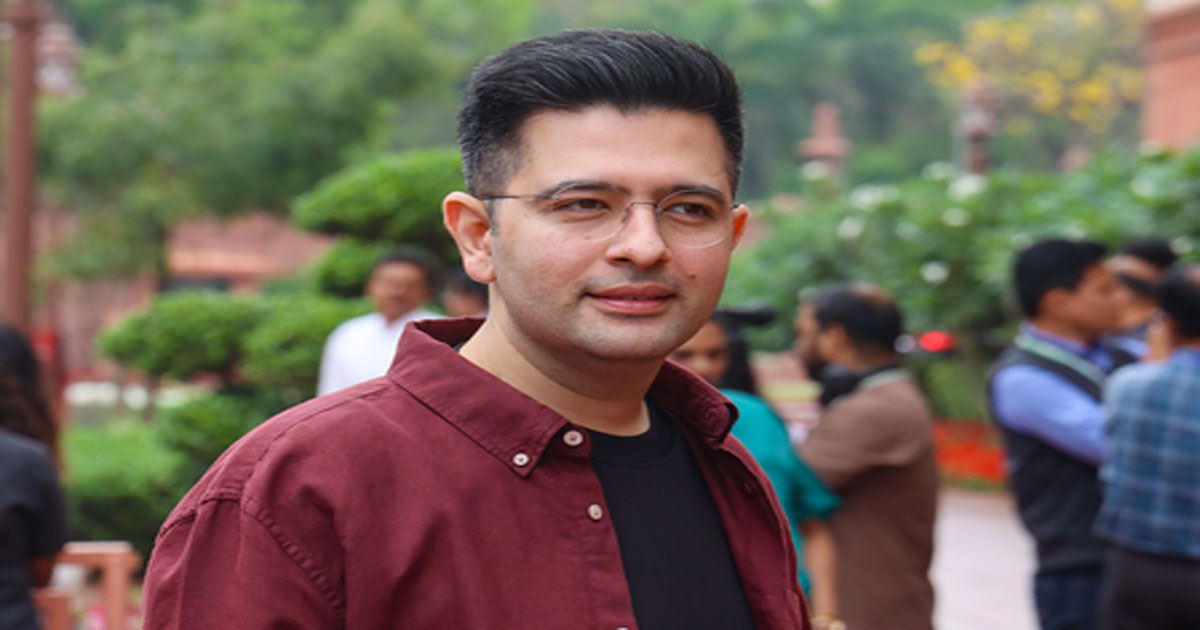
New Delhi, April 15: The Ministry of Home Affairs has provided security cover to Aam Aadmi Party (AAP) Rajya Sabha member Raghav Chadha. He will receive ‘Z+ category’ security in both Delhi and Punjab, sources said on Wednesday.
This followed the Punjab government’s decision to withdraw Chadha’s security detail earlier in the day. This action also occurred amid a growing rift between Chadha and the AAP in recent weeks.
According to sources, paramilitary forces will be deployed to provide security to the AAP leader.
This security cover has been granted based on a threat perception report submitted by the Intelligence Bureau (IB) and following an assessment conducted by the Ministry of Home Affairs.
The developments follow recent changes within the party. On April 2, AAP appointed Ashok Mittal as its new Deputy Leader in the Rajya Sabha, replacing Chadha in the role. The move was seen as a significant organisational shift, bringing in a new face from Punjab.
Earlier on April 3, Chadha broke his silence on the development, stating that he had been “silenced, not defeated”.
Meanwhile, speculation is mounting about Chadha’s position within AAP. On April 8, a separate Instagram post shared by him drew attention after it featured a purported supporter suggesting that he should form a new youth-led political party instead of joining any existing organisation.
On April 10, amid an internal rift within the Aam Aadmi Party (AAP), the Rajya Sabha member shared a message on Instagram asserting that his parliamentary work would speak for itself.
Taking to the social media platform Instagram, Chadha posted a video and wrote, “With respect to those questioning my parliamentary performance, I’ll let my work do the talking.”
The video featured a compilation of his interventions and questions raised in the Rajya Sabha, highlighting a wide range of public policy issues he has addressed.

Mumbai Police Anti-Narcotics Cell Seizes Drugs Worth ₹2.21 Crore; Nigerian National Arrested In Khar

Mumbai Local Train Chaos! Mega Block Disrupts Central Line; Passengers Seen Walking On Tracks At Kopar, Thakurli

Iran says ‘progress’ in US talks, but ‘far from final discussion’

NESCO Concert Drug Deaths Case: Mumbai Police Arrests Nigerian National, Seizes Cocaine & MDMA Worth Crores In Khar Raid

Massive Fire Breaks Out At Mumbai’s Crawford Market Shop, No Injuries Reported

Dhurandhar 2 Box Office Collection Day 9: Ranveer Singh Starrer Earns ₹41.55 Crore On Its Second Friday; Enters ₹700 Crore Club

Bharti Airtel Receives ₹1,74,000 Penalty Notice From DoT For Subscriber Verification Lapses

Mumbai: 28-Year-Old Ghatkopar Woman Killed By Speeding Tanker While Crossing Road, Driver Arrested

Thane Horror: Man Slashed With Chopper In Naupada For Refusing ‘Vargani’, Caught On Camera

Chilling Highway SCAM In Maharashtra! Mumbai Man Cornered By Fake Recovery Agents Claiming ₹10 Lakh Dues Near Lonavala
-

 Crime4 years ago
Class 10 student jumps to death in Jaipur
-

 Maharashtra2 years ago
Mumbai Local Train Update: Central Railway’s New Timetable Comes Into Effect; Check Full List Of Revised Timings & Stations
-

 Maharashtra2 years ago
Mumbai To Go Toll-Free Tonight! Maharashtra Govt Announces Complete Toll Waiver For Light Motor Vehicles At All 5 Entry Points Of City
-

 Maharashtra2 years ago
False photo of Imtiaz Jaleel’s rally, exposing the fooling conspiracy
-

 National News2 years ago
Ministry of Railways rolls out Special Drive 4.0 with focus on digitisation, cleanliness, inclusiveness and grievance redressal
-

 Maharashtra1 year ago
Maharashtra Elections 2024: Mumbai Metro & BEST Services Extended Till Midnight On Voting Day
-

 National News2 years ago
J&K: 4 Jawans Killed, 28 Injured After Bus Carrying BSF Personnel For Poll Duty Falls Into Gorge In Budgam; Terrifying Visuals Surface
-

 Crime2 years ago
Baba Siddique Murder: Mumbai Police Unable To Get Lawrence Bishnoi Custody Due To Home Ministry Order, Says Report