
International News
Mahatma Gandhi comes to UN, an avatar provoking, prodding, inspiring ideas of true education

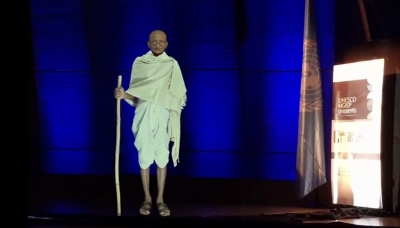
Mahatma Gandhi “came” to the UN Trusteeship Council chamber with the message of holistic education.
He came on Friday as a holographic avatar, to animate a discussion on “Education for Human Flourishing” at the UN’s observance of the International Day of Nonviolence.
And while he spoke of education creating new people and a world of peace, at the nearby Security Council chamber mighty nations were clashing over an intractable war and its violence.
India’s UN Mission and UNESCO’s Mahatma Gandhi Institute of Education for Peace and Sustainable Development (MGIEP) brought him to the UN for the observance of the International Day of Nonviolence, and who better to learn nonviolence and the education for the creative change it inspires.
A lifesize, speaking, gesticulating presence on the stage, the avatar provoked, prodded and challenged a panel made up of an activist, a diplomat, a youth and an economist to delve into the meaning of education for humanity.
The avatar was created with digital graphic files merged with motion graphics to produce the high-definition hologram that spoke authentic, researched statements made by the Mahatma himself in the context of the topic.
The Mahatma Gandhi Digital Museum made the hologram to spread his message creatively, said Anantha Duraiappah, the director UNESCO’s Mahatma Gandhi Institute of Education for Peace and Sustainable Development (MGIEP), who moderated the panel discussion.
The Gandhi avatar, bringing his words with vocal clarity, said that “education is merely an instrument, and an instrument may be well used or abused. The same instrument that may be used to cure a patient may be used to take his life”.
“We want to provide only such education as would enable the student to earn more. We hardly give any thought to the improvement of the character of the educated. Schools and colleges and really a factory of turning out clerks for the government,” Gandhi’s words reverberated.
“On the contrary, real education consists in drawing the best out of yourself. What better book can there be than the book of humanity?”
The Gandhi avatar also questioned the value of even literacy if it is without values.
“Literacy is not the end of education or even the beginning,” the avatar repeated his words.
For him, education meant “an all-round growing” bringing out the best in the child’s “body, mind and spirit”, spiritual training and “education of the heart, the training of the Spirit”.
India’s Permanent Representative Ruchira Kamboj, who was a panellist, summed it up saying that Gandhi “was very big on holistic education” and “education for the upliftment and dignity of all”.
The New Education Policy introduced in India reflects this approach with an emphasis on “holistic development across the sciences, social sciences, arts, humanities and sports” blending “the systems and traditions that have been a part of the rich legacy of India”, she said.
The policy “lays special emphasis on the socially and economically disadvantaged groups” and facilitates “multiple pathways to learning involving both formal and non-formal education modes” with a lot of emphasis on digital education platforms”, she said.
Bernice King, the daughter of Gandhi-inspired civil rights icon Martin Luther King, said that for her father the “chief aim of education was to save people from the morass of propaganda”.
He said that education’s “function, therefore, is to teach one to think intensively and critically, but if it stops with efficiency, it may prove the greatest menace to society”.
“We must remember that intelligence is not enough Intelligence plus character is the true goal of education. The complete education gives one not only power of concentration, but worthy objectives upon which to concentrate,” she quoted him.
Bernice King said that the current education system is “doing a disservice to our young people and to our society, because we’re not developing people, enough people who have the level of compassion and courage and conscientiousness to create a just, humane, equitable and peaceful world”.
But changing the education system is going to take “some radical action” when a “critical mass of people decide, let’s organise, mobilise and strategise and begin to make demands”.
She said in the footsteps of Gandhi and King, the people would have to resort to nonviolent resistance and noncooperation to bring about the change.
Princess Hayu, the daughter of Sultan Hamengkubuwono X of Yogyakarta, Indonesia, and youth representative on digital education transformation, said that “each culture has its own local wisdom” even though the underlying values are universal.
“That cannot be forgotten, so that has to be continually taught as well because otherwise we are just going to blend in and by becoming just one identity we lose our identity,” she said.
Omar Hilale, the Permanent Representative of Morocco said, Gandhi inspired the “constitutional building of our nations and of the United Nations” because “his notion is that peace can be achieved in a very unique manner, nonviolently and with extreme courage, and sacrifice and tolerance”.


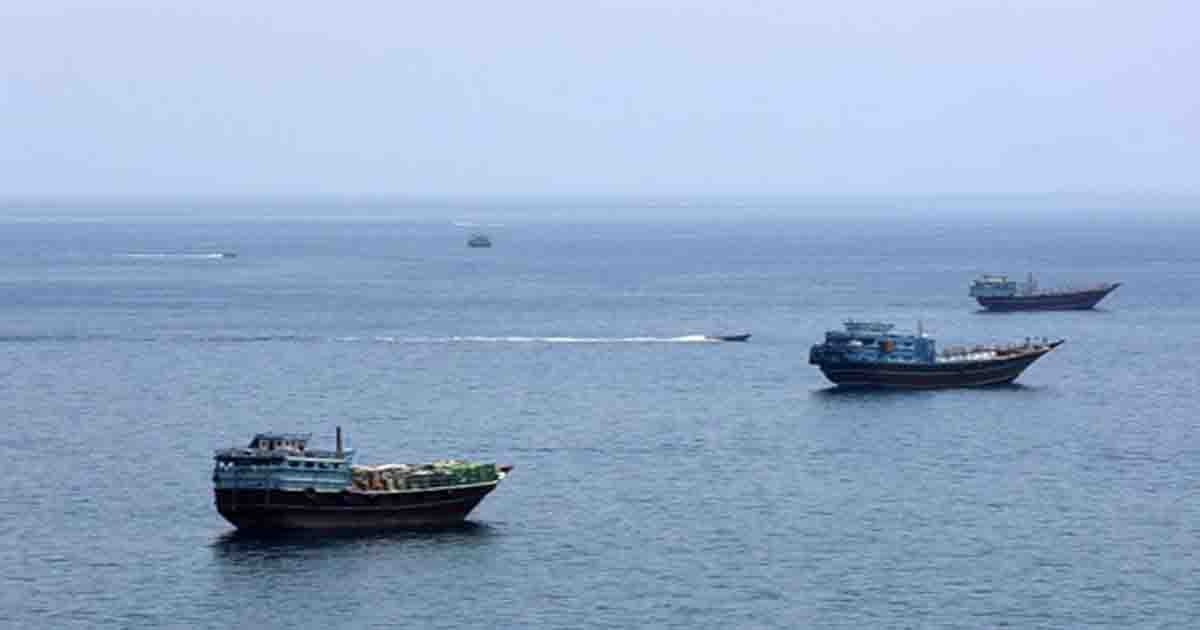
The United States has effectively blocked Iranian oil exports through the Strait of Hormuz while allowing millions of barrels of crude from other countries to reach global markets, Secretary of State Marco Rubio has said, describing the strategy as part of Washington’s efforts to weaken Tehran’s economy without disrupting international energy supplies.
Rubio said between 13 million and 14 million barrels of oil were passing through the strategic waterway daily, with American military forces escorting and protecting commercial vessels against Iranian attacks.
The remarks, made during an interview with Breitbart News on October 15 and released by the State Department on October 19, offered an account of Washington’s military and economic strategy in the Gulf.
“Today, on average over the last 10 days and certainly over the last 30, about 13 to 14 million barrels of oil are going through the Straits of Hormuz out to the global market, and some days it’s actually equivalent to what it was pre-conflict,” Rubio said.
The figures represent the administration’s assessment and were not independently verified in the interview.
The Strait of Hormuz is one of the world’s most important energy corridors, connecting oil-producing Gulf countries with international markets, including India and other major Asian economies.
Rubio said American forces were helping maintain shipping movements despite continuing Iranian attacks.
“And the U.S. military is involved in escorting and defending these ships from these strikes,” he said.
The Secretary of State claimed that Iran had lost control of the waterway following American military operations and that Washington was now using sanctions and a blockade to restrict Tehran’s oil revenues.
“The only country in the world that cannot get a single barrel of oil through the Straits of Hormuz is Iran,” Rubio said.
The assertion was not accompanied by independent shipping data or figures showing the volume of Iranian exports affected by the restrictions.
Rubio said the administration’s objective was to prevent Iran from using energy supplies and maritime security as instruments of pressure against other countries.
He argued that American military operations had significantly weakened Iran’s conventional capabilities, including its naval forces, air defences and facilities producing missiles and drones.
According to Rubio, the administration had sought to prevent Tehran from developing a nuclear weapon while relying on conventional military capabilities to deter international intervention.
He said Iran continued to threaten shipping even after losing much of its ability to control the strait.
Rubio also defended the administration’s economic measures against Tehran, saying they were designed to reduce the resources available to Iran’s military and allied armed groups.
“Every dollar you deny them in sanctions is a dollar they don’t have for Hizballah, a dollar they don’t have for Hamas, a dollar they don’t have for the terrorist militias inside of Iraq, and a dollar they don’t have for their own military or their own nuclear ambitions,” he said.
The Secretary of State acknowledged public frustration over the continuing confrontation with Iran but maintained that Washington had achieved important military objectives.
He described the current American military role in the Strait of Hormuz primarily as defensive, involving the protection of shipping while economic pressure continued.
The claims about Iran’s military losses, oil exports and the effectiveness of the blockade could not be independently established from the interview alone.
The Strait of Hormuz connects the Persian Gulf with the Gulf of Oman and the Arabian Sea. It is a major transit route for crude oil and liquefied natural gas shipped from Gulf producers to international customers, making disruptions particularly significant for energy-importing Asian economies.
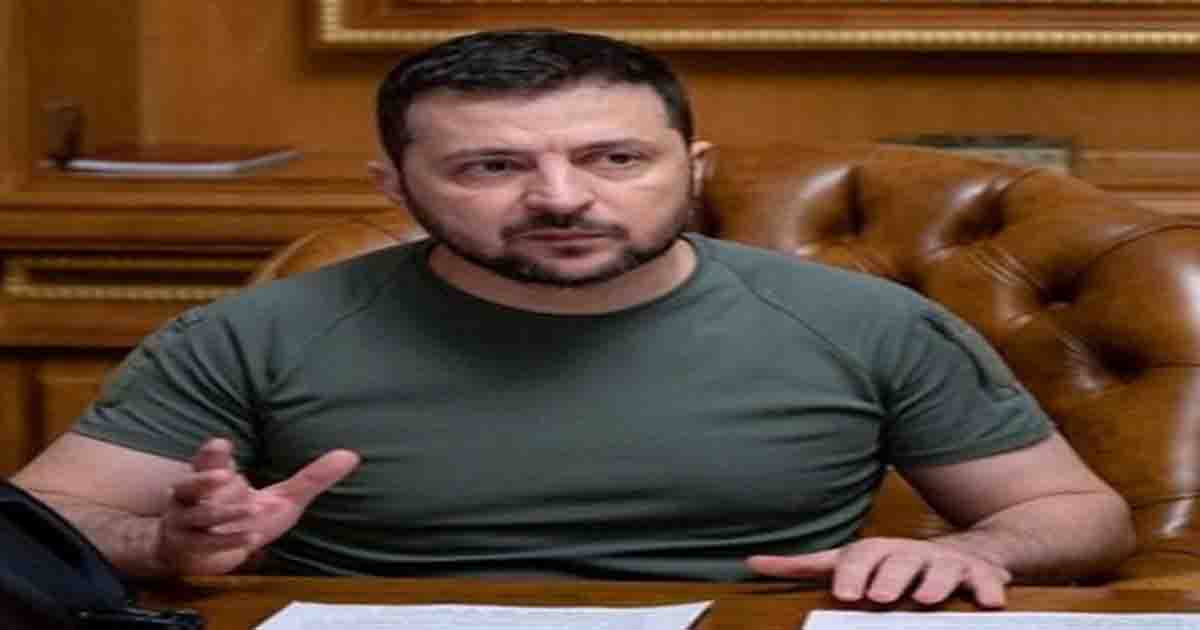
Ukrainian President Volodymyr Zelensky said that the United States temporarily suspended crucial intelligence sharing with Ukraine for three days, leaving its forces without American warnings of Russian ballistic missile attacks during that period.
In an interview with NBC’s Meet the Press, Zelensky also said restrictions on satellite communications used by Ukrainian forces had not been fully lifted, raising fresh questions about Washington’s military and intelligence support for Kyiv.
The Ukrainian leader said the intelligence interruption affected information that only the United States could provide, particularly advance warnings of ballistic missile strikes.
“We didn’t see attacks of Russia using ballistic missiles,” Zelensky said.
He said Ukraine continued receiving intelligence from European governments and other international partners, but their capabilities could not fully replace American systems.
“We have dozens of countries who help. But only United States has this unique intelligence to say, to tell us, to tell our side when Russia uses ballistic missiles,” he said.
“And we didn’t get it during ballistic attacks during three days.”
Zelensky said the intelligence-sharing arrangement had since been restored.
“It was blocked for some period of time. And then it was deblocked by American side. We are very thankful for this. Now it works,” he said.
The disclosure came amid growing tensions between Washington and Kyiv over President Donald Trump’s handling of the war with Russia.
Zelensky also raised concerns about restrictions affecting Starlink, the satellite internet network operated by Elon Musk’s SpaceX, and its military-related services.
Asked whether the interruption had been deliberate, Zelensky said Ukrainian military officials believed the restrictions originated with the American government.
“Of course the message came from government. I don’t know from whom, what cabinet, and etc,” he said.
He added that Ukrainian officials believed SpaceX had technically implemented the restrictions following instructions from Washington.
Zelensky acknowledged that he did not know which American official might have authorised the move.
Asked whether satellite services had been fully restored, he replied: “No, not of course. We have limitation.”
The Ukrainian President’s account was challenged by Treasury Secretary Scott Bessent, who appeared separately on the same programme.
Bessent said Trump and Secretary of State Marco Rubio had denied that anyone in the administration ordered restrictions on Starlink.
“President Trump and Secretary Rubio have categorically said that no one in the Trump administration did that,” Bessent said.
He called Zelensky’s allegation reckless and said he had no information about the reported intelligence interruption.
“Again, I don’t know anything about that, but we’ve been very clear,” Bessent said.
The conflicting accounts left unresolved who was responsible for the communications disruption and why American intelligence sharing had been temporarily interrupted.
Zelensky said Ukraine remained dependent on American military assistance despite its growing network of European partners.
“If it’s without United States’ support, it’s very difficult,” he said.
Russia launched its full-scale invasion of Ukraine in February 2022. Since then, American intelligence, weapons and satellite communications have played an important role in Ukraine’s defence against Russian military operations, including missile and drone attacks.
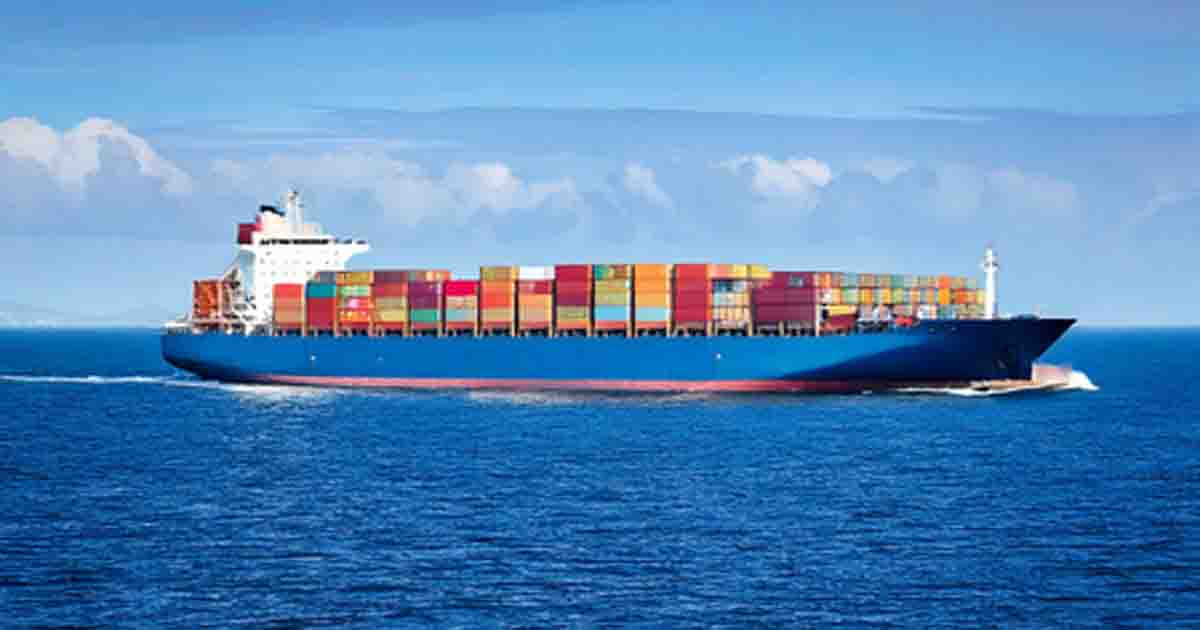
India’s strong economic growth trajectory and the implementation of the India-EFTA Trade and Economic Partnership Agreement (TEPA) are creating significant opportunities for Norwegian investors, particularly in manufacturing, renewable energy, infrastructure, financial services and the digital economy, according to industry insights.
With GDP growth projected to remain around 6.5 per cent annually through 2030, India is widely expected to become the world’s third-largest economy by the end of the decade, according to EY India report.
Analysts attribute this outlook to strong domestic consumption, rising investments, ongoing infrastructure development and reforms aimed at improving the ease of doing business.
The India-EFTA TEPA, which came into effect in October 2025, is being viewed as a major milestone in India-Norway economic relations.
The agreement seeks to promote trade liberalisation, facilitate investment flows and deepen cooperation in areas such as innovation, sustainability and advanced technologies.
The pact includes investment commitments of $100 billion over 15 years and is expected to support the creation of one million direct jobs in India, aligning with the country’s broader goals of expanding manufacturing capacity and strengthening its position in global value chains.
Industry experts believe the agreement creates a strong framework for Norwegian companies to expand their presence in India by combining Norway’s expertise in technology, sustainability and capital-intensive industries with India’s large market and growth ambitions.
Several sectors have been identified as priority areas for collaboration, including manufacturing, renewable energy, oil and gas, maritime services, seafood processing, information and communication technology (ICT), fintech and financial services. These industries are expected to benefit from increasing bilateral cooperation under the TEPA framework.
The rapid expansion of India’s digital economy and digital payments ecosystem is also creating opportunities for Norwegian companies seeking exposure to one of the world’s largest and fastest-growing consumer markets.
At the same time, India’s policy measures aimed at attracting foreign investment are expected to provide a supportive environment for long-term investors, as per the report.

Akhilesh Yadav blows poll conch in UP; flags off PDA rath campaign on Dussehra ahead of Assembly polls

Oversight Board criticises Meta over election-related moderation errors

Suniel Shetty raises concern over Tiger Shroff firing incident: ‘Jackie Dada is my childhood friend’

Police Sub-Inspector son shot dead, elder offspring critical in Gaya; two suspects detained

Mexican cartels eye India expansion, turn rented homes into local drug production units

Rahul, Cong ecosystem want to force regime change: BJP after Neha Bora praises B’desh Gen-Z protest

BJP pays tribute to ex-President Abdul Kalam, recalls his enduring influence on generations of India’s youth

Attack on democratic rights: INDIA Bloc leaders on detentions of anti-ECI protestors

INDIA bloc begins protest march against ECI

Maha Congress stages agitation against Gyanesh Kumar
-

 Crime4 years ago
Class 10 student jumps to death in Jaipur
-

 Maharashtra2 years ago
Mumbai Local Train Update: Central Railway’s New Timetable Comes Into Effect; Check Full List Of Revised Timings & Stations
-

 Maharashtra2 years ago
Mumbai To Go Toll-Free Tonight! Maharashtra Govt Announces Complete Toll Waiver For Light Motor Vehicles At All 5 Entry Points Of City
-

 Maharashtra2 years ago
False photo of Imtiaz Jaleel’s rally, exposing the fooling conspiracy
-

 National News2 years ago
Ministry of Railways rolls out Special Drive 4.0 with focus on digitisation, cleanliness, inclusiveness and grievance redressal
-

 Maharashtra2 years ago
Maharashtra Elections 2024: Mumbai Metro & BEST Services Extended Till Midnight On Voting Day
-

 National News2 years ago
J&K: 4 Jawans Killed, 28 Injured After Bus Carrying BSF Personnel For Poll Duty Falls Into Gorge In Budgam; Terrifying Visuals Surface
-

 Crime2 years ago
Baba Siddique Murder: Mumbai Police Unable To Get Lawrence Bishnoi Custody Due To Home Ministry Order, Says Report