
Politics
Maharashtra: Toll-Tax Reforms To Roll Out Soon, PWD Minister Dada Bhuse Confirms In Joint Presser With Raj Thackeray

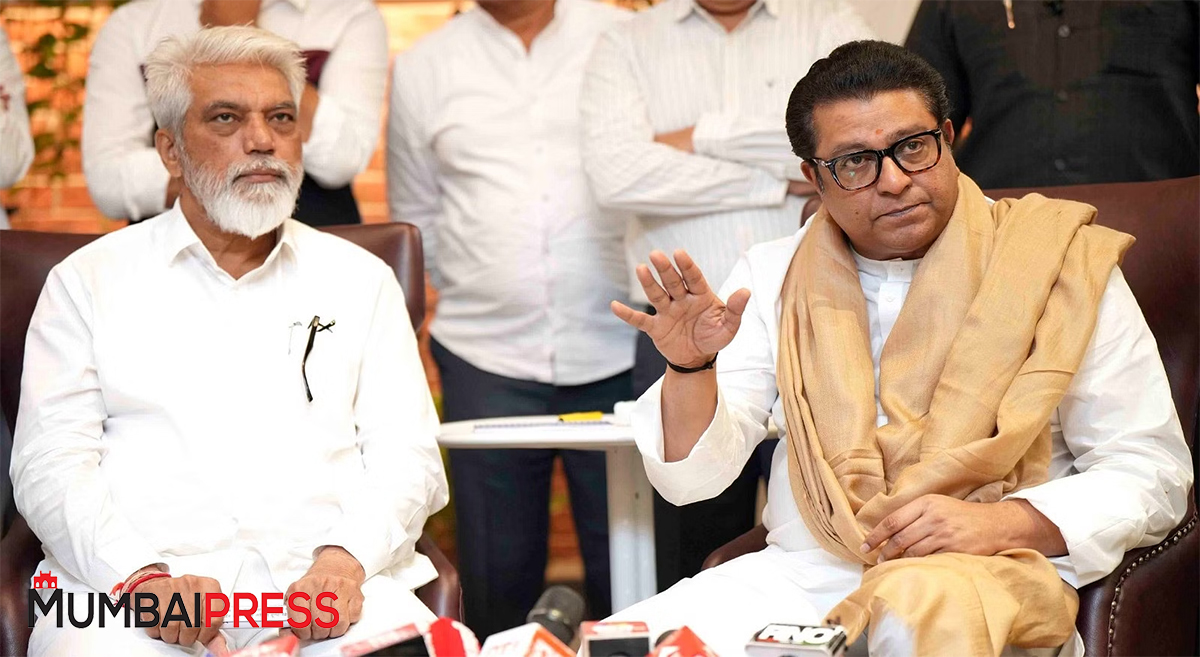
Mumbai: The government is committed to transparency and reforms in toll collection, which would be rolled out shortly, affirmed by PWD Minister Dadaji D. Bhuse, along with Maharashtra Navnirman Sena (MNS) President Raj Thackeray during a joint press conference held on Friday morning.
A delegation of MNS leaders, led by Thackeray, had previously met with Chief Minister Eknath Shinde on Thursday. In continuation of the discussions from that meeting, PWD Minister Bhuse paid a visit to the residence of the MNS Chief. Following an extensive dialogue, both leaders convened a joint press conference.
Thackeray announced, “Within the next two weeks, closed-circuit television cameras (CCTVs) will be installed at all toll booths at the five Mumbai Entry Points (MEPs), and a control room will be established at Mantralaya to monitor them. Digital displays will indicate the toll amounts collected by the contractor as per the tender and the remaining balance, ensuring transparency for the public regarding the financials of the respective toll booths.”
Furthermore, the government will guarantee that no vehicle is required to stop for more than four minutes at toll booths, and vehicles located beyond the ‘yellow line’ (indicating traffic congestion) will be permitted to pass without paying the road toll tax. MNS will also construct public facilities near certain toll booths and oversee their operations.
Bhuse clarified a video clip featuring DCM Devendra Fadnavis regarding toll exemptions, stating that four-wheeled vehicles have been exempted at 53 toll booths in the state, with the state government having already compensated the relevant companies.
The MNS had called for the closure of 29 old toll booths under the PWD Department and 15 under the Maharashtra State Road Development Corporation (MSRDC), to which Bhuse indicated that the government will evaluate and make a decision on this matter soon.
In response to Thackeray’s warning of ‘burning the toll booths’ if small/light vehicles were compelled to pay road toll tax, the MNS had organized significant protests at various toll booths in Mumbai, Thane, Raigad, Nashik, and other locations, causing concern within the government.
The assurances provided by the government include:
Installation of cameras at toll plazas to count the number of vehicles passing through the toll gates for the next 15 days. The MNS will also set up similar cameras.
Ensuring that all contract-specified amenities, such as restrooms, first aid services, ambulances, and emergency lights, are available at all toll plazas.
Establishment of a system at Mantralaya for receiving complaints, with a dedicated mobile number for registering toll plaza grievances.
Conducting structural audits by IIT for all bridges and underpasses mentioned in the contracts.
Decision on reversing toll fee hikes in Thane within a month.
Restoration of the yellow line at all toll gates, allowing vehicles outside the yellow line to pass without toll charges.
No double charging in the case of an inoperative Fastag, with the option to file a complaint in case of a double charge notification on mobile.
Implementation of the rule to cease toll collection on defaced roads under the central government within 15 days, following consultations with central authorities.
Conducting a CAG audit for toll collection at Mumbai Entry Points (MEP), Mumbai-Pune Expressway, and Rajiv Gandhi Sea Link.
Enforcing discipline among heavy vehicles within the next 15 days.

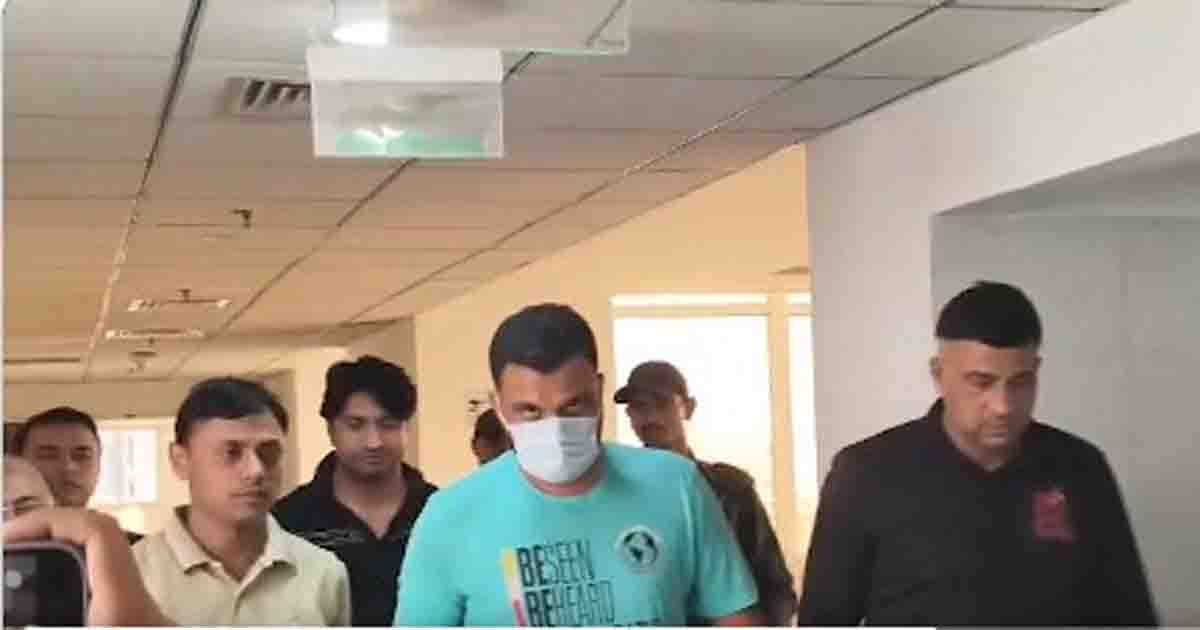
New Delhi, Oct 3: A Delhi court on Saturday remanded alleged international narcotics trafficking accused Navpreet Singh to 10 days of police custody after he was deported from Turkey and brought back to India in connection with a major drug trafficking case.
Singh was produced before the Rouse Avenue Court in New Delhi following his deportation from Turkey, where he was allegedly living under the identity of Navab Virk.
Seeking his custodial remand, the police said that his questioning was required as part of the ongoing investigation into the alleged international narcotics trafficking network and to ascertain the role of other accused and the wider network.
However, the defence opposed the police remand plea, saying that there was no need for further custodial interrogation.
Advocate Asgar Khan, appearing for Singh, told the court that the police had already recorded his statement while he was in custody and that further investigation could proceed on the basis of the statement.
“We presented our arguments against the police remand before the court, but the court granted it,” Khan told media.
Navpreet Singh has been accused by investigating agencies of being linked to an international drug trafficking network allegedly operating between Afghanistan, India and Turkey.
According to the investigation, Singh was allegedly operating as a key handler of the network from Turkey and was accused of facilitating the trafficking of heroin and methamphetamine from Afghanistan to India.
His name had also surfaced in connection with a major narcotics case that came to light in Delhi in 2021, in which investigators recorded the recovery of around 355.5 kg of heroin from the accused persons.
Investigating agencies have claimed that Singh used the identity “Navab Virk” and obtained Turkish citizenship under the assumed identity while continuing to operate the alleged narcotics network.
Union Home Minister Amit Shah on Saturday described Singh’s deportation from Turkey as a “historic milestone” for the Narendra Modi-led Union government.
In a post on social media platform X, Home Minister Shah said that Singh had obtained Turkish citizenship under the alleged fake identity of Navab Virk and continued to smuggle heroin and methamphetamine to India from Afghanistan.
“Our agencies tracked him down, ripping apart veil after veil to unmask his true identity, and secured his deportation. Today he has been brought back to India and put behind bars in connection with cases involving drug trafficking and other crimes he is accused of. Congratulations to all the agencies for this success,” the Union Minister added.
Union Minister Shah also said that the Central government was committed to destroying every narco-cartel before December 2029.
The Ministry of Home Affairs said Singh’s deportation was part of the Centre’s efforts to bring back fugitives involved in serious criminal cases.
The development comes months after suspected drug trafficker Mohammad Salim Dola was brought back to India from Turkey.
Earlier, fugitive Prabhdeep Singh was also brought back from Azerbaijan in connection with a major narcotics case involving the recovery of a large quantity of heroin.
The investigation against Navpreet Singh and other accused is underway.
Maharashtra
Kasturba Marg Police recover 100 stolen mobile phones, return them to their original owners

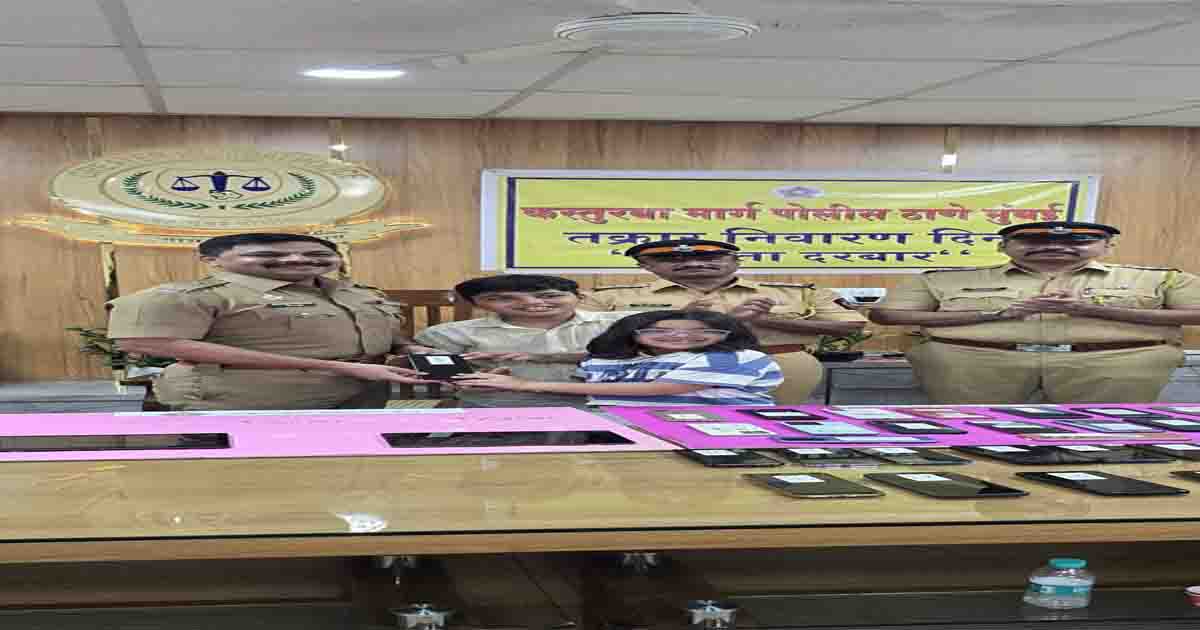
Acting on complaints regarding stolen and lost mobile phones within the jurisdiction of the Kasturba Marg Police Station in Mumbai, police analyzed data from the CEIR portal and conducted technical investigations. By verifying device details, IMEI numbers, and user information, officers from the Kasturba Marg Police Station tracked down and recovered a total of 100 mobile phones from locations across Mumbai and other parts of Maharashtra.
The total estimated value of the 100 recovered mobile phones is ₹2,270,658. Of these, 18 phones have already been returned to their respective owners/complainants, including: 1) Rajendra Puri, 2) Khush Saw, 3) Kripa Lodhiya, 4) Shreya Satam, 5) Atul Sathe, 6) Priyanka Mistri, 7) Banu Tarang, 8) Prem Gupta, 9) Adya Shaikh, 10) Shweta Shah, 11) Sandhya Pandit, 12) Deepak Sawdekar, 13) Saurabh Jhangar, 14) Ketan Shete, 15) Onkar Raut, 16) Jayalal Yadav, 17) Lakshmi Appa Kripagiri, and 18) Praveen Dubey. The process of returning the remaining phones to their owners is currently underway.
This operation was carried out under the supervision of the DCP (North, Zone 3), Mumbai, by the team at Kasturba Marg Police Station, led by Balasaheb Bunkar.
International News
Iran to pursue US seizure of commercial ship during truce in international courts: official
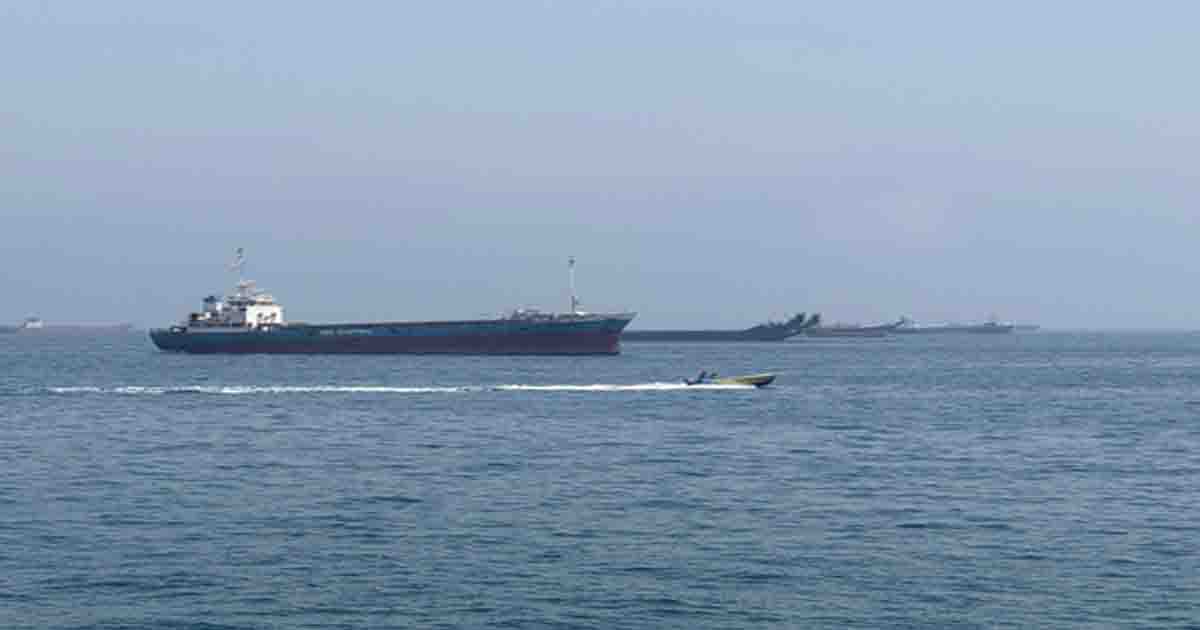
Tehran, Oct 3: A senior Iranian shipping official has said the country will pursue in international courts the US attack on and seizure of one of its container ships, which took place in April during the ceasefire between Tehran and Washington, the official news agency IRNA reported Saturday.
Mohammad-Reza Modarres Khiabani, CEO of the Islamic Republic of Iran Shipping Lines, made the remarks at a meeting in Tehran while describing as a “war crime” the US forces’ boarding and seizure of the Iranian-flagged vessel Touska off the coast of Iran’s southeastern Chabahar port in the Gulf of Oman on April 19, said the report.
He said the ship was carrying medicines related to the Iranian Red Crescent Society and dialysis patients, noting that attacking a commercial ship during the ceasefire constitutes a “war crime and violation of the truce,” Xinhua News Agency reported.
He also said that the imposition of any form of naval blockade violated international law and constituted a “hostile” act, alleging that the US Navy struck Touska’s engine room and took 28 crew members hostage.
Meanwhile, US President Donald Trump declined to reveal his next move on Iran, saying the situation was “working out very well” and predicting that the conflict would not last long.
Trump made the remarks while speaking to reporters at the White House before departing aboard Marine One.
Asked what his next step regarding Iran would be, Trump initially suggested that disclosing it would make major news.
“That’s very, oh, it’s — well, if I told you, you’d have a major story, right? But you’ll see. Working out very well. Iran is not doing well,” Trump said.
The President did not elaborate on what action his administration was considering or provide a timetable.
But later in the same exchange with reporters, Trump again referred to Iran while discussing global energy supplies and his efforts to get Europe to put more diesel into the market.

Deported narco-trafficking kingpin Navpreet Singh sent to 10-day police custody

Kasturba Marg Police recover 100 stolen mobile phones, return them to their original owners

Iran to pursue US seizure of commercial ship during truce in international courts: official

SP changes 2 MLC candidates in UP; fields Akash Agrawal, Sanjay Tripathi

Capt Smit Machchhar under excellent medical care, recovering well: Indian Embassy in UAE

Gift to President Putin part of PM Modi bid to globally display India’s heritage

PM Modi’s warm camaraderie with Putin, Xi on full display at BRICS Summit

Corporators of all parties in trouble! Corporators of all major parties including Shiv Sena (UBT), BJP and Congress are facing legal challenges.

Complaint against Netflix & Mukesh Chhabra for inappropriate language on ‘India’s Got Latent 2’

School bus driver shot at in MP’s Dabra; 50 terrified children on board witness crime
-

 Crime4 years ago
Class 10 student jumps to death in Jaipur
-

 Maharashtra2 years ago
Mumbai Local Train Update: Central Railway’s New Timetable Comes Into Effect; Check Full List Of Revised Timings & Stations
-

 Maharashtra2 years ago
Mumbai To Go Toll-Free Tonight! Maharashtra Govt Announces Complete Toll Waiver For Light Motor Vehicles At All 5 Entry Points Of City
-

 Maharashtra2 years ago
False photo of Imtiaz Jaleel’s rally, exposing the fooling conspiracy
-

 National News2 years ago
Ministry of Railways rolls out Special Drive 4.0 with focus on digitisation, cleanliness, inclusiveness and grievance redressal
-

 Maharashtra2 years ago
Maharashtra Elections 2024: Mumbai Metro & BEST Services Extended Till Midnight On Voting Day
-

 National News2 years ago
J&K: 4 Jawans Killed, 28 Injured After Bus Carrying BSF Personnel For Poll Duty Falls Into Gorge In Budgam; Terrifying Visuals Surface
-

 Crime2 years ago
Baba Siddique Murder: Mumbai Police Unable To Get Lawrence Bishnoi Custody Due To Home Ministry Order, Says Report