
Maharashtra
Maharashtra signs MoUs worth Rs 46K cr at Davos WEF


Getting into the business mode in Davos, Maharashtra Chief Minister Eknath Shinde and his team inked MoUs worth around Rs 45,900 crore for various projects with a potential to create around 10,000 direct jobs, an official from the delegation said here on Tuesday.
Industry Minister Uday Samant, who is part of the CM entourage, said that on the first day on Monday (January 16), the state government has signed the agreements with several major global conglomerates and investors.
Present at the ceremonies were top officials like Harshdeep Kamble, Vipin Sharma. T. Krishna, Shreya Eren, Ashish Nawade and others.
The investments include Berkshire Hathaway HomeServices Orenda India (Rs 16,000 cr), ICP Investments/Indus Capitals (Rs 16,000 cr), Greenko Energy Projects Pvt. Ltd. of Telangana (Rs 12,000 cr), Nipro Pharma Packaging India Pvt. Ltd. of Pune (Rs 1,650 cr) and Rukhi Agro Foods of Thane (Rs 250 cr).
The Shiv Sena (UBT) Chief Spokesperson and MP Sanjay Raut said that if all these investments are indeed coming then that is good for the state.
“However, let’s wait till the investments actually come and jobs are really created before we can comment,” said a skeptical Raut, who had yesterday urged Shinde to visit Gujarat and get back projects of Maharashtra which had shifted there in 2022.
Setting the state on an ambitious journey of a USD One Trillion economy, Shinde is all set to sign a total of 21 MoUs worth Rs 1.40 lakh-crore, intended to create over 66,500 jobs in the next five years.
Besides the agreements signed on Monday, more MoUs are scheduled with major global conglomerates and investors in greenfield projects like data centres, pharmaceuticals, logistics, chemicals, automobiles, electric vehicles, renewable energy and ESDM during Shinde’s ongoing visit to the World Economic Forum (WEF) in Davos, Switzerland.
He showcased the progressive policy reforms of the government, making the state a part of the global conversation, to reiterate to political leaders and global investors why Maharashtra is a premier investment destination.
Maharashtra has signed the prestigious three-year Platform Partnership with the WEF, a commercial contract for continuous engagements on subjects of strategic importance to the state.
The subjects focus on Shaping the Future of Urban Transformation – smart and connected cities, urban resilience, governance, infrastructure & services and resource management, and New Economies and Societies, focusing on entrepreneurship, education & skills, economic growth and job creation, said Shinde.
In the next couple of days, Shinde will present Maharashtra’s progressive policies and investor-friendly outlook to key political and government representatives from Luxembourg, Saudi Arabia, and Singapore, among others.
Among the most industrialised states in India, Maharashtra contributes 15 percent to the national GDP and 16 percent of the country’s industrial output.
The services sector accounts for much of the state economy, upto 62 per cent of the state GDP, followed by the manufacturing sector which contributes 20 per cent through major industries including automobiles, engineering, textiles, pharmaceuticals, chemicals, petrochemicals, food processing and IT/ITeS.

Maharashtra
Pune, Pimpri-Chinchwad, and PMR region to become India’s major mobility hub by 2030: Maha CM Fadnavis

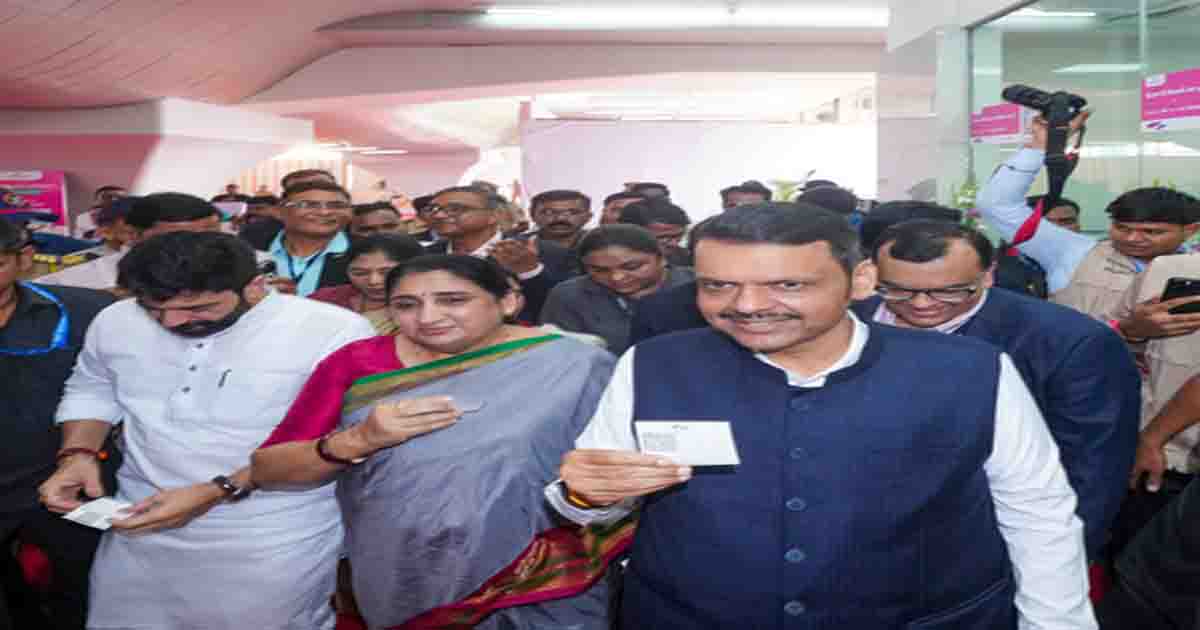
Maharashtra Chief Minister Devendra Fadnavis on Tuesday expressed confidence that with a robust network of modern transport facilities—including the metro, electric buses, inner ring roads, outer ring roads, tunnels, and a new airport—being developed across Pune, Pimpri-Chinchwad, and the Pune Metropolitan Region (PMR), the region will emerge as a major mobility hub of the country by 2030.
He was speaking at an event after Prime Minister Narendra Modi virtually inaugurated Mann-Hinjawadi to Shivajinagar Line-3 and laid foundation stone for the Pune Metro Phase-2.
“Hinjawadi and its surrounding areas form a critical IT hub in India, visited daily by thousands of employees who often face heavy traffic congestion, losing one to two hours of their time. The launch of the Metro will bring immense relief to IT professionals, particularly the youth,” the Chief Minister said.
He expressed joy that the project, whose foundation stone was laid by Prime Minister Modi in 2018, was now being dedicated to the nation by him as well.
The Shivajinagar-Hinjawadi corridor is the country’s first Metro project implemented through a Public-Private Partnership (PPP) model. Built by Tata Projects and Siemens on a DBOT (Design, Build, Operate, and Transfer) basis, the project reached completion with the cooperation of the Central and state governments, viability gap funding (VGF), and land acquisition facilitated by the Maharashtra government.
Acknowledging the vital contribution of women from construction to operations, the Chief Minister noted that this ‘Pink Powered’ metro symbolises the active participation of women power.
Around 120 kilometers of metro lines have been developed in Pune, with work ongoing on several other corridors.
Maharashtra has been a major beneficiary of the country’s metro expansion, with metro systems operational or under construction across 12 municipal corporation areas.
“The Metro is not merely a transport facility but an engine driving economic development, fostering investments, employment, and surrounding economic ecosystems,” the Chief Minister said.
To develop the Pune Metropolitan Region into a major urban growth centre, the Central government has provided a fund of Rs 5,000 crore, which will be utilised to build modern transport infrastructure in Pune and the PMR. Developed as a ‘Green Metro’, Pune Metro will generate 30 per cent of its required energy independently.
“With the comprehensive network of metro lines, electric buses, inner and outer ring roads, CMTR (Common Mobility Transport Route), underground routes, and tunnels taking shape, Pune is poised to become a key centre not only for IT and manufacturing but also for frontier technologies, contributing significantly to the national economy,” CM Fadnavis said.
Emphasising that the Central government under Prime Minister Modi prioritises poverty eradication and youth employment alongside infrastructure development, the Chief Minister expressed hope that Maharashtra will continue to receive the Centre’s steadfast support and guidance.
Deputy Chief Minister Eknath Shinde said that the metro will play a pivotal role in easing traffic congestion in Pune and making citizen commutes faster, safer, and more comfortable.
Metro Line-3 is a game-changing project for Pune’s public transport network that will reshape the city’s future and resolve daily commuting challenges.
Terming the metro an historic Diwali gift to the residents of Pune, Deputy CM Shinde commended the state government’s track record of keeping its promises and executing projects on time, reflecting Maharashtra’s rapid developmental strides.
Pune Metro Line-3 is India’s first metro project executed under a PPP model using the DBFOT framework under the National Metro Rail Policy 2017.
The Deputy CM congratulated the Pune Metropolitan Region Development Authority, Maha-Metro, Tata Projects, Siemens, and all concerned officials for completing the project on a mission mode.
Highlighting women’s substantial participation in building and operating the metro, Eknath Shinde remarked that this project reaffirms that women are second to none in any field.
“The Mumbai-Pune Expressway has significantly boosted Pune’s growth, and the upcoming ‘Missing Link’ project will further reduce travel time between the two cities, alongside the development of a ring road encircling Pune. These projects will collectively ease traffic congestion and bring immense relief to citizens, making Pune’s mobility more dynamic and seamless,” the Deputy CM said.
He also made a special mention of the late Deputy Chief Minister Ajit Pawar’s enduring contributions to Pune’s development.
Citing initial scepticism regarding public ridership when the Metro was first launched, Eknath Shinde noted that more than nine million passengers have chosen the Metro so far, underlining its popularity as a comfortable, time-saving transit option that strengthens public transport.
The state government remains firmly committed to making Pune a congestion-free, modern city, he added.
Deputy Chief Minister Sunetra Pawar said that given Pune’s rising population and transportation demands as a cultural, educational, and industrial hub, building a modern, safe, and eco-friendly public transport system is imperative.
Pune Metro Line-3 is India’s first metro corridor executed through a PPP, completed at a cost of around Rs 8,313 crores.
“Notably, it will be the country’s first 100 per cent women-operated metro line, with around 100 women train pilots and 50 per cent of station staff being women—a matter of immense pride,” Deputy CM Sunetra Pawar added.
The foundation stone for this corridor was laid by Prime Minister Modi in 2018.
The Union Cabinet has also approved four extended corridors under Phase-2, the foundation stone for which was laid on Tuesday. These 31-kilometer, 28-station corridors, cleared by the Central government at an estimated cost of Rs 9,858 crore, will connect areas such as Vanaz to Chandani Chowk, Ramwadi to Vitthalwadi, Kothrud, Bavdhan, Viman Nagar, Kharadi, and Wagholi. Once completed, the total Pune Metro network will exceed 100 kilometers.
“Stations like the R.K. Laxman Museum and Savitribai Phule Pune University on this route will pay tribute to the ideals of the ‘Common Man’ and Krantijyoti Savitribai Phule, respectively,” Sunetra Pawar noted.
The late Deputy Chief Minister Ajit Pawar made invaluable contributions from the inception of every Detailed Project Report (DPR) to its final approval.
As Finance Minister, he ensured necessary fund allocations and personally reviewed the progress of Hinjawadi metro stations in July, instructing officials to maintain high quality and adhere to timelines.
A special task force under the leadership of the District Collector has been constituted to address infrastructure needs in Hinjawadi, Mann, and Marunji, covering roads, transport, water, electricity, waste management, and metro connectivity.
Approvals worth Rs 426 crore have been granted for internal approach roads leading to metro stations, and as Guardian Minister, she would closely oversee the execution of these works, she assured.
Minister of State Murlidhar Mohol described the inauguration of the metro and the groundbreaking of new lines as a historic milestone for Pune’s development.
The 23-km Hinjawadi-Shivajinagar route will expand the Pune Metro network to 55 km, benefiting IT employees and millions of citizens.
In September alone, 9,58,603 passengers travelled via Pune Metro, cementing its status as the city’s lifeline.
“The foundation stone was also laid on Tuesday for nearly 46 km of new routes—namely Khadakwasla–Kharadi, Vanaz–Chandani Chowk, Ramwadi–Wagholi, and Manikbaug–Nal Stop—which will strengthen connectivity across the eastern, western, and southern parts of the city and help ease traffic congestion,” he said.
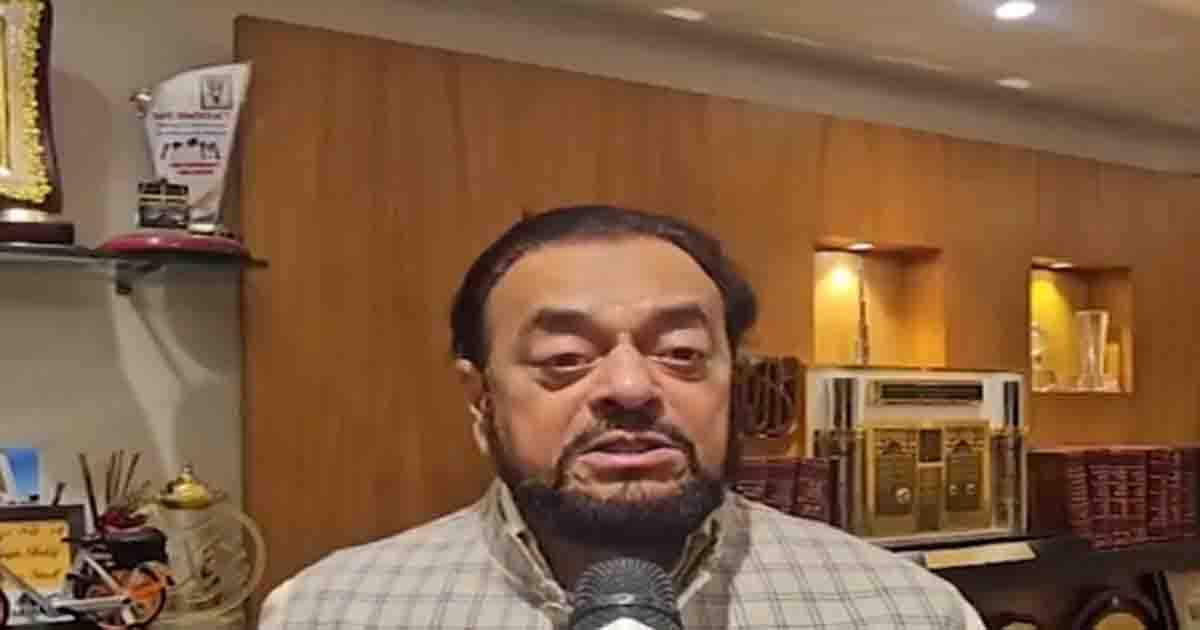
Samajwadi Party Maharashtra President Abu Asim Azmi on Tuesday alleged that former Uttar Pradesh minister Azam Khan was being targeted by the government, claiming that fresh cases were being filed against him whenever he secured bail.
Azmi’s remarks came after Azam Khan was sent to 14 days of judicial custody following his arrest in a money laundering case. Khan was arrested shortly after being released on bail on Monday. He will be lodged at Dasna jail in Ghaziabad.
Speaking to media, Azmi said: “Azam Khan has been in jail for several years. If the ED had anything against him, it could have questioned him inside the prison and taken action. But as soon as he gets bail, a new case is filed. All this is happening at the government’s behest.”
“This is completely wrong. Azam Khan has not earned anything through wrongdoing. He brought money and established the university. He has been elected as an MLA more than 10 times and has also served as a minister and an MP. However, such treatment is being meted out to him. I believe that the PDA (Pichhda, Dalit, and Alpsankhyak) is repeatedly being targeted in this manner. But now, the public has awakened,” he added.
Azmi also welcomed the Bombay High Court’s order directing the Brihanmumbai Municipal Corporation (BMC) to re-upload actor Dia Mirza’s Diwali video, which appealed to people to celebrate an eco-friendly and firecracker-free festival.
Reacting to the development, the Samajwadi Party leader said, “I am very happy and want to congratulate the court for showing that justice is still alive. I would also urge all courts not to forget the struggles of Dr B.R. Ambedkar and Mahatma Gandhi.”
He further urged the judiciary to take suo motu cognisance whenever anything unconstitutional or imposed through coercion and hooliganism takes place in the country.
“Whenever anything unconstitutional happens in the country, courts should take suo motu action. If this continues, those BJP leaders who are spreading anarchy in the country will come to their senses,” he said.
The Bombay High Court on Tuesday expressed strong displeasure over the rhetoric used by politicians against Dia Mirza and directed the civic body to re-upload the deleted video.
Emphasising that India is a secular country, the court underscored the importance of allowing individuals to express their views on celebrating festivals in an environmentally responsible manner.
Bollywood
Tiger Shroff firing case: MCOCA court sends gangster Anil Pandit’s sister-in-law to police custody till Nov 16
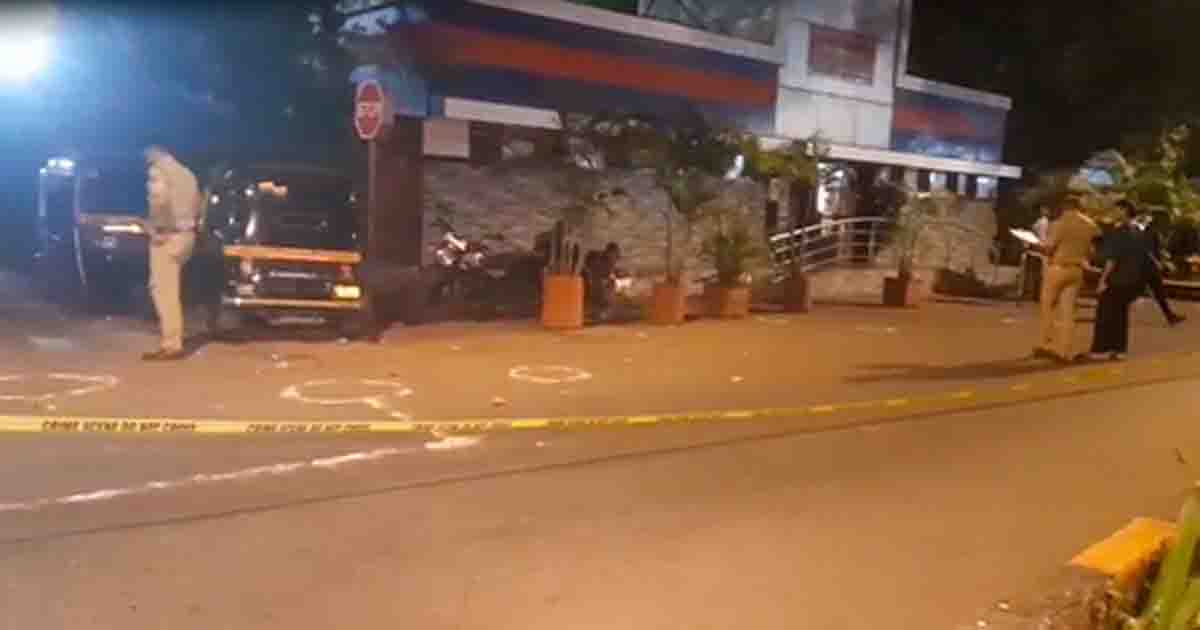
A special Maharashtra Control of Organised Crime Act (MCOCA) court here on Tuesday sent Suneha Pandit, the 13th accused arrested in connection with the firing incident on Bollywood actor Tiger Shroff, to police custody till November 16.
The Mumbai Crime Branch had arrested Suneha Pandit, the sister-in-law of gangster Anil Pandit, who had claimed responsibility for the October 18 firing case, from Haryana’s Karnal district.
She was produced before a special MCOCA court in Mumbai on Tuesday, where investigators sought her police custody for further questioning.
According to officials, Suneha Pandit is the wife of Abhishek, who allegedly operates a cryptocurrency account.
Funds have reportedly been received in this account from abroad, and investigators suspect that the money may be proceeds from extortion.
Abhishek Pandit is the brother of Anil Pandit and is accused of running two other groups along with his network and is said to handle payments for all operations.
The other accused persons in the firing case were assigned special codes through which Abhishek Pandit allegedly transferred money to them, police said.
The Mumbai Crime Branch had sought 15 days of police custody for Suneha Pandit.
However, her lawyer opposed the police custody request, arguing that the police have already obtained all the information they required.
The Mumbai Crime Branch also informed the court that the funds allegedly used in the Tiger Shroff firing case came from foreign sources.
In its order, the MCOCA court sent the accused woman to the custody of the Mumbai Crime Branch until November 16.
Last week, a special MCOCA court sent Amar, the 12th accused arrested from Haryana’s Sonipat, to police custody till November 6.
Prior to that, the MCOCA court had sent 11 other accused arrested in connection with the firing on Shroff’s car to police custody till November 6.
Amar was arrested from Rohna village in Sonipat.
According to officials, Amar is accused of having transferred money, allegedly used in the commission of the crime, online. The funds were reportedly used for various expenses, including the purchase of a motorcycle and booking hotel rooms linked to the case.

Delhi Police defend Jantar Mantar de-notification, says decision taken after MHA panel report

Pune, Pimpri-Chinchwad, and PMR region to become India’s major mobility hub by 2030: Maha CM Fadnavis

India’s pomegranates, kiwi fruit exports hit Dubai market

Bihar: Women confront official during protest over Madhubani police firing

‘PDA repeatedly being targeted’: Abu Azmi as Azam Khan sent to 14-day judicial custody

Rahul, Cong ecosystem want to force regime change: BJP after Neha Bora praises B’desh Gen-Z protest

Attack on democratic rights: INDIA Bloc leaders on detentions of anti-ECI protestors

BJP pays tribute to ex-President Abdul Kalam, recalls his enduring influence on generations of India’s youth

INDIA bloc begins protest march against ECI

Congress trying to protect 3 crore Bangladeshi infiltrators in voter list: HM Shah
-

 Crime4 years ago
Class 10 student jumps to death in Jaipur
-

 Maharashtra2 years ago
Mumbai Local Train Update: Central Railway’s New Timetable Comes Into Effect; Check Full List Of Revised Timings & Stations
-

 Maharashtra2 years ago
Mumbai To Go Toll-Free Tonight! Maharashtra Govt Announces Complete Toll Waiver For Light Motor Vehicles At All 5 Entry Points Of City
-

 Maharashtra2 years ago
False photo of Imtiaz Jaleel’s rally, exposing the fooling conspiracy
-

 National News2 years ago
Ministry of Railways rolls out Special Drive 4.0 with focus on digitisation, cleanliness, inclusiveness and grievance redressal
-

 Maharashtra2 years ago
Maharashtra Elections 2024: Mumbai Metro & BEST Services Extended Till Midnight On Voting Day
-

 National News2 years ago
J&K: 4 Jawans Killed, 28 Injured After Bus Carrying BSF Personnel For Poll Duty Falls Into Gorge In Budgam; Terrifying Visuals Surface
-

 Crime2 years ago
Baba Siddique Murder: Mumbai Police Unable To Get Lawrence Bishnoi Custody Due To Home Ministry Order, Says Report