
Maharashtra
Maharashtra: Plea Seeks Fair Distribution Of Water For Nashik And Ahmednagar Residents

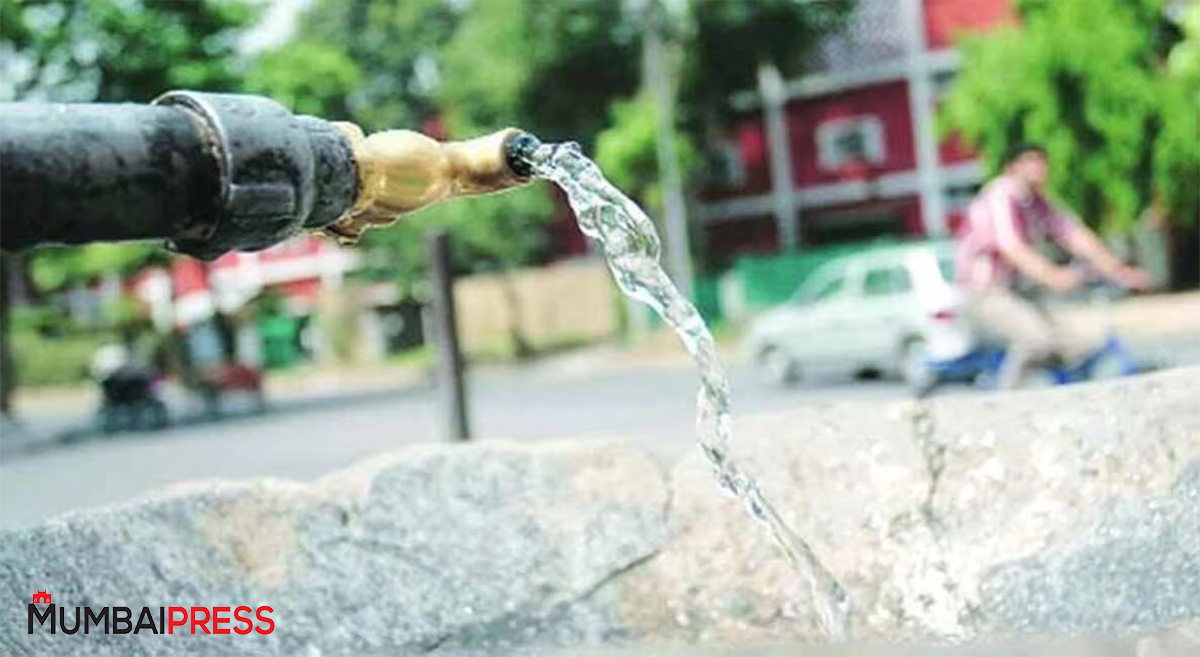
A Public Interest Litigation (PIL) has been filed seeking fair distribution of water for residents of Maharashtra’s Nashik and Ahmednagar districts, which rely on water from the upstream dam groups of Mula, Pravara, Gangapur, Godavari Darna, and Palkhed on the Godavari River.
The PIL filed by Late Rajabhau Tugar Sahakari Upsa Sinchan Sanstha Maryadit, a co-operative society which works in the field of promoting irrigation, has sought quashing of the order issued by the Godavari Marathwada Irrigation Development Corporation (GMIDC) on October 30. The order mandates the release of 8.603 thousand million cubic feet of water from five upstream dam groups to the Jayakwadi dam. This dam provides water to areas around the drought-prone Chhatrapati Sambhajinagar district in the Marathwada region.
The PIL contends: “If water is released as per the impugned order, then the districts of Nashik and Ahmednagar will certainly face grave water shortage even for drinking purposes.”
GMIDC issues water release order without committee’s report
On July 26 this year, a Government Resolution (GR) was issued by the state’s Water Resources Department forming a committee to reassess water distribution requirements and prepare appropriate directive principles. Without waiting for the committee report, the GMIDC issued its water release order in the meantime in October.
“In the absence of the report from such a committee, the recommendations by the impugned order dated 30 October 2023 have been made which are contrary to law,” the PIL states.
Further, the upstream group of dams received only 52% of the average rainfall this year, leading to a considerable reduction in the water level in the region’s wells. This aspect, according to the petitioner, needed to be considered while deciding on the distribution of water to the Jayakwadi Dam, the plea highlights.
On September 19, 2014, a committee was formed Maharashtra Water Resources Regulatory Authority (MWRRA) pursuant to HC directive to formulate a scheme in respect of equitable distribution of water. It also specified that the said guiding principles be reviewed each year and a report thereon be made to MWRRA. The PIL contends that the same has not been done in the case at hand.
The State Government has failed to comply with the statutory requirement and also its statutory duty of calling for a Committee Report and acting only in accordance with the Committee Report, the plea alleges.


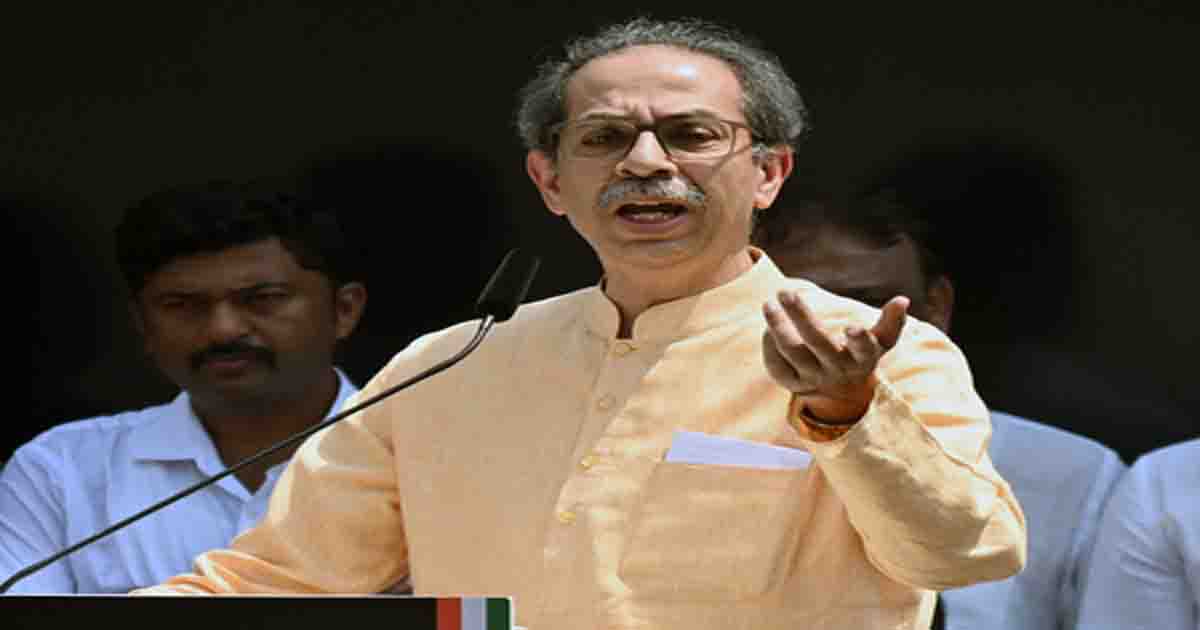
Mumbai, Oct 7: Drawing a direct parallel between the violent mass protests crippling France and the underlying socio-economic unrest across India, Shiv Sena Uddhav Balasaheb Thackeray on Wednesday issued a sharp critique of the ruling administration.
The Thackeray camp in the party’s mouthpiece, ‘Samaana’, warned that while public anger in France has exploded onto the streets, India is witnessing a subterranean simmer that could erupt into a major crisis if public grievances remain unaddressed.
Highlighting the unrest across France, the editorial noted that over 5,00,000 citizens, including students, teachers, healthcare workers, and firefighters, have taken to the streets in more than 170 cities. The French Ministry of Interior has acknowledged that the situation has moved beyond control, with major disruptions to railways, supply chains, and public services.
The editorial attributed the turmoil in France to soaring diesel and energy prices, systemic corruption in education, severe public sector mismanagement, and proposed government budget cuts under the Sébastien Lecornu administration. With French public debt climbing to 119 per cent of GDP, planned measures — such as freezing public sector wages — have eroded purchasing power and triggered widespread outrage.
Drawing comparison to the Indian scenario, the editorial argued that the everyday struggles facing Indian citizens are equally, if not more, severe. While French protesters hit the streets over rising fuel and energy costs, families in India are grappling with inflation in essential commodities, including pulses, vegetables, and medicines.
The editorial detailed several key points of concern currently confronting the nation. Millions of workers face low wages, contractualisation without security, lack of Provident Fund benefits, and absent healthcare.
Highlighting recent labour agitations in industrial hubs like Noida, Greater Noida, and Manesar, the editorial pointed out that workers earning around Rs 10,000 to Rs 12,000 per month for 12-hour workdays have reached a breaking point.
The editorial criticised systemic corruption in public service examinations, pointing to paper leaks in tests like NEET and MPSC as drivers of widespread youth dissatisfaction.
Pointing to regional economic distress, the Thackeray camp highlighted Maharashtra’s severe drought conditions, forcing the state government to raise Rs 40,000 crore in loans. Meanwhile, citizens harbour growing fears over banking stability and middle-class savings amid broader economic stress.
Citing records compiled via opposition initiatives like the ‘Satyagraha’ portal, the editorial claimed over 31,434 protest sites are currently active across India, spanning farmers demanding MSP guarantees, students, and workers.
According to the editorial, the primary distinction between the two nations lies in the legal framework for public expression. “In France, trade unions operate within a recognised legal framework, allowing strikes to quickly become national policy discussions. In contrast, the Indian government systematically suppresses union action, invoking stringent laws like the Maharashtra Essential Services Maintenance Act (MESMA) and criminalising peaceful strikes,” claimed the editorial.
The Uddhav Thackeray-led Shiv Sena concluded with a stark warning to the Central government: while French citizens have expressed their anger through visible violent protests, Indian citizens have so far shown restraint. However, it cautioned that continued economic neglect, rising costs, and suppression of democratic rights could soon push public patience past its breaking point.
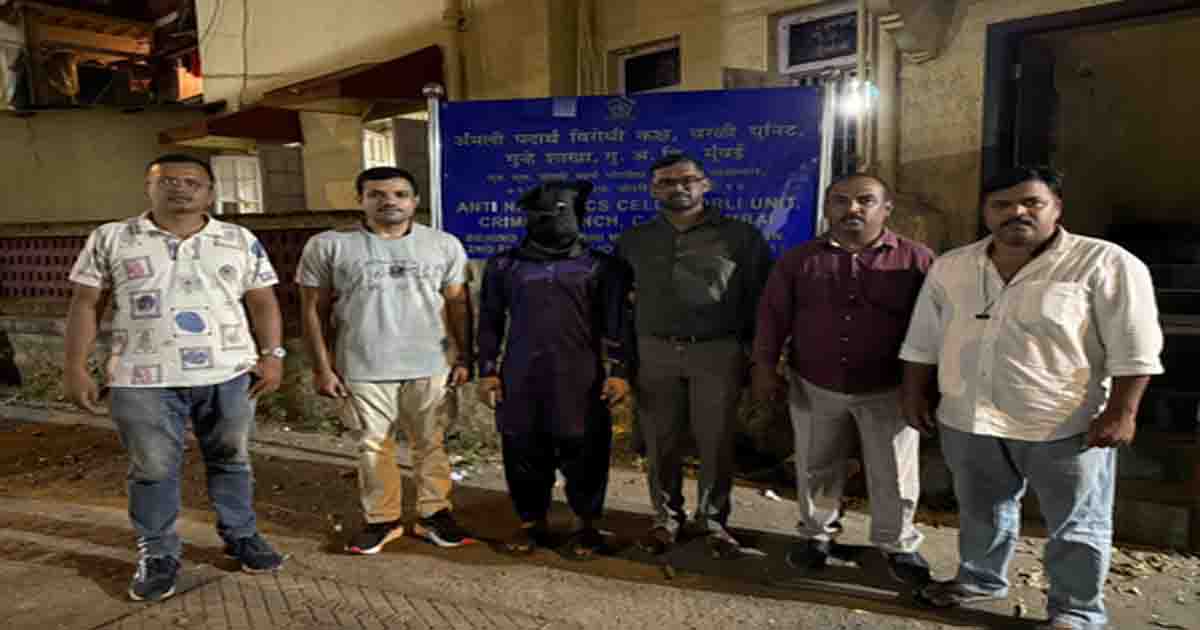
Mumbai, Oct 7: The Anti-Narcotics Cell (ANC), Worli Unit of the Mumbai Police, has seized Nitrazepam and Alprazolam tablets worth approximately Rs 2.53 crore in a case related to the illegal sale of narcotic and psychotropic substances.
According to a press note, the case has been registered by the Anti-Narcotics Cell, Worli Unit, under Section 22(C) of the Narcotic Drugs and Psychotropic Substances (NDPS) Act. The offence took place between 10:40 p.m. on October 6 and 12:40 a.m. on October 7.
Acting on information received during an investigation into persons allegedly involved in the purchase, sale and supply of illegal drugs in Mumbai, the police learned that a person was selling tablets used for intoxication in the Dr Zakir Hussain Nagar area of Govandi.
Following verification of the information, a police team searched the residence of the accused and seized 4,500 Nitrazepam tablets of the NITCOR-10 brand. The tablets weighed approximately 2 kg and 475 grams and were valued at Rs 1.98 crore.
The police also recovered 5,300 Alprazolam tablets of the PROCALM-1 brand, weighing approximately 689 grams and valued at Rs 55.92 lakh.
In total, 9,800 Nitrazepam and Alprazolam tablets, collectively valued at approximately Rs 2.53 crore, were seized during the operation.
The operation was carried out under the guidance of Mumbai Police Commissioner Deven Bharti, Joint Commissioner of Police (Crime) Anil Kumbhare and Additional Commissioner of Police (Crime) Krishnakant Upadhyay, with the supervision of senior officers of the Anti-Narcotics Cell and Worli Unit.
Earlier, on October 2, the Anti-Narcotics Cell raided The Smoke Shop at Bhoomi Tower in Sector 4, following concerns raised by Kharghar residents over a shop operating barely 50 metres from ITM College. Police seized hookah flavours and related material worth around Rs 92,000.
The raid was conducted after the ANC received information regarding the sale of hookah and tobacco products near an educational institution. A team led by Senior Police Inspector Sandeep Nigade carried out the operation.
Earlier, on August 19, the Mumbai ANC had arrested a man from Bihar at Bandra Terminus for allegedly carrying 10.10 kg of charas, with a market value of Rs 10.01 crore.
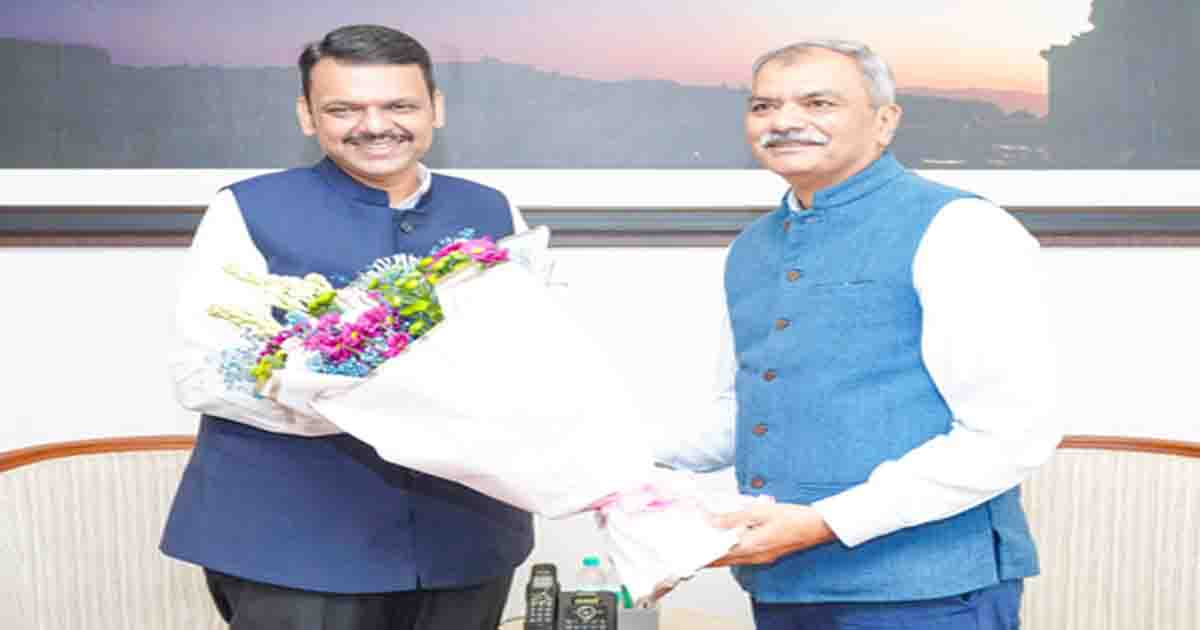
Mumbai, Oct 6: Director General of the Narcotics Control Bureau (NCB) Anurag Garg called on Maharashtra Chief Minister Devendra Fadnavis in Mumbai and discussed measures to intensify the fight against drug trafficking, an official said on Tuesday.
The NCB official said on X, “Detailed discussions were held on the various steps being undertaken by the Ministry of Home Affairs under the Whole-of-Government Approach against drug trafficking and distribution in line with the Central Government’s objective of making the country drug-free by December 2029, along with Maharashtra’s ongoing efforts and the action plan for the coming period.”
“The state continues to be at the forefront of this nationwide mission to build a drug-free Maharashtra,” said the NCB.
Earlier in August, the India-US Counter Narcotics Working Group (CNWG) Pillar I Working Group Meeting was hosted by the Narcotics Control Bureau (NCB) in a hybrid format to strengthen bilateral cooperation in combating narcotics trafficking.
The NCB shared details of the meeting on the social media platform X, stating, “The India-US Counter Narcotics Working Group (CNWG) – Pillar I Working Group Meeting was hosted by the Narcotics Control Bureau on 6 August 2026 in hybrid mode.”
The meeting brought together representatives from several Indian and US agencies. Participants from the Indian side included the NCB, Central Bureau of Narcotics (CBN), Directorate of Revenue Intelligence (DRI), Central Drugs Standard Control Organisation (CDSCO), Ministry of External Affairs (MEA), Department of Revenue and Department of Chemicals and Petrochemicals.
The US delegation included officials from the Drug Enforcement Administration (DEA), LEGAT, Office of National Drug Control Policy (ONDCP) and the US Department of State.
The discussions focused on strengthening operational cooperation, preventing the diversion of precursor chemicals, enhancing policy coordination, and advancing capacity building, said the NCB.
According to the Union Home Ministry, the NCB has strengthened international cooperation in drug control through bilateral agreements with 27 countries and Memoranda of Understanding (MoUs) with 19 countries.
India holds regular Director General (DG) Level/bilateral talks on drug-related matters with countries such as Myanmar, Nepal, Thailand, Sri Lanka, Indonesia, Singapore and the US, said an official.

Seemapuri building collapse: 1 killed, 7 rescued

’80 pc to NDA, 20 pc to PDA’: CM Yogi Adityanath’s swipe at SP ahead of 2027 UP polls

Meta unveils new AI tools to combat child sexual exploitation online

PM Modi thanks world leaders for warm wishes on completing 25 years as head of government

Delhi HC permits Vivo India executive to travel abroad, suspends LOC for four days

Gift to President Putin part of PM Modi bid to globally display India’s heritage

PM Modi’s warm camaraderie with Putin, Xi on full display at BRICS Summit

Complaint against Netflix & Mukesh Chhabra for inappropriate language on ‘India’s Got Latent 2’

INDIA bloc begins protest march against ECI

Maha Congress stages agitation against Gyanesh Kumar
-

 Crime4 years ago
Class 10 student jumps to death in Jaipur
-

 Maharashtra2 years ago
Mumbai Local Train Update: Central Railway’s New Timetable Comes Into Effect; Check Full List Of Revised Timings & Stations
-

 Maharashtra2 years ago
Mumbai To Go Toll-Free Tonight! Maharashtra Govt Announces Complete Toll Waiver For Light Motor Vehicles At All 5 Entry Points Of City
-

 Maharashtra2 years ago
False photo of Imtiaz Jaleel’s rally, exposing the fooling conspiracy
-

 National News2 years ago
Ministry of Railways rolls out Special Drive 4.0 with focus on digitisation, cleanliness, inclusiveness and grievance redressal
-

 Maharashtra2 years ago
Maharashtra Elections 2024: Mumbai Metro & BEST Services Extended Till Midnight On Voting Day
-

 National News2 years ago
J&K: 4 Jawans Killed, 28 Injured After Bus Carrying BSF Personnel For Poll Duty Falls Into Gorge In Budgam; Terrifying Visuals Surface
-

 Crime2 years ago
Baba Siddique Murder: Mumbai Police Unable To Get Lawrence Bishnoi Custody Due To Home Ministry Order, Says Report