
Maharashtra
Maharashtra gets 12 new wildlife reserves, 3 sanctuaries

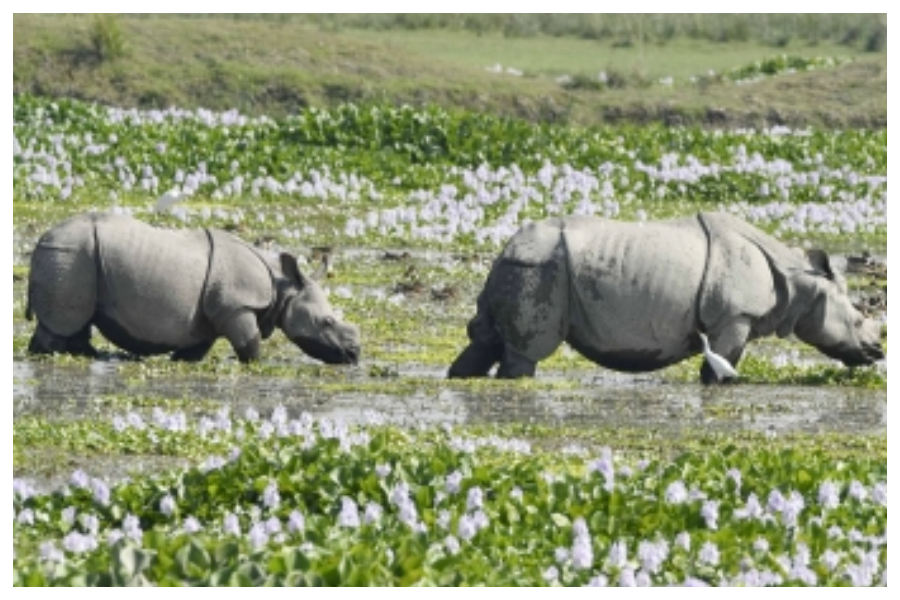
In a significant move, Maharashtra on Monday announced 12 new wildlife conservation areas spread across 693 square km and three new sanctuaries including an expanded Lonar Sanctuary in Buldhana.
The decisions were taken at the State Wildlife Board’s 18th meeting, presided over by Chief Minister Uddhav Thackeray, and it also approved setting up the Jayakwadi Bird Sanctuary in Aurangabad for which a proposal will be submitted to the National Wildlife Board.
The state has notified 15 conservation reserve areas, out of which 8 areas have been approved in the last two years alone and Thackeray expressed satisfaction over the addition of the 12 new conservation areas today.
These are: two in Dhule district at Chivatibawri (66.04 square km), Aladari (100.56 square km), four in Nashik district at Kalvan (84.12 square km), Muragad (42.87 square km), Trimbakeshwar (96.97 square km), Igatpuri (88.499 square km), two in Raigad district at Raigad (47.62 square km) and Roha (27.30 square km), Pune district’s Bhor (28.44 square km), Satara district’s Dare-Khurd for butterflies (1.07 square km), Kolhapur district’s Masai Plateau (5.34 square km) and Nagpur district’s Mogarkasa (103.92 square km).
The SWB also approved the proposal to declare Kolamarka, Muktai Bhavani and extended Lonar as wildlife sanctuaries in the state.
Besides, 10 spots have been designated as ‘endangered wildlife habitats’ in different parts of Maharashtra.
They include: Mayureshwar-Supe (5.15 square km), Bor (62 square km), Navin Bor (61 square km), extended Bor (16 square km), Narnala (12 square km.), Lonar (3.65 square km), Gugamal National Park (361 square km), Yedshi Ramalingaghat Wildlife Sanctuary (22.37 square km), Naigaon-Mayur Wildlife Sanctuary (30 square km) and the tiniest one, Deulgaon-Rehekuri Antelope Sanctuary (2.17 square km).
On the occasion, the CM directed the officials concerned to conduct a study and find out a permanent solution to the problems of wild elephants rampaging in Dodamarg region of Sindhudurg district within two months.
The plans include closing the entry of elephants at Ajra, Chandgad and Tilari areas and providing enhanced compensation to the villagers affected due to the damage caused to their farms and properties due to the elephants herds.
Discuss the rehabilitation of villagers in the forest area and the compensation to be given to them with confidence, he said.
Urging for priority to wildlife conservation efforts, Thackeray urged the officials to take the people affected by including the rehabilitation of the forest dwellers into confidence for its success.
He also asked them to consider all aspects before proposing development works in forests and clear all levels including the SWB before implementing them.
Environment Minister Aditya Thackeray said that care should be taken not to disturb wildlife paths, particularly in sensitive areas with tigers, while granting approval to road development works through jungles, and holding discussions with all stakeholders, experts and local NGOs.


Maharashtra
‘Should face same punishment as adults’: Abu Azmi demands lowering of age of juvenile offenders to 14

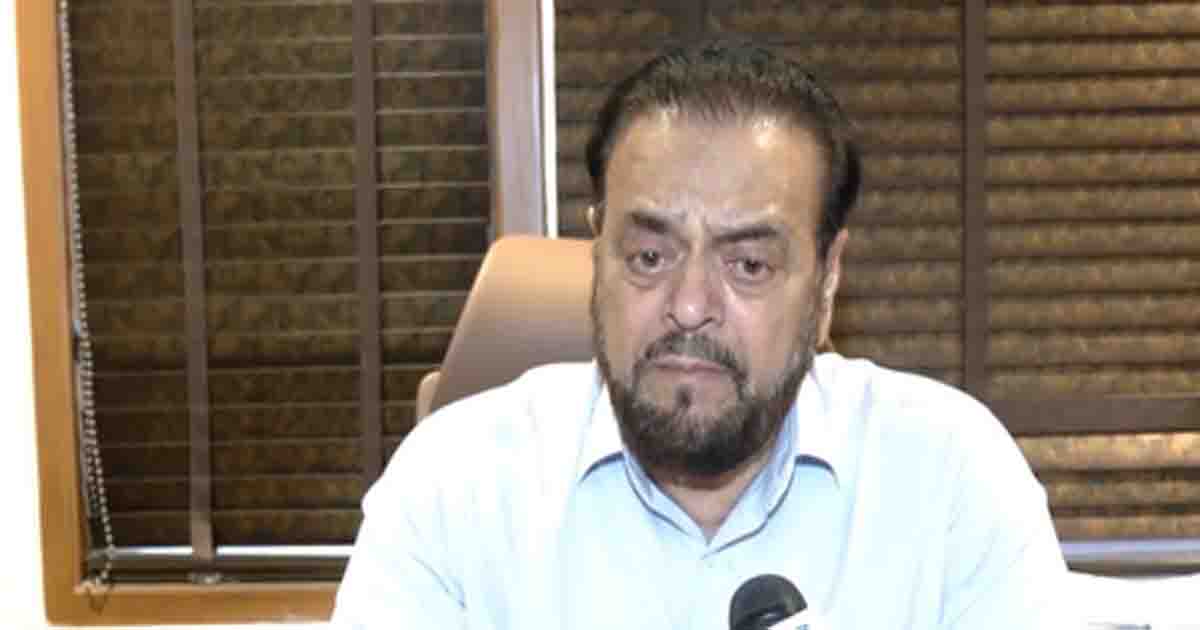
Samajwadi Party (SP) Maharashtra President and MLA, Abu Asim Azmi, on Monday demanded that the age threshold for treating an accused as a minor be lowered, arguing that juveniles aged 15 or 16 should face the same punishment as adults if they commit murder.
Speaking to media, Azmi said, “First and foremost, my demand is that the age threshold for a minor be lowered from 17 years to 14 years. At 15 or 16, young people have ‘hot blood’; they fear no one and are capable of doing anything. This age limit should be reduced to 12, 13 or 14 years. If they commit murder, they should face the same punishment as anyone else.”
Reacting to the firing incident involving actor Tiger Shroff in Mumbai, Azmi criticised Mumbai’s law and order situation, alleging that several incidents of murder and violence had taken place without receiving adequate public attention.
“First Baba Siddique, now Tiger Shroff, and it doesn’t end there. Many other murders have occurred previously as well. However, since those victims were not prominent or famous figures, their cases haven’t been highlighted. Murders are rampant in Mumbai. In Mankhurd-Shivaji Nagar, people are being murdered over the most trivial matters. The law and order situation is in a dire state,” he said.
Azmi also criticised the Maharashtra government, alleging that it was focussing its efforts on targeting Muslims rather than addressing law and order concerns.
“I want to tell Chief Minister Fadnavis that this government is focussing all its energy on humiliating Muslims. I ask, why don’t such murders happen in Singapore? Why does no one dare to commit such acts there? Why are there no murders in Arab countries? And if a murder does occur, how quickly is a verdict reached? Just look back at the pages of history,” he said.
He added that people in Mumbai were living in constant fear and said it was shameful for the government when individuals openly claimed responsibility for such crimes.
The firing incident took place on Sunday at around 7 p.m. when Tiger Shroff was returning by car from a football ground in Mumbai’s Juhu area.
According to police, the assailants fired at the vehicle with a pistol, injuring the driver. Another person present at the scene was also hit by a bullet.
A Mumbai Police official said Shroff managed to lean forward when the shots were fired, helping him avoid a direct hit. However, he sustained an injury from a fragment of shattered glass.
Police are investigating the motive behind the attack, tracing the weapon used in the shooting and determining whether other individuals were involved.
In a major development in the case, Kota City Police in Rajasthan apprehended three suspects, including a minor, at Kota railway station in connection with the firing incident on the Bollywood star.

A 70-year-old man was cheated of Rs 4.81 lakh by cyber fraudsters on the pretext of pension card registration in the Baner area in Pune, Maharashtra.
The victim, Dilip Eknath Waikar, a resident of Pashan, received a WhatsApp message regarding pension card registration between September 8 and 9. He was asked to open the message and enter his bank account details. Subsequently, he discovered that Rs 4.81 lakh had been fraudulently withdrawn from his account.
Following the incident, a case was registered at Baner police station under Sections 318(4) and 318(2) of the Bharatiya Nyaya Sanhita (BNS) and Section 66(D) of the Information Technology Act. The identity of the accused remains unknown, and no arrests have been made so far.
In a similar incident reported in September, a 72-year-old retired bank employee was cheated of Rs 5 lakh after clicking on a Facebook advertisement offering a pension card. The victim, a resident of Makarba, approached the Sarkhej police after noticing an unauthorised transaction in his bank account.
According to his complaint, the retired banker came across an advertisement on Facebook on September 6 offering a pension card purportedly issued by a bank. Believing the advertisement to be genuine, he applied for the card through the link provided.
The following day, he received a call from an unknown mobile number. The caller allegedly informed him that his pension card had been approved and asked him to provide his name, address and other personal details to complete the registration process.
The victim told police that he shared the requested information, including his bank account details, with the caller.
He subsequently received an email alert regarding an online transaction worth Rs 5 lakh from his account. Realising that he had not authorised the transaction, he suspected fraud and immediately contacted the cybercrime helpline at 1930.
Upon checking his bank account, he discovered that the money had been transferred online to an account maintained with Punjab National Bank.
Crime
Tiger Shroff attack: CM Fadnavis vows action, says Mumbai Police will dismantle gangs operating from abroad
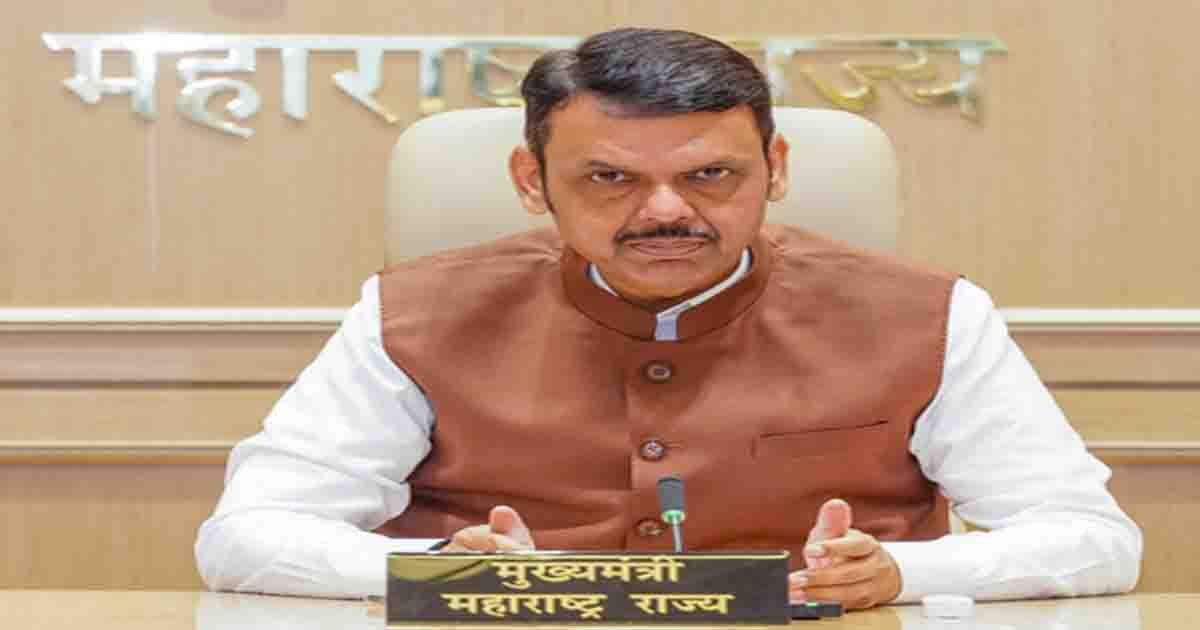
Maharashtra Chief Minister Devendra Fadnavis on Monday issued a stern warning to criminal syndicates following the shocking attack on Bollywood actor Tiger Shroff. Dismissing the perpetrators as cowards hiding behind remote communication networks, the Chief Minister asserted that the Mumbai Police will completely dismantle the international tentacles of these criminal gangs.
Emphasising the professional calibre of the city’s law enforcement, CM Fadnavis stated that no one will be permitted to openly challenge the Mumbai Police or threaten public safety. Labelling the culprits as cowardly proxies who operate from hidden locations, he declared that their plots will be thoroughly neutralised.
Acknowledging that the threats originate from outside Maharashtra and beyond national borders, CM Fadnavis confirmed that the state machinery is actively coordinating with central intelligence agencies to root out the entire network.
“The police will find the accused, and their masterminds have also been found. Therefore, I can say with certainty that such incidents will not be tolerated. The Mumbai Police will definitely track down the accused. No one can openly challenge the police,” said CM Fadnavis.
“These are cowardly people. They hide somewhere and boast from there. They don’t have the courage. These are kind of hired people, and those who operate based on them,” CM Fadnavis said.
“The challenge the police definitely face in this is that they do not operate from Maharashtra; they operate from outside the country. By contacting the Central government agencies, the Mumbai Police will annihilate these gangs operating from outside Maharashtra and the country,” he added.
He noted that the police have already mapped crucial trails and identified key operatives linked to the assault.
CM Fadnavis said that public safety — for both celebrities and ordinary citizens — remains its paramount priority. With multiple specialised police teams deployed to probe the shooting, he added that the government has made it clear that local conspirators and international masterminds alike will face the full might of the law.
Earlier, Deputy Chief Minister Eknath Shinde stated that the attack on actor Tiger Shroff was extremely unfortunate, and he fortunately survived it. He mentioned that following the attack, Shroff’s entire family is currently in a state of terror and anxiety, prompting him to personally visit them to check on his health.
The Deputy CM noted that despite having no disputes or quarrels with anyone, such a life-threatening attack on a young actor has left the Shroff family, especially his mother, Ayesha Shroff, under severe mental stress.
Following the incident, Mumbai Police have taken serious cognisance of the matter, with the Police Commissioner forming a special team to track down the culprits.
Deputy CM Shinde, who visited the Tiger Shroff at his residence and inquired about his health, stated that these criminals will be apprehended immediately and strict action will be taken against them. Additionally, he mentioned that instructions have been given to the Mumbai Police Commissioner to review the security of all artists and actors in the film industry.
Addressing recent incidents of celebrities being threatened by the Bishnoi gang or other gangs, Shinde asserted, “The terror of any gang or attempts to threaten celebrities in Mumbai or Maharashtra will not be tolerated. Anyone attempting to do so will be given a fitting reply by the police,” he said.
Recalling how the police completely crushed Mumbai’s gang wars through strict action in the 1990s, Dy CM Shinde warned that anyone attempting to create terror through similar bullying today will not be spared. “The security of ordinary citizens and celebrities is the top priority of the government. Artists in the film industry have no reason to panic following such incidents,” said Dy CM Shinde.
He appealed to people that anyone receiving threat calls or messages from such gangs should immediately contact the Mumbai Police, assuring that the government stands firmly behind the artists.

Bihar MLC election: Three FIRs filed against Anant Singh, Jan Suraaj candidate Anuj Singh

‘Owaisi, BJP are twins’: Congress MP accuses AIMIM chief of splitting Oppn votes

Odisha: Jharsuguda police arrest wanted criminal after exchange of fire

‘Should face same punishment as adults’: Abu Azmi demands lowering of age of juvenile offenders to 14

Tiger Shroff firing case: 3 suspects held in Rajasthan’s Kota planned to flee to Nepal, say police

Rahul, Cong ecosystem want to force regime change: BJP after Neha Bora praises B’desh Gen-Z protest

BJP pays tribute to ex-President Abdul Kalam, recalls his enduring influence on generations of India’s youth

Attack on democratic rights: INDIA Bloc leaders on detentions of anti-ECI protestors

INDIA bloc begins protest march against ECI

Maha Congress stages agitation against Gyanesh Kumar
-

 Crime4 years ago
Class 10 student jumps to death in Jaipur
-

 Maharashtra2 years ago
Mumbai Local Train Update: Central Railway’s New Timetable Comes Into Effect; Check Full List Of Revised Timings & Stations
-

 Maharashtra2 years ago
Mumbai To Go Toll-Free Tonight! Maharashtra Govt Announces Complete Toll Waiver For Light Motor Vehicles At All 5 Entry Points Of City
-

 Maharashtra2 years ago
False photo of Imtiaz Jaleel’s rally, exposing the fooling conspiracy
-

 National News2 years ago
Ministry of Railways rolls out Special Drive 4.0 with focus on digitisation, cleanliness, inclusiveness and grievance redressal
-

 Maharashtra2 years ago
Maharashtra Elections 2024: Mumbai Metro & BEST Services Extended Till Midnight On Voting Day
-

 National News2 years ago
J&K: 4 Jawans Killed, 28 Injured After Bus Carrying BSF Personnel For Poll Duty Falls Into Gorge In Budgam; Terrifying Visuals Surface
-

 Crime2 years ago
Baba Siddique Murder: Mumbai Police Unable To Get Lawrence Bishnoi Custody Due To Home Ministry Order, Says Report