
Maharashtra
Maharashtra Elections 2024: 137 Seats Of Vidarbha & MMR-Konkan Belt To ‘Decide’ The Fate Of Mahayuti & MVA

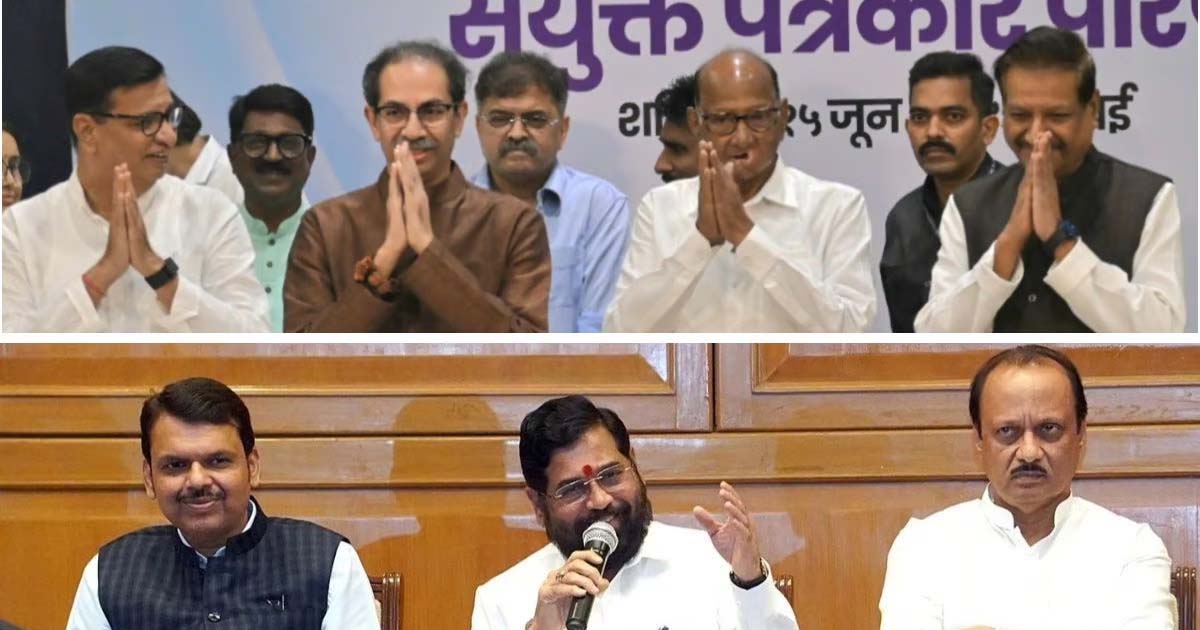
Mumbai: In the upcoming Maharashtra assembly elections, two critical regions, Vidarbha and the Konkan-Mumbai Metropolitan Region (MMR) belt are expected to play a decisive role in determining the outcome. These areas hold 62 and 75 seats respectively and both the ruling Mahayuti alliance and the opposition Maha Vikas Aghadi (MVA) are focusing their strategies on these regions.
Insights from the recent Lok Sabha elections indicate a tight contest between the two coalitions, with the MVA winning 30 out of Maharashtra’s 48 seats, while the Mahayuti secured 17. Despite this, there was less than a 1% difference in the vote share between them, with the MVA at 43.71% and Mahayuti at 43.55%.
Outcome Of Recent Lok Sabha Elections
Vidarbha, with the highest number of assembly seats and the MMR-Konkan belt, are seen as battlegrounds that could tip the scales. In Vidarbha, the MVA led in 7 out of 10 Lok Sabha seats, while the Mahayuti performed better in the Konkan region, winning 5 out of 6 seats outside Mumbai. Mumbai itself saw the MVA dominate, winning 4 out of 6 seats.
Mahayuti Relying On Effect Of Schemes & Grassroots Campaigning
The Mahayuti’s strategy revolves around bridging the gap of 30-odd seats where the MVA currently leads, leveraging caste combinations, grassroots campaigning and populist schemes like the Ladki Bahin Yojana. The alliance is focusing on strengthening its position in regions where it performed well in the Lok Sabha polls, particularly in Vidarbha and the MMR-Konkan belt.
The BJP, which once dominated Vidarbha, is hoping to regain its stronghold, while Chief Minister Eknath Shinde’s Shiv Sena faction remains confident of winning in the Konkan-MMR districts, where it has deep roots.
MVA Focussing On Maratha Quota & Farmers’ Issues
In contrast, the MVA, bolstered by the Maratha reservation movement and the legacy of Sharad Pawar in western Maharashtra, is confident of maintaining its lead in Marathwada and western Maharashtra. Maratha agitation is a key factor in these regions, with the MVA seen as having the upper hand.
In Vidarbha, discontent among farmers and youth, coupled with the Dalit, Muslim and Kunbi alliance that benefited the Congress in the Lok Sabha polls, could also play a decisive role in the MVA’s favour.
Reports citing political analysts believe the BJP’s success in Vidarbha will depend on its ability to appeal to various caste groups and the impact of populist welfare schemes. While the Mahayuti is optimistic about maintaining its hold in Konkan and parts of Vidarbha, the MVA is poised to exploit any growing dissatisfaction among the electorate, particularly in rural areas.
Ultimately, the performance of both alliances in Vidarbha and MMR-Konkan will be crucial in determining the balance of power in Maharashtra’s assembly elections. The elections will be conducted in a single phase, with the polling date on November 20. The counting of votes will take place on November 23.

Maharashtra
‘BMC Election Not A Family Business’: BJP Secretary Flags Nepotism Concerns Ahead Of Mumbai Civic Polls


Mumbai: Advocate Vivekanand Gupta, a secretary of the Bharatiya Janata Party’s Mumbai unit, has flagged concerns over alleged nepotism in ticket distribution ahead of the Brihanmumbai Municipal Corporation (BMC) elections, urging the party leadership to ensure that the civic polls do not turn into a ‘family business.’ The letter comes amid an internal unease that is brewing within the Bharatiya Janata Party (BJP) ahead of the high-stakes Brihanmumbai Municipal Corporation (BMC) elections.
In his letter, Gupta expressed strong reservations about the practice of issuing civic election tickets to family members of party office bearers, MLAs, and other public representatives. He pointed out that relatives such as wives, sons, daughters, and even grandchildren of influential leaders are often favoured during ticket distribution, sidelining grassroots workers who have served the party for years.
Gupta stressed that candidates for the BMC polls should be selected purely on merit and dedication, and not on the basis of family connections. He argued that the BJP, which prides itself on being a cadre-based organisation, must give priority to loyal karyakartas who have worked consistently at the ground level and contributed to the party’s growth in Mumbai.
The BJP leader also flagged concerns over the alleged misuse of changes in seat reservations. According to Gupta, when wards are converted from general seats to women, OBC, or other reserved categories, the opportunity is often used to accommodate family members of influential leaders rather than deserving party workers. He warned that such practices demoralise long-serving workers who patiently wait for a fair chance to contest elections.
Emphasising that the BJP has been built by the dedication and sacrifices of its workers, Gupta urged the party leadership to resist internal pressure while finalising candidates. He called for transparency, fairness, and a clear commitment to merit-based ticket allocation, adding that loyalty and hard work should be the sole criteria for contesting the civic polls.
Meanwhile, BJP Mumbai president Ameet Satam announced that the party will release its manifesto for the BMC elections in the first week of January 2026. However, it is yet to be decided whether the BJP will unveil a joint manifesto with its ally Shiv Sena. Voting for the much-anticipated BMC elections is scheduled to take place on January 15, with counting of votes slated for January 16.
Maharashtra
Mumbai Municipal Commissioner Administrator and Election Chairman Bhushan Gagrani has ordered election officers and agencies to act in a coordinated manner.
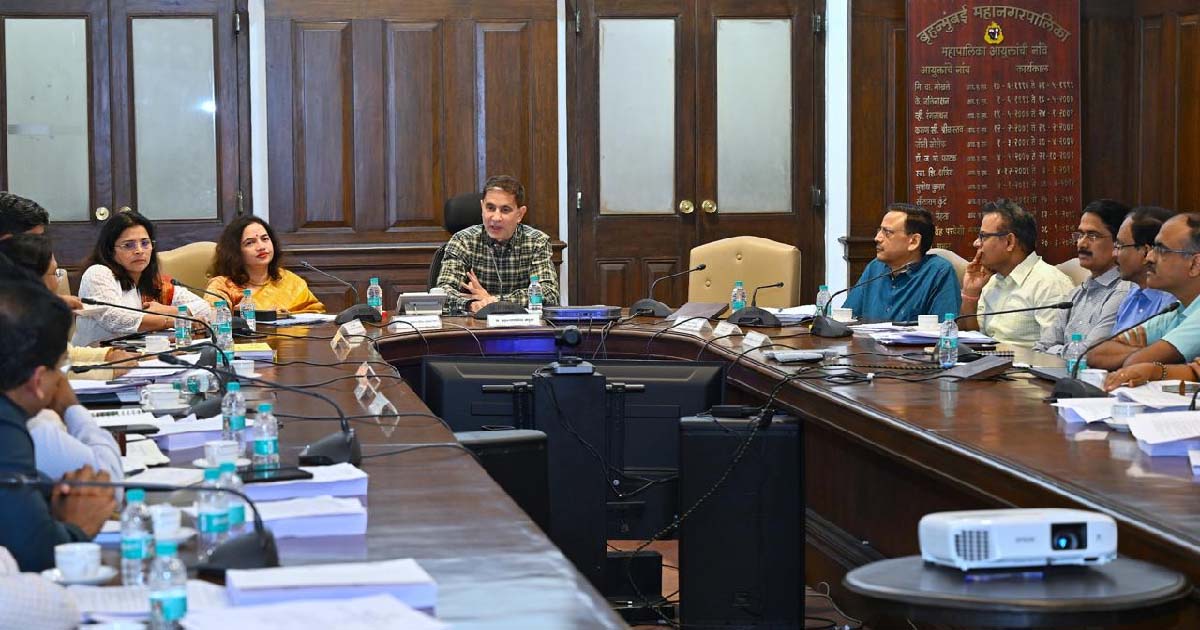
Mumbai Municipal Corporation Mumbai Municipal Corporation has directed the Municipal Commissioner Bhushan Gagrani to ensure strict implementation of the code of conduct during the elections and to ensure the process.
The Returning Officer should take necessary precautions to ensure that the general elections of the Municipal Corporation are held in a fearless, free and transparent environment. Before preparing the final list of polling stations, a live inspection of the polling stations should be carried out. Officers and employees related to the election process should be appointed within the stipulated time and they should be trained. Municipal Corporation Commissioner and District Election Officer Bhushan Gagrani have given various instructions to keep various teams working in connection with the elections. Gagrani has also directed that security measures be taken for effective implementation of the code of conduct by the police, excise and other departments. As per the direct election programme for the Mumbai Municipal Corporation General Elections 2025-26, a joint meeting of the officers of the Municipal Corporation, Returning Officers, Police, Excise Department officers was held at the Municipal Corporation Headquarters. Municipal Corporation Commissioner and District Election Officer Mr. Bhushan Gagrani was also present as Chairman.
Additional Municipal Corporation Commissioner (City) Dr. Ashwini Joshi, Special Duty Officer (Election) Mr. Vijay Balmwar, Joint Commissioner (Tax Assessment and Collection) Mr. Vishwas Shankarwar, Deputy Commissioner (Reforms) Mr. Sanjog Kabre, Deputy Commissioner (General Administration) Mr. Kishore Gandhi, Additional Commissioner (General Administration) Mr. Ambekar Gandhi, Deputy Commissioner (General Administration). Konkan Division Mrs. Farogh Mukadam, District Election Officer Mr. Vijay Kumar Suryavanshi and 23 Election Officers were present.
Municipal Commissioner and District Election Officer Bhushan Gagrani said that the State Election Commission has fixed the criteria for the determination of election polling stations. According to this, there are about 10 thousand 111 polling stations in the limits of Mumbai Municipal Corporation. Facilities like electricity supply, drinking water supply, toilets, ramps etc. have been provided at these polling stations. The Election Officer will inspect and confirm it. After that, the final list of polling stations should be prepared. A ‘Voter Assistance Centre’ should be set up near the polling station to help voters find their names. He directed that information boards should be put up at polling stations to inform the voters.
The process of appointing officers and employees required for the election process is underway. Training will be given to the officers and employees appointed for election work. Detailed guidance will be given on the voting process, election laws, model code of conduct, EVM handling and responsibilities at the polling station. Training of all employees is mandatory for the success of the election process. The above instructions should be strictly followed. The Returning Officer should contact the Deputy Commissioner of the Municipal Corporation Circle, Assistant Commissioner of Administrative Departments. Gagrani also directed that action should be taken in a coordinated manner.
To ensure effective and strict implementation of the model code of conduct, all necessary precautions should be taken in collaboration with the Police Department, Excise Department and other concerned departments. A strict watch should be kept on the malpractices committed to influence the voters during the election period. Special vigilance should be taken in sensitive and highly sensitive areas to maintain law and order. Regular patrolling, check posts, checking of vehicles and immediate action should be taken on suspicious movements. If any violation of the model code of conduct is found, immediate and strict action should be taken against the concerned as per the rules, Gagrani has directed.
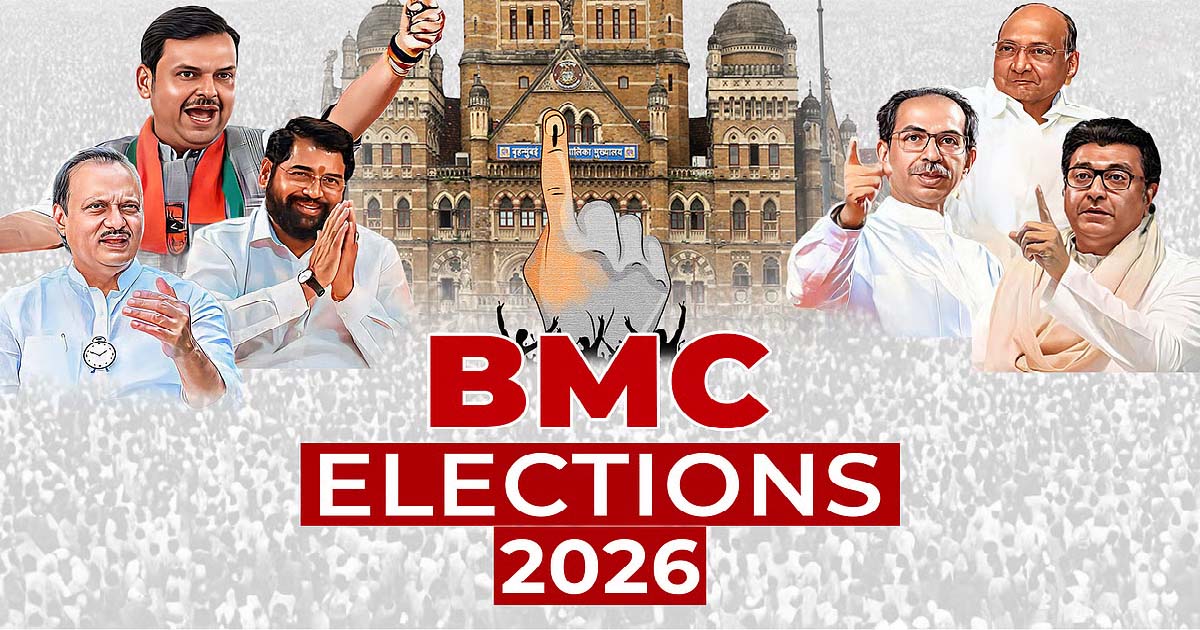
Mumbai: The upcoming Brihanmumbai Municipal Corporation (BMC) elections, scheduled for January 15, 2026, are set to be a definitive battle for Mumbai’s soul. At the heart of this contest is the ‘Marathi Manoos’ factor, a demographic that comprises approximately over 30 per cent of the city’s electorate but holds disproportionate influence over the narrative of ‘Marathi Asmita’ (pride).
With the split in the Shiv Sena and the emergence of competing claims for the Marathi vote, several key wards and areas have become the primary battlegrounds.
Traditionally, the epicentre of Marathi politics, these areas are the birthplace of the Shiv Sena.
The Dynamics: These wards have seen a shift from mill-worker-dominated chawls to luxury high-rises. However, the core identity remains fiercely Marathi.
Key Conflict: This is a prestige battle for the Uddhav Thackeray-led Sena (UBT) to retain its home turf against the Eknath Shinde-led Sena, which claims the true legacy of Bal Thackeray. The MNS (Maharashtra Navnirman Sena) under Raj Thackeray also remains a potent third force here, often acting as a ‘spoiler’ or a kingmaker.
While the western suburbs are often associated with Gujarati and North Indian populations, specific areas like Vile Parle (East) and Dahisar have dense Marathi clusters.
Vile Parle (Ward K-East): Known as a cultural hub, the Marathi middle class here is vocal and politically active. The BJP is aggressively courting this segment by promising a ‘Marathi Mayor,’ a strategic move to peel away traditional Sena loyalists.
Dahisar (Ward R-North): As one of the last frontiers of the city, Dahisar has a major ‘Bhumiputra’ population. Issues of local redevelopment and infrastructure are being framed through the lens of preserving Marathi areas.
The eastern suburbs house a massive Marathi-speaking population, particularly in the lower-middle-class and labour segments.
Bhandup & Mulund (Ward S): Bhandup has historically seen high-voltage clashes between the Sena and MNS. The ‘Marathi vs Outsider’ narrative often surfaces here regarding job opportunities and housing.
Chembur (Ward M-West): This area sees a mix of Dalit-Marathi and upper-caste Marathi voters. The Maha Vikas Aghadi (MVA) is counting on a consolidated Marathi-Dalit-Muslim front, while the Mahayuti is focusing on splitting the Marathi vote through the Shinde faction’s ‘Sons of the Soil’ rhetoric.
In a historic departure from its usual plank of ‘Vikas’ (Development), the BJP has recently declared that if the Mahayuti alliance wins, the Mayor of Mumbai will be a Marathi Manoos. This is a direct attempt to neutralise the ‘Anti-Marathi’ tag often used against the party by the Sena UBT faction.
The Thackeray Cousins: Reports of a tactical understanding between Uddhav and Raj Thackeray could consolidate the Marathi vote.
Delimitation Impact: With nearly 20-25 per cent of ward boundaries modified in the recent rectification, traditional vote banks have been disrupted, making grassroots mobilisation critical.
Housing & Displacement: The ‘Marathi Manoos’ being pushed out of Mumbai to the Mumbai Metropolitan Region (MMR) due to high costs is a primary emotional trigger that the opposition will use against the ruling dispensation.
As January 15 approaches, these wards will not just decide who controls the country’s richest civic body, but also who truly represents the Marathi identity in the city.

Three Noida schools receive hoax bomb threat emails; UP Police launch probe

‘BMC Election Not A Family Business’: BJP Secretary Flags Nepotism Concerns Ahead Of Mumbai Civic Polls

Nifty to touch 29,094 in 12 months supported by durable earnings, strong macro backdrop

ACB Gets Go-Ahead To Proceed Against Mazgaon Court Additional Sessions Judge Aejazuddin Kazi As Corruption Probe Deepens

Bihar: CM Nitish Kumar empowering Jeevika Didis in Bhagalpur to become leaders

Kalyan College Namaz Controversy: SIO Demands Action Against Perpetrators

Sensex, Nifty open lower amid weak global cues

Veteran Bollywood Actor Dharmendra Passes Away at 89

Sensex, Nifty open marginally down amid negative global cues

Mega Block On Sunday, 23-11-2025: Mumbai Local Train Services To Be Affected On CR’s Main Line, No Block On Harbour & Trans-Harbour Line; Check Details
-

 Crime3 years ago
Class 10 student jumps to death in Jaipur
-
 Maharashtra1 year ago
Mumbai Local Train Update: Central Railway’s New Timetable Comes Into Effect; Check Full List Of Revised Timings & Stations
-
 Maharashtra1 year ago
Mumbai To Go Toll-Free Tonight! Maharashtra Govt Announces Complete Toll Waiver For Light Motor Vehicles At All 5 Entry Points Of City
-
 Maharashtra1 year ago
False photo of Imtiaz Jaleel’s rally, exposing the fooling conspiracy
-
 National News1 year ago
Ministry of Railways rolls out Special Drive 4.0 with focus on digitisation, cleanliness, inclusiveness and grievance redressal
-
 Maharashtra1 year ago
Maharashtra Elections 2024: Mumbai Metro & BEST Services Extended Till Midnight On Voting Day
-
 National News1 year ago
J&K: 4 Jawans Killed, 28 Injured After Bus Carrying BSF Personnel For Poll Duty Falls Into Gorge In Budgam; Terrifying Visuals Surface
-
 Crime1 year ago
Baba Siddique Murder: Mumbai Police Unable To Get Lawrence Bishnoi Custody Due To Home Ministry Order, Says Report