
Maharashtra
Maharashtra economy collapsed due to institutional corruption: Shiv Sena(UBT) in ‘Saamana’

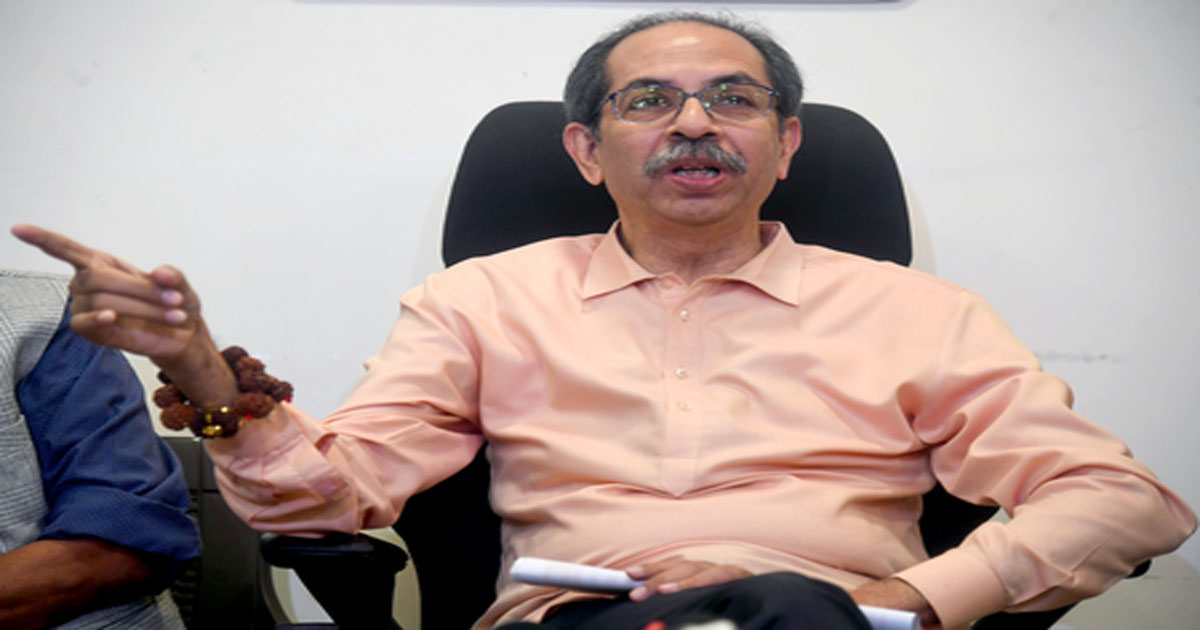
Mumbai, July 15: In a blistering attack on the ruling dispensation, Shiv Sena(UBT) on Wednesday alleged that Maharashtra’s economy has completely collapsed due to unprecedented institutional corruption. Citing a recent report by the Comptroller and Auditor General (CAG), the editorial claimed that the ruling alliance orchestrated a “State Capture” by illegally siphoning off Rs 3,541 crore from the state exchequer through the Ladki Bahin Yojana to purchase votes ahead of the Assembly elections.
The party in an editorial in its mouthpiece, ‘Saamana’, said the government initially launched the flagship welfare scheme — promising Rs 1,500 per month to women — with a total outlay of Rs 14,000 crore distributed to 2.43 crore beneficiaries. However, the subsequent CAG audit revealed that 92 lakh beneficiaries were completely bogus or ineligible. Among these discrepancies, “About 62 lakh individuals had not completed mandatory e-KYC verifications. Further, 29,000 men and 8,000 government employees were illegally enrolled and drew funds from the scheme,” said the editorial.
It further asserted that while the government has now unceremoniously dropped these 92 lakh ineligible names after winning the elections, the money was intentionally channelled into these accounts right before the Model Code of Conduct took effect to secure victory.
Drawing parallels to the post-Soviet collapse in Eastern Europe — where politicians and oligarchs colluded to control the state apparatus for personal gain — the Thackeray camp classified this scam as a textbook case of State Capture. “Spending Rs 3,541 crore from the public treasury to systematically purchase 30 to 35 lakh votes is not ordinary corruption. It is the outright purchasing of a state by manipulating laws, tenders, and public policies for political survival,” it noted.
The editorial sharply criticised Chief Minister Devendra Fadnavis for crying foul and accusing the opposition of “defaming Maharashtra” whenever corruption is exposed. It noted that despite investigative reports exposing massive land scams linked to public figures, accountability remains completely absent.
The editorial has highlighted the stark double standard in how the state treats ordinary citizens versus political elites. It pointed out that while absconding businessmen like Vijay Mallya, Nirav Modi, Mehul Choksi, and Lalit Modi fled the country after defaulting on bank loans, poor farmers face immediate property seizures, and citizens have their electricity disconnected for missing simple bill payments. Yet, a government overseeing a Rs 3,541 crore fraud continues to rule with absolute impunity.
The Uddhav Thackeray-led Shiv Sena has demanded full financial accountability, stating that the responsibility does not end with merely purging bogus names from the recipient list. “Recover the stolen funds directly from the personal assets of the then-Chief Minister, Deputy Chief Ministers, the entire cabinet, and the senior bureaucrats (including the Chief Secretary, Finance Secretary, and Women & Child Development Secretary) who cleared the illegal payouts. Freeze and auction their personal movable and immovable properties to return the plundered money to the taxpayers,” it said.
The editorial pointed out a grim assessment of Maharashtra’s fiscal health amid rising public debt and depleting borrowing credibility. It flagged reports from the World Bank indicating a sharp decline in Maharashtra’s per capita income compared to other states.
By prioritising electoral bribes over fundamental governance, the editorial stated that the rulers have deprived legitimate distressed groups, including struggling farmers, students, widows, the underprivileged, and the disabled, of vital state aid. The Thackeray camp warned that such blatant financial indiscipline would permanently shatter the public’s trust in welfare schemes and social governance.

Maharashtra
67 TMC of water to Mumbai, drought-hit Marathwada neglected: Uddhav Sena attacks Fadnavis govt

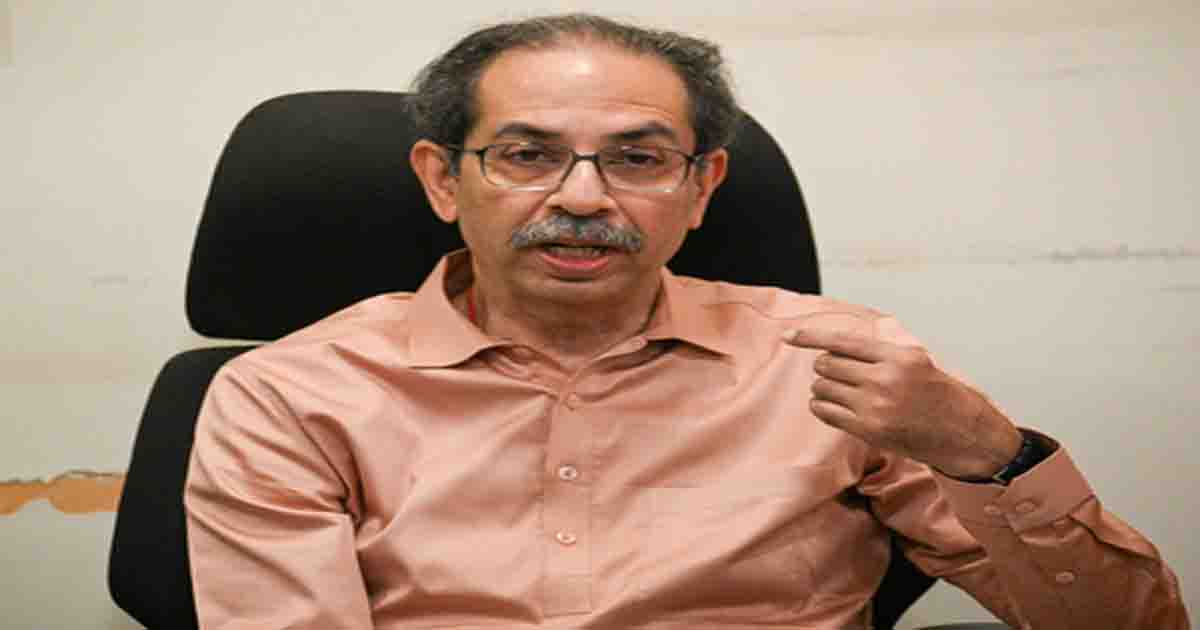
The Shiv Sena (Uddhav Balasaheb Thackeray) on Tuesday criticised the Maharashtra government’s handling of a severe drought in Marathwada while examining a state proposal to divert surplus water from the Koyna hydroelectric project towards Mumbai.
The Thackeray camp in the party mouthpiece ‘Samaana’ editorial argued that acute water scarcity, crop losses, and lack of livelihood in Marathwada are forcing rural residents to abandon their villages. At the same time, it pointed to recent discussions chaired by Chief Minister Devendra Fadnavis on planning long-term water supply—reportedly spanning 50 years—and diverting water discharged after power generation at the Koyna project toward Mumbai, Navi Mumbai, and Thane.
The editorial highlighted depleting reservoirs, reliance on water tankers across Marathwada villages, failed kharif crops due to erratic rainfall, bleak rabi prospects, and shortages of drinking water, fodder, and rural employment. It questioned the rationale of planning up to 67 TMC of water for the Mumbai metropolitan region—alleging benefits for builders—while Marathwada faces severe distress and migration.
“The leadership of Marathwada, which has burnt to ashes, ought to break through walls of factionalism, unite across party lines, and wage a fierce struggle on issues concerning the people. Crops have withered in the fields, reservoirs have dried up, stoves have gone cold, and cattle are wandering in search of fodder. Just because the Chief Minister has declared a drought does not mean the problems have been ‘resolved’. The state government asked the Centre for Rs 40,000 crore rupees for drought relief; the Centre approved a mere thousand crore rupees. That is not even enough to console the drought-affected,” remarked the editorial.
The editorial alleged that while the state sought Rs 40,000 crore from the Centre for drought relief, central assistance fell far short, and criticises elected representatives and political leaders across party lines for failing to unite around affected farmers and displaced families.
The Uddhav Thackeray-led Shiv Sena said that people suffering due to lack of water in the villages and hamlets of Marathwada are also Marathi people of Maharashtra.
“If the sixteen public representatives from areas like Latur, Chhatrapati Sambhajinagar, and Solapur had been sensitive, a common platform would have been created to help the drought-affected. But that did not happen, and each person remains busy calculating their own political gains and losses,” it noted.
The editorial claimed that dark shadows of despair and apathy have spread across Maharashtra. In many countries in Europe, people have called for general strikes over issues affecting the public.
“Had a situation such as the severe drought in Marathwada, coupled with a government’s failure to address it, occurred in a European country, an apathetic and spineless government there would not have lasted even an hour. We are witnessing with our own eyes the displacement of ‘Marathi’ people from Marathwada due to drought. MLAs, MPs, corporators, mayors and other elected representatives should hang their heads in shame,” the editorial said.
The Ministry of Statistics and Programme Implementation (MoSPI), with the RBI as the knowledge partner, organised a conference here on Monday to familiarise data users with the New Series of Gross Domestic Product (GDP), Consumer Price Index (CPI) and Index of Industrial Production (IIP).
Following the release of revised series of GDP, CPI and IIP at different points during 2026, the conference was organised to acquaint data users with the methodological changes, data sources and key improvements incorporated in each of the revised series.
It also aimed to facilitate a better understanding of these changes and their implications for the resulting estimates.
The conference brought together representatives of the Reserve Bank of India (RBI), SEBI, economists, forecasters, credit rating agencies, experts from financial institutions and the banking sector, academia, research institutions, industry and investor organisations, users of official statistics and senior officials of the Central and State Governments.
Dalip Singh, Director General (Central Statistics), in his welcome address, noted that macroeconomic statistics form the foundation of economic analysis, policy making and informed decision making and that GDP, CPI and IIP together provide a comprehensive measure of economic activity and growth.
He observed that, as the structure of the economy, production processes, consumption patterns and technology continue to evolve, the statistical system must evolve continuously to remain representative of prevailing economic realities.
Saurabh Garg, Secretary, MoSPI, while setting the context, noted that the conference was being held in Mumbai after about a year, this time after the completion of the base revision exercise, with the first-quarter GDP estimates of the new series already released and the second-quarter estimates due shortly.
Looking ahead, he outlined the Ministry’s priorities, including the rebasing of Gross State Domestic Product to 2022-23 and the development of District Domestic Product estimates for more granular decision-making; preparation for the implementation of the System of National Accounts (SNA) 2025, with its focus on well-being and distributional accounts.
Poonam Gupta, Deputy Governor, RBI, in her inaugural address, congratulated MoSPI on completing the base revision of the three series in a timely manner and commended the Ministry’s extensive consultations with users.
She highlighted the key features of the revised series — the use of double deflation and a wider range of administrative data in the national accounts, the alignment of demand- and supply-side GDP estimates through the Supply-Use Table framework, the updated weighting pattern and more precise measurement of core inflation in the CPI and the greater weight assigned to technology- and consumption-oriented sectors in the IIP.
Deepak Parekh, former chairman, HDFC, in his keynote address, described 2026 as a year of modernising India’s statistical architecture, noting that the revisions address concerns earlier raised on the national accounts and welcomed the growing use of high-frequency indicators and new data sources such as night lights and online search trends, while cautioning that technology and AI must be supported by appropriate safeguards and cannot substitute for judgement.
The inaugural session was followed by three technical sessions on the new series of GDP, CPI and IIP, in which officers of MoSPI and the RBI presented the methodological changes, data sources and key improvements.
Maharashtra
Tracking drug addicts in Mumbai now easier: Advanced van deployed at Mahalaxmi concert; action taken against 12 drug users.
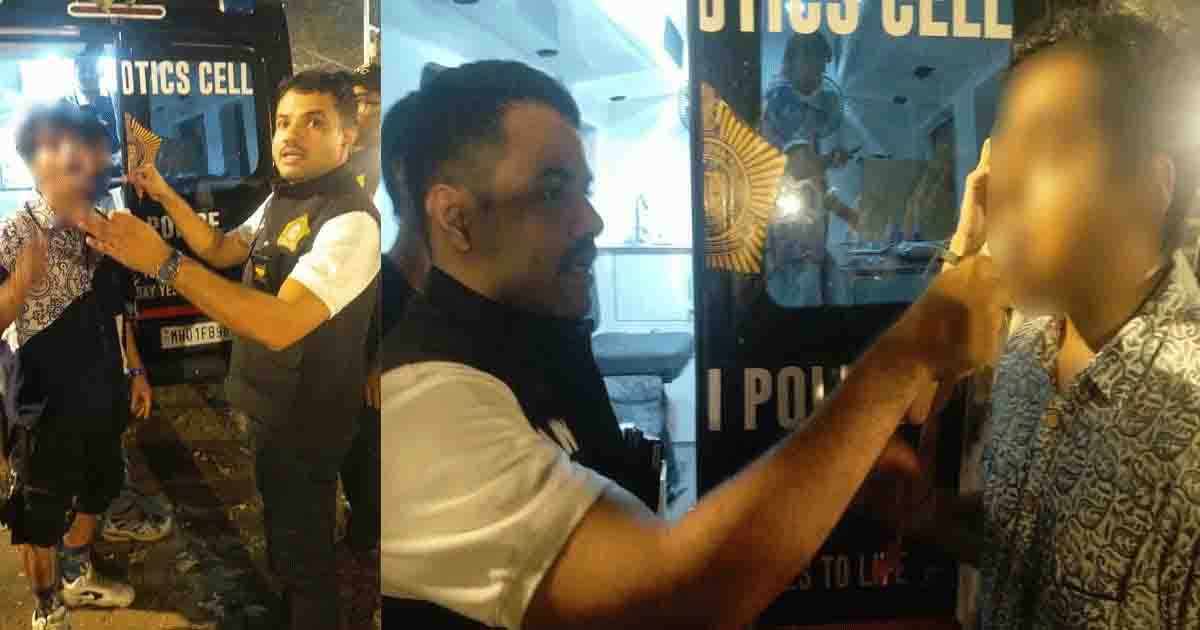
Mumbai: Detecting drug users at concerts, parties, or other events in Mumbai has become significantly easier. The Anti-Narcotics Cell (ANC) has added a state-of-the-art van to its fleet, specifically designed to identify individuals under the influence of drugs. In its very first operation, the van helped detect 12 individuals involved in drug use, leading to subsequent legal action against them. To curb drug consumption and trafficking, the Mumbai Police’s Anti-Narcotics Cell has begun utilizing this specialized “Anti-Narcotics Investigation Van,” which was inaugurated by Chief Minister Devendra Fadnavis. The van is custom-built for tasks such as detecting narcotics, conducting on-site analysis, and collecting samples, while also facilitating technical investigations. Following its induction into the force, the van was deployed on November 22 at the ‘AEDE’ live music concert held at the Mahalaxmi Racecourse. Attendees were screened to determine if they had consumed drugs; a total of 12 individuals were found to be under the influence and faced appropriate action. The van can be parked in various neighborhoods, streamlining investigative procedures.

Bhuvan Bam recalls Shah Rukh Khan giving him a head massage, Madhuri Dixit calls him a ‘generous actor’

‘Ma’s journey has been full of love and tragedy’: LoP Rahul Gandhi shares video featuring mother Sonia, sister Priyanka

Earthquake tremors felt across Bihar, no damage reported

Five killed, three injured as Scorpio collides with coal-laden truck in Lakhisarai

Hema Malini gets emotional remembering Dharmendra on his first death anniversary: ‘Life seems so empty without him’

Congress trying to protect 3 crore Bangladeshi infiltrators in voter list: HM Shah

Red Fort car blast probe exposes blueprint for spread of terror modules across India

Trump flags Iran targets as talks continue

‘Conspiracy, not accident’: NCP on Ajit Pawar death

BJP, Shiv Sena slam Mallikarjun Kharge for terming Diwali ‘Khushiyon ka Eid’
-

 Crime4 years ago
Class 10 student jumps to death in Jaipur
-

 Maharashtra2 years ago
Mumbai Local Train Update: Central Railway’s New Timetable Comes Into Effect; Check Full List Of Revised Timings & Stations
-

 Maharashtra2 years ago
Mumbai To Go Toll-Free Tonight! Maharashtra Govt Announces Complete Toll Waiver For Light Motor Vehicles At All 5 Entry Points Of City
-

 Maharashtra2 years ago
False photo of Imtiaz Jaleel’s rally, exposing the fooling conspiracy
-

 National News2 years ago
Ministry of Railways rolls out Special Drive 4.0 with focus on digitisation, cleanliness, inclusiveness and grievance redressal
-

 Maharashtra2 years ago
Maharashtra Elections 2024: Mumbai Metro & BEST Services Extended Till Midnight On Voting Day
-

 National News2 years ago
J&K: 4 Jawans Killed, 28 Injured After Bus Carrying BSF Personnel For Poll Duty Falls Into Gorge In Budgam; Terrifying Visuals Surface
-

 Crime2 years ago
Baba Siddique Murder: Mumbai Police Unable To Get Lawrence Bishnoi Custody Due To Home Ministry Order, Says Report