
Maharashtra
Car catches fire inside Coastal Road Tunnel

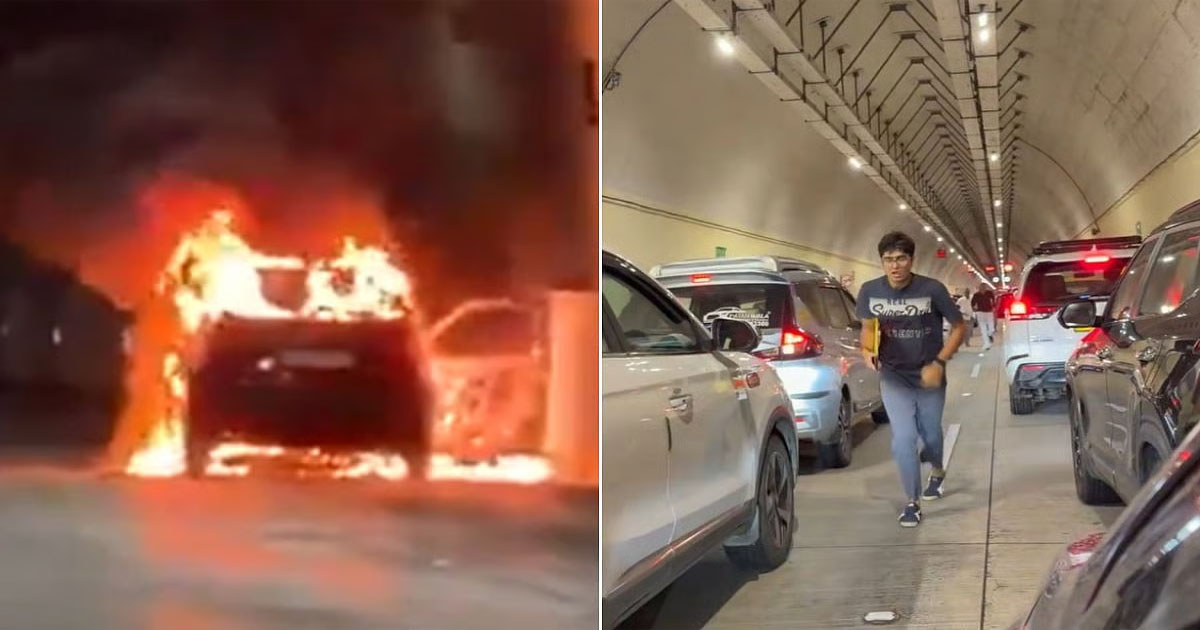
A moving car caught fire inside the Coastal Road Tunnel in Mumbai this afternoon. The incident took place in the Gali Tunnel leading from Haji Ali to Worli. Fire brigade, police and ambulance teams reached the spot on receiving information.
According to initial information, the Mumbai Fire Brigade Control Room received a report at around 12:25 pm that a car suddenly caught fire while passing through the Coastal Road Tunnel towards Worli.
On receiving the information, teams of Mumbai Fire Brigade, Mumbai Police and 108 Ambulance Service immediately reached the spot and started relief and rescue work. Currently, there is no report of any injury due to the incident. The cause of the fire is not yet known and the concerned agencies are investigating the matter.

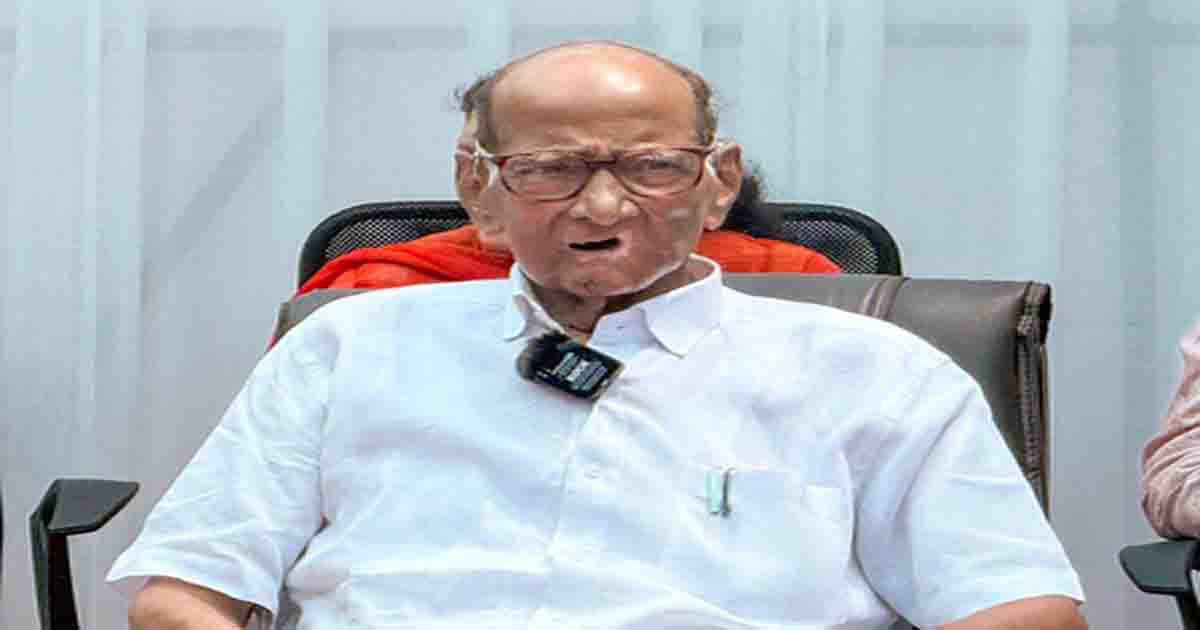
Nationalist Congress Party (NCP-SP) Working President Supriya Sule and Shiv Sena (UBT) leader Sanjay Raut on Tuesday strongly rejected media reports suggesting that veteran leader Sharad Pawar may retire from active politics and that his faction could align with the BJP-led National Democratic Alliance (NDA).
Responding to a newspaper report that cited unnamed sources, Supriya Sule expressed displeasure over speculation regarding Sharad Pawar’s political future, describing the retirement narrative as “outrageous”.
“Sharad Pawar will not retire. The public will decide who should retire; Sharad Pawar still has 5 years left in the Rajya Sabha, so how could Sharad Pawar retire?” she said, seeking to put an end to the speculation.
Sanjay Raut also dismissed the reports, framing Pawar’s six-decade political career around fighting fundamentalist forces and upholding the ideals of social reformers Phule, Shahu, and Ambedkar.
Raut argued it would be inappropriate if those eager to join power sidelined Phule-Shahu-Ambedkar ideology, adding that he did not believe Pawar would take such a step.
Targeting opponents, Raut criticised suggestions that Pawar should rest after his party was split, and asserted that opposition to Prime Minister Narendra Modi stems from how he runs the country.
On Supriya Sule, Raut said he did not believe Sule would align with the NDA, describing her as firmly rooted in Phule-Ambedkar ideology.
According to reports, Pawar — who turns 86 on December 12 and has served across roles including Chief Minister and Union Minister over more than six decades — could face a sharp break from his past political stance if he aligned with the BJP at this stage.
The report claimed party figures were exploring whether Pawar could retire while leaders such as MP Supriya Sule and senior leader Jayant Patil weighed joining the NDA, though no final decision had been made, and added that some party leaders had spoken with BJP leadership.
The fresh round of speculation also revived discussion around a phone call Prime Minister Narendra Modi made to Pawar when Pawar fell ill during a tour to inspect drought conditions in Maharashtra.
After experiencing cough, phlegm, and weakness, Pawar was hospitalised first in Pune and then in Mumbai. During the call checking on his health, PM Modi reportedly remarked, “You take rest, Supriya, and we will take care of the country”.
Political circles at the time interpreted the remark as a subtle hint toward Pawar’s retirement, adding fuel to the debate whenever such reports resurface.
Maharashtra
67 TMC of water to Mumbai, drought-hit Marathwada neglected: Uddhav Sena attacks Fadnavis govt

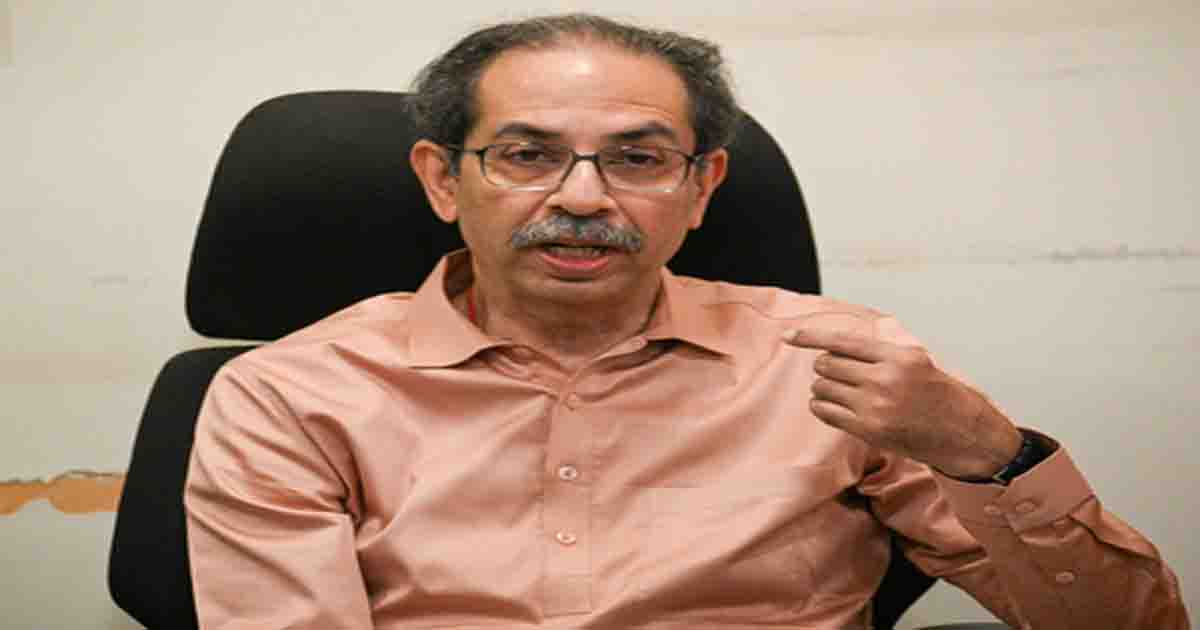
The Shiv Sena (Uddhav Balasaheb Thackeray) on Tuesday criticised the Maharashtra government’s handling of a severe drought in Marathwada while examining a state proposal to divert surplus water from the Koyna hydroelectric project towards Mumbai.
The Thackeray camp in the party mouthpiece ‘Samaana’ editorial argued that acute water scarcity, crop losses, and lack of livelihood in Marathwada are forcing rural residents to abandon their villages. At the same time, it pointed to recent discussions chaired by Chief Minister Devendra Fadnavis on planning long-term water supply—reportedly spanning 50 years—and diverting water discharged after power generation at the Koyna project toward Mumbai, Navi Mumbai, and Thane.
The editorial highlighted depleting reservoirs, reliance on water tankers across Marathwada villages, failed kharif crops due to erratic rainfall, bleak rabi prospects, and shortages of drinking water, fodder, and rural employment. It questioned the rationale of planning up to 67 TMC of water for the Mumbai metropolitan region—alleging benefits for builders—while Marathwada faces severe distress and migration.
“The leadership of Marathwada, which has burnt to ashes, ought to break through walls of factionalism, unite across party lines, and wage a fierce struggle on issues concerning the people. Crops have withered in the fields, reservoirs have dried up, stoves have gone cold, and cattle are wandering in search of fodder. Just because the Chief Minister has declared a drought does not mean the problems have been ‘resolved’. The state government asked the Centre for Rs 40,000 crore rupees for drought relief; the Centre approved a mere thousand crore rupees. That is not even enough to console the drought-affected,” remarked the editorial.
The editorial alleged that while the state sought Rs 40,000 crore from the Centre for drought relief, central assistance fell far short, and criticises elected representatives and political leaders across party lines for failing to unite around affected farmers and displaced families.
The Uddhav Thackeray-led Shiv Sena said that people suffering due to lack of water in the villages and hamlets of Marathwada are also Marathi people of Maharashtra.
“If the sixteen public representatives from areas like Latur, Chhatrapati Sambhajinagar, and Solapur had been sensitive, a common platform would have been created to help the drought-affected. But that did not happen, and each person remains busy calculating their own political gains and losses,” it noted.
The editorial claimed that dark shadows of despair and apathy have spread across Maharashtra. In many countries in Europe, people have called for general strikes over issues affecting the public.
“Had a situation such as the severe drought in Marathwada, coupled with a government’s failure to address it, occurred in a European country, an apathetic and spineless government there would not have lasted even an hour. We are witnessing with our own eyes the displacement of ‘Marathi’ people from Marathwada due to drought. MLAs, MPs, corporators, mayors and other elected representatives should hang their heads in shame,” the editorial said.
The Ministry of Statistics and Programme Implementation (MoSPI), with the RBI as the knowledge partner, organised a conference here on Monday to familiarise data users with the New Series of Gross Domestic Product (GDP), Consumer Price Index (CPI) and Index of Industrial Production (IIP).
Following the release of revised series of GDP, CPI and IIP at different points during 2026, the conference was organised to acquaint data users with the methodological changes, data sources and key improvements incorporated in each of the revised series.
It also aimed to facilitate a better understanding of these changes and their implications for the resulting estimates.
The conference brought together representatives of the Reserve Bank of India (RBI), SEBI, economists, forecasters, credit rating agencies, experts from financial institutions and the banking sector, academia, research institutions, industry and investor organisations, users of official statistics and senior officials of the Central and State Governments.
Dalip Singh, Director General (Central Statistics), in his welcome address, noted that macroeconomic statistics form the foundation of economic analysis, policy making and informed decision making and that GDP, CPI and IIP together provide a comprehensive measure of economic activity and growth.
He observed that, as the structure of the economy, production processes, consumption patterns and technology continue to evolve, the statistical system must evolve continuously to remain representative of prevailing economic realities.
Saurabh Garg, Secretary, MoSPI, while setting the context, noted that the conference was being held in Mumbai after about a year, this time after the completion of the base revision exercise, with the first-quarter GDP estimates of the new series already released and the second-quarter estimates due shortly.
Looking ahead, he outlined the Ministry’s priorities, including the rebasing of Gross State Domestic Product to 2022-23 and the development of District Domestic Product estimates for more granular decision-making; preparation for the implementation of the System of National Accounts (SNA) 2025, with its focus on well-being and distributional accounts.
Poonam Gupta, Deputy Governor, RBI, in her inaugural address, congratulated MoSPI on completing the base revision of the three series in a timely manner and commended the Ministry’s extensive consultations with users.
She highlighted the key features of the revised series — the use of double deflation and a wider range of administrative data in the national accounts, the alignment of demand- and supply-side GDP estimates through the Supply-Use Table framework, the updated weighting pattern and more precise measurement of core inflation in the CPI and the greater weight assigned to technology- and consumption-oriented sectors in the IIP.
Deepak Parekh, former chairman, HDFC, in his keynote address, described 2026 as a year of modernising India’s statistical architecture, noting that the revisions address concerns earlier raised on the national accounts and welcomed the growing use of high-frequency indicators and new data sources such as night lights and online search trends, while cautioning that technology and AI must be supported by appropriate safeguards and cannot substitute for judgement.
The inaugural session was followed by three technical sessions on the new series of GDP, CPI and IIP, in which officers of MoSPI and the RBI presented the methodological changes, data sources and key improvements.

Delhi Police busts cryptocurrency fraud syndicate targeting traders through phishing links; four arrested

‘We are not begging anyone’: Imran Masood reacts to SP’s offer of 26 seats to Congress in UP; talks to continue today

Supriya Sule, Sanjay Raut dismiss reports of Sharad Pawar’s retirement, NDA shift

Actor Dhanush plans welfare units across all 234 assembly constituencies in TN

16-year-old dies after falling from 19th floor of Noida society

Congress trying to protect 3 crore Bangladeshi infiltrators in voter list: HM Shah

Red Fort car blast probe exposes blueprint for spread of terror modules across India

Trump flags Iran targets as talks continue

‘Conspiracy, not accident’: NCP on Ajit Pawar death

BJP, Shiv Sena slam Mallikarjun Kharge for terming Diwali ‘Khushiyon ka Eid’
-

 Crime4 years ago
Class 10 student jumps to death in Jaipur
-

 Maharashtra2 years ago
Mumbai Local Train Update: Central Railway’s New Timetable Comes Into Effect; Check Full List Of Revised Timings & Stations
-

 Maharashtra2 years ago
Mumbai To Go Toll-Free Tonight! Maharashtra Govt Announces Complete Toll Waiver For Light Motor Vehicles At All 5 Entry Points Of City
-

 Maharashtra2 years ago
False photo of Imtiaz Jaleel’s rally, exposing the fooling conspiracy
-

 National News2 years ago
Ministry of Railways rolls out Special Drive 4.0 with focus on digitisation, cleanliness, inclusiveness and grievance redressal
-

 Maharashtra2 years ago
Maharashtra Elections 2024: Mumbai Metro & BEST Services Extended Till Midnight On Voting Day
-

 National News2 years ago
J&K: 4 Jawans Killed, 28 Injured After Bus Carrying BSF Personnel For Poll Duty Falls Into Gorge In Budgam; Terrifying Visuals Surface
-

 Crime2 years ago
Baba Siddique Murder: Mumbai Police Unable To Get Lawrence Bishnoi Custody Due To Home Ministry Order, Says Report