
National News
Madras HC judge visits temple as commoner, detects corruption


Madras High Court Judge S.M. Subramaniam on Monday came down heavily on the administration of a temple here after taking a serious note of corruption in the issuance of special ‘darshan’ tickets.
He said that he had visited the Dhandayuthapani temple, Chennai temple, Chennai on Saturday with his family. He did not disclose his identity and also did not take the VIP darshan. Instead, he paid Rs 150 for three special darshan tickets each costing Rs 50.
To his surprise, the judge found that the staff at the counter provided two tickets worth Rs 50 each and the third one for Rs 5 Rs. When he questioned about this, the staff behaved rudely with him, said the judge.
In the open court, the judge while narrating the experience to the state government Pleader P. Muthukumar and the Executive Officer of the temple said the staff of the temple was not willing to share the contact number of the executive officer of the temple.
He said that when his wife enquired with the staff as to why the executive officer was not sharing the phone number while even the Chief Minister’s contact number was available, the staff said, “The CM may share his number but we cannot share the phone number of the temple executive officer.”
The judge said that the temple staff entered into an argument with his family, and even tried to push him out of the temple when the police arrived on the scene and identified him.
Judge Subramaniam said the temple was having a turnover of Rs 14 crore per annum and said that the temple was owning properties worth hundreds of crores of rupees.
He also said that the executive officer of the temple was equally responsible for the issues that took place in the temple and said that she cannot be absolved of the disciplinary proceedings to be taken. The Judge said that the HR&CE department had posted officers in the rank of Deputy Commissioners as executive officers to manage such temples and that the executive officer of this temple had erred in her duty.
Judge Subramaniam handed over a written complaint addressed to the HR&CE commissioner to the state government Pleader and said that if necessary he can identify the temple staff who behaved rudely with him and his family.
He said that it was only when constitutional authorities visit public places without VIP treatment that they can understand the amount of difficulties being faced by the common man.
The judge also said that he was not initiating suo moto proceedings in the case as he was expecting proper action from the HR&CE commissioner. The state government Pleader assured the judge that proper action would be taken and that it would be reported to the court by the second week of January.


National News
In her memoir, Sonia Gandhi recalls palmist prediction that Rajiv, not Sanjay, would be PM

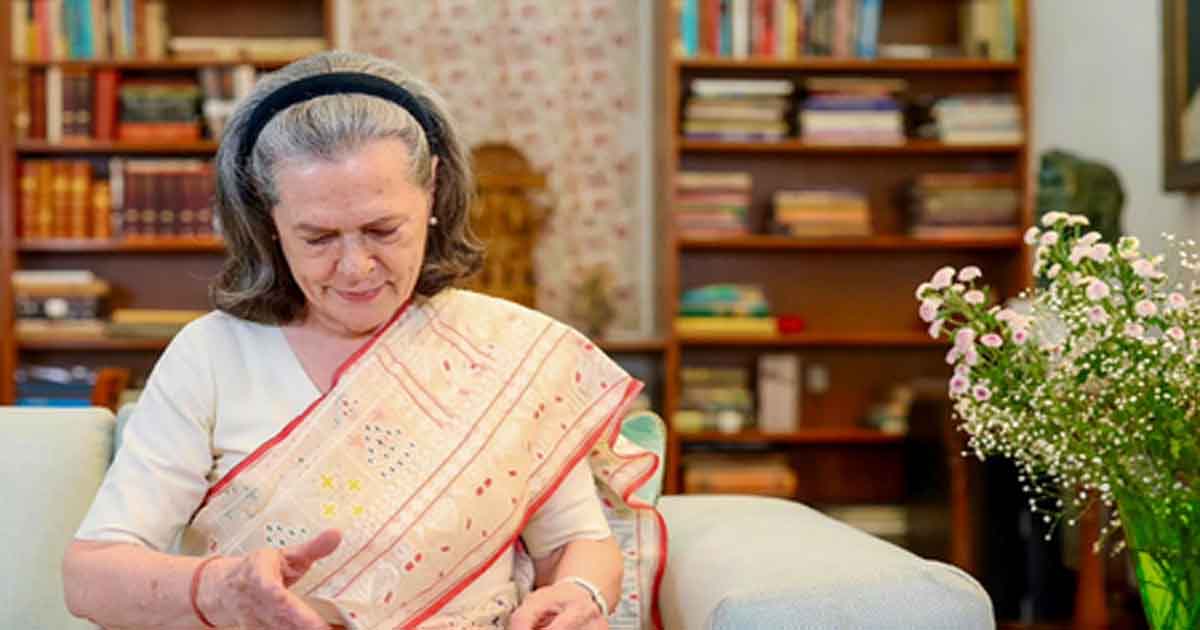
A strange encounter with a palmist at the Gandhi family’s erstwhile residence in Delhi decades ago, which initially appeared amusing, later acquired an unsettling significance in the wake of a series of political tragedies. The incident, recalled by Congress Parliamentary Party Chairperson Sonia Gandhi in her memoir ‘Belonging: A Journey of Love’, revolved around a prediction that her husband, Rajiv Gandhi, would one day become the Prime Minister instead of his younger brother, Sanjay Gandhi.
The memoir, released on November 10, recounts the incident from the late 1970s, when the Gandhi family was living at Bungalow Number 12 on Willingdon Crescent in Delhi, a period Sonia Gandhi refers to as the “Baara Number days”.
Late Prime Minister Indira Gandhi had shifted to the four-bedroom residence with her family after losing power in 1977. The house had been vacated for her by family friend Mohammad Yunus. At the time, Rajiv Gandhi was working as a commercial pilot and had little inclination towards politics, while Sanjay Gandhi was widely regarded as his mother’s political successor.
Recalling one of the unusual incidents at the residence, Sonia writes, “Of all the bizarre happenings and unusual characters in 12 Willingdon Crescent, there’s one that stands out in my memory.”
She describes how a palmist entered their portion of the house without permission and attempted to persuade her to let him read her future.
“One day, a fat man dressed in white forced his way onto our side of the house and began calling out to me, brandishing a paper with the imprint of a palm…I didn’t believe in astrology, I told him. I asked him politely to leave — I had no time to waste, I had work to do, I knew my past, and I was not interested in knowing my future,” she writes.
However, the man refused to leave despite her objections. Sonia recalls that when she ‘flew angrily at him to chase him off’, he turned around and shouted a prediction while making his escape.
“Nahi, nahi, Sanjay nahi — aapke pati Rajivji ek din pradhan mantri banenge! (No, no, not Sanjay, your husband Rajiv will become prime minister one day!)”
The incident became even more amusing when Sonia discovered that Rajiv had already interacted with the palmist.
“Then I saw Rajiv, laughing heartily, with the imprint of the palmist’s ink on his palm. He’d been waylaid by the astrologer and humoured him, thinking it was a great joke. I rushed to my room and tried to calm down, but burst out crying instead,” she writes.
The prediction eventually took on a different meaning following a succession of tragedies. Sanjay Gandhi died in a plane crash in June 1980. Four years later, Indira Gandhi was assassinated in October 1984, following which Rajiv Gandhi was sworn in as the Prime Minister within hours. According to the memoir, he accepted the responsibility despite Sonia’s tearful appeals against his entry into politics. He told her, “They will kill me anyway.”
Although Sonia maintains that she was not superstitious, the memoir also describes instances when events made her wonder whether certain occurrences carried a deeper meaning.
One such incident took place during Rajiv Gandhi’s 41st birthday celebrations in August 1985. During dinner, the family received news that Akali leader Harchand Singh Longowal had been shot dead in Punjab.
“I couldn’t share what was going through my mind, that this was a tragedy but also a bad omen,” she writes. “Why on Rajiv’s birthday — was that just a coincidence, I wondered, or a warning?”
The memoir also revisits the couple’s decision to move into 10 Janpath on February 5, 1990, where Sonia Gandhi continues to reside. Several of Rajiv Gandhi’s colleagues had reportedly advised him against choosing the residence, describing it as “inauspicious”.
Behind the property’s rear gate was a mound believed to contain an elephant’s grave, while the grave of a Sufi pir was located opposite it. However, Rajiv and Sonia dismissed the concerns.
“Neither he nor I were superstitious and laughed it away,” she writes.
Rajiv Gandhi was assassinated 15 months after moving into the residence, in May 1991, adding another tragic dimension to the memories recounted in the memoir.
Entertainment
Hindu outfit backs actor after Kareena gets legal notice over Quranic verse on 200-year-old heirloom pendant

After Madhya Pradesh Congress spokesperson, Abbas Hafeez, sent a legal notice to Bollywood actor Kareena Kapoor Khan over her social media photographs featuring her wearing a huge vintage emerald pendant bearing a Quranic verse, a Hindu outfit has backed the star.
Demanding the removal of the social media photographs and a public apology over it, Hafeez said his objection was not to the actor wearing the jewellery but to the manner in which the religious inscription was displayed on social media, claiming it had hurt the sentiments of the Muslim community.
Hafeez’s advocate Mohammad Zafar said the pendant carried a verse from the Holy Quran, which is considered sacred in Islam, and that religious practices prescribe ritual ablution before touching or reciting the holy texts.
The legal notice seeks the removal of the photographs and related posts, an apology and an assurance against displaying the religious inscription in a manner considered disrespectful.
Hafeez said the pendant was associated with the heritage of the Begums of Bhopal and was worn as an expression of faith rather than as a fashion accessory.
He, however, clarified that the issue was his personal initiative and should not be linked to the Congress party, its ideology or political position.
The controversy centres on an emerald pendant described by celebrity stylist Rhea Kapoor as an approximately 200-year-old heirloom of the former Bhopal royal family.
Kapoor had shared photographs of Kareena wearing the jewellery as part of her Diwali look.
The historical connection is linked to the Pataudi family as actor Saif Ali Khan’s grandmother Sajida Sultan was the daughter of Hamidullah Khan, the last ruling Nawab of Bhopal.
She married Iftikhar Ali Khan Pataudi, and their son was former Indian cricket captain Mansoor Ali Khan Pataudi, Saif’s father.
Meanwhile, Hindu Utsav Samiti president Chandra Shekhar Tiwari has extended support to Kareena and said she did not need to apologise to anyone.
“A pendant is meant to be worn around the neck, close to the heart. If it bears Quranic verses, she would not have worn it at any place considered disrespectful. She does not need to apologise to anyone,” Tiwari said.
He also argued that Kareena, being the daughter-in-law of the erstwhile Bhopal royal family, could naturally wear jewellery belonging to her mother-in-law.
The Hindu Utsav Samiti and Sanskriti Bachao Manch have also expressed support for the actor. There was no immediate public response from Kareena Kapoor or her representatives to the legal notice.
National News
‘Took time to get used to Indian food but learnt slowly’: Sonia Gandhi shares her love for India’s cuisines

Congress Parliamentary Party (CPP) Chairperson Sonia Gandhi has shared her love for Indian food, saying that though she initially took time to adjust, she eventually “fell in love” with cuisines from different parts of the country.
This comes a day after her memoir “Belonging: A Journey of Love” hit bookstands worldwide.
A video posted on the official X account of the veteran Congress leader on Wednesday shows her, along with her daughter and party MP Priyanka Gandhi Vadra, interacting in the garden of 1, Safdarjung Road residence of the late former Prime Minister Indira Gandhi.
During the conversation, Priyanka Gandhi also made her mother fondly recall that the latter had even made the Gujarati dish ‘Khaandvi’ for her and her brother, Leader of the Opposition in the Lok Sabha, Rahul Gandhi, during their childhood.
Sharing her fondness for Indian dishes, Sonia Gandhi said: “I love Bengali food. Believe it or not, I love Gujarati food, from Surat.”
However, given her Italian roots, Gandhi said: “It took me time to get used to Indian food. It was difficult for me to enjoy Indian food right at the beginning. I didn’t know how to cook when I came. But later, slowly, I learned.”
The senior leader said that now she loves having kababs, chicken tikka, tandoori chicken, dal makhni, Kashmiri kofta and the ‘haakh’.
To this, Priyanka Gandhi added: “…and ‘Daal Chawal’, we used to have it every day.”
Sonia Gandhi further said: “From the day I came to this house till today, the only dal cooked is ‘arhar ki daal’, nothing else.”
The Wayanad MP then asked her mother about the Gujarati cuisine ‘Khaandvi’ that the latter used to make when the Gandhi siblings were younger, saying: “Didn’t you use to make Khaandvi while we were kids?…can you imagine?”
The CPP Chairperson then said on a lighter note, “Making Khaandvi is easy”.
Further, Priyanka Gandhi recalled: “But, Dadi couldn’t cook,” referring to late Prime Minister Indira Gandhi.
However, Sonia Gandhi asserted that even though her mother-in-law couldn’t cook, she had a very acute sense of how to make a dish better.
“She knew exactly how to improve something,” she said.
Meanwhile, in the post accompanying the video, the veteran leader shared she fell in love with her husband, former Prime Minister late Rajiv Gandhi, while looking for a good meal.
“Food has always had a special place in my story. It was while looking for a good meal that I met Rajiv, and fell in love,” Sonia Gandhi said.
She added: “Years later, India came to me the same way, one meal at a time. At first the variety amazed me and the spice scared me. Now dal chawal is the taste of home, and I can’t go a day without it.”

In her memoir, Sonia Gandhi recalls palmist prediction that Rajiv, not Sanjay, would be PM

Mumbai: Three arrested for exploiting minor girl; objectionable videos found on phones

Pune man loses Rs 22 Lakh to cyber fraudsters posing as Karnataka Police, CBI officers

Mumbai: Four arrested for attacking family over Diwali firecracker dispute in Andheri

Hindu outfit backs actor after Kareena gets legal notice over Quranic verse on 200-year-old heirloom pendant

Rahul, Cong ecosystem want to force regime change: BJP after Neha Bora praises B’desh Gen-Z protest

BJP pays tribute to ex-President Abdul Kalam, recalls his enduring influence on generations of India’s youth

Attack on democratic rights: INDIA Bloc leaders on detentions of anti-ECI protestors

Congress trying to protect 3 crore Bangladeshi infiltrators in voter list: HM Shah

Online betting: ED conducts searches at 20 premises in Mumbai, Pune, Hyderabad
-

 Crime4 years ago
Class 10 student jumps to death in Jaipur
-

 Maharashtra2 years ago
Mumbai Local Train Update: Central Railway’s New Timetable Comes Into Effect; Check Full List Of Revised Timings & Stations
-

 Maharashtra2 years ago
Mumbai To Go Toll-Free Tonight! Maharashtra Govt Announces Complete Toll Waiver For Light Motor Vehicles At All 5 Entry Points Of City
-

 Maharashtra2 years ago
False photo of Imtiaz Jaleel’s rally, exposing the fooling conspiracy
-

 National News2 years ago
Ministry of Railways rolls out Special Drive 4.0 with focus on digitisation, cleanliness, inclusiveness and grievance redressal
-

 Maharashtra2 years ago
Maharashtra Elections 2024: Mumbai Metro & BEST Services Extended Till Midnight On Voting Day
-

 National News2 years ago
J&K: 4 Jawans Killed, 28 Injured After Bus Carrying BSF Personnel For Poll Duty Falls Into Gorge In Budgam; Terrifying Visuals Surface
-

 Crime2 years ago
Baba Siddique Murder: Mumbai Police Unable To Get Lawrence Bishnoi Custody Due To Home Ministry Order, Says Report