
General
Madhya Pradesh: OBC body calls for ‘state bandh’ on Saturday; Congress extends support

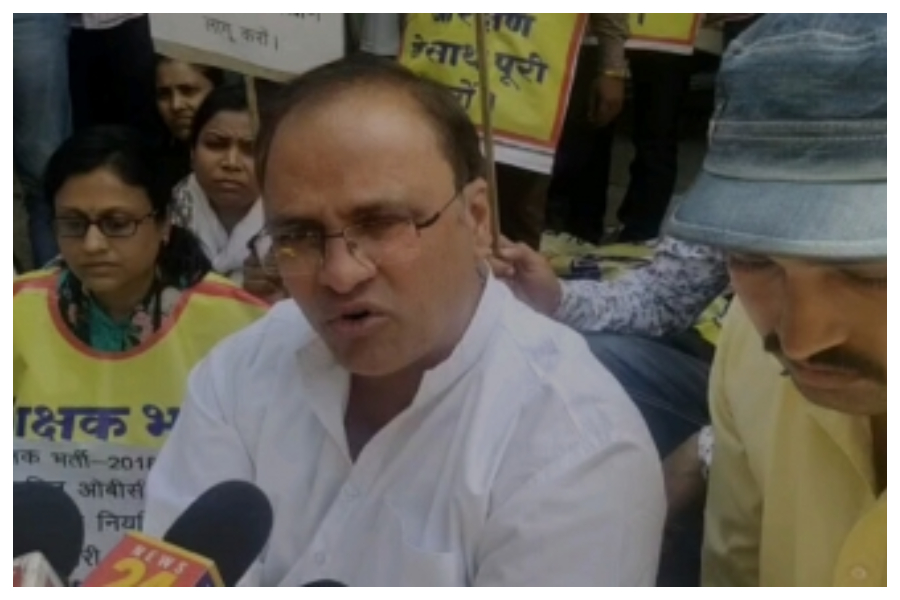
Despite the Supreme Court allowing holding of local body polls along with OBC reservation in Madhya Pradesh, the issue has stoked a massive row after OBC Mahasabha, an organisation representing the OBC community, called for a ‘state bandh’ on May 21 to raise the demand for 27 per cent reservation to the community.
This protest came a day after the apex court permitted the state government to continue with the elections along with reservation for OBCs in local bodies in the state with a limit of total 50 per cent reservation in it.
The OBC Mahasabha expressed its displeasure with the SC order, saying that giving only 14 per cent reservation to the OBCs will be injustice to the community.
“The SC’s order said the OBCs will get just 14 per cent reservation, whereas the quota should be provided as per the population of OBCs in the state — which is 48 per cent. Therefore, we are going ahead with our call for bandh,” said State President, OBC Mahasabha, Rakesh Singh Lodhi.
Sources told IANS that the call for a bandh came after a meeting of state and national level office-bearers of the Mahasabha was held after the SC order was pronounced.
While the OBC organisation said both the BJP and Congress had deceived the OBC community on the issue of reservation, the call for the bandh was given against the BJP government in Madhya Pradesh, sources said.
Meanwhile, the opposition Congress has extended its support for the bandh, saying that the OBC must get 27 per cent reservation in local body polls instead of just 14 per cent.
“The OBC Mahasabha has given a call for bandh in Madhya Pradesh on May 21 for demanding reservation. The Congress party fully supports it,” said an official statement issued from the state Congress office on Thursday.
On Wednesday, the ruling BJP-led state government hailed the SC’s order, saying it was a “historic day” for Madhya Pradesh, and claimed that the government took all possible measures to ensure reservation for the OBC community.
The opposition Congress also hailed the top court’s ruling, but pointed out that it has capped the upper limit of reservation up to 50 per cent, due to which the OBC community will not be able to receive benefits of the 27 per cent quota.


Maharashtra
Waqf Property Report Pending for Three Years: Rais Shaikh Accuses NCP of Ignoring Muslim Community’s Issues

Mumbai – The report of a committee—formed to review the ‘7/12’ land record entries for ‘Waqf’ properties (valued at hundreds of billions of rupees) and to formulate a policy for the distribution of land acquisition compensation—has remained pending for over three years. Rais Shaikh, a Samajwadi Party Member of the Legislative Assembly (MLA) from Bhiwandi East, has expressed concern that the Minority Development Department and the ruling Nationalist Congress Party (NCP) have failed to address the issues faced by the Muslim community with the necessary seriousness. In a letter addressed to the Deputy Chief Minister and Minister for Minority Development, Supriya Pawar, MLA Rais Shaikh has demanded immediate action on this matter.
There are 23,566 registered ‘Waqf’ properties in the state, spanning an area of approximately 92,247 acres. These properties are subject to large-scale encroachment, and many private individuals claim ownership over them. On September 21, 2023, a meeting was held under the chairmanship of the then-Deputy Chief Minister, Ajit Pawar. The meeting addressed several key issues: reviewing the ‘7/12’ land record entries, formulating a policy for the distribution of land acquisition compensation, removing the names of private individuals from these records, and ensuring that the names of ‘Waqf’ institutions and the ‘Waqf Board’ are officially recorded.
Following this meeting, the Minority Development Department constituted a four-member committee on October 17, 2023, with instructions to submit its report within one month. However, the report has not been submitted, even long after the stipulated deadline has passed. MLA Rais Shaikh has raised the question: if reports are not submitted within the timeframe set by the government, then what is the purpose of forming committees and issuing administrative orders?
This delay in the report concerning ‘Waqf’ properties cannot be dismissed as mere administrative lethargy. MLA Rais Shaikh has demanded that the relevant department clarify the reasons for this delay and fix responsibility in the matter. Progress on issues related to ‘Waqf’ properties—which were brought to the fore through the initiative of the then-Deputy Chief Minister Ajit Pawar—should have continued even after he left his post. Yet, many issues faced by the Muslim community remain unresolved. In light of this, MLA Rais Shaikh has questioned, via a letter, whether the ruling Nationalist Congress Party (NCP) and the state government are according appropriate priority to the concerns of the Muslim community.
Matters such as the registration of ‘Waqf’ properties and the payment of compensation for land acquisition directly affect the property rights and financial interests of the concerned institutions. It is imperative to resolve the uncertainty surrounding these issues and reach a definitive conclusion. Rather than relying on mere verbal assurances, concrete decisions must be taken and effectively implemented.
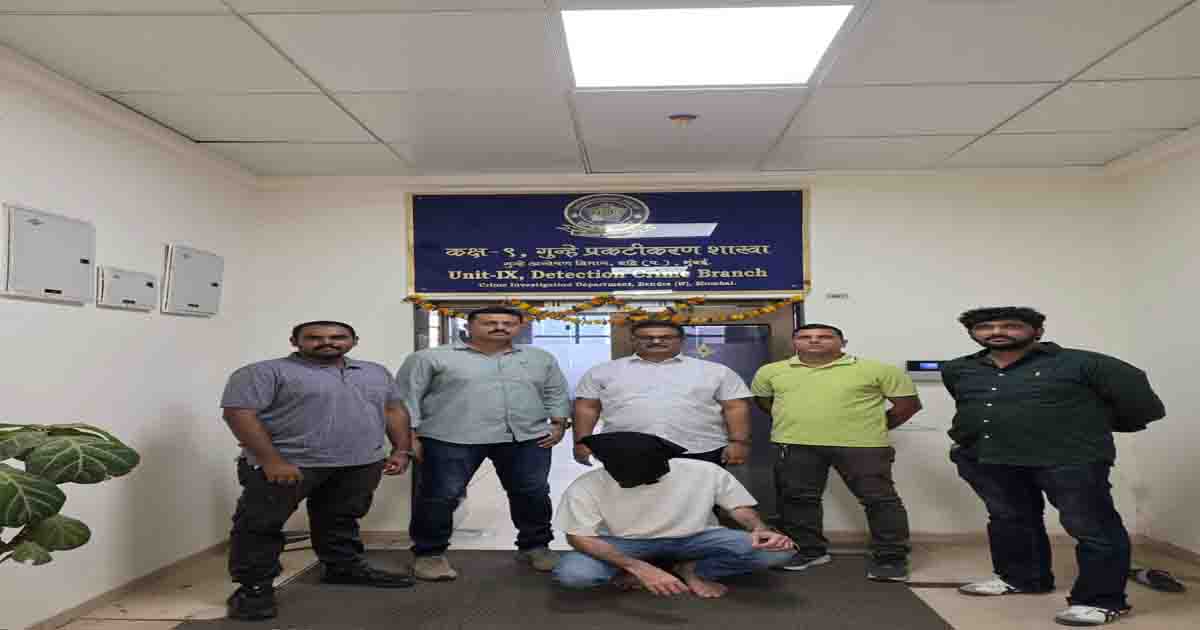
On October 24, Crime Branch Unit 9 (Bandra West, Mumbai) intensified its crackdown on drug peddlers, resulting in the arrest of an individual involved in the sale of narcotics. The police had received information that the accused was selling charas (cannabis resin) and other intoxicating substances from his residence. Acting on this intelligence and following the guidance of senior officers, a team from Crime Branch Unit 9—accompanied by independent witnesses (panches)—raided the premises on October 24. During the operation, 1.505 kilograms of charas were seized in accordance with legal procedures; the estimated value of the contraband is 15 million rupees (1.5 crore INR) based on international market rates.
A case has been registered in connection with this incident under the NDPS (Narcotic Drugs and Psychotropic Substances) Act. One individual, aged 40, has been arrested. Additionally, another person has been identified as a wanted suspect, and a search is currently underway to locate him.
This notable operation was carried out under the supervision of Police Commissioner Deven Bharti, Joint Commissioner of Police (Crime) Anil Kumbhare, Additional Commissioner of Police Krishnakant Upadhyay, and Deputy Commissioner of Police (DCP) Nonath Dhole.
Maharashtra
Lawrence Bishnoi gang shooters had practised shooting in the Aarey Colony forest before opening fire at Tiger Shroff’s residence.

Following the firing incident involving Tiger Shroff, an investigation has revealed that a businessman in Pune and a film star in Mumbai were on Lawrence Bishnoi’s target list. The gang’s objective is to instill fear among the film industry and the business community in order to extort money—specifically, to collect protection money or ransoms. The primary goal of the Lawrence Bishnoi gang is not necessarily murder, but rather the creation of terror and fear within the film industry and among business circles.
Currently, 56 operatives of the Lawrence Bishnoi gang are incarcerated in various Mumbai jails; they have been linked to over 10 criminal incidents in Mumbai and Pune over the past 2–3 years. Targeting Bollywood is a key objective for the Lawrence gang, and they have been involved in conspiracies to target film actors specifically to spread fear and terror throughout the business community.
In the Tiger Shroff case, it has emerged that the shooters underwent firearms training in the Aarey Colony forest. A shepherd witnessed the shooters practicing and serves as an eyewitness; according to him, three to four individuals trained there, and he saw them firing weapons. New revelations continue to surface in the case involving Tiger Shroff, with the Crime Branch making significant progress in its investigation.
Weapons have also been recovered in connection with the matter. Furthermore, the interrogation of the shooters arrested by the police has led to the discovery of a link to Anil Pandit—a member of the Lawrence Bishnoi gang—with whom the shooters were in contact.

True success of science lies in taking innovation from lab to land: PM Modi

Another Class 12 student found dead in Delhi; suicide suspected

ECI’s affidavit on SIR deceptive: Jairam Ramesh

Maha CM defends pumped storage project in Karjat amid environmental backlash

Waqf Property Report Pending for Three Years: Rais Shaikh Accuses NCP of Ignoring Muslim Community’s Issues

Rahul, Cong ecosystem want to force regime change: BJP after Neha Bora praises B’desh Gen-Z protest

Attack on democratic rights: INDIA Bloc leaders on detentions of anti-ECI protestors

BJP pays tribute to ex-President Abdul Kalam, recalls his enduring influence on generations of India’s youth

INDIA bloc begins protest march against ECI

Maha Congress stages agitation against Gyanesh Kumar
-

 Crime4 years ago
Class 10 student jumps to death in Jaipur
-

 Maharashtra2 years ago
Mumbai Local Train Update: Central Railway’s New Timetable Comes Into Effect; Check Full List Of Revised Timings & Stations
-

 Maharashtra2 years ago
Mumbai To Go Toll-Free Tonight! Maharashtra Govt Announces Complete Toll Waiver For Light Motor Vehicles At All 5 Entry Points Of City
-

 Maharashtra2 years ago
False photo of Imtiaz Jaleel’s rally, exposing the fooling conspiracy
-

 National News2 years ago
Ministry of Railways rolls out Special Drive 4.0 with focus on digitisation, cleanliness, inclusiveness and grievance redressal
-

 Maharashtra2 years ago
Maharashtra Elections 2024: Mumbai Metro & BEST Services Extended Till Midnight On Voting Day
-

 National News2 years ago
J&K: 4 Jawans Killed, 28 Injured After Bus Carrying BSF Personnel For Poll Duty Falls Into Gorge In Budgam; Terrifying Visuals Surface
-

 Crime2 years ago
Baba Siddique Murder: Mumbai Police Unable To Get Lawrence Bishnoi Custody Due To Home Ministry Order, Says Report