
National News
Kolkata Doctor Case Hearing: ‘Somebody Has Lost Their Life, Don’t At Least Laugh’, SG Tushar Mehta To WB Govt Counsel Kapil Sibal In SC

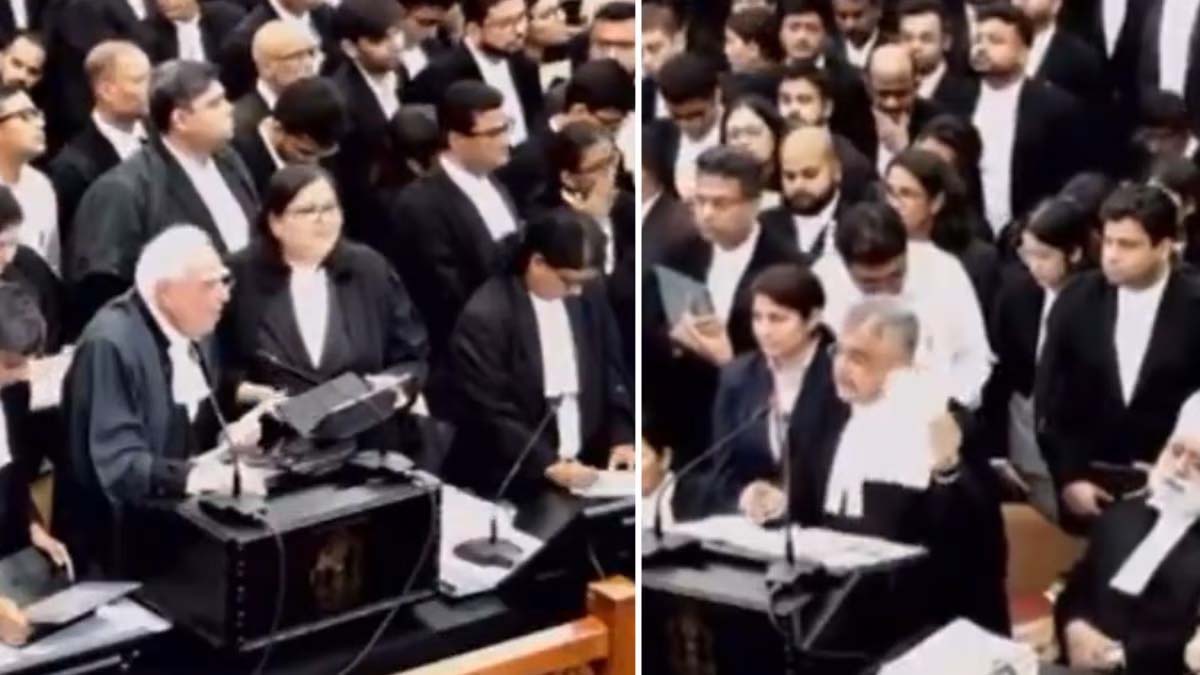
Solicitor General Tushar Mehta, representing the CBI, on Thursday reprimanded West Bengal govt counsel Kapil Sibal in Supreme Court during the hearing in the Kolkata doctor’s rape and murder case and said: “Somebody has lost their life, do not at least laugh.”
This exchange between the two advocates took place when Sibal supposedly “laughed” while Mehta was pointing out the glaring gaps in registering the FIR by the police.
The CBI, on Thursday, submitted its status report to the Supreme Court on the progress of the investigation into the rape and murder of a woman doctor in state-run R.G Kar Medical College & Hospital in Kolkata, and the agency has found several missing links.
The apex court’s division bench headed by the Chief Justice of India (CJI) D.Y. Chandrachud was hearing the matter.
The CBI in its status report said the crime scene was altered and the victim’s family was misled about their daughter’s death. The family was informed that their daughter died due to suicide.
During the hearing, Solicitor General Tushar Mehta, representing CBI also flagged the delay in the filing of the FIR.
“The most shocking fact is that the first FIR was registered at 11:45 pm after cremation. The parents were told it was a suicide, then death and then friends of the doctor at the hospital insisted on videography. They also suspected something was amiss,” Mehta said to the bench led by the Chief Justice of India (CJI) DY Chandradhud.
The SC termed “extremely disturbing” the Kolkata Police’s delay in registering the unnatural death of the woman doctor who was raped and murdered at the RG Kar Medical College and Hospital.
SC asks protesting doctors to resume work
It also asked protesting doctors to resume work and assured them that no adverse action would be taken after they rejoin.
Questioning the sequence and timing of legal formalities conducted by police, a bench comprising Chief Justice DY Chandrachud said it was very surprising that the postmortem of the deceased was conducted on August 9 between 6.10 pm to 7.10 pm before the registration of case as unnatural death.
“How was it that the post-mortem was conducted at 6.10 pm on August 9 and yet the unnatural death information is sent to Tala police station at 11.30 pm on August 9. This is extremely disturbing,” the bench, also comprising Justice J B Pardiwala and Manoj Misra, said.
SC asks Kolkata Police officer to appear in next hearing
It directed the Kolkata Police officer, who registered the first entry about the rape-murder that has shocked the country, to appear in the next hearing and disclose the time of the entry.
Solicitor General Tushar Mehta, appearing for the CBI, told the top court that the most shocking fact is that the FIR was registered at 11.45 pm after the postgraduate medic was cremated.
“State police told parents it was suicide, then they said it was murder. Victim’s friend suspected cover up and insisted on videography,” Mehta told the bench.
As the hearing commenced, the top court asked protesting doctors to resume work, and assured them that no adverse action will be taken against them after they rejoin.
The apex court was told by the counsel for resident doctors at AIIMS Nagpur that they are being victimised for protesting over the Kolkata rape-murder case.
“Once they get back to duty, we will prevail upon authorities to not take adverse action. How will public health infrastructure run if the doctors do not work?” the bench asked.
“If there is difficulty after that, come to us. but let them first report to work,” it said. The top court said its heart goes out to all patients visiting public hospitals.
It assured doctors’ associations that the National Task Force will hear all stakeholders.
The brutal assault and murder of the junior doctor has sparked nationwide protests. Her body was found with severe injury marks inside the seminar hall of the state-run hospital’s chest department. A civic volunteer was arrested by the Kolkata Police in connection with the case the following day on August 10.

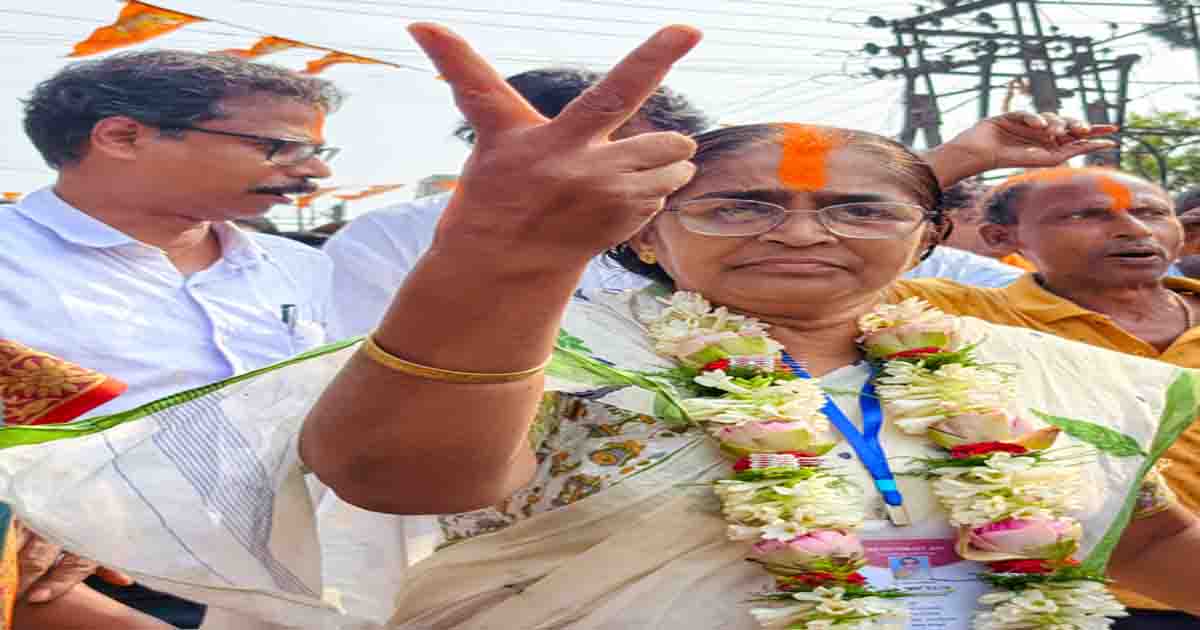
Kolkata, Oct 9: Hasirani Rath, the Bharatiya Janata Party (BJP) candidate for the bypoll for Nandigram Assembly Constituency in East Midnapore district of West Bengal, was declared elected by a record margin of 1,22,753 votes.
While Rath secured 1,64,427 votes, Congress’s Milan Pradhan came in the second position, securing 41,674 votes.
CPI’s Santi Gopal Giri was in the third position, receiving 5,779 votes, followed by All India Secular Front’s (AISF) Ali Md Sabe Miraj Khan in the fourth position, securing 1,607 votes.
Ritabrata Banerjee-led Democratic Trinamool Congress finished in the fifth position, securing just 853 votes.
Former West Bengal Chief Minister Mamata Banerjee-led Mamata All India Trinamool Congress was not in the electoral race at Nandigram this time, as its candidate Sanchita Pradhan Dey withdrew her nomination at the last moment, following which Mamata Banerjee announced her support towards the Congress candidate.
This is the highest ever victory margin by any winning candidate from Nandigram since 1967. The previous record was held by current Chief Minister Suvendu Adhikari in 2016, when he got elected from Nandigram as a Trinamool Congress candidate by a margin of 81,230 votes.
“Before the bypolls, I predicted that the victory margin for the BJP candidate this time would surpass my own record in 2016. This is what exactly happened. This would not have been possible unless our candidate had secured the majority of the minority votes in Nandigram,” said CM Adhikari while giving his reactions on the Nandigram assembly polls
In the assembly elections earlier this year, CM Adhikari was elected from Nandigram by a margin of just 9,665 or 50.37 per cent of the total votes polled then. So statistically, in the bypolls this time, BJP witnessed 25.79 per cent positive vote swing, with Rath securing 75.94 per cent of the total votes polled.
Earlier this year, CM Adhikari was elected simultaneously from Bhabanipur Assembly Constituency in South Kolkata, defeating Mamata Banerjee by a margin of little over 15,000 votes. Later he decided to retain Bhabanipur, thus necessitating bypolls at Nandigram.
Hasirani Rath is the mother of Chandranath Rath, the former personal assistant of Suvendu Adhikari, who was assassinated at Madhyamgram in North 24 Parganas district on May 6.
The final result of bypolls for Rejinagar Assembly Constituency in Murshidabad district of West Bengal is yet to be announced.
National News
334 GRP personnel deployed, 14 CAPF companies sought for October 10 protest: DCP, Railways

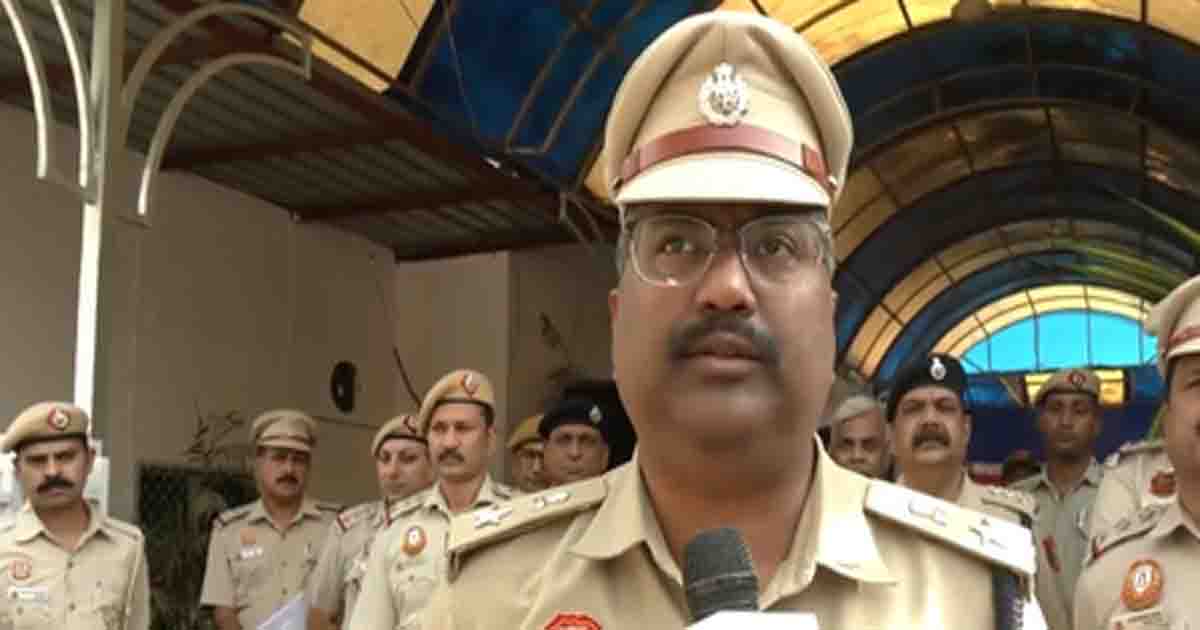
New Delhi, Oct 9: Deputy Commissioner of Police, Railways, B. Bharat Reddy, on Friday said that they have deployed 334 Government Railway Police (GRP) personnel and sought 14 companies of the Central Armed Police Forces (CAPF) to strengthen security arrangements ahead of the CJP protest scheduled for October 10 at Jantar Mantar.
Speaking to media, Reddy said special security arrangements had been made at major railway stations to manage the movement of protesters arriving in Delhi by train to participate in the demonstration.
“CJP has called for a protest at Jantar Mantar on October 10. For protesters coming to Delhi by train to participate in the demonstration, we have deployed 334 GRP personnel and sought 14 companies of the Central Armed Police Forces (CAPF). The deployment will be round-the-clock. Delhi has seven major railway stations that receive the highest number of trains and witness the highest footfall,” he said.
He added that security personnel would remain deployed round-the-clock at these stations.
Addressing concerns over travel disruptions, Reddy said passengers whose trains had not been diverted and were scheduled to arrive at their designated stations would face no inconvenience.
“They can follow their travel plans, arrive on time, and board their trains. The railway advisory also asks passengers to keep checking their train status online and plan their travel accordingly,” he said.
Indian Railways has cancelled 38 of the 165 trains scheduled to operate to New Delhi and Hazrat Nizamuddin stations ahead of the protest on October 10, in view of anticipated severe road traffic congestion around the stations amid the proposed CJP protests.
Trains, scheduled to arrive at New Delhi and Hazrat Nizamuddin railway stations between 4 a.m. and 2 p.m. on Saturday, will be affected by the cancellations.
In a statement, the Ministry of Railways said the decision was taken as a precautionary measure to minimise inconvenience to passengers amid the anticipated traffic congestion.
“To ensure that passengers do not face similar hardship, Railways has taken a proactive, precautionary step: All Mail/Express trains starting from source after 14:00 hrs on 9th Oct which were scheduled to arrive New Delhi / Hazrat Nizamuddin between 04:00-14:00 hrs on 10th Oct are cancelled at source,” the ministry said.
Meanwhile, the Delhi Police have warned against unauthorised gatherings ahead of the proposed CJP protest on October 10, saying Section 163 of the Bharatiya Nagarik Suraksha Sanhita (BNSS) is in force in the New Delhi area. Police said violations of the restrictions would invite legal action.
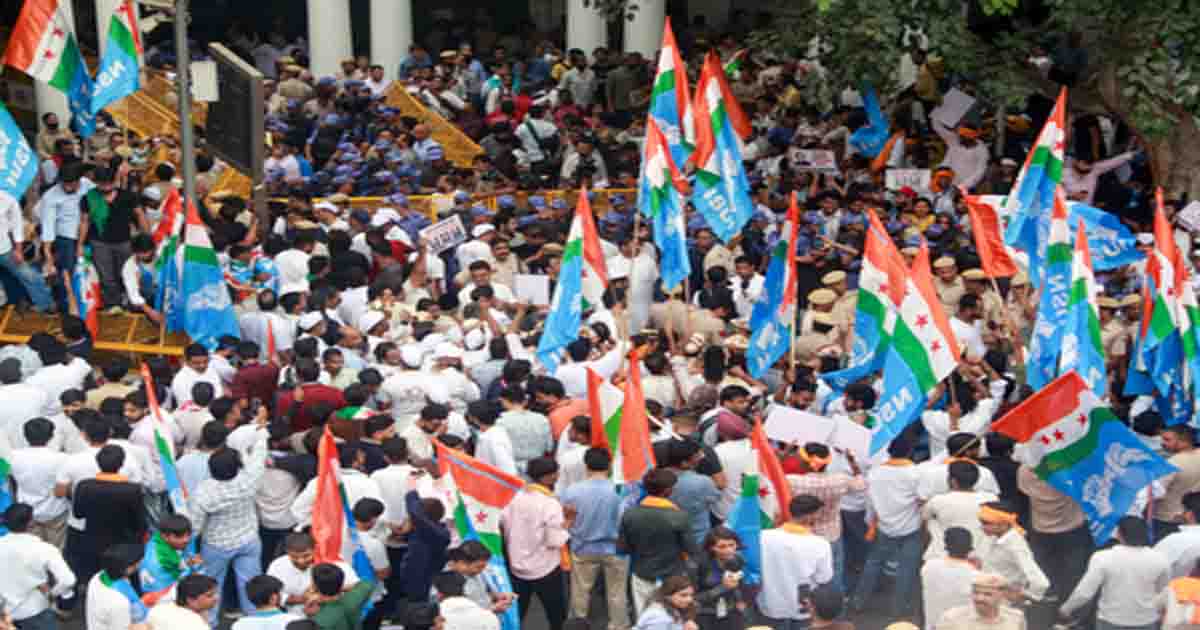
New Delhi, Oct 9: The Opposition’s intensified campaign against Chief Election Commissioner (CEC) Gyanesh Kumar, alleging irregularities in electoral roll revisions and claiming that the exercise has disproportionately benefited the ruling Bharatiya Janata Party (BJP), has revived the debate over the right to protest in a parliamentary democracy and the responsibility to safeguard public convenience.
The agitation has spread across several cities and has again brought the Cockroach Janta Party (CJP) onto the streets along with Opposition leaders, activists, and student organisations.
In a constitutional democracy, citizens and political parties have the right to protest against government policies, public institutions, and administrative officials.
Protestors thus argue that raising concerns over the conduct of elections is not only political, but a democratic obligation. In fact, many landmark reforms in India have come after pressure from civil society movements, parliamentary resistance, judicial intervention, and public demonstrations, furthering the right to dissent as indispensable.
However, questions arise when the exercise of one’s right infringes upon the rights of others. With demonstrations intensifying, authorities have responded with large-scale security arrangements.
Earlier protests in central Delhi led to the closure of several major Metro stations, including Rajiv Chowk, Central Secretariat, Janpath and New Delhi, while large sections of the city faced traffic restrictions and barricading.
For any demonstration planned or anticipated, especially over Friday and Saturday, security agencies have now proposed heightened strictures.
The Delhi Police recommended closure of entry and exit gates at 57 Metro stations beginning Friday night, citing concerns about crowd mobilisation and attempts to enter high-security zones. Train frequency at affected stations was also proposed to be reduced.
Meanwhile, the Railways announced cancellation of trains as a precaution against anticipated congestion or trouble around the capital’s railway hubs.
Authorities justified the move by referring to earlier disruptions in which thousands of passengers reportedly struggled to reach stations because of road blockades and crowding.
Such traffic snarls also put commuters at a disadvantage on roads. On the other hand, protestors argue that governments rarely respond to peaceful petitions, memoranda, or symbolic protests; they even cancel assemblies at designated locations.
According to this view, public disruption becomes necessary because authorities act only when the political cost of ignoring grievances becomes too high. There are indeed examples that lend some support to this argument. However, the counterargument is equally compelling.
Rights and duties are often described as two sides of the same coin. The right to assemble peacefully exists alongside the duty to respect the rights of fellow citizens.
Freedom of expression does not eliminate responsibility. The constitutional promise of liberty is accompanied by an expectation of civic restraint. If a protest disrupts public transport, prevents citizens from commuting, or imposes costs on people who have no direct role in the dispute, the balance between democratic dissent and public responsibility becomes increasingly difficult to maintain.
Sometimes, the inconvenience may be indirect, coming as security restrictions imposed by authorities. Yet, the outcome remains the same for the common citizen.
Protests should occur in a democracy; criticism of public institutions should be allowed; but what matters are the methods by which dissent is expressed. While governments need to avoid dismissing criticism until demonstrations become impossible to ignore, protest organisers must recognise that, with intensity, they also need to mobilise public support without imposing high costs on the common people.
As the confrontation over the Election Commission continues, the dispute is likely to remain politically charged. The right to protest is fundamental; but so is the right of millions of citizens to go about their daily lives without avoidable disruption. The challenge is not about choosing one over the other, but ensuring that both can coexist.

ED arrests two drug traffickers linked to syndicate run by Dawood aide Salim Ismail Dola

Bengal: BJP candidate wins Nandigram bypoll by a record margin of 1,22,753 votes

Ashish Vidyarthi revisits fond memories with Nana Patekar, shares video of actor making an omelette

334 GRP personnel deployed, 14 CAPF companies sought for October 10 protest: DCP, Railways

Protest politics: Can dissent coexist with public convenience?

Gift to President Putin part of PM Modi bid to globally display India’s heritage

PM Modi’s warm camaraderie with Putin, Xi on full display at BRICS Summit

Complaint against Netflix & Mukesh Chhabra for inappropriate language on ‘India’s Got Latent 2’

INDIA bloc begins protest march against ECI

Maha Congress stages agitation against Gyanesh Kumar
-

 Crime4 years ago
Class 10 student jumps to death in Jaipur
-

 Maharashtra2 years ago
Mumbai Local Train Update: Central Railway’s New Timetable Comes Into Effect; Check Full List Of Revised Timings & Stations
-

 Maharashtra2 years ago
Mumbai To Go Toll-Free Tonight! Maharashtra Govt Announces Complete Toll Waiver For Light Motor Vehicles At All 5 Entry Points Of City
-

 Maharashtra2 years ago
False photo of Imtiaz Jaleel’s rally, exposing the fooling conspiracy
-

 National News2 years ago
Ministry of Railways rolls out Special Drive 4.0 with focus on digitisation, cleanliness, inclusiveness and grievance redressal
-

 Maharashtra2 years ago
Maharashtra Elections 2024: Mumbai Metro & BEST Services Extended Till Midnight On Voting Day
-

 National News2 years ago
J&K: 4 Jawans Killed, 28 Injured After Bus Carrying BSF Personnel For Poll Duty Falls Into Gorge In Budgam; Terrifying Visuals Surface
-

 Crime2 years ago
Baba Siddique Murder: Mumbai Police Unable To Get Lawrence Bishnoi Custody Due To Home Ministry Order, Says Report