
International News
Iranian Defence Minister, IRGC chief among 7 top commanders killed in Israeli strikes

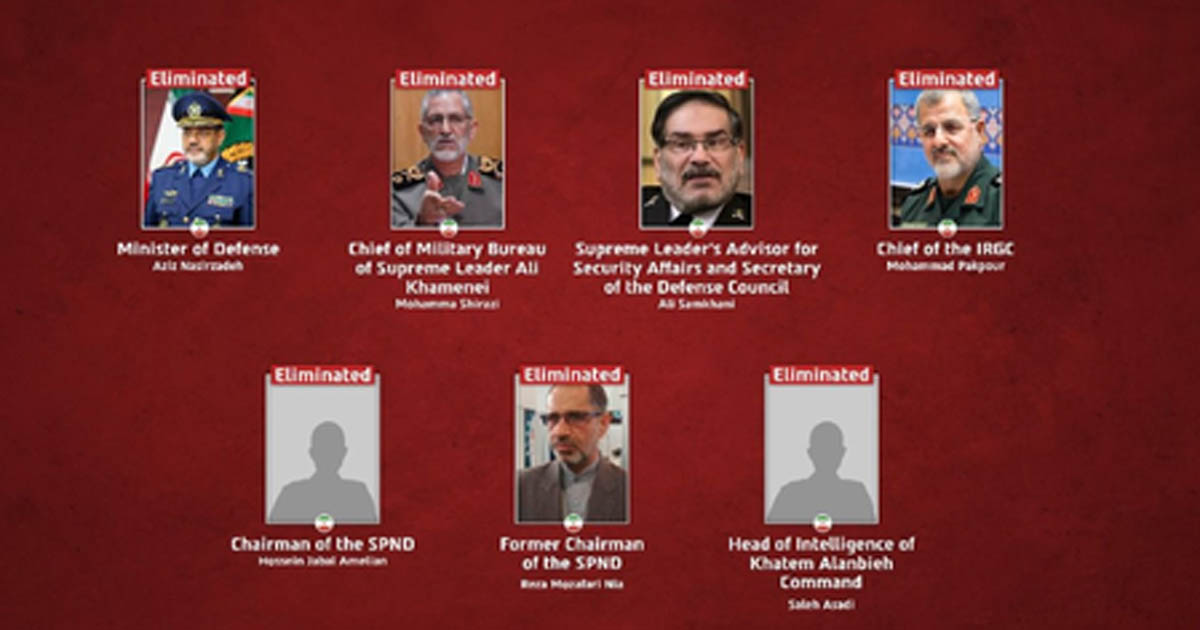
Tel Aviv, March 1: The Israel Defense Forces (IDF) on Sunday announced that seven senior Iranian military commanders, including Defence Minister Aziz Nasirzadeh and the Chief of the Islamic Revolutionary Guard Corps (IRGC), were killed in what it described as precise airstrikes carried out across Iran.
Iran has not officially confirmed the deaths of the commanders named by Israel.
The reported killings occurred as part of a wider joint offensive by the United States and Israel targeting Iran’s military and strategic infrastructure, a development that has sharply heightened tensions across the Middle East.
According to the IDF, the operation was executed by the Israel Air Force (IAF) after the Military Intelligence Directorate identified two separate locations in Tehran where high-ranking Iranian security officials were gathered.
Among those Israel said were killed was Ali Shamkhani, a senior adviser to Supreme Leader Ayatollah Ali Khamenei and a prominent figure in Iran’s defence establishment. The IDF noted that Shamkhani had also been targeted during last year’s hostilities.
The Israeli military further confirmed the death of Mohammad Pakpour, identified as the commander of the Islamic Revolutionary Guard Corps. The IDF accused Pakpour of spearheading a “plan to destroy Israel” and of overseeing missile and drone operations directed against Israeli targets.
Other officials named by Israel as having been killed include Salah Asadi, Mohammad Shirazi, Defence Minister Aziz Nasirzadeh, and senior figures associated with Iran’s SPND weapons development body.
Israel alleged that the officials played central roles in missile production, coordination with regional proxy groups and the advancement of sophisticated weapons programmes, including projects linked to nuclear development.
“The world is a better place without them,” the IDF said.
Meanwhile, Iranian state media reported that Supreme Leader Ayatollah Ali Khamenei was also killed in the US-Israel strikes.
This marks an inflexion point in the 46-year Shia-theocratic rule as Tehran’s retaliation set off conflagrations in a swath of the Middle East.


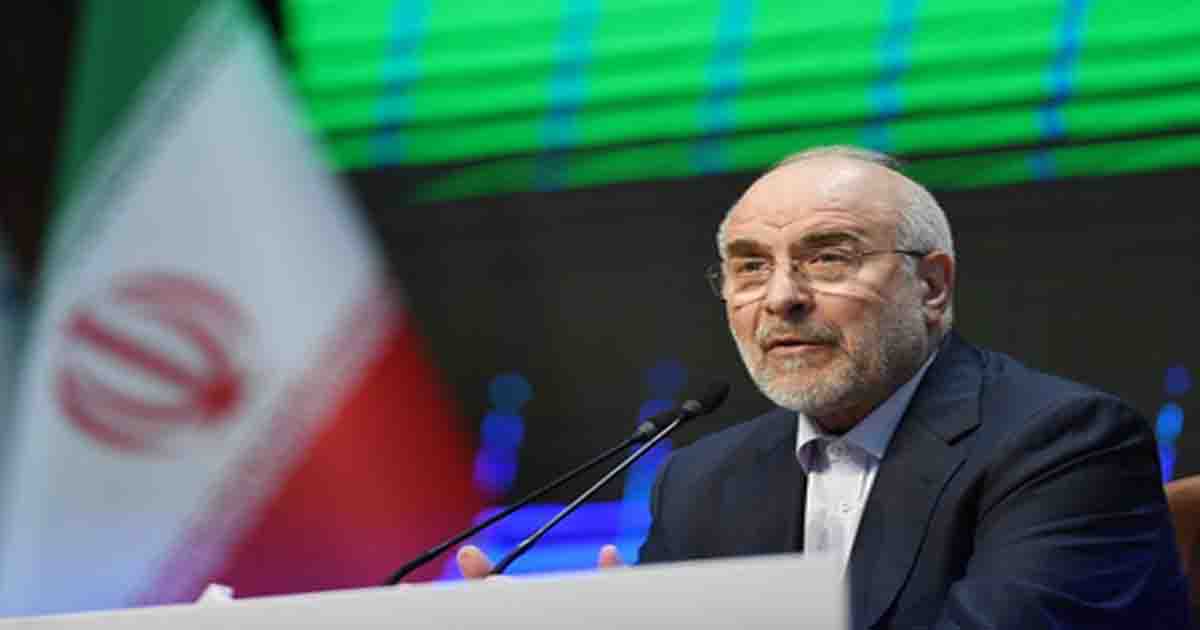
Iranian Parliament Speaker Mohammad Baqer Qalibaf will be unable to attend the Meeting of Speakers of the Parliaments of BRICS Member Countries in New Delhi next week due to “certain unforeseen circumstances”, the Embassy of Iran in New Delhi stated on Saturday.
The Parliament of India will host the 12th BRICS Parliamentary Forum on October 26-27 in the Central Hall of Samvidhan Sadan.
“The Embassy of the Islamic Republic of Iran in New Delhi wishes to inform that, due to certain unforeseen circumstances, H.E. Dr. Mohammad-Baqer Qalibaf, Speaker of the Islamic Consultative Assembly of Iran, will be unable to attend the Meeting of Speakers of the Parliaments of BRICS Member Countries in New Delhi,” read a statement issued by the Iranian Embassy on Saturday.
“It is also emphasised that the parliamentary delegation of the Islamic Republic of Iran will participate in the meeting. As one of the members of BRICS, Iran reaffirms its commitment to active and effective participation at the highest levels in the summits and meetings of this grouping,” it added.
According to the Iranian Foreign Ministry, the country’s delegation will continue its dialogue and consultations with delegations from BRICS member countries in New Delhi, with a view to expanding and deepening bilateral and multilateral cooperation, particularly in the field of parliamentary relations and cooperation.
“The Embassy of the Islamic Republic of Iran also expresses its sincere appreciation to the Government of the Republic of India for its gracious hospitality and the arrangements made to host this meeting. It wishes the Meeting of Speakers of the Parliaments of BRICS Member Countries every success and hopes that it will yield constructive outcomes towards strengthening cooperation and engagement among member countries,” the statement added.
Several global parliamentary leaders will assemble in New Delhi for the conference being hosted under India’s chairship on the theme of people-centric development.
Earlier this week, Lok Sabha Speaker Om Birla mentioned that the conference marks a new chapter in the history of India’s parliamentary diplomacy. It will bring together Presiding Officers and parliamentary leaders from BRICS member and partner countries, Union Ministers, Deputy Chairman of the Rajya Sabha Harivansh, Presiding Officers of State Legislatures, Members of Parliament and other dignitaries.
The Lok Sabha Speaker stated that Prime Minister Narendra Modi would grace the event and meet the leaders of the visiting delegations.
He further stated that the conference would feature bilateral and multilateral interactions with the leaders of visiting delegations and parliamentary friendship groups. A meeting of the Secretaries of the delegations will be held on Monday to finalise the Joint Statement of the 12th BRICS Parliamentary Forum.
Highlighting the central theme of the programme, he said that the forum would deliberate on the overarching theme of ‘Strengthening Parliaments for People-Centric Development’.
He added that, building on the legacy of the BRICS Parliamentary Forum, the 12th BRICS Parliamentary Forum would facilitate consensus-based dialogue through four high-level sessions, titled Resilience: The critical role of parliaments in strengthening institutions to ensure a better future; Innovation: Promoting human-centred innovation in artificial intelligence and digital technologies through parliaments; Cooperation: Ensuring a more representative system of global governance through parliamentary cooperation; and, Sustainability: The role of parliaments in ensuring a sustainable and inclusive future for our countries.
Members of the delegations will visit the Parliament of India and also enjoy cultural visits in Delhi.
A Hindu American parents’ group is taking its campaign to change how Hinduism is taught in American schools directly to teachers, saying it found educators receptive to “accurate and culturally sensitive” material at a New Jersey conference attended by about 200 teachers.
The Hindu Parents Network (HPN) said it sponsored an interactive session on “Accurate and Culturally Sensitive Teaching of Hinduism in a Changing World” at the 2026 New Jersey Teachers Conference.
The session “addressed common misrepresentations, discussed classroom challenges, and shared practical resources to support educators”, the group said in a message to supporters on Friday.
“The response was overwhelmingly positive. Educators recognised the need for accurate resources and welcomed practical solutions,” it said.
“What if we could transform how thousands of students understand Hindu Dharma and history by empowering the educators who teach them?” the group asked, as it appealed for funds to take the effort nationwide.
HPN said it wants to develop “accurate, classroom-ready educational resources”, reach more educators through conferences and workshops, and “work with school districts to address misrepresentations”.
The group says its goal is to ensure “the next generation learns about Hindu dharma through resources that are bias-free, accurate, culturally sensitive, and respectful”.
In its mid-year report, HPN said it supported six new engagements with school districts in 2026 over curriculum bias, misrepresentation of Hindus and culturally sensitive teaching.
The group publishes “Hinduism for Schools” handbooks for primary and secondary classes and free lesson plans, slides and quizzes on topics such as Holi, which it says are meant to complement textbooks.
Earlier this month, HPN launched an educational video for Hindu Heritage Month on the contributions of Hindu civilisation.
Indian American and Hindu American groups have for years contested the portrayal of Hinduism in US textbooks, most prominently in California’s history-social science curriculum debates.
The push comes at a sensitive time for the community. Hindu American organisations have reported a rise in online hate, and lawmakers have demanded a federal hate-crime investigation into the foiled plot at a Hindu temple in Aurora, Illinois, on October 11.
New Jersey has one of the largest Indian American populations in the country.
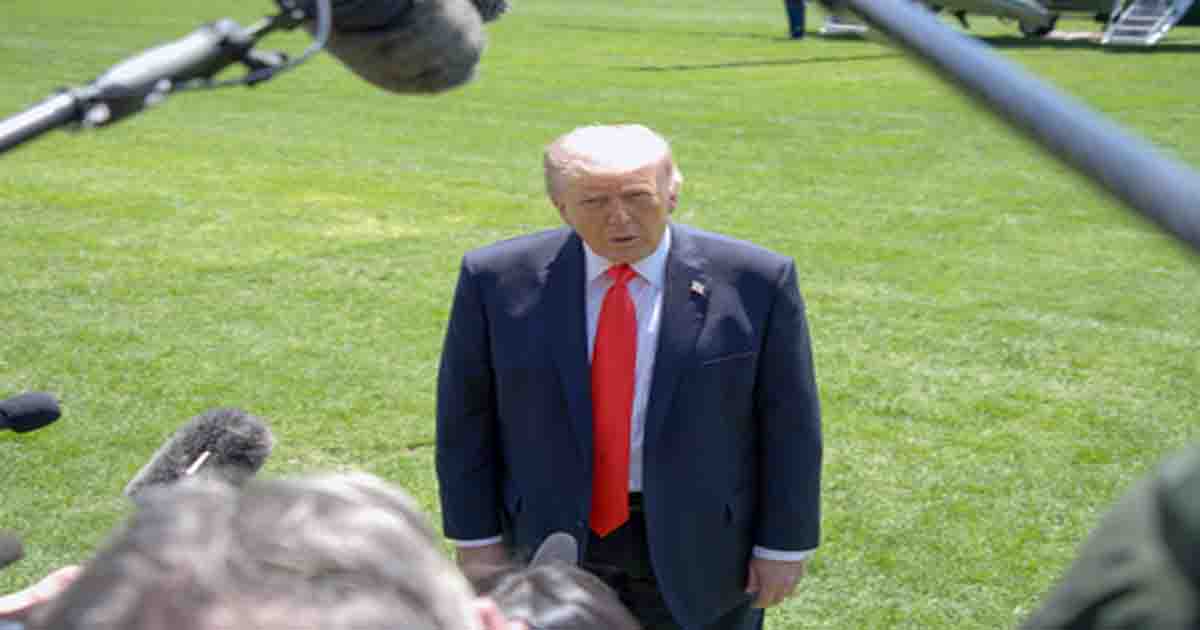
US President Donald Trump suggested that further military action against Iran remained possible, while acknowledging that the war could carry a political cost for Republicans in the approaching congressional elections.
Asked how the conflict had affected the election campaign, Trump said Americans were divided over his decision but defended it as necessary to prevent Iran from obtaining a nuclear weapon.
“Well in one way, they love it because I’m doing what should have been done by other presidents, and another way maybe they don’t,” he told reporters before departing Washington.
“It’s — there’s a price to pay, which I knew immediately when I did it, but we can’t let Iran have a nuclear weapon.”
Trump did not specify whether he was considering a new operation, identify potential targets or give a timetable.
“The Iran War, and we’ve knocked the hell out of them, and we may do it a little bit further,” he said.
That statement was an indication of possible further action, rather than an announcement that an operation had been ordered. His assessment of the damage inflicted on Iran was not accompanied by a military briefing or supporting figures.
The President argued that some voters supported the campaign even if others opposed it.
“I mean, in one way, people probably don’t love it, but many people, many great patriots, really love it. This should have been done a long time ago by other presidents,” he said.
Trump’s comments linked his conduct of the war directly to the domestic political contest.
During the same exchange, the President said Republican prospects would depend heavily on whether his supporters turned out to vote.
The remarks came as UN Secretary-General António Guterres warned in New York that widening conflicts were transmitting economic shocks far beyond the countries where fighting was taking place.
Guterres identified energy markets, shipping lanes, supply chains and financial systems as channels through which wars were affecting households.
“The distance from the Strait of Hormuz to a family home or village market is shorter than we think,” he said.
Guterres called for fighting to stop, civilians to be protected and diplomacy to be given space. He also announced that he would travel to Egypt on Friday.
Asked about the visit, he described Egypt as one of the mediators in the conflict between the United States and Iran. He did not announce a negotiating breakthrough or a meeting between American and Iranian representatives.
The two sets of remarks offered no confirmed timetable for ending the conflict. Trump left open the possibility of further action, while the UN chief emphasised diplomatic efforts and the consequences for civilians and developing economies.

Bihar: JD (U) expels Anant Singh, wife Neelam Devi from party for six years

Iranian Speaker Qalibaf unable to attend BRICS Parliamentary Forum in New Delhi

‘Searching for Rs 500 crores too’: Shrikant Shinde reacts to audio clip row

Naseeruddin Shah backs SRFTI students’ protest: BJP trying to frighten future filmmakers

Delhi Aastha Kunj Park: CCTV, 105 new lights in place after last month’s gang rape

Rahul, Cong ecosystem want to force regime change: BJP after Neha Bora praises B’desh Gen-Z protest

BJP pays tribute to ex-President Abdul Kalam, recalls his enduring influence on generations of India’s youth

Attack on democratic rights: INDIA Bloc leaders on detentions of anti-ECI protestors

INDIA bloc begins protest march against ECI

Maha Congress stages agitation against Gyanesh Kumar
-

 Crime4 years ago
Class 10 student jumps to death in Jaipur
-

 Maharashtra2 years ago
Mumbai Local Train Update: Central Railway’s New Timetable Comes Into Effect; Check Full List Of Revised Timings & Stations
-

 Maharashtra2 years ago
Mumbai To Go Toll-Free Tonight! Maharashtra Govt Announces Complete Toll Waiver For Light Motor Vehicles At All 5 Entry Points Of City
-

 Maharashtra2 years ago
False photo of Imtiaz Jaleel’s rally, exposing the fooling conspiracy
-

 National News2 years ago
Ministry of Railways rolls out Special Drive 4.0 with focus on digitisation, cleanliness, inclusiveness and grievance redressal
-

 Maharashtra2 years ago
Maharashtra Elections 2024: Mumbai Metro & BEST Services Extended Till Midnight On Voting Day
-

 National News2 years ago
J&K: 4 Jawans Killed, 28 Injured After Bus Carrying BSF Personnel For Poll Duty Falls Into Gorge In Budgam; Terrifying Visuals Surface
-

 Crime2 years ago
Baba Siddique Murder: Mumbai Police Unable To Get Lawrence Bishnoi Custody Due To Home Ministry Order, Says Report