
Business
iPhone 13 launch: Can Apple capture a larger market share in India?


Apple is all set to unleash its new iPhone models on September 14. With its upcoming iPhone 13 series launch, it is primed to build on its recent growth momentum in India with a potential double-digit growth for the full year.
“I believe the new generation of iPhones will come with enhanced camera upgrades, faster A15 Bionic processor, always-on display, dynamic 120Hz refresh rates, and bigger batteries, amongst others. Increased local assembly, expanded retail initiatives including online store, aggressive marketing initiatives, and positive consumer appetite including, especially iPhone loyalists, will potentially fuel Apple’s growth.
“As we run into the all-important festive quarter, Apple does need to navigate some potential headwinds ahead, including potential supply chain constraints, and associated increase in component prices,” CMR’s Head, Industry Intelligence Group, Prabhu Ram, told IANS.
Apple registered more than 140 per cent growth in India in the second quarter this year, as iPhone 11 continued to perform well with a strong aspirational brand value, according to CMR.
iPhone 11 contributed over 60 per cent of the iPhone shipments during the April-June quarter in the country. The rest of the iPhone line-up, including Apple iPhone 12, XR and SE 2020 also performed well.
“Apple is likely to capture over 2 per cent share in 2021, its highest annual share ever. Apart from this, local manufacturing will help it to further localise its operations and save on the duties that can make help to bring the cost of its products down. Additionally, refurb market is also growing and entry to enter into Apple ecosystem can now happen from sub Rs 20K price points.
“Going forward we expect Apple and are on track to record its best annual performance in India ever since,” market intelligence firm Counterpoint’s Research Director Tarun Pathak said.
Apple has already started manufacturing certain iPhone models, including the latest iPhone 12, in India. The Cupertino-based tech giant started manufacturing iPhones in India in 2017 with iPhone SE, and now manufactures some of its most advanced iPhones in India, including XR, iPhone 11, and now iPhone 12.
“Apple was never a mass product for markets like India. It’s a gradual game for them in India and they should never go after market share by thinking of affordable iPhones. That goes against the brand image. This season, however, I see positive news for the Luxe segment (above Rs 50,000) as the target segment has rather saved money and hasn’t got affected much due to the pandemic,” techARC Founder and Chief Analyst, Faisal Kawoosa, noted.
The iPhone 13 lineup may mirror the iPhone 12 family of phones, with a 5.4-inch iPhone 13 Mini, 6.1-inch iPhone 13, 6.1-inch iPhone 13 Pro, and 6.7-inch iPhone 13 Pro Max. The devices are said to be powered by Apple’s next-generation A15 chip manufactured based on TSMC’s 5nm+ process.
The entire iPhone 13 range is also expected to sport the LiDAR sensor, which first appeared in the latest generation iPad Pro in March this year followed by the iPhone 12 Pro and iPhone 12 Pro Max.

Business
Skill training institutes no less than IITs, IIMs: PM Modi urges youth to champion skill development

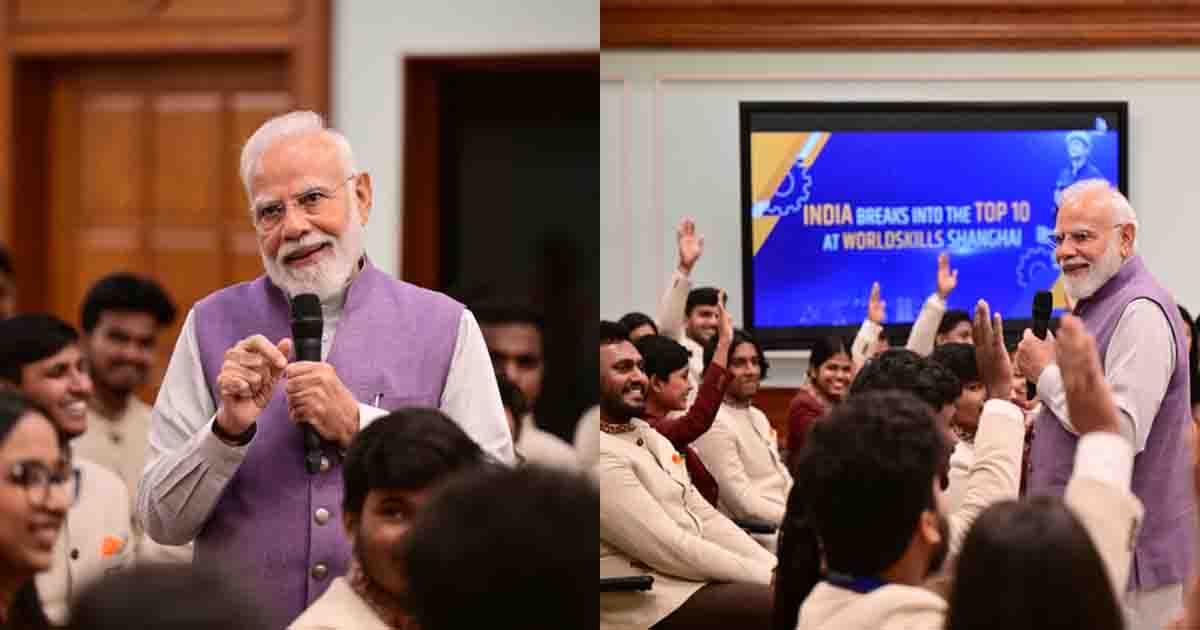
New Delhi, Oct 9: Prime Minister Narendra Modi on Friday met members of India’s contingent that delivered an impressive performance at the WorldSkills Competition Shanghai 2026, congratulating the young participants for showcasing their talent and skills on the global stage.
The interaction took place at the Prime Minister’s residence at 7, Lok Kalyan Marg, where PM Modi lauded the competitors for their achievements and encouraged them to continue excelling in their respective fields.
Sharing details of the meeting on social media, the Prime Minister praised the participants for their outstanding performance at the international skills competition and said it was a pleasure to interact with and motivate the young achievers.
The Prime Minister underlined the objective behind establishing a separate Ministry for Skill Development and said that the importance of skill training institutions is no less than that of IITs and IIMs. He encouraged the participants to share their experiences and suggestions with the government to help improve India’s skill training system.
India recorded its best-ever performance at the 48th WorldSkills Competition, held from September 22 to 27 at the National Exhibition and Convention Center (NECC) in Shanghai. The country secured six silver medals and 20 Medallions for Excellence, finishing 10th in the overall rankings.
The latest result marks a significant improvement from the previous edition of the competition held in France’s Lyon in 2024, where India finished 13th with four bronze medals and 12 Medallions for Excellence.
The improved ranking reflects the growing capabilities of India’s skilled workforce and its rising presence in global skills competitions.
According to the Ministry of Skill Development and Entrepreneurship, the six-day event brought together more than 1,400 young competitors from nearly 70 countries and regions.
India fielded its largest-ever contingent, comprising 70 competitors, who participated in 63 skill categories spanning emerging technologies, advanced manufacturing, engineering, creative industries and specialised services.
After four days of intense competition, winners were honoured during the closing ceremony held in Shanghai on September 27. The event celebrated excellence in technical expertise, innovation, precision and craftsmanship, drawing participants, industry leaders, experts and international delegations from across the world.
India’s participation in WorldSkills Shanghai 2026 was coordinated by the National Skill Development Corporation (NSDC) under the Ministry of Skill Development and Entrepreneurship, with support from Sector Skill Councils, industry partners, training institutions and technical experts.

New Delhi, Oct 9: PhonePe and the Digital Publisher Content Grievances Council (DPCGC), a self-regulatory body under the aegis of the Internet and Mobile Association of India (IAMAI), have announced the signing of a Memorandum of Understanding (MoU).
The partnership aims to facilitate seamless SRO certification for all merchants, champion regulatory compliance, and drive merchant education for all merchant partners onboarding on PhonePe’s Payment Gateway.
Under applicable Indian regulations, over-the-top (OTT) or Publishers of Online Curated Content (OCCPs) are legally required to be members of a recognised self-regulatory organisation (SRO) for grievance redressal.
Pioneering a compliance-first approach, PhonePe enforces this regulatory requirement as a mandatory prerequisite during its merchant onboarding process.
DPCGC is a Level II SRO formed under the IT Rules, 2021, which is registered with the Ministry of Information and Broadcasting.
Through the MoU, PhonePe and DPCGC aim to drive merchant education and awareness.
Recognising the limited awareness among OTT/OCCPs regarding SRO compliance, the joint initiative will educate both existing and prospective merchants on regulatory requirements and seamlessly facilitate their SRO certification through DPCGC.
The partnership further strengthens PhonePe’s position as a trusted, robust, and compliant payment partner tailored for the rapidly growing OTT ecosystem.
Dr. Subho Ray, President of IAMAI, said, “DPCGC, established under the IT Rules, is committed to efficiently addressing concerns and grievances related to OTT platforms through self-regulation.
This collaboration between DPCGC and PhonePe will foster greater alignment and adherence to the Code of Ethics, expanding the reach of self-regulation and strengthening its benefits for both the industry and its users.”
Deep Agrawal, Head of Payments at PhonePe, added, “At PhonePe, compliance and trust are at the core of everything we build. The OTT segment has exploded in terms of coverage and penetration over the last couple of years.
Agrawal further stated that our MoU with DPCGC will allow us to educate the OTT platforms to seamlessly drive higher awareness about customer grievance redressal, reinforcing PhonePe as the most trusted & compliant growth partner for India’s booming OTT ecosystem.”

The Directorate of Revenue Intelligence (DRI) has seized 1.3 kg of gold biscuits worth Rs 1.8 crore in a smuggling operation involving luggage trolleys. Two accused transported the gold from Kuala Lumpur, Malaysia, and concealed the biscuits by sticking them to luggage trolleys.
The accused allegedly targeted unsuspecting passengers who picked up these trolleys and crossed customs. They reportedly followed the passengers and later retrieved the gold from the trolleys, using innocent travellers as unwitting carriers without their knowledge.
Acting on intelligence inputs, DRI officials seized the gold. The investigation is expected to focus on the alleged smuggling network and the modus operandi used to transport the gold through unsuspecting passengers.
Earlier, on October 4, the DRI had seized a cumulative 15.59 kg of narcotic drugs, including amphetamine, cocaine and heroin, in three separate intelligence-led operations, the Finance Ministry said. Five people were arrested under the provisions of the Narcotic Drugs and Psychotropic Substances (NDPS) Act, 1985.
In one operation, the DRI, in coordination with the Central Bureau of Narcotics (CBN), had intercepted a car suspected of carrying amphetamine at the Ujjain-Dewas Toll Plaza in Madhya Pradesh.
When signalled to stop, the driver had allegedly broken through the barricade and sped away. The officers pursued the vehicle in a high-speed chase lasting approximately 1.5 hours before intercepting it near Bicholi Mardana in Indore.
A detailed search of the vehicle led to the discovery of the contraband concealed inside the spare tyre mounted on the rear door of the Thar, according to the statement.
Earlier, on October 2, the DRI’s Mumbai Zonal Unit had busted an international syndicate involved in smuggling 8.5 kg of gold worth Rs 12.65 crore into India and trafficking 1,168 carats of diamonds worth Rs 1.09 crore out of the country to Dubai through Chhatrapati Shivaji Maharaj International Airport (CSMIA).
The DRI had arrested eight members of the syndicate for their alleged involvement in trafficking valuables into and out of the country.

Demolition drive carried out in Delhi Seemapuri following building collapse

Telangana to cancel licences of shops selling synthetic manja

Bihar police driver recruitment aspirants protest in Patna, seek filling of vacant women’s quota posts

Pak drug cartels turn to India-made meth labs in Kerala, TN as busts choke smuggling routes

SC orders four-week deadline to link accident, vehicle, insurance databases

Gift to President Putin part of PM Modi bid to globally display India’s heritage

PM Modi’s warm camaraderie with Putin, Xi on full display at BRICS Summit

INDIA bloc begins protest march against ECI

Complaint against Netflix & Mukesh Chhabra for inappropriate language on ‘India’s Got Latent 2’

Maha Congress stages agitation against Gyanesh Kumar
-

 Crime4 years ago
Class 10 student jumps to death in Jaipur
-

 Maharashtra2 years ago
Mumbai Local Train Update: Central Railway’s New Timetable Comes Into Effect; Check Full List Of Revised Timings & Stations
-

 Maharashtra2 years ago
Mumbai To Go Toll-Free Tonight! Maharashtra Govt Announces Complete Toll Waiver For Light Motor Vehicles At All 5 Entry Points Of City
-

 Maharashtra2 years ago
False photo of Imtiaz Jaleel’s rally, exposing the fooling conspiracy
-

 National News2 years ago
Ministry of Railways rolls out Special Drive 4.0 with focus on digitisation, cleanliness, inclusiveness and grievance redressal
-

 Maharashtra2 years ago
Maharashtra Elections 2024: Mumbai Metro & BEST Services Extended Till Midnight On Voting Day
-

 National News2 years ago
J&K: 4 Jawans Killed, 28 Injured After Bus Carrying BSF Personnel For Poll Duty Falls Into Gorge In Budgam; Terrifying Visuals Surface
-

 Crime2 years ago
Baba Siddique Murder: Mumbai Police Unable To Get Lawrence Bishnoi Custody Due To Home Ministry Order, Says Report