
International News
Int’l campaign to protect Palestinians set to launch: Abbas


Palestinian President Mahmoud Abbas has announced that a broad campaign to provide international protection for “the defenceless Palestinian people is about to launch”.
Abbas made the remarks during a joint meeting of the Palestine Liberation Organization (PLO) executive committee and his Fatah movement’s central committee that he chaired, Xinhua news agency reported.
“We will launch the campaign to put everyone before their legal and historical responsibilities to provide international protection for the defenceless Palestinian people in the West Bank, East Jerusalem, and Gaza,” Abbas said at the meeting.
He added that the world’s continued silence and turning its back on Israel’s crimes “can never be accepted.”
Abbas said that the campaign comes “to confront the racist practices of Israel, and in light of the formation of an extreme right-wing government”, adding that the time has come for the Palestinian people “to enjoy justice, fairness, and protection”.
Abbas’s statements come amid the ongoing tension in the West Bank between the Israeli army and the Palestinians.
According to official Palestinian statistics, more than 200 Palestinians have been killed since January.
Meanwhile, since March, 27 Israelis have been killed in operations carried out by Palestinians in Israel.
Abbas considered the death of the sick prisoner, 50-year-old Nasser Abu Hamid, in an Israeli hospital Tuesday morning “an assassination and a full-fledged war crime”, as Israel “prevented his struggling mother and all his family members from visiting him throughout the years of his illness”.
The Palestinian Prisoners’ Club Association, a non-government Palestinian organization, said that Abu Hamid, from a Palestinian refugee camp near Ramallah, died in an Israeli hospital after years of suffering from cancer.


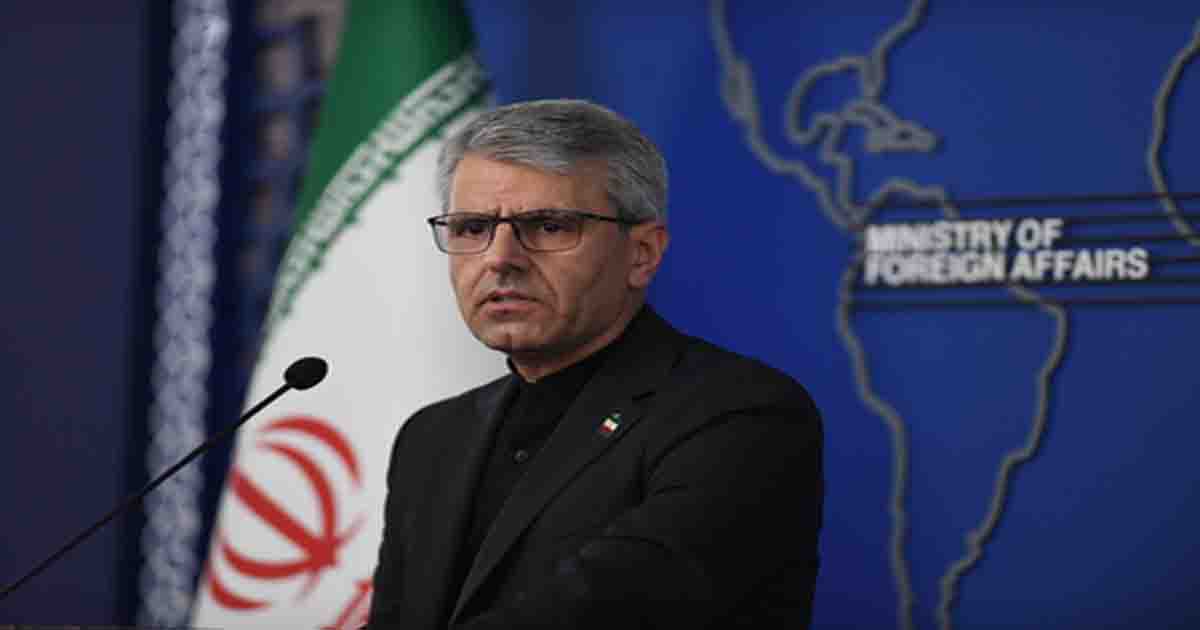
Iran on Monday said that security in the Strait of Hormuz and the region can be restored within the “shortest possible time” if the US fulfils its commitments and meets Tehran’s conditions, local media reported.
Iran’s Foreign Ministry spokesperson Esmaeil Baghaei made these remarks at his weekly press briefing in Tehran on Monday while responding to a question regarding Foreign Minister Abbas Araghchi’s statement on reopening the strait within two hours if the US fulfilled its commitments, Iran’s state-run news agency IRNA reported.
Baghaei clarified that Iran remains committed to fulfilling its obligations and, if the other side meets the relevant conditions, will be able to implement its commitments “in the shortest possible time”.
“This emphasis means that we are serious about fulfilling our commitments, upholding our rights and maintaining the conditions we have set. If the American side fulfils its commitments, security can be restored to the Strait of Hormuz and the region in the shortest possible time. This does not mean overlooking the complexities surrounding the issue; rather, it simply underscores that the Islamic Republic of Iran knows what it wants, understands the rights of the Iranian people and their full scope, and will under no circumstances back down on this matter,” he noted.
The spokesperson stressed Iran is not insisting on unusual demands but on part of the country’s rights.
“All these cases are neither new preconditions nor demands outside the framework of Iran’s rights. They are an inseparable part of the Iranians’ rights,” he added.
He also mentioned that there has been no decision communicated to the Foreign Ministry regarding the withdrawal from the Non-Proliferation Treaty (NPT). Iran has been a member of the NPT since 1970.
Baghaei also answered questions regarding US media reports portraying dams in Iran as military facilities and Iran’s response in the event of an attack on these installations; he said: “They will not dare to do such a thing.”

Ukrainian forces sank Russian corvette Merkury and hit the Russian dry cargo vessel MV ANGARA off the coast of Libya using seven Ukrainian-made naval drones, Ukraine’s President Volodymyr Zelensky said on Monday.
“An exemplary Ukrainian operation in response to Russia’s war. I thank the warriors of the Security Service of Ukraine and all our Defence Forces of Ukraine who took part in carrying out these tasks. I received detailed briefings on the operation’s steps yesterday and today – the targets we set were achieved,” Zelensky posted on X.
The Ukrainian President said the corvette, which was sunk despite the enemy’s efforts to counter the attack, was one of Russia’s newest ships.
“It all took place off the coast of Libya. Our warriors deployed seven Ukrainian-made naval drones. Despite all the enemy’s efforts to counter the attack, the Russian corvette Merkury was sunk. It’s one of their newest ships, commissioned in 2023, during the full-scale war,” he said.
According to Zelensky, a Ka-27 combat helicopter was also destroyed along with the corvette.
“Our second target was the Russian dry cargo vessel MV ANGARA, which the enemy used to transport weapons. Result: target hit,” the Ukrainian President stated.
Stating that Ukraine would continue its operations, Zelensky said, “We continue our operations in designated waters. We are responding to Russia’s aggression. We are developing Ukrainian weapons. Glory to Ukraine!”
Meanwhile, the Russian Ministry of Defence said that over the past 24 hours, Russian troops struck Ukrainian Armed Forces drone production and storage sites, air traffic control radar stations, and temporary deployment points for Ukrainian armed forces and foreign mercenaries in 142 districts, Russian news agency TASS reported.
“Operational-tactical aviation, strike unmanned aerial vehicles, missile forces, and artillery of the Russian Armed Forces struck energy and transport infrastructure facilities used by the Ukrainian Armed Forces, production and storage sites for unmanned aerial vehicles, ground-based robotic systems, ammunition depots, military airfields, air traffic control radar stations, as well as temporary deployment sites for Ukrainian armed forces and foreign mercenaries in 142 districts,” the ministry said.
Business
Viksit Bharat and Samunnat Nepal: 10-pillar roadmap to reshape, deepen ties between India and Nepal

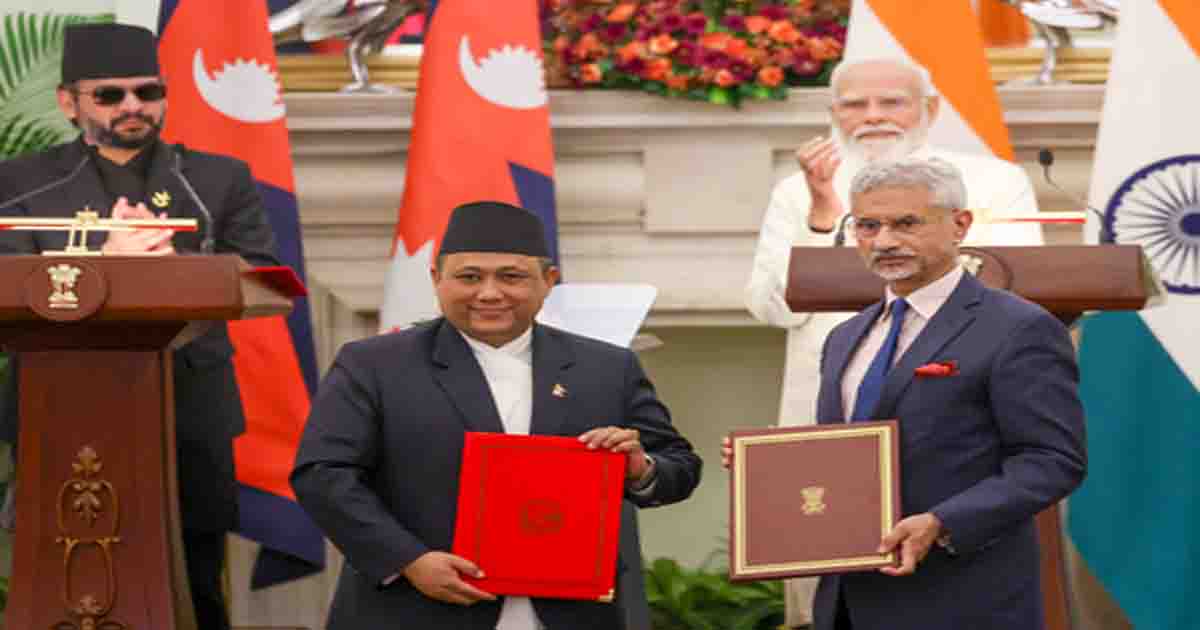
Nepal and India on Monday unveiled a 10-pillar joint vision aimed at reshaping their bilateral partnership and providing a roadmap for future cooperation.
The 10 pillars of the joint vision cover economic and development cooperation, physical and digital connectivity, energy and water resources, climate resilience, good governance, technology and innovation, education and skills development, sports, culture and tourism, health, and agriculture.
Titled ‘Viksit Bharat and Samunnat Nepal: Re-imagining the Partnership’, the joint vision was adopted during Nepali Prime Minister Balendra Shah’s two-day State Visit to India at the invitation of his Indian counterpart, Prime Minister Narendra Modi.
The first pillar of the joint vision document is ‘Comprehensive Economic and Development Partnership’. Under this pillar, the two countries agreed to review existing frameworks and agreements governing trade and investment to facilitate a more comprehensive economic partnership. They will also explore new transit connectivity arrangements and air routes to improve access between the two countries.
The document states that India’s national vision of ‘Viksit Bharat 2047’ and Nepal’s aspiration of ‘Samunnat Nepal’ have several complementarities that could be leveraged to further strengthen the extensive economic ties between the neighbouring countries.
Under this pillar, the two countries will cooperate in establishing cross-border special economic zones and industrial parks near the Nepal-India border. These zones are expected to promote export-oriented manufacturing and strengthen links with regional supply chains in manufacturing and other processing industries.
Under the second pillar, titled ‘Physical and Digital Connectivity’, the two sides will also cooperate in developing information technology parks, while India will encourage investment in Nepal’s priority sectors.
The joint vision document says that arrangements will be pursued to enhance investor confidence and improve the ease of doing business in Nepal.
Nepal and India have agreed to accelerate several cross-border connectivity projects, including railway links, integrated check posts, petroleum pipelines and digital payment systems, with a view to strengthening economic cooperation and people-to-people ties.
The third pillar is ‘Energy, Water Resources and Climate Resilience’. The two countries have agreed to strengthen cooperation in hydropower development, cross-border electricity trade, water resources management and climate resilience, with a focus on promoting investment, accelerating multipurpose projects and improving disaster preparedness.
Good Governance is the fourth pillar of the joint vision document. Under this pillar, the two countries have agreed to strengthen cooperation through the exchange of digital technology, technical expertise and best practices, while expanding training opportunities for civil servants and cooperation between government institutions.
Under the agreement, India and Nepal will exchange technical expertise and best practices in digital public infrastructure, covering digital identity, payment systems and e-governance. Such cooperation will be pursued in accordance with globally recognised principles of digital sovereignty and data protection and will support the implementation of Nepal’s Digital Nepal Framework.
The fifth pillar is ‘Technology, Space and Innovation’. Under this pillar, the two countries have agreed to deepen cooperation in technology, innovation and space research, including plans to establish a Startup Centre of Excellence in Kathmandu and a Digital Nomads and Innovation Hub in Pokhara, in western Nepal.
The sixth pillar is ‘Education and Skill Development’. Under this pillar, the two countries have agreed to strengthen cooperation in education and skill development, including exploring the establishment of a branch campus of an Indian Institute of Technology (IIT) in Nepal and expanding scholarship opportunities for Nepali students in emerging academic disciplines.
Sports is the seventh pillar of the joint vision. Nepal and India have agreed to strengthen cooperation in sports development, including establishing a national cricket coaching and training academy in Nepal with Indian support and expanding opportunities for Nepali players to train in India.
Under the agreement, India will support the establishment of a national cricket coaching and training academy in Nepal, alongside the development of cricket infrastructure at both national and provincial levels.
Players from Nepal’s provincial cricket teams will also be given opportunities to train at national cricket training academies in India.
Nepal and India have agreed to strengthen cultural and tourism cooperation by developing cross-border religious tourism circuits, organising annual youth cultural festivals and promoting collaboration between universities and tourism entrepreneurs.
These initiatives are outlined under the eighth pillar, titled ‘Culture and Tourism’. The two countries will work together to develop religious tourism circuits and new destinations by linking important cultural and pilgrimage sites in both countries.
The proposed initiatives include a Ramayana circuit connecting Janakpur in Nepal with Ayodhya in India; a Buddhist circuit linking Lumbini, Bodhgaya, Sarnath and Kushinagar; and a Shiv-Shakti circuit connecting Kathmandu’s Pashupatinath Temple with Varanasi. Sister-city agreements will also be pursued to strengthen these links.
Under the ninth pillar, ‘Health’, the two countries have agreed to strengthen cooperation in the health sector, including upgrading Nepal’s National Medical Laboratory, establishing Jan Aushadhi Kendras to provide affordable medicines and expanding healthcare infrastructure across the country.
The 10th pillar is ‘Agriculture’. Under this pillar, the two countries have agreed to strengthen cooperation in agriculture and livestock development, including establishing an agro-industrial park in Chitwan with grant assistance from India to promote value addition to Nepali agricultural products.
The proposed agro-industrial park will aim to increase the value of agricultural products by supporting processing and other value-addition activities. The document states that India will provide grant assistance for its establishment.
The two countries have also agreed to expedite the implementation of the 2026–2030 Work Plan between India’s Indian Council of Agricultural Research (ICAR) and Nepal’s Nepal Agricultural Research Council (NARC).
As part of efforts to strengthen Nepal’s agricultural and livestock sectors, India will organise specialised training programmes for Nepali government officials, farmers and other agriculture-related professionals.
The two countries have also agreed to activate a High-Level Monitoring Group to accelerate the implementation of bilateral projects and initiatives. The mechanism will meet at least once every six months.
The monitoring group will be led by Nepal’s Foreign Secretary and India’s Ambassador to Nepal. It will oversee the implementation of projects and initiatives envisaged under the joint vision document and facilitate the necessary clearances and approvals to expedite their execution.
The two Prime Ministers also agreed that the monitoring group will submit its reports to the India-Nepal Joint Commission, which is co-chaired by the foreign ministers of both countries.

MoSPI briefs data users on new series of GDP, CPI and IIP

Security in Hormuz can be restored if US fulfils commitment: Iran

Tracking drug addicts in Mumbai now easier: Advanced van deployed at Mahalaxmi concert; action taken against 12 drug users.

Public hearing on proposed UCC in Thane; Muslim delegations strongly protest.

Mumbai self-styled police arrested for duping foreign nationals

Congress trying to protect 3 crore Bangladeshi infiltrators in voter list: HM Shah

Red Fort car blast probe exposes blueprint for spread of terror modules across India

Trump flags Iran targets as talks continue

‘Conspiracy, not accident’: NCP on Ajit Pawar death

BJP, Shiv Sena slam Mallikarjun Kharge for terming Diwali ‘Khushiyon ka Eid’
-

 Crime4 years ago
Class 10 student jumps to death in Jaipur
-

 Maharashtra2 years ago
Mumbai Local Train Update: Central Railway’s New Timetable Comes Into Effect; Check Full List Of Revised Timings & Stations
-

 Maharashtra2 years ago
Mumbai To Go Toll-Free Tonight! Maharashtra Govt Announces Complete Toll Waiver For Light Motor Vehicles At All 5 Entry Points Of City
-

 Maharashtra2 years ago
False photo of Imtiaz Jaleel’s rally, exposing the fooling conspiracy
-

 National News2 years ago
Ministry of Railways rolls out Special Drive 4.0 with focus on digitisation, cleanliness, inclusiveness and grievance redressal
-

 Maharashtra2 years ago
Maharashtra Elections 2024: Mumbai Metro & BEST Services Extended Till Midnight On Voting Day
-

 National News2 years ago
J&K: 4 Jawans Killed, 28 Injured After Bus Carrying BSF Personnel For Poll Duty Falls Into Gorge In Budgam; Terrifying Visuals Surface
-

 Crime2 years ago
Baba Siddique Murder: Mumbai Police Unable To Get Lawrence Bishnoi Custody Due To Home Ministry Order, Says Report