
Politics
Interim order for ‘Shivling’ protection to continue, suit transferred to district judge: Supreme Court

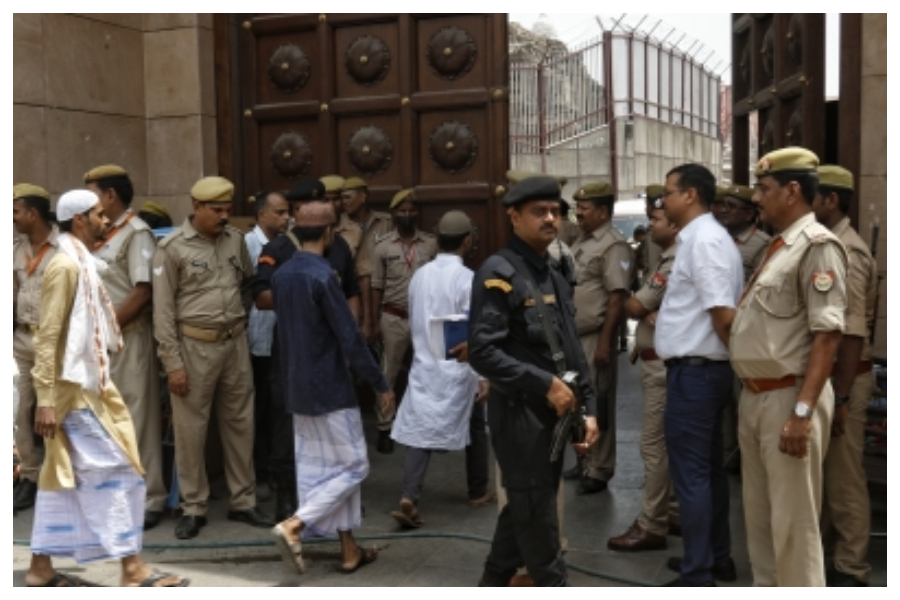
The Supreme Court on Friday said its interim order of May 17, directing protection of the ‘Shivling’, which was purportedly discovered during the survey in Varanasi’s Gyanvapi mosque, without impeding the right of Muslims to offer namaz there, would continue, pending disposal of application challenging maintainability of the suit by Hindu parties, and thereafter for a period of 8 weeks.
A bench, headed by Justice D.Y. Chandrachud and comprising Justices Surya Kant and P.S. Narasimha, said taking in view of complexity of the issues involved in the suit and the sensitivity, the suit before Civil Judge, Senior Division, Varanasi should be tried before a senior and experienced judicial officer of the Uttar Pradesh Higher Judicial Service.
The top court directed the transfer of the case pending before Civil Judge, Senior Division to the District Judge Varanasi for trial.
The top court also asked Varanasi’s District Magistrate to consult with parties to ensure that appropriate arrangements are made for ‘wuzu’ (pre-prayer abolutions).
Senior advocate Huzefa Ahmadi, representing the Committee of Management Anjuman Intezamia Masajid Varanasi, contended that the status quo of 500 years had already changed by sealing the premises and added that the status quo, which existed before, must continue.


Crime
Suspicious passenger apprehended at Delhi Jama Masjid Metro Station after trying to flee during screening

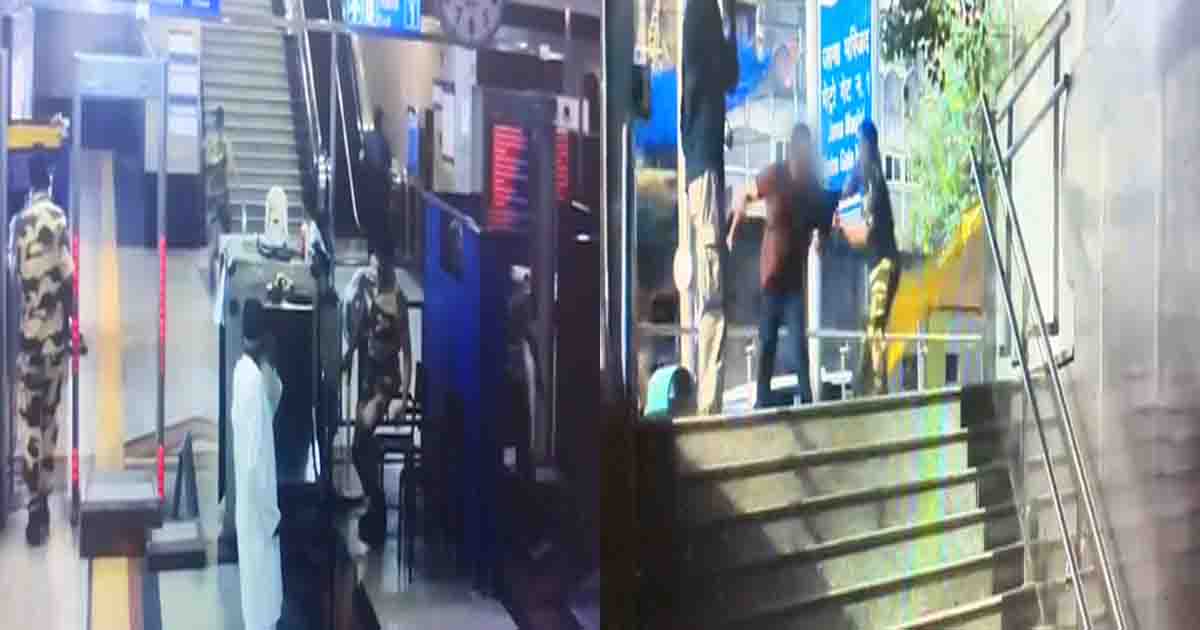
Alert personnel of the Central Industrial Security Force (CISF) apprehended a passenger at Delhi’s Jama Masjid Metro Station after he allegedly attempted to flee when a suspicious object was detected during his baggage screening.
According to the CISF, the incident came to light when the passenger’s baggage was being screened through an X-ray Baggage Inspection System (XBIS). During the examination, personnel noticed a dense and suspicious object on the scanner screen.
Sensing something unusual, the security personnel attempted to examine the matter further. However, the passenger allegedly tried to escape from the screening area, according to CISF.
Displaying promptness and alertness, CISF personnel immediately chased him and apprehended him near the station’s exit gate before he could leave the premises.
A subsequent examination of his belongings led to the recovery of an unidentified semi-solid substance concealed inside a stitched portion of his undergarment, the CISF said.
According to reports, the passenger reportedly claimed to be a non-resident Indian (NRI) residing in Kuala Lumpur, Malaysia.
Following the recovery, the CISF handed over the passenger, along with his belongings and the suspected substance, to the police for further investigation.
The nature of the semi-solid substance and the reason behind its concealment remain unclear. Police are investigating the matter to establish the identity of the substance and determine the circumstances surrounding the incident.
The CISF’s swift intervention prevented the passenger from leaving the station without further examination.
The force said its personnel remain alert during the screening of passengers and their baggage to ensure compliance with security protocols and prevent any potential threat to metro commuters. Further action in the case will depend on the findings of the investigation, said the police officials.
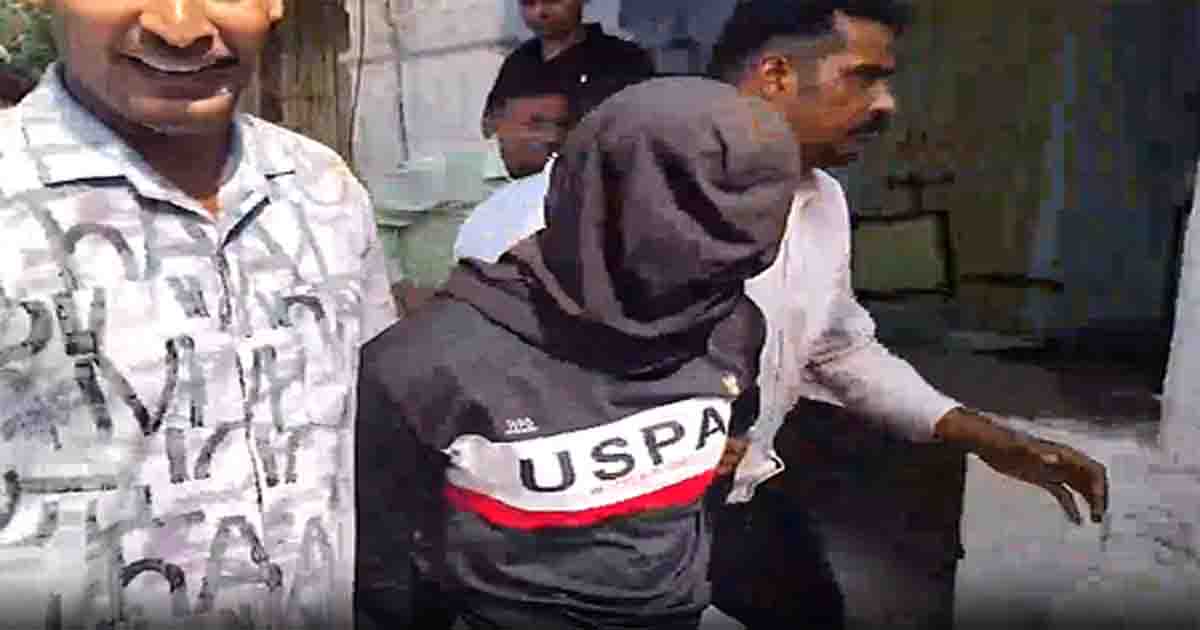
The reported involvement of a man identified as Hrithik Kumar alias Roshan, a native of Bihar’s Begusarai district, in a shooting case linked to actor Tiger Shroff has triggered concern among his family members.
However, his identity as the person arrested in connection with the case remains unconfirmed, and his family has denied that the person shown in a circulated photograph is their son.
The Begusarai police have not issued an official statement confirming the alleged link.
Meanwhile, local police have begun inquiries to establish the man’s identity and verify his family background and address.
According to family members, Hrithik is the son of Ramu Mahto. His ancestral home is in Badalpura village under the Matihani police station area, while his family has been living in Dumri under the jurisdiction of Singhaul police station.
The family reportedly built a house on an eight-dhur plot in Ward No. 7 of Dumri around two years ago.
The house has two shutters and an iron-grille entrance.
Hrithik’s father runs a rented shop in the Pipra area, selling food items such as litti and samosas, along with cosmetics.
The family reportedly depends primarily on the shop for its livelihood and has limited financial resources.
According to his relatives, Hrithik previously worked as a cook with a catering service in Delhi before moving to Mumbai around three months ago.
His family, however, has limited information about his employment, activities or associates in Mumbai.
Hrithik is reportedly the elder of two brothers. Family members said they had been unable to contact him for approximately 10 days, as his mobile phone remained switched off.
The emergence of his name in media reports concerning the Mumbai shooting case has heightened their anxiety.
They are now attempting to establish his whereabouts and determine whether the person mentioned in the reports is actually their son.
His mother reportedly denied recognising him in the photograph circulating in connection with the case.
The family has also said it does not possess identification documents that could help establish his identity conclusively.
Police personnel visited the family’s residence in Dumri to gather information about Hrithik’s background and recent movements.
Ganesh Shankar, station house officer of Ratanpur police station, questioned family members about his employment in Delhi, his subsequent move to Mumbai and the period during which they had been unable to contact him.
According to information attributed to SP Manish, the absence of identification documents has complicated efforts to verify the reported connection.
However, police inquiries at the family’s residence do not establish that Hrithik has been arrested or that he is the individual involved in the Mumbai firing case.
The reported Begusarai connection has generated considerable local interest, but key questions remain unanswered: where Hrithik is currently staying and whether the individual identified in media reports is actually Hrithik Kumar alias Roshan.
Until the concerned authorities officially establish the arrested person’s identity, the reported connection should be treated with caution.
The family’s denial and the absence of official confirmation mean that no definitive conclusion can be drawn at this stage.
Further clarity is expected once the police verify the individual’s identity and establish the facts surrounding the alleged connection to the Mumbai shooting case.
Maharashtra
Bollywood in the Crosshairs After Firing at Tiger Shroff; Legal Action Initiated Against Bishnoi Gang, Three Shooters Arrested
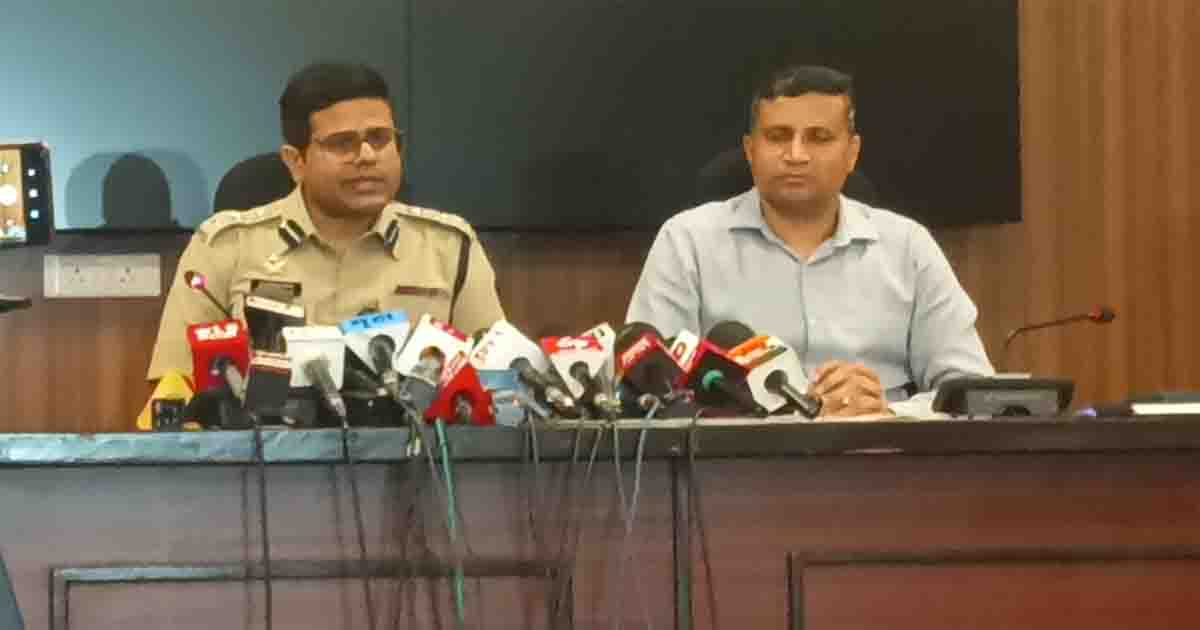
Mumbai: The Crime Branch has claimed to have solved the case involving a shooting incident targeting Tiger Shroff in the Juhu area of Mumbai. Addressing a press conference, Mumbai Crime Branch DCP Raj Tilak Roshan stated that two unidentified individuals on a motorcycle carried out the shooting. The Crime Branch received information that, following the incident, the shooters abandoned their Pulsar motorcycle at Andheri station and traveled by train toward Kota. The Crime Branch alerted the Kota police, who subsequently arrested three suspects. The police have now taken all three individuals into custody. Additionally, Anil Pandit had circulated a post online referencing the ‘Bishnoi gang,’ a matter that is currently under police investigation. Regarding the targeting of Bollywood figures by the Bishnoi gang, DCP Raj Tilak Roshan noted that action has been taken against the group—including in the earlier case involving the shooting incident at Salman Khan’s residence. In the current case, the Crime Branch has registered a case under charges of attempted murder and the Arms Act. Legal proceedings are also underway concerning the Lawrence and Anmol Bishnoi gang, with efforts being made to secure the custody of Lawrence Bishnoi. The DCP explained that comprehensive information was provided to the Kota police, as Crime Branch teams had been actively pursuing the shooters. To date, no weapons have been recovered from the suspects. Authorities are currently verifying a post circulating on social media to determine whether it originated from the Bishnoi gang, and action is being taken against those involved. The suspects spent 10 to 15 minutes surveying the scene before carrying out the shooting. One of the suspects, 22-year-old Ritik (alias Roshan), has completed his education up to the 12th grade. None of the three suspects are minors; therefore, they will all be held in custody for further interrogation. Five rounds were fired. Prior to this incident, no complaints regarding threats against Tiger Shroff had been received; the police are investigating every aspect of the case and have already begun questioning the three suspects while they remain in custody. The three individuals—Ritik (alias Roshan), Rehan Rashiduddin, and Paul Singh—have been arrested. Rehan, who previously worked as a ‘Rapido’ (ride-hailing) driver in Mumbai, eventually became a shooter. The suspects were apprehended from the general compartment of a train; they were attempting to flee toward Delhi and Nepal. DCP Raj Tilak Roshan stated that, in light of their involvement in past shooting incidents and their ties to the Bishnoi gang, the MCOCA (Maharashtra Control of Organised Crime Act) has been invoked against these shooters.

Suspicious passenger apprehended at Delhi Jama Masjid Metro Station after trying to flee during screening

Tiger Shroff attack: Bihar family denies accused is their son

Bollywood in the Crosshairs After Firing at Tiger Shroff; Legal Action Initiated Against Bishnoi Gang, Three Shooters Arrested

E-Office System Implemented in Mumbai Municipal Corporation; 14,000 Users to Be Integrated in Phases to Make Administration More Transparent and Efficient

Bihar MLC election: Three FIRs filed against Anant Singh, Jan Suraaj candidate Anuj Singh

Rahul, Cong ecosystem want to force regime change: BJP after Neha Bora praises B’desh Gen-Z protest

BJP pays tribute to ex-President Abdul Kalam, recalls his enduring influence on generations of India’s youth

Attack on democratic rights: INDIA Bloc leaders on detentions of anti-ECI protestors

INDIA bloc begins protest march against ECI

Maha Congress stages agitation against Gyanesh Kumar
-

 Crime4 years ago
Class 10 student jumps to death in Jaipur
-

 Maharashtra2 years ago
Mumbai Local Train Update: Central Railway’s New Timetable Comes Into Effect; Check Full List Of Revised Timings & Stations
-

 Maharashtra2 years ago
Mumbai To Go Toll-Free Tonight! Maharashtra Govt Announces Complete Toll Waiver For Light Motor Vehicles At All 5 Entry Points Of City
-

 Maharashtra2 years ago
False photo of Imtiaz Jaleel’s rally, exposing the fooling conspiracy
-

 National News2 years ago
Ministry of Railways rolls out Special Drive 4.0 with focus on digitisation, cleanliness, inclusiveness and grievance redressal
-

 Maharashtra2 years ago
Maharashtra Elections 2024: Mumbai Metro & BEST Services Extended Till Midnight On Voting Day
-

 National News2 years ago
J&K: 4 Jawans Killed, 28 Injured After Bus Carrying BSF Personnel For Poll Duty Falls Into Gorge In Budgam; Terrifying Visuals Surface
-

 Crime2 years ago
Baba Siddique Murder: Mumbai Police Unable To Get Lawrence Bishnoi Custody Due To Home Ministry Order, Says Report