
Maharashtra
Insights On Mumbai Redevelopment: How The New MahaRERA Consent Waiver Speeds Up Projects

On September 9, 2025, the Bombay High Court issued a ruling that removes one of the biggest hurdles in Mumbai’s redevelopment landscape. The Court held that new developers do not need two-thirds consent from allottees of a terminated developer to register with the Maharashtra Real Estate Regulatory Authority (MahaRERA). This clarification could unlock thousands of stalled projects, paving the way for faster redevelopment across the city.
Redevelopment has long been central to addressing Mumbai’s housing crunch. The city faces a shortage of nearly 400,000–450,000 units, with over 19,000 cessed buildings and 25,000 dilapidated structures at risk. Mumbai also leads the country in stalled projects, with more than 2,000 delayed, often because of regulatory bottlenecks. By removing the consent requirement, the Court has created a clearer, quicker pathway for societies and developers to move forward.
The ruling arose from a petition by Tuvin Constructions LLP against MahaRERA’s insistence on consent from allottees of the terminated developer in the Vilas Vaibhav Co-operative Housing Society project.
The society’s original 2014 agreement with Aditya Developer was terminated in 2023 by arbitral award.
In October 2024, the society appointed Tuvin as the new developer.
When Tuvin sought MahaRERA registration in March 2025, consent under Section 15 of RERA was demanded.
The Court, led by Justices Riyaz Chagla and Farhan Dubash, held there was no privity of contract between the new developer and the old allottees, directing MahaRERA to process registration without delay.
The judges emphasized: once an erstwhile developer’s rights are terminated, old allottees cannot extend claims to the new developer.
Consent Not Needed: No two-thirds consent required from old allottees once a termination is legally valid.
Society-Led Decisions: Registration can proceed with the society’s new agreement.
Legal Consistency: Court reaffirmed that there is no contractual link between the new developer and prior purchasers.
Immediate Effect: Request for a stay was declined; registration to move forward promptly.
Redevelopment is already reshaping Mumbai: by May 2024, over 31,000 projects were approved, with 15–25% of registrations tied to redevelopment. Yet, MahaRERA has suspended 4,800 projects for non-compliance, while 7,500 cases remain pending. Many of these stem from consent disputes—the very issue addressed by this ruling.
For societies, the ruling brings:
Faster timelines: Restart projects in weeks instead of months.
Stronger bargaining power: Better terms on carpet area, amenities, and possession timelines.
Legal clarity: Provided the termination is sound (e.g., arbitral award), fresh registration no longer hinges on old allottee consent.
Important: This does not change the rule that 51% member approval is required at the initial redevelopment stage. The ruling applies only to post-termination registrations.
Claims by purchasers under the old developer remain with that developer.
The decision prevents viable projects from being trapped in consent disputes, increasing the supply of redeveloped housing stock.
Yes, where a previous developer’s rights are legally terminated and a new developer is appointed.
Societies must pass a resolution, sign a new development agreement, and file Form A for MahaRERA registration—no old allottee consents needed.
Yes. By removing one of the most contentious hurdles, the ruling should significantly cut timelines for many stalled projects.
Absolutely. Full disclosure, adherence to timelines, and regulatory transparency remain mandatory.
This verdict marks a turning point for Mumbai’s redevelopment journey. By streamlining the consent process, it ensures that societies, developers, and ultimately homebuyers benefit from faster, fairer redevelopment.

Maharashtra
Mumbai: Fraudster targeting senior citizens at ATM centers arrested; 25 ATM cards and cash recovered.


Mumbai: Police has exposed the accused who came to Mumbai from Odisha and cheated the elderly from the ATM machine on the pretext of withdrawing money from the ATM machine. He was wanted for the last four years. Dandoshi police have also claimed to arrest him. According to the details, the complainant Vishwas Sadanand, 51, filed a complaint that when he went to withdraw money from the ATM center in Malad, a suspect withdrew Rs 40,000 from the ATM against his will. In this case, the police registered a case on the complaint of the complainant. The police examined 60 to 70 CCTV footage in this case and then on the basis of this footage and the information of the informant, the police took Krishna Chandra Acharya into custody from Naigaon and during his search, 25 ATM cards and cash were recovered from his possession. The police arrested the accused and presented him in the court. The court has ordered his remand. In this case, after his arrest, four more cases were revealed against him, according to the police. A total of four cases have been registered against him in Dandoshi and Kasturba Marg and he is wanted in these too. This action was taken on the instructions of Mumbai Police Commissioner Devin Bharti and DCP Mahesh Chamte had issued orders to arrest this accused. This accused used to commit such crimes in Mumbai, Thane, and Odisha. The police is investigating this matter further.
Maharashtra
Mumbai Metro 2B Inauguration On April 3: Know Route & How Corridor Will Help Ease Congestion & Improve Connectivity Between Chembur & Mankhurd
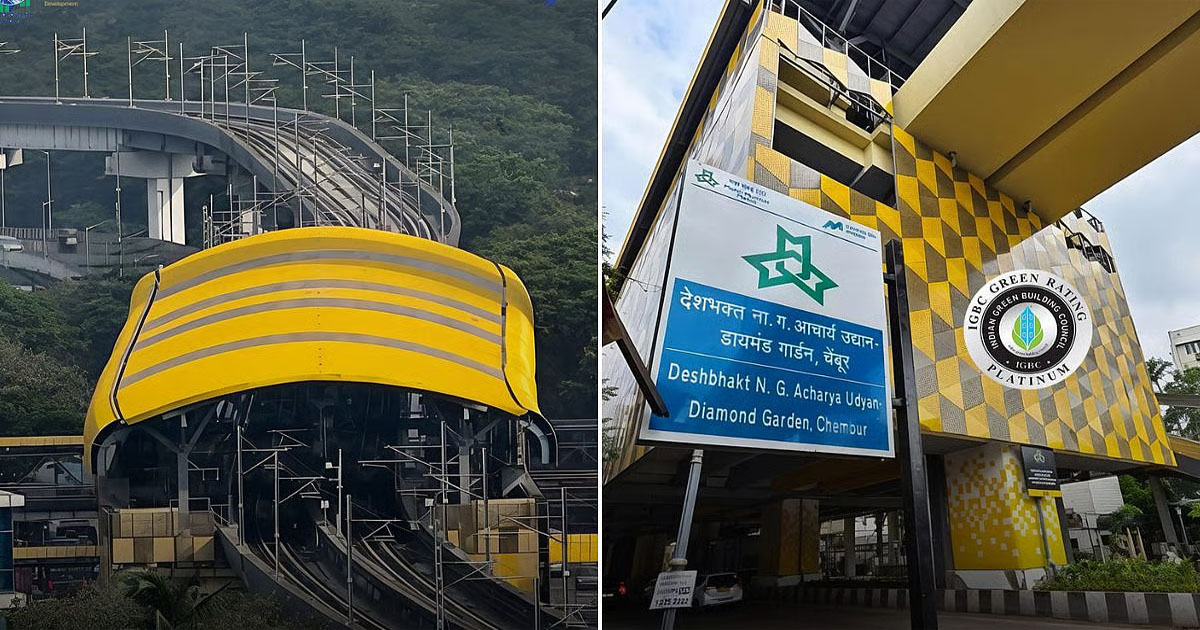
Mumbai: In a major relief for residents of Mankhurd and Chembur, the first phase of Mumbai Metro Line 2B is set to be inaugurated on April 3. The residents have long demanded the opening of the 5.4-km stretch, which is set to ease congestion and improve connectivity.
The Phase I section of the corridor covers a 5.4-km stretch between Diamond Garden in Chembur and Mandale in Mankhurd, comprising five stations: Diamond Garden, Shivaji Chowk, BSNL Metro, Mankhurd and Mandale.
The entire 23.6-km elevated Metro Line 2B corridor, with 20 stations, will connect several major transport systems, including the Western and Eastern Express Highways, suburban railway networks, the Monorail and other metro corridors such as Mumbai Metro Line 2A, Mumbai Metro Line 3 and Mumbai Metro Line 4. Once the corridor is fully operational, it is expected to reduce travel time along the route by up to 75 per cent.
The route between Chembur and Mankhurd has witnessed severe traffic jams, especially during peak hours. The evening rush between Chembur and Mankhurd is expected to ease, bringing relief to office-goers, students, and senior citizens alike. In Chembur, with the opening of the stretch, connectivity to popular locations such as Diamond Garden, K Star Mall, St. Anthony’s High School, RCF Colony, the Fine Arts Society, and Chembur Railway Station will become easier.
Earlier in the day, Metropolitan Commissioner Dr Sanjay Mukherjee, IAS, also conducted an on-ground inspection of the corridor infrastructure, reviewing safety measures and operational preparedness. Talking to X, Mukhejee added that the corridor with 5 modern stations is set to transform mobility in Mumbai’s eastern suburbs — faster, greener, and smarter connectivity for lakhs of Mumbaikars.
Maharashtra
Mumbai Local Train Tragedy: Fatal Accident Reported At Bhayandar Station’s Platform No 1 – Disturbing Video Surfaces
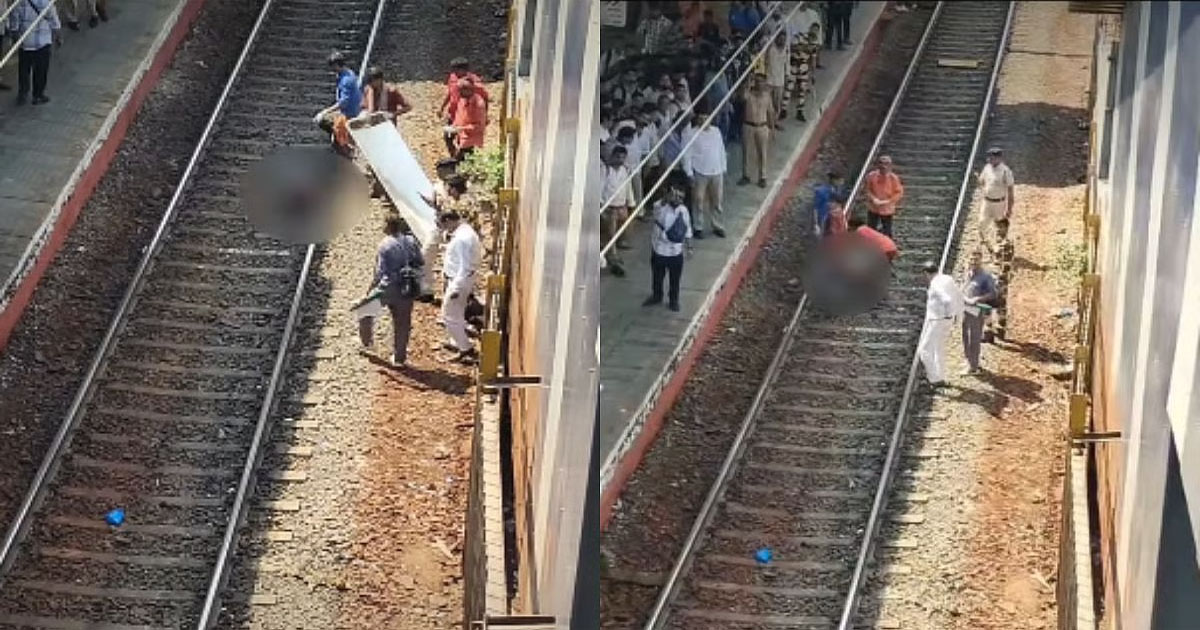
Mira-Bhayandar: In a tragic incident, an individual was hit by a suburban train at Bhayandar Station’s Platform No. 1 on Tuesday morning. The incident took place at 10:40 am when the deceased was reportedly crossing the tracks to catch the train during peak-hour travel. The victim was hit by the local train, following which he fell under the train and died.
Visuals shared by Gems of MBMC showed the Railway staff rushed to the scene and conducted a rescue operation. Currently, there is no information on the identity of the individual.
Just a few days back, a 39-year-old man allegedly died after being run over by a local train at Ghatkopar railway station. According to GRP, the incident occurred at around 12:35 pm on March 27 on platform number 4, on the Kalyan-bound fast track. The victim was hit by a fast local train (S-24), following which he fell under the train and sustained severe injuries.
The on-duty station master immediately informed police constable Chavan and arranged for the injured man to be rushed to Rajawadi Hospital in Ghatkopar East for treatment. However, doctors at the hospital examined him and declared him dead before admission at around 1:26 pm.

Japan deploys long-range counterstrike missiles for 1st time despite opposition

Mumbai: Fraudster targeting senior citizens at ATM centers arrested; 25 ATM cards and cash recovered.

Mumbai Metro 2B Inauguration On April 3: Know Route & How Corridor Will Help Ease Congestion & Improve Connectivity Between Chembur & Mankhurd

Gold loans top retail credit market in India, account for 36 pc volume: Report

Mumbai Local Train Tragedy: Fatal Accident Reported At Bhayandar Station’s Platform No 1 – Disturbing Video Surfaces

Married Mumbai Woman Mocked In Andheri Society Over ‘Lift Kissing’ CCTV Video, Files Police Complaint

LPG Crisis In Maharashtra: Cyber Crime On Rise Amid Shortage, 2 Women Lose ₹4 Lakh In ‘Gas Update’ Online Scam In Kalyan-Dombivli

Mahayoti’s big gift to the people of Mumbai… Now there is no tax for houses up to 500 square feet, the Municipal Corporation has increased this limit to 700 square feet.

Rashmika Mandanna-Vijay Deverakonda Wedding: Virosh Turn Modern Day Prince & Princess For Their Dreamy Sangeet Ceremony

Dhurandhar 2 Box Office Collection Day 1: Ranveer Singh Starrer Takes An Exceptional Opening; Crosses ₹100 Crore Mark
-

 Crime4 years ago
Class 10 student jumps to death in Jaipur
-

 Maharashtra1 year ago
Mumbai Local Train Update: Central Railway’s New Timetable Comes Into Effect; Check Full List Of Revised Timings & Stations
-

 Maharashtra1 year ago
Mumbai To Go Toll-Free Tonight! Maharashtra Govt Announces Complete Toll Waiver For Light Motor Vehicles At All 5 Entry Points Of City
-

 Maharashtra2 years ago
False photo of Imtiaz Jaleel’s rally, exposing the fooling conspiracy
-

 National News1 year ago
Ministry of Railways rolls out Special Drive 4.0 with focus on digitisation, cleanliness, inclusiveness and grievance redressal
-

 Maharashtra1 year ago
Maharashtra Elections 2024: Mumbai Metro & BEST Services Extended Till Midnight On Voting Day
-

 National News2 years ago
J&K: 4 Jawans Killed, 28 Injured After Bus Carrying BSF Personnel For Poll Duty Falls Into Gorge In Budgam; Terrifying Visuals Surface
-

 Crime1 year ago
Baba Siddique Murder: Mumbai Police Unable To Get Lawrence Bishnoi Custody Due To Home Ministry Order, Says Report