
Business
India’s Oct exports rise over 42%, imports over 62%


India’s merchandise exports in October rose to $35.47 billion, higher by 42.33 per cent on a year-on-year basis, preliminary data showed on Monday.
Exports in October 2020 had stood at $24.92 billion.
According to data furnished by the Ministry of Commerce and Industry, in comparison to October 2019, last month’s exports rose by 35.21 per cent.
“India’s merchandise exports in October 2021 were at $35.47 billion, an increase of 42.33 per cent over $24.92 billion in October 2020 and an increase of 35.21 per cent over $26.23 billion in October 2019.”
“Value of non-petroleum exports in October 2021 was $30.27 billion, registering a positive growth of 29.63 per cent over non-petroleum exports of $23.35 billion in October 2020 and a positive growth of 32.84 per cent over non-petroleum exports of $22.79 billion in October 2019.”
Besides, value of non-petroleum and non-gems and jewellery exports in October 2021 registered a positive growth of 27.54 per cent to $26.05 billion over non-petroleum and non-gems and jewellery exports of $20.43 billion in October 2020.
As per the data, India’s merchandise imports last month increased by 62.49 per cent to $55.37 billion over $34.07 billion in October 2020 and an increase of 45.76 per cent over $37.99 billion in October 2019.
“Value of non-petroleum imports was $40.94 billion in October 2021 with a positive growth of 45.82 per cent over non-petroleum imports of $28.07 billion in October 2020 and a positive growth of 44.87 per cent over non-petroleum imports of $28.26 billion in October 2019.”
“Value of non-oil, non-GJ (gold, silver & precious metals) imports was $32.42 billion in October 2021 with a positive growth of 39.29 per cent over non-oil and non-GJ imports of $23.27 billion in October 2020 and a positive growth of 30.72 per cent over non-oil and non-GJ imports of $24.8 billion in October 2019.”
Consequently, trade deficit last month rose by 117.38 per cent YoY to $19.90 billion from $9.15 billion while it increased by 69.29 per cent when compared to $11.75 billion reported for October 2019.
ICRA’s Chief Economist Aditi Nayar said: “The merchandise trade deficit compressed only modestly to $19.9 billion in October 2021, from the record-high $22.6 billion in September 2021, with a heartening sequential uptick in non-oil exports, accompanied by a decline in oil imports after the spike seen in the previous month.”
“Predictably, gold imports remained strong amidst the onset of the festive season, and we expect the aggregate imports to spike to $40-45 billion in FY2022, especially if the rabi outlook supports rural sentiment.”
FIEO President A. Sakthivel said that the monthly exports performance of $35.47 billion with an impressive double-digit growth of more than 42 per cent, signifies the importance of opening up and further recovery of economies across the globe coupled with buoyant order booking position across sectors.
“This has not only added positive sentiment for exports but has also further enthused the exporters to perform with much more vigour and zeal thereby achieving the $400 billion merchandise exports target in the current fiscal,” he said.
The FIEO Chief also praised efforts of the exporting community, who have continued to perform remarkably well during these challenging times.

Business
Maharashtra Minister Nitesh Rane Announces AI Project For Mango, Cashew Farming In Sindhudurg With 400 Farmers In Pilot Phase

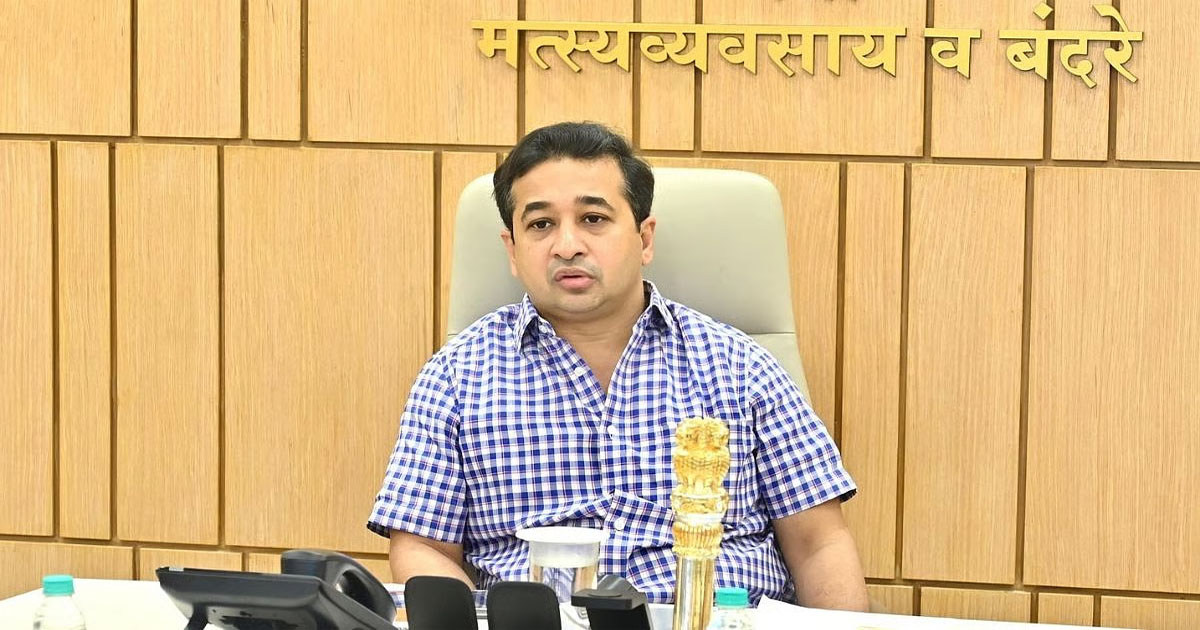
Mumbai, March 27: Maharashtra Fisheries and Ports Minister Nitesh Rane on Friday announced that an Artificial Intelligence (AI)-based project will be implemented to enhance mango and cashew cultivation in Sindhudurg district.
Initially, 400 farmers—200 each cultivating mango and cashew—will be selected for the pilot phase. The project aims to digitise farms by collecting basic data such as farmers’ names, contact details and village information. Based on the success of the initial phase, the initiative will be expanded to include more farmers.
The proposal was presented by experts from ADT Krishi Vigyan Kendra Baramati in the presence of agricultural scientists and officials, including representatives from Dr Balasaheb Sawant Konkan Krishi Vidyapeeth.
Under the project, sensors will be installed to monitor soil health, crop conditions and yield patterns. Farmers will receive training and awareness about AI technology through group-based sessions conducted over a 150-day initial phase.
The use of drones for pesticide spraying is expected to significantly reduce time from several days to just a few hours, ensuring quicker and more effective disease control. Additionally, AI-based predictive models will help detect crop diseases in advance, reducing excessive pesticide use and curbing black marketing.
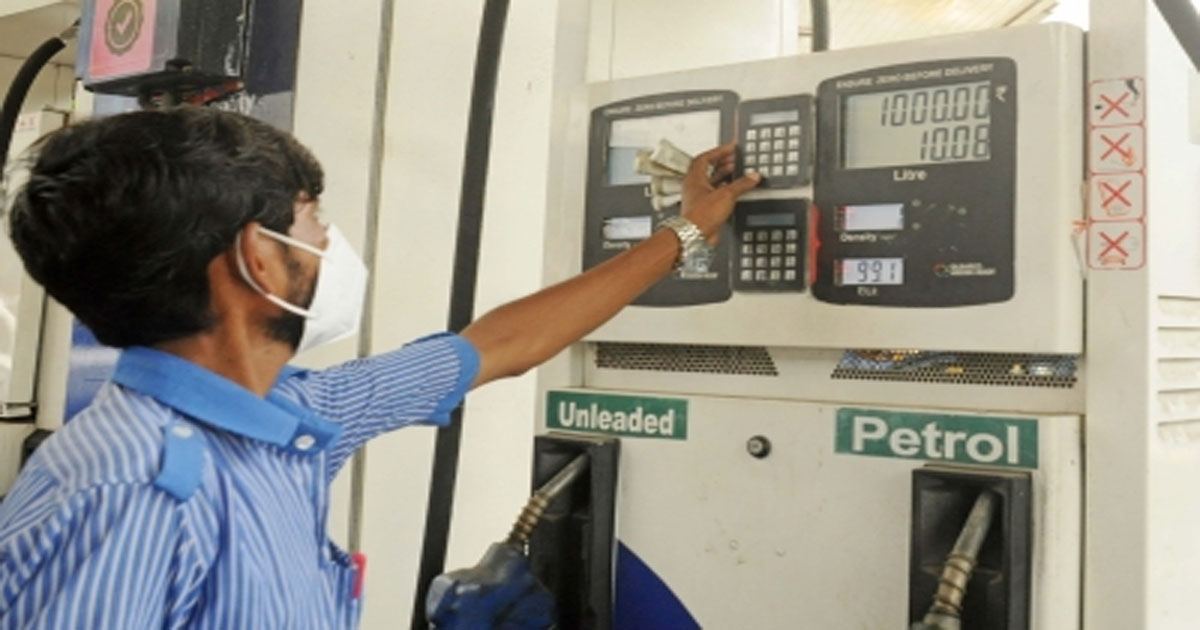
New Delhi, March 27: The government on Friday said retail pump prices of petrol and diesel will not change, and the excise reduction is not being passed on as a price cut at the pump.
Instead, it directly reduces the under-recoveries being absorbed by public sector oil marketing companies (OMCs) — Indian Oil Corporation, Bharat Petroleum Corporation and Hindustan Petroleum Corporation — who have continued to supply fuel to Indian consumers at prices well below their cost of supply, the Petroleum Ministry said.
At current international crude prices, under-recoveries stand at approximately Rs 26 per litre on petrol and Rs 81.90 per litre on diesel.
The combined daily under-recovery being absorbed by OMCs is approximately Rs 2,400 crore.
The excise reduction offsets Rs 10 per litre of these losses, ensuring OMCs can continue to supply fuel without disruption while keeping retail prices unchanged, said the ministry.
The government has reduced excise duty by Rs 10 per litre on both petrol and diesel with immediate effect.
“This decision has been taken in response to the steep and rapid rise in international crude oil prices, which have surged from approximately $70 per barrel to around $122 per barrel over the past month — an increase of nearly 75 per cent in under four weeks, driven by the ongoing conflict in West Asia and associated disruptions to global energy supply chains,” the ministry said.
The contrast with global fuel markets is instructive. Fuel prices have risen by 30 to 50 per cent across South and South-East Asian countries, 30 per cent in North America, and 20 per cent in Europe since the onset of the current crisis. India has held the line. That stability carries a fiscal cost, and the government has chosen to bear it.
Earlier in the day, Minister for Petroleum and Natural Gas, Hardeep Singh Puri, said that Prime Minister Narendra Modi decided to take a hit on government finances to safeguard the Indian citizen.
“The government has taken a substantial impact on its taxation revenues to reduce the high losses being faced by oil marketing companies at this time of sky-high international prices,” he mentioned.
Alongside the excise reduction, the government has simultaneously introduced an export levy on diesel. At a time when international diesel prices have surged sharply, the levy is designed to disincentivise exports and ensure that refinery output is directed first towards meeting domestic demand.
Keeping Indian pumps fully supplied takes precedence over export opportunities, however commercially attractive those may be at current global prices. The government will continue to monitor the evolving global energy situation and take all measures necessary to maintain supply stability and price protection for Indian consumers.
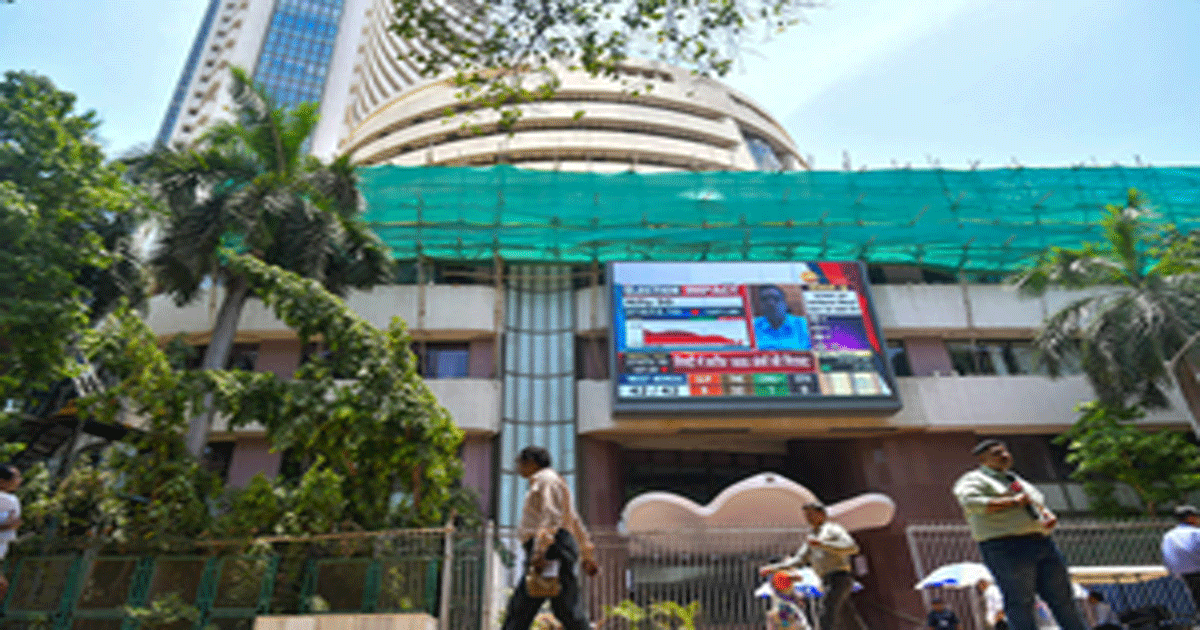
Mumbai, Domestic equity benchmarks opened sharply lower on Friday, tracking weak global cues and elevated Brent crude prices amid fading hopes of a resolution to the Iran conflict.
Nifty opened at 23,173.55, down 132.90 points or 0.57 per cent, while the Sensex fell around 400 points to 74,883.79 in early trade.
Broader markets also remained under pressure, with midcap and smallcap indices traded lower.
Sectorally, most indices traded in the red, led by realty, metal, PSU banks and auto stocks, which fell up to 1 per cent. Financials and consumer durables also witnessed selling pressure.
However, IT and oil and gas stocks bucked the trend and posted modest gains.
Among heavyweights, stocks such as HDFC Bank and Bajaj Finance were among the top laggards.
Market sentiment remained cautious amid ongoing geopolitical tensions. US President Donald Trump said the pause on attacks on Iran’s energy infrastructure would be extended, though uncertainty persists after Iran termed a US proposal “one-sided”.
Global markets also reflected a risk-off mood. US indices ended sharply lower, with the S&P 500 down 1.74 per cent and Nasdaq falling 2.38 per cent. Asian markets followed suit, with Japan’s Nikkei declining over 1 per cent and South Korea’s Kospi dropping around 3 per cent.
Crude oil prices remained volatile, although they eased slightly, with Brent crude falling 2.29 per cent to $105.53 per barrel, while WTI crude declined 2.54 per cent to $92.08.
According to analysts, markets are likely to remain volatile amid global uncertainties. Immediate support for Nifty is seen in the 23,050–23,000 zone, while resistance is placed around 23,450–23,500.
Foreign institutional investors (FIIs) continued to remain net sellers, while domestic institutional investors (DIIs) provided support to the market.
Notably, Indian markets resumed trading on Friday after a holiday on Thursday on account of Ram Navami.

Government committed to creating a quality healthcare system: Devendra Fadnavis

Targetting of Iranian school crime against humanity: Iran’s FM at UNHRC session

Mumbai News: ED Attaches ₹19.12 Crore Asset Linked To LOIL Group In NSEL Scam Probe

Maharashtra Minister Nitesh Rane Announces AI Project For Mango, Cashew Farming In Sindhudurg With 400 Farmers In Pilot Phase

Lockdown will not be implemented… Oil prices will not increase either, criminal cases will be registered against those spreading rumors: Devendra Fadnavis

Married Mumbai Woman Mocked In Andheri Society Over ‘Lift Kissing’ CCTV Video, Files Police Complaint

Mumbai: JBCN International School In Borivali Gets Bomb Threat, Search Reveals Hoax, Students Safe

Mahayoti’s big gift to the people of Mumbai… Now there is no tax for houses up to 500 square feet, the Municipal Corporation has increased this limit to 700 square feet.

LPG Crisis In Maharashtra: Cyber Crime On Rise Amid Shortage, 2 Women Lose ₹4 Lakh In ‘Gas Update’ Online Scam In Kalyan-Dombivli

Rashmika Mandanna-Vijay Deverakonda Wedding: Virosh Turn Modern Day Prince & Princess For Their Dreamy Sangeet Ceremony
-

 Crime4 years ago
Class 10 student jumps to death in Jaipur
-

 Maharashtra1 year ago
Mumbai Local Train Update: Central Railway’s New Timetable Comes Into Effect; Check Full List Of Revised Timings & Stations
-

 Maharashtra1 year ago
Mumbai To Go Toll-Free Tonight! Maharashtra Govt Announces Complete Toll Waiver For Light Motor Vehicles At All 5 Entry Points Of City
-

 Maharashtra2 years ago
False photo of Imtiaz Jaleel’s rally, exposing the fooling conspiracy
-

 National News1 year ago
Ministry of Railways rolls out Special Drive 4.0 with focus on digitisation, cleanliness, inclusiveness and grievance redressal
-

 Maharashtra1 year ago
Maharashtra Elections 2024: Mumbai Metro & BEST Services Extended Till Midnight On Voting Day
-

 National News2 years ago
J&K: 4 Jawans Killed, 28 Injured After Bus Carrying BSF Personnel For Poll Duty Falls Into Gorge In Budgam; Terrifying Visuals Surface
-

 Crime1 year ago
Baba Siddique Murder: Mumbai Police Unable To Get Lawrence Bishnoi Custody Due To Home Ministry Order, Says Report