
International News
India’s growing friendship with Russia and Central Asia making China uneasy

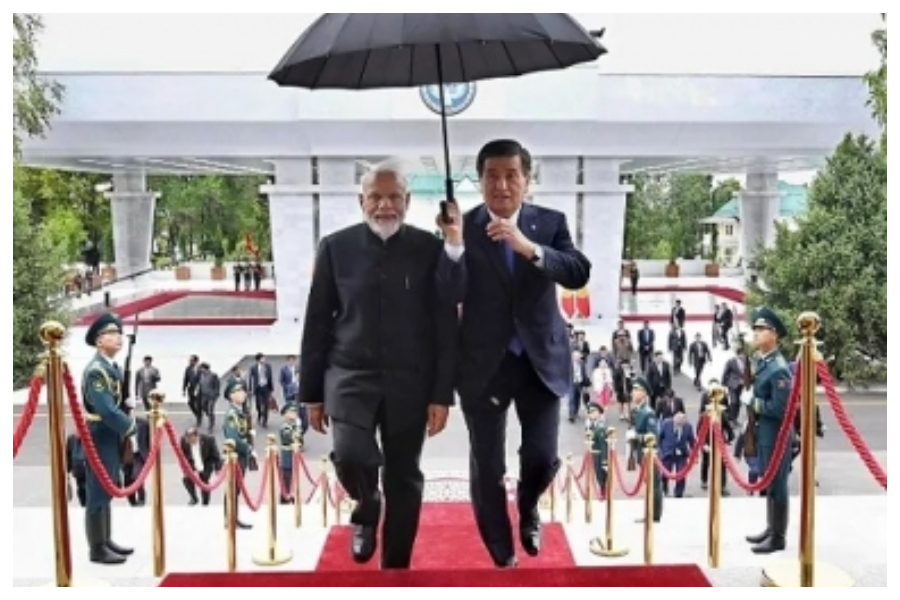
India’s growing partnership with the Central Asian countries and the unbroken camaraderie with Russia – highly visible during Vladimir Putin’s visit to New Delhi in December – could irk China a lot, feel some of Moscow’s top strategic experts.
The last 12 months have seen New Delhi tightening its bond with the landlocked regions of Eurasia, especially after the turbulence in Afghanistan.
The territory is also the Kremlin’s traditional foreign policy priority and forming Greater Eurasian partnership is part of Putin’s initiative.
As reported by IndiaNarrative.com, a few days before his visit to the Indian capital, Putin had regarded India as one of the strong independent “centres of a multipolar world” with a foreign policy philosophy and priorities “that are close to us”.
The Central Asian countries followed the Russian leader by underlining the civilisational, cultural, trade and people-to-people linkages between India and their countries during the third meeting of the India-Central Asia Dialogue on December 19.
While the foreign ministers of Central Asian countries called India their strategic partner, Prime Minister Narendra Modi had emphasised that they remain India’s “extended neighbours” and all possible efforts should be made to strengthen comprehensive cooperation between the countries of Central Asia and South Asia, in which India is ready to provide the maximum assistance.
The events, not surprisingly, are enough to make Beijing uncomfortable, reckon experts.
In an interview with Russian daily Nezavisimaya Gazeta, Russian defence analyst Ruslan Pukhov, who is also the Director of the Moscow-based Centre for Analysis of Strategies and Technologies, said that the intensification of India’s diplomatic efforts and its interaction with Russia in Central Asia would certainly not please Beijing.
“After all, poor countries are forced to agree to loans from China on any terms, even at the risk of being in debt. And now the PRC appears to have a competitor,” said Pukhov.
The defence expert reckoned that while the “ambitions of India” may cause “some inconvenience” to Russia as well, Delhi does not want to weaken Moscow’s position at all.
“But the Central Asian regimes, depending on Moscow economically and militarily, now have room for manoeuvre. They can bargain with us,” he added.
However, sources tell IndiaNarrative.com that India’s engagement with the region will happen keeping the Russian interests in mind.
With New Delhi and Moscow having pledged extensive military-technical cooperation until 2030, both will be working together on having a joint manufacturing of military equipment in Central Asia, which would benefit all partners.
Also, unlike China’s Belt and Road Initiative (BRI), New Delhi’s efforts on having an inter-connected Eurasia through the development of Chabahar port in Iran and also enhancing connectivity with the landlocked region via the International North-South Transport Corridor (INSTC), highlight India’s internationalism – that of always seeing the world as a family.
While Beijing makes inroads into several Central Asian nations through BRI, members of the Commonwealth of Independent States (CIS) have become increasingly uncomfortable with the growing Chinese presence through various infrastructure projects.
India, on the other hand, has always stressed that connectivity projects to build modern arteries of commerce must adhere to the most basic principle of international relations – respect for sovereignty and territorial integrity.
“Respect for the sovereignty and territorial integrity of nations rank foremost among them. It is also important that connectivity building is a participative and consensual exercise, based on financial viability and local ownership. They must not serve other agendas,” External Affairs Minister S Jaishankar had said last October while addressing the 6th Ministerial meeting of the Conference of Interaction and Confidence Building Measures in Asia (CICA) at Kazakhstan capital Nur-Sultan.
In a fast-changing geopolitical scene, countries like Tajikistan, Kyrgyzstan, Uzbekistan, Turkmenistan and Kazakhstan have appreciated India’s role in sustainable and stable development of the region.
The visit of Heads of State from these countries as special guests on the Republic Day later this month could also mark a new high at the start of 2022 – the 30th anniversary of the establishment of diplomatic relations between India and Central Asian States.

International News
Indians in Saudi Arabia advised to stay indoors during aerial attacks; Embassy opens 24×7 control room

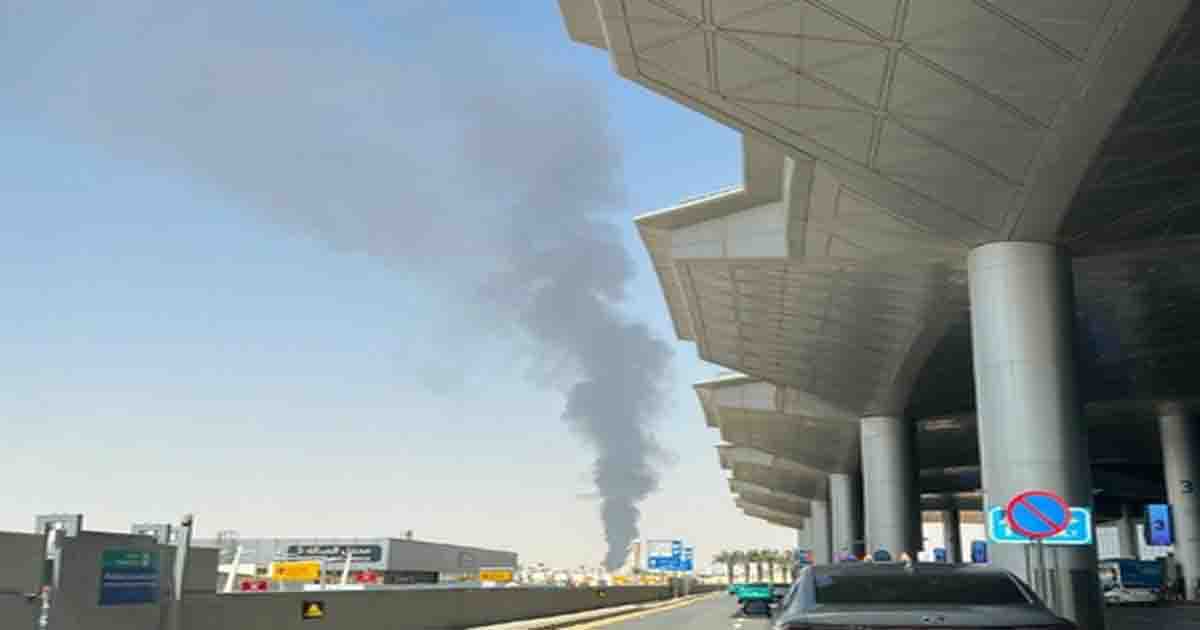
Riyadh, Oct 13: Indian nationals in Saudi Arabia have been advised to remain calm, vigilant and stay indoors in case of an aerial attack, the Indian Embassy in Riyadh said on Tuesday as it opened a 24×7 control room to assist the community.
“In view of the current situation, all Indian nationals in the Kingdom of Saudi Arabia are advised to remain calm and vigilant, stay indoors in case of an aerial attack, and follow the instructions issued by local authorities through official channels,” the Embassy said in an advisory.
It also “strongly advised” Indian nationals to refrain from circulating or reposting any videos or news related to the ongoing events.
Indian nationals were advised to remain in regular contact with their airlines and verify the latest status of their flights. Those in an emergency who wish to leave Saudi Arabia may avail flights from airports in neighbouring Gulf countries, particularly Qatar and Bahrain, subject to obtaining visas as per their rules, the Embassy said.
“In view of the evolving situation, the Embassy has opened 24×7 Control Room to provide necessary assistance to Indian nationals in Saudi Arabia,” it said.
Giving an update on the Indian nationals injured in the October 10 attack on Riyadh airport, the Embassy mentioned that four people remain in the ICU, four are receiving medical care in the normal ward, and three have been discharged.
“The Embassy officials continue to visit the hospitals where the injured Indian nationals are receiving medical treatment, and are in constant touch with their family members and providing all possible support,” it added.
The funeral rites of Mohammed Yousuf Ali, the Indian national who lost his life in the attack, were completed in Riyadh on October 12 as per the wishes of his family, with the Ambassador and Embassy officials in attendance.
On October 11, India condemned the attack on Saudi Arabia’s King Khalid International Airport, saying that attacks on civilians and civilian infrastructure were “unacceptable” and calling for an immediate cessation of hostilities.
“The repeated attacks on civilians and civilian infrastructure are completely unacceptable and must cease immediately,” the Ministry of External Affairs (MEA) said in a statement.
“We stand in solidarity with the people and the government of the Kingdom of Saudi Arabia in defence of their sovereignty, and hope that peace and normalcy returns to the region at the earliest,” it added.
On October 10, Saudi Arabia’s General Authority of Civil Aviation said that the attack targeting King Khalid International Airport on Saturday afternoon killed 12 people and injured 309 others.
International News
Pakistan: Emergency rule in Khyber Pakhtunkhwa intensifies volatile political confrontation
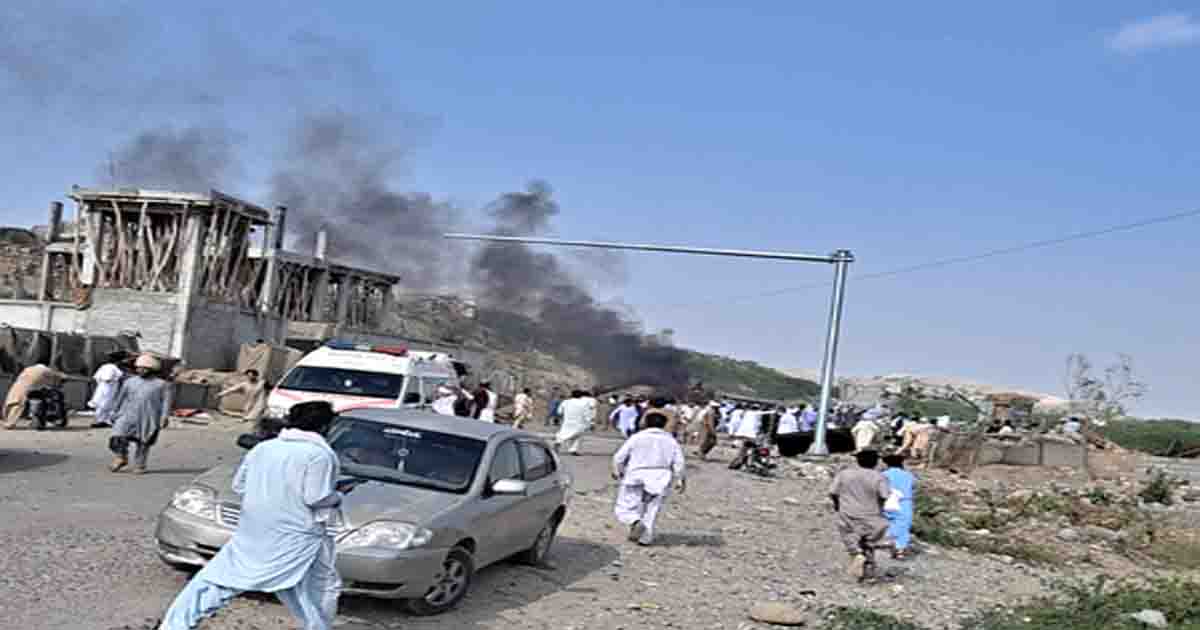
Islamabad, Oct 13: Pakistan government’s decision to impose emergency rule in the Khyber Pakhtunkhwa province has intensified an already volatile political confrontation between the federal government and the opposition. It has reignited long-standing debates regarding governance, security and the state’s relationship with its Pashtun-majority frontier region, a report has detailed.
Pakistan government effectively removed the Pakistan Tehreek-e-Insaf (PTI)-led provincial government and presented it as a “necessary response” to militancy. However, critics have described the decision by Pakistani authorities as a political intervention disguised as a security measure, an opinion piece in Afghan Diaspora Network detailed.
On October 11, Pakistan President Asif Ali Zardari approved emergency measures after recommendations made by Prime Minister Shehbaz Sharif’s cabinet. The move suspended the provincial government led by former Pakistan Prime Minister Imran Khan-founded PTI and transferred authority to a Governor. In addition, the federal government announced the deployment of forces in Khyber Pakhtunkhwa. The decision comes at a politically sensitive moment as PTI has been preparing major demonstrations demanding the release of Imran Khan.
PTI spokesperson Zulfikar Bukhari has condemned the Pakistan government’s decision to impose Governor’s rule in Khyber Pakhtunkhwa, terming it as a “coup disguised as emergency.”
“Strongly condemn the arrest of the only mandated Chief Minister Sohail Afridi and of Junaid Akbar. This coup disguised as emergency or Governor rule has squashed the only little bit of democracy left in Pakistan. Further instability and collateral damage to follow. The regime must be feeling very proud,” Bukhari wrote on X.
PTI chairman Gohar Ali Khan condemned the imposition of emergency and Governor’s rule in Khyber Pakhtunkhwa, describing the federal government’s decision as a “political mistake and undemocratic.” He emphasised that there is no disagreement on eliminating terrorism; however, the fight against terrorism cannot be used as justification to suppress the voice of the people, achieve political objectives and restrict the constitutional authority of the province.
“We strongly condemn the imposition of emergency in the province in the strongest terms and completely reject this action. This is an extremely alarming and grave political mistake and an undemocratic measure — the people will never accept such actions against their rights,” Khan posted on X.
Former Member of Pakistan’s National Assembly, Mohsin Dawar, accused the Pakistan government of following “colonial” policies towards Khyber Pakhtunkhwa and said that the decisions impacting the province are once again imposed without a democratic mandate. He said that emergency rule in Khyber Pakhtunkhwa could push the region “into further darkness.”
Veteran Pashtun nationalist leader Afrasiab Khattak said that Pakistan government’s imposition of emergency rule in Khyber Pakhtunkhwa, which has already faced decades of conflict, was another experiment in authoritarian governance. According to the Afghan Diaspora Network report, he asked whether Pashtuns should see the decision as proof of how they continue to be treated as subjects of a colony instead of equal citizens within the federation.
“Whether one accepts these arguments or not, they reflect a broader perception found among many critics of Pakistan’s security policies: that the country’s current security challenges cannot be separated from decisions made over several decades. The emergency declaration therefore represents more than an administrative measure. It sits at the intersection of three overlapping crises: rising militancy, deep political polarisation, and unresolved questions about the governance of Pakistan’s Pashtun borderlands,” the report in Afghan Diaspora Network stated.
“Supporters see decisive action against a deteriorating security situation. Opponents see a dangerous precedent in which elected governments can be sidelined under the banner of counterterrorism. As troops move into Khyber Pakhtunkhwa and federal authorities assume greater control, the province has once again become the focal point of Pakistan’s most important national debate: whether security and democracy can coexist or whether one will continue to be used to justify curtailing the other,” the author added.
International News
Riyadh airport attack: Embassy officials visit hospital, provide support to injured Indians
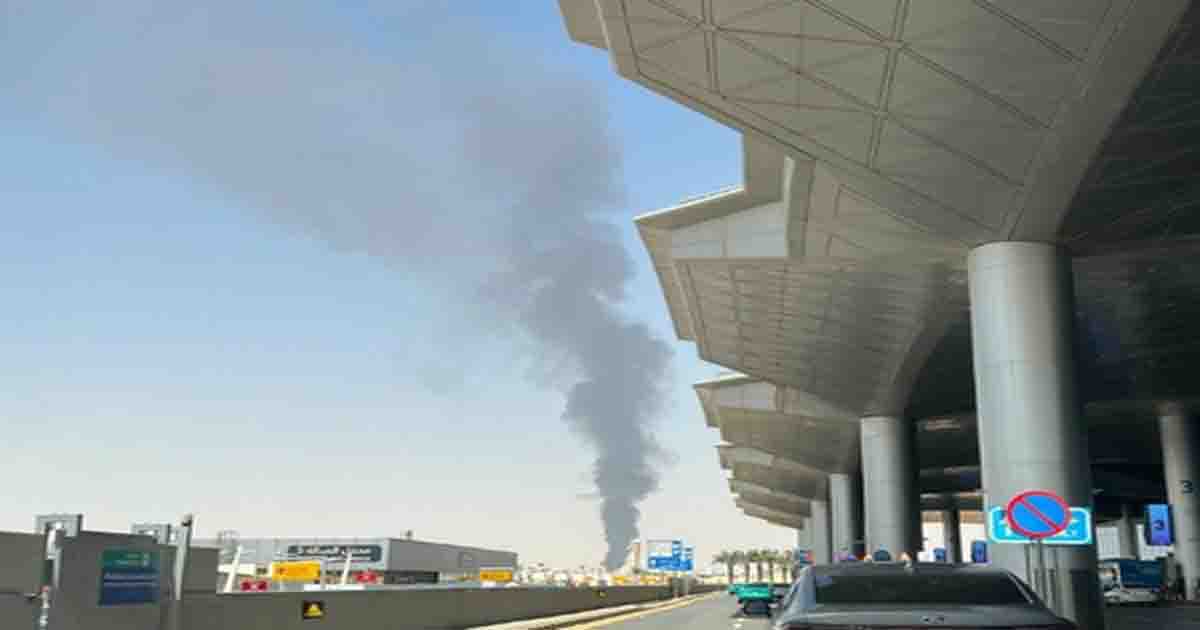
Riyadh, Oct 12: The Indian Embassy in Saudi Arabia said on Monday that it has been providing assistance to the family of the deceased Indian national, Mohammed Yousuf Ali, who died in the recent attack on Riyadh airport.
The Embassy said its officials visited the hospitals where injured people have been receiving treatment. As many as five people are in the ICU and two remain in the normal ward while the rest have been discharged from the hospital.
Sharing an update regarding the Riyadh airport attack on X, the Indian Embassy in Saudi Arabia stated, “The family of late Mr. Mohammed Yousuf Ali, who passed away in the attack on Riyadh airport, has decided to conduct the funeral in Riyadh itself. Mission is providing all assistance to the bereaved family, including completion of all formalities for the funeral.”
“Mission officials have visited the hospitals where injured nationals are undergoing treatment. Three persons continue to be in ICU, and two more have been admitted in the ICU, two remain in the normal ward, and rest have been discharged. The Embassy remains in constant touch with their family members and providing all possible support,” it added.
On Sunday, the Indian Embassy in Saudi Arabia confirmed the death of an Indian national injured in the Riyadh airport attack and offered condolences to the family of the deceased.
“It is learnt that one Indian national injured in the Riyadh attack has unfortunately lost his life today. We convey our heartfelt condolences to the family of the deceased. We are in touch with the family and will provide all support for ensuring the early repatriation of mortal remains,” the Embassy posted on X.
The deceased, Mohammed Yusuf Ali, hailed from Hyderabad. His two sons and an aunt were also injured in the attack.
On October 11, India condemned the attack on Saudi Arabia’s King Khalid International Airport, saying that attacks on civilians and civilian infrastructure were “unacceptable” and calling for an immediate cessation of hostilities.
In a statement, the Ministry of External Affairs (MEA) said, “We strongly condemn the repeated attacks on Riyadh’s King Khalid International Airport over the past few days, including the dastardly attack on October 10, which have led to loss of lives, injuries and damage to property. We express our condolences to the families of the deceased and wish speedy recovery to the injured persons.”
“The repeated attacks on civilians and civilian infrastructure are completely unacceptable and must cease immediately,” the statement read.
“We stand in solidarity with the people and the government of the Kingdom of Saudi Arabia in defence of their sovereignty, and hope that peace and normalcy returns to the region at the earliest,” it added.
On October 10, Saudi Arabia’s General Authority of Civil Aviation said that the attack targeting King Khalid International Airport on Saturday afternoon killed 12 people and injured 309 others.

Delhi Police arrest 11 cyber criminals for digital arrests linked to Cambodia

Eknath Shinde Calls Rahul Gandhi’s Supreme Court March a Black Day in India’s History, Alleges INDIA Bloc Is Part of a Foreign Conspiracy.

Maha leads in creating an investment ecosystem for industries: CM Fadnavis

Indians in Saudi Arabia advised to stay indoors during aerial attacks; Embassy opens 24×7 control room

Adani Enterprises, Jabil plan to build mega AI, data centre infra platform in India

INDIA bloc begins protest march against ECI

Maha Congress stages agitation against Gyanesh Kumar

Complaint against Netflix & Mukesh Chhabra for inappropriate language on ‘India’s Got Latent 2’

Delhi court grants three-week interim bail to influencer Swatantra Bhardwaj

Bombay HC warns Vijay Mallya against posting court documents on social media
-

 Crime4 years ago
Class 10 student jumps to death in Jaipur
-

 Maharashtra2 years ago
Mumbai Local Train Update: Central Railway’s New Timetable Comes Into Effect; Check Full List Of Revised Timings & Stations
-

 Maharashtra2 years ago
Mumbai To Go Toll-Free Tonight! Maharashtra Govt Announces Complete Toll Waiver For Light Motor Vehicles At All 5 Entry Points Of City
-

 Maharashtra2 years ago
False photo of Imtiaz Jaleel’s rally, exposing the fooling conspiracy
-

 National News2 years ago
Ministry of Railways rolls out Special Drive 4.0 with focus on digitisation, cleanliness, inclusiveness and grievance redressal
-

 Maharashtra2 years ago
Maharashtra Elections 2024: Mumbai Metro & BEST Services Extended Till Midnight On Voting Day
-

 National News2 years ago
J&K: 4 Jawans Killed, 28 Injured After Bus Carrying BSF Personnel For Poll Duty Falls Into Gorge In Budgam; Terrifying Visuals Surface
-

 Crime2 years ago
Baba Siddique Murder: Mumbai Police Unable To Get Lawrence Bishnoi Custody Due To Home Ministry Order, Says Report