
Maharashtra
India logs 1,088 fresh Covid cases, 26 deaths in 24 hrs


India reported 1,088 fresh Covid-19 infections in the past 24 hours, against previous day’s 796 cases, the Union Health Ministry said on Wednesday morning.
In the same period, as many as 26 Covid-related deaths occurred across the country, taking the total fatalities to 5,21,736.
The active caseload has declined to 10,870. Active cases now constitute 0.03 per cent of the country’s total positive cases.
A total of 1,081 patients have recovered in the last 24 hours and the cumulative tally of recovered patients since the beginning of the pandemic is now at 4,25,05,410. Consequently, India’s recovery rate stands at 98.76 per cent.
Also in the same period, a total of 4,29,323 tests were conducted across the country. India has so far conducted over 79.49 crore cumulative tests.
The weekly positivity rate in the country currently stands at 0.24 per cent, However, the Daily Positivity rate is also reported to be 0.25 per cent.
On the vaccination front, India’s Covid-19 vaccination coverage has exceeded 186.07 crore as per provisional reports till 7 a.m this morning. This has been achieved through 2,25,81,738 sessions. Over 2.32 crore adolescents have been administered with the first dose of the vaccine since the beginning of vaccination drive for this age bracket.
More than 19.88 crore balance and unutilised Covid vaccine doses are still available with the states and UTs to be administered, according to the health ministry.

Maharashtra
Shiv Sena(UBT) targets Centre, Maha govt over extortion threats, bulletproof shield for Big B

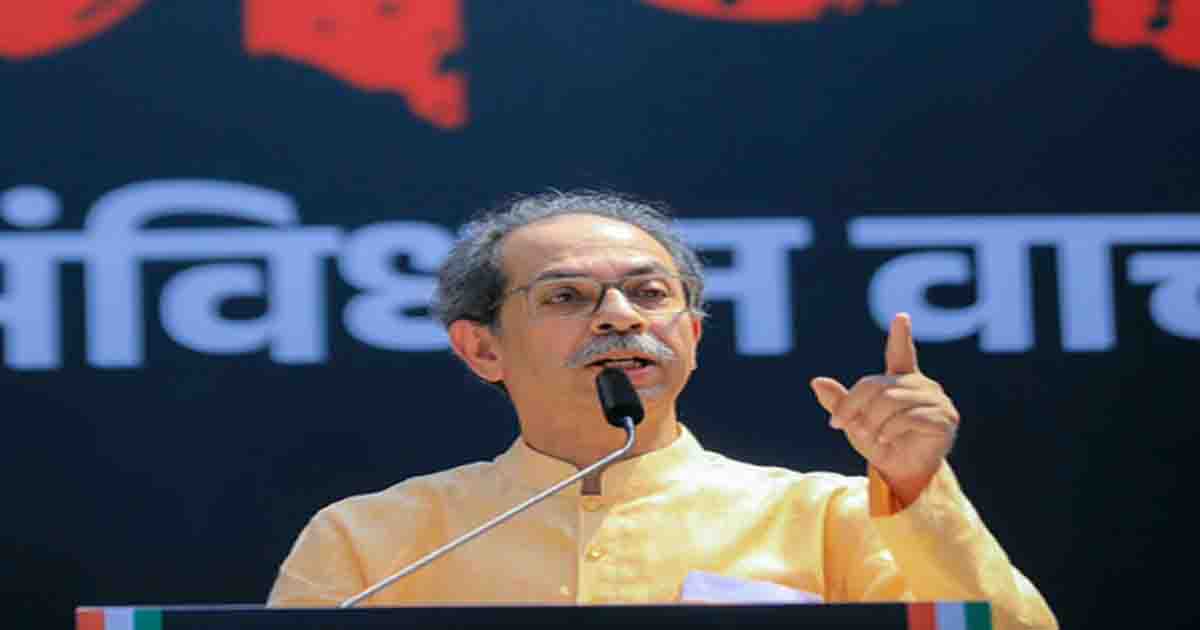
Launching a scathing attack on the Centre and the state government, Shiv Sena Uddhav Balasaheb Thackeray on Wednesday cited visuals of megastar Amitabh Bachchan greeting fans from behind a bulletproof glass enclosure as evidence of a total breakdown in law and order under the current administration.
In a sharp editorial in the party’s mouthpiece, ‘Saamana’, the Thackray camp targeted Union Home Minister Amit Shah and Maharashtra Chief Minister Devendra Fadnavis, asserting that the state of public safety in the country has deteriorated to an alarming low.
The editorial noted that the 84-year-old cinematic icon — a national treasure with no political enmities — was forced to wave at his weekly fans outside his Juhu bungalow, Jalsa, enclosed within bulletproof glass following a recent threat perception.
Pointing to recent firing incidents near actor Tiger Shroff’s vehicle and extortion demands served to bullion merchants in Nagpur, the editorial questioned why high-profile film personalities, business tycoons, and ordinary citizens are living under constant siege.
The Uddhav Thackeray camp questioned why criminal syndicates, particularly the Lawrence Bishnoi network, continue to operate with apparent impunity. It alleged that a Home Ministry decree preventing state police forces from taking Bishnoi into custody from Gujarat’s Sabarmati Jail has effectively granted the jailed gangster an “invisible security blanket”.
Mocking the ruling leadership’s political rallies and claims of handling national security, the editorial asserted that an administration unable to protect its top citizens and dismantle basic criminal networks has lost its moral authority, and called for Home Minister Amit Shah’s resignation.
“While the ruling leadership stages high-profile rallies under heavy police protection, ordinary citizens, builders, and film icons live in constant terror. How many citizens can the state furnish with specialised defence shields?” asked the editorial.
The editorial concluded by highlighting the stark contrast between the government’s boasts of political dominance and its failure to guarantee basic physical safety for prominent public figures and business owners across Maharashtra.
Maharashtra
MNS chief Raj Thackeray cancels Shivaji Park Deepotsav amid severe drought in Maharashtra
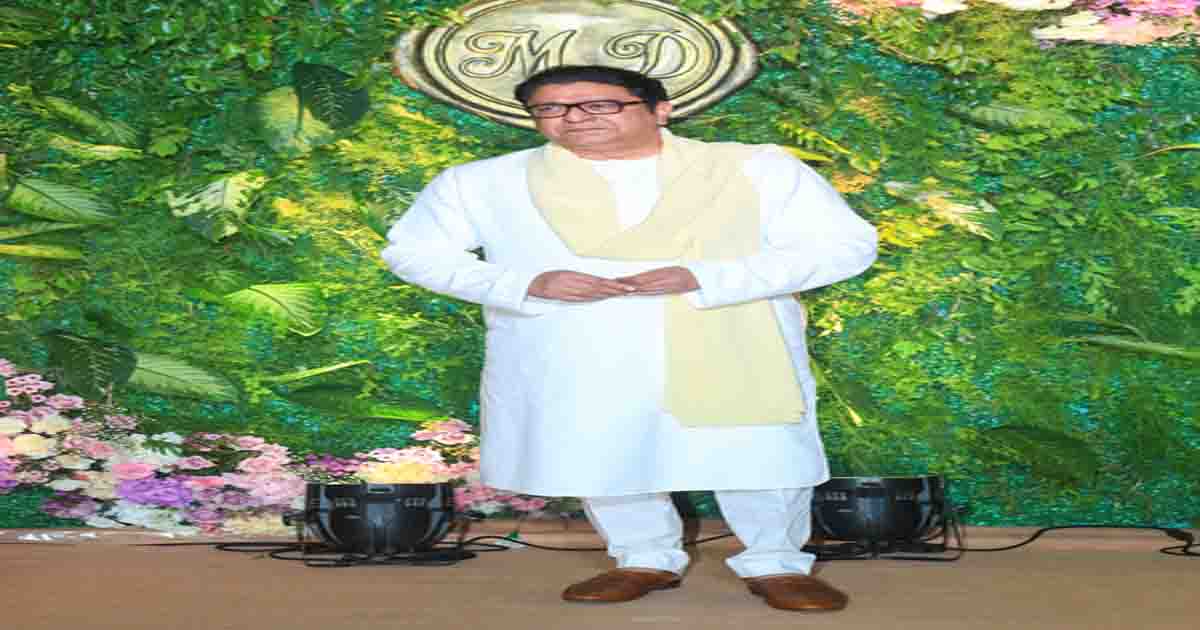
In view of the severe drought affecting 304 out of 358 talukas in Maharashtra — which has caused widespread damage to an estimated 141.53 lakh hectares of rain-fed, irrigated, and horticultural crops — Maharashtra Navnirman Sena (MNS) chief, Raj Thackeray, on Wednesday announced the cancellation of the annual Deepotsav celebration at Mumbai’s Chhatrapati Shivaji Maharaj Park.
Every year, the MNS celebrates Deepotsav at Shivaji Park with grand illuminations and spectacular fireworks, drawing crowds from Mumbai, Thane, and various corners of Maharashtra to enjoy the festivities. However, through a video message, Thackeray announced that the celebration will not be held this year.
Explaining the rationale behind the decision, Thackeray said, “There is usually immense enthusiasm. Illuminations and fireworks are set up here at Shivaji Park, and people from all over Maharashtra—from Mumbai, Thane, and distant corners of the state—make it a point to come and enjoy the Deepotsav, having a wonderful time. However, we have decided not to celebrate Deepotsav this year. The sole reason is the terrible drought that has struck, exists, and looms over Maharashtra. In light of this severe drought, my heart simply could not accept celebrating a festival of this kind.”
He highlighted the grim reality facing the state, noting that rural Maharashtra is grappling with acute water scarcity and a worsening drought.
“Today, Maharashtra is passing through a very peculiar phase. Given this situation, when we celebrate Diwali with grand enthusiasm, how would our brothers and sisters in rural Maharashtra, and their young children, feel about it? I think we need to reflect on this ourselves,” he stated.
Taking a critical stance on political priorities, Thackeray added, “The Chief Minister stated that this drought will be even more severe than the one in 1972. Even though this was announced earlier, it seems the ruling party leaders didn’t quite grasp it and continued playing Garba. Be that as it may, that is their concern. But celebrating Diwali and organising such a Deepotsav under these circumstances does not feel right to my conscience, and hence the decision has been made not to hold Deepotsav this year.”
Expressing hope for better times ahead, Raj Thackeray prayed for relief and good conditions next year. Highlighting the impending migration from rural areas, he warned, “Countless households and communities will be forced to leave their villages from numerous places across Maharashtra and head towards the cities, where urban conditions are already visible to us. Celebrating such a festival amid this overall state scenario did not feel right to me, and I have a humble request to make to you as well.”
Clarifying that he is not advocating a “black Diwali,” he urged citizens to practice moderation. “We do not want to celebrate a black Diwali, but we must exercise some restraint on that excitement. It is necessary to check ourselves and exercise restraint when bursting crackers and putting up illuminations. We are all citizens of Maharashtra, and we all have immense love for our state. When citizens of Maharashtra are suffering like this, celebrating a festival on a massive scale just does not feel right, and it shouldn’t feel right to you either,” he noted.
Concluding his message, Thackeray urged people to stick to traditional simple observances while keeping celebrations in check. “Therefore, this Diwali, let us all hang lanterns, share sweets, and do all the necessary things, but I request you to exercise restraint when it comes to heavy lighting and bursting firecrackers. Next year, we will once again celebrate Deepotsav with great zeal. Until then, this is all I wanted to share with you,” he said.
He wrapped up his message by extending heartfelt Diwali greetings to the public on behalf of himself, his family, and his party MNS.
Maharashtra
Pune, Pimpri-Chinchwad, and PMR region to become India’s major mobility hub by 2030: Maha CM Fadnavis
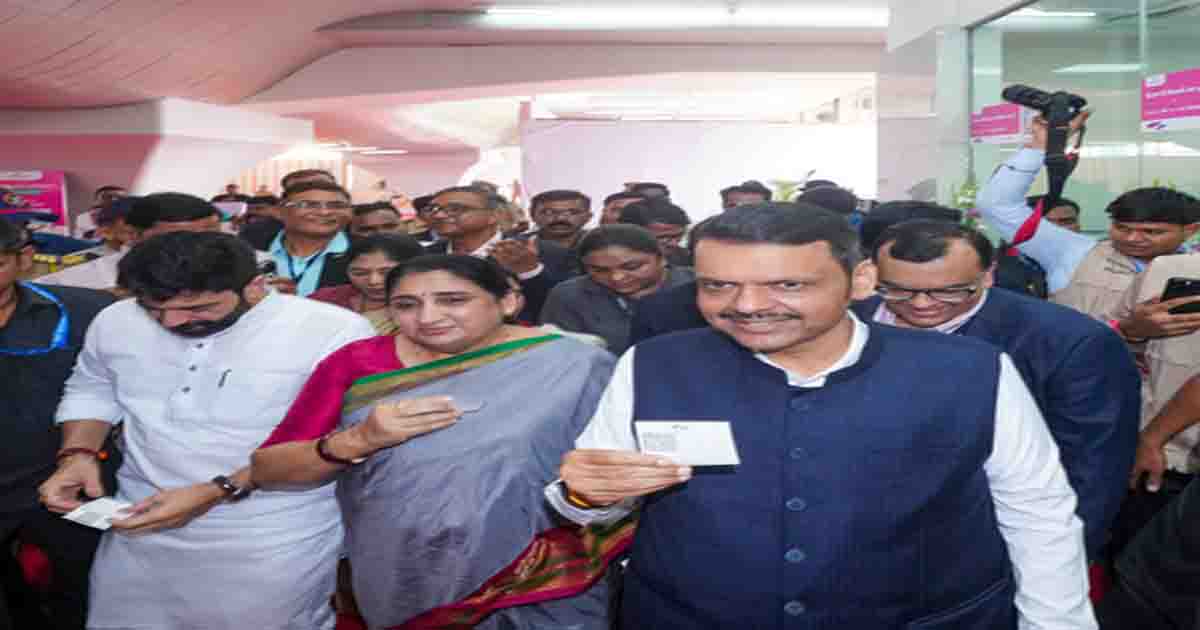
Maharashtra Chief Minister Devendra Fadnavis on Tuesday expressed confidence that with a robust network of modern transport facilities—including the metro, electric buses, inner ring roads, outer ring roads, tunnels, and a new airport—being developed across Pune, Pimpri-Chinchwad, and the Pune Metropolitan Region (PMR), the region will emerge as a major mobility hub of the country by 2030.
He was speaking at an event after Prime Minister Narendra Modi virtually inaugurated Mann-Hinjawadi to Shivajinagar Line-3 and laid foundation stone for the Pune Metro Phase-2.
“Hinjawadi and its surrounding areas form a critical IT hub in India, visited daily by thousands of employees who often face heavy traffic congestion, losing one to two hours of their time. The launch of the Metro will bring immense relief to IT professionals, particularly the youth,” the Chief Minister said.
He expressed joy that the project, whose foundation stone was laid by Prime Minister Modi in 2018, was now being dedicated to the nation by him as well.
The Shivajinagar-Hinjawadi corridor is the country’s first Metro project implemented through a Public-Private Partnership (PPP) model. Built by Tata Projects and Siemens on a DBOT (Design, Build, Operate, and Transfer) basis, the project reached completion with the cooperation of the Central and state governments, viability gap funding (VGF), and land acquisition facilitated by the Maharashtra government.
Acknowledging the vital contribution of women from construction to operations, the Chief Minister noted that this ‘Pink Powered’ metro symbolises the active participation of women power.
Around 120 kilometers of metro lines have been developed in Pune, with work ongoing on several other corridors.
Maharashtra has been a major beneficiary of the country’s metro expansion, with metro systems operational or under construction across 12 municipal corporation areas.
“The Metro is not merely a transport facility but an engine driving economic development, fostering investments, employment, and surrounding economic ecosystems,” the Chief Minister said.
To develop the Pune Metropolitan Region into a major urban growth centre, the Central government has provided a fund of Rs 5,000 crore, which will be utilised to build modern transport infrastructure in Pune and the PMR. Developed as a ‘Green Metro’, Pune Metro will generate 30 per cent of its required energy independently.
“With the comprehensive network of metro lines, electric buses, inner and outer ring roads, CMTR (Common Mobility Transport Route), underground routes, and tunnels taking shape, Pune is poised to become a key centre not only for IT and manufacturing but also for frontier technologies, contributing significantly to the national economy,” CM Fadnavis said.
Emphasising that the Central government under Prime Minister Modi prioritises poverty eradication and youth employment alongside infrastructure development, the Chief Minister expressed hope that Maharashtra will continue to receive the Centre’s steadfast support and guidance.
Deputy Chief Minister Eknath Shinde said that the metro will play a pivotal role in easing traffic congestion in Pune and making citizen commutes faster, safer, and more comfortable.
Metro Line-3 is a game-changing project for Pune’s public transport network that will reshape the city’s future and resolve daily commuting challenges.
Terming the metro an historic Diwali gift to the residents of Pune, Deputy CM Shinde commended the state government’s track record of keeping its promises and executing projects on time, reflecting Maharashtra’s rapid developmental strides.
Pune Metro Line-3 is India’s first metro project executed under a PPP model using the DBFOT framework under the National Metro Rail Policy 2017.
The Deputy CM congratulated the Pune Metropolitan Region Development Authority, Maha-Metro, Tata Projects, Siemens, and all concerned officials for completing the project on a mission mode.
Highlighting women’s substantial participation in building and operating the metro, Eknath Shinde remarked that this project reaffirms that women are second to none in any field.
“The Mumbai-Pune Expressway has significantly boosted Pune’s growth, and the upcoming ‘Missing Link’ project will further reduce travel time between the two cities, alongside the development of a ring road encircling Pune. These projects will collectively ease traffic congestion and bring immense relief to citizens, making Pune’s mobility more dynamic and seamless,” the Deputy CM said.
He also made a special mention of the late Deputy Chief Minister Ajit Pawar’s enduring contributions to Pune’s development.
Citing initial scepticism regarding public ridership when the Metro was first launched, Eknath Shinde noted that more than nine million passengers have chosen the Metro so far, underlining its popularity as a comfortable, time-saving transit option that strengthens public transport.
The state government remains firmly committed to making Pune a congestion-free, modern city, he added.
Deputy Chief Minister Sunetra Pawar said that given Pune’s rising population and transportation demands as a cultural, educational, and industrial hub, building a modern, safe, and eco-friendly public transport system is imperative.
Pune Metro Line-3 is India’s first metro corridor executed through a PPP, completed at a cost of around Rs 8,313 crores.
“Notably, it will be the country’s first 100 per cent women-operated metro line, with around 100 women train pilots and 50 per cent of station staff being women—a matter of immense pride,” Deputy CM Sunetra Pawar added.
The foundation stone for this corridor was laid by Prime Minister Modi in 2018.
The Union Cabinet has also approved four extended corridors under Phase-2, the foundation stone for which was laid on Tuesday. These 31-kilometer, 28-station corridors, cleared by the Central government at an estimated cost of Rs 9,858 crore, will connect areas such as Vanaz to Chandani Chowk, Ramwadi to Vitthalwadi, Kothrud, Bavdhan, Viman Nagar, Kharadi, and Wagholi. Once completed, the total Pune Metro network will exceed 100 kilometers.
“Stations like the R.K. Laxman Museum and Savitribai Phule Pune University on this route will pay tribute to the ideals of the ‘Common Man’ and Krantijyoti Savitribai Phule, respectively,” Sunetra Pawar noted.
The late Deputy Chief Minister Ajit Pawar made invaluable contributions from the inception of every Detailed Project Report (DPR) to its final approval.
As Finance Minister, he ensured necessary fund allocations and personally reviewed the progress of Hinjawadi metro stations in July, instructing officials to maintain high quality and adhere to timelines.
A special task force under the leadership of the District Collector has been constituted to address infrastructure needs in Hinjawadi, Mann, and Marunji, covering roads, transport, water, electricity, waste management, and metro connectivity.
Approvals worth Rs 426 crore have been granted for internal approach roads leading to metro stations, and as Guardian Minister, she would closely oversee the execution of these works, she assured.
Minister of State Murlidhar Mohol described the inauguration of the metro and the groundbreaking of new lines as a historic milestone for Pune’s development.
The 23-km Hinjawadi-Shivajinagar route will expand the Pune Metro network to 55 km, benefiting IT employees and millions of citizens.
In September alone, 9,58,603 passengers travelled via Pune Metro, cementing its status as the city’s lifeline.
“The foundation stone was also laid on Tuesday for nearly 46 km of new routes—namely Khadakwasla–Kharadi, Vanaz–Chandani Chowk, Ramwadi–Wagholi, and Manikbaug–Nal Stop—which will strengthen connectivity across the eastern, western, and southern parts of the city and help ease traffic congestion,” he said.

Shiv Sena(UBT) targets Centre, Maha govt over extortion threats, bulletproof shield for Big B

Delhi Police arrest three in Karol Bagh gold theft case, recover jewellery worth Rs 45 Lakh

24-year-old woman RTC conductor dies after being pushed from moving bus in Telangana

Big B would fly to Switzerland just for two hours to watch Abhishek’s basketball matches, reveals Ranbir Kapoor

ED secures conviction of five in money laundering case, court awards three-year jail term

Rahul, Cong ecosystem want to force regime change: BJP after Neha Bora praises B’desh Gen-Z protest

Attack on democratic rights: INDIA Bloc leaders on detentions of anti-ECI protestors

BJP pays tribute to ex-President Abdul Kalam, recalls his enduring influence on generations of India’s youth

INDIA bloc begins protest march against ECI

Congress trying to protect 3 crore Bangladeshi infiltrators in voter list: HM Shah
-

 Crime4 years ago
Class 10 student jumps to death in Jaipur
-

 Maharashtra2 years ago
Mumbai Local Train Update: Central Railway’s New Timetable Comes Into Effect; Check Full List Of Revised Timings & Stations
-

 Maharashtra2 years ago
Mumbai To Go Toll-Free Tonight! Maharashtra Govt Announces Complete Toll Waiver For Light Motor Vehicles At All 5 Entry Points Of City
-

 Maharashtra2 years ago
False photo of Imtiaz Jaleel’s rally, exposing the fooling conspiracy
-

 National News2 years ago
Ministry of Railways rolls out Special Drive 4.0 with focus on digitisation, cleanliness, inclusiveness and grievance redressal
-

 Maharashtra2 years ago
Maharashtra Elections 2024: Mumbai Metro & BEST Services Extended Till Midnight On Voting Day
-

 National News2 years ago
J&K: 4 Jawans Killed, 28 Injured After Bus Carrying BSF Personnel For Poll Duty Falls Into Gorge In Budgam; Terrifying Visuals Surface
-

 Crime2 years ago
Baba Siddique Murder: Mumbai Police Unable To Get Lawrence Bishnoi Custody Due To Home Ministry Order, Says Report