
National News
India declares Mushtaq Ahmed Zargar freed in exchange for IC-814 hostages as terrorist


The Ministry of Home Affairs has declared Mustaq Ahmed Zargar alias Latram as terrorist under the Unlawful Activities (Prevention) Act, 1967.
Zargar was one the three terrorists released by the Indian government in exchange for hostages abroad the hijacked IC-814 in 1999.
According to a Gazette notification issued on Wednesday, Zargar had been affiliated with the Jammu and Kashmir Liberation Front and had gone to Pakistan to procure illegal arms and ammunition training in the past. His terror outfit ‘Al-Umar-Mujahideen’ is listed as a terrorist organisation under the First Schedule to the UAPA.
The ministry notification also said that Zargar has been running an incessant campaign from Pakistan to fuel terrorism in Jammu and Kashmir and has been involved in various terror crimes, including murder, attempt to murder, kidnapping, planning and execution of terrorist attacks and terror funding.
“Mushtaq Ahmed Zargar is a threat to peace, not only to India, but across the world, with his contacts and proximity to radical terrorist groups like the ‘Al Qaeda’ and ‘Jaish-e Mohammed’,” the notification reads further.
Zargar, 52, a resident of Gani Mohalla near Jama Masjid in Nowhatta in Srinagar, is the founder and Chief Commander of the terror outfit ‘Al Umar-Mujahideen’ based in Pakistan and suspected to be the man behind the Anantnag terror attack which led to the deaths of five CRPF jawans on June 13, 2019.
“Now, therefore, the government, in exercise of the powers conferred by clause (a) of sub-section (1) of section 35 of the Unlawful Activities (Prevention) Act, 1967, declared Mushtaq Ahmed Zargar alias Latram as a terrorist listed at number 35 under the Fourth Schedule to the said Act.” the Gazette notification said.
The Air India flight IC-814 with 76 passengers and 15 crew members on board was hijacked on December 24, 1999, when it was on its way to Delhi from Kathmandu. The flight made stops at Amritsar and Lahore before finally being forced to stop in Afghanistan’s Kandahar. The hijack and subsequent hostage-release situation lasted a week until India agreed to release the three terrorists — Masood Azhar, Omar Sheikh and Mushtaq Ahmed Zargar.


India, as Chair of the Kimberley Process (KP) for 2026, has flagged key priorities concerning the global diamond industry, including responsible rough diamond sourcing as part of its outreach ahead of the KP Plenary to be held in Delhi from November 30 to December 4, according to a statement issued by the Commerce Ministry on Thursday.
The issue was discussed at a stakeholder consultation in Angola’s Luanda on Tuesday, chaired by Additional Secretary Yashvir Singh on India’s behalf, which brought together the Chairs and Vice-Chairs of KP Working Groups and Committees (KP Working Bodies), the KP Vice-Chair (of Ghana), and the former KP Chair (of the United Arab Emirates). Representatives of observers and partner organisations, including the World Diamond Council and the African Diamond Producers’ Association (ADPA), also participated in the discussion, the statement said.
India has observer status in the ADPA, providing an institutional platform for engagement with African diamond-producing countries. This offers opportunities for cooperation in securing rough diamond supply chains, technical knowledge exchange, value addition, market access and the promotion of ethical and sustainable practices.
The 13th Extraordinary Meeting of the ADPA Council of Ministers, held alongside the 20th anniversary celebrations, approved a Memorandum of Understanding (MoU) between the Gem & Jewellery Export Promotion Council (GJEPC), India, and the ADPA. The MoU seeks to strengthen cooperation between the Indian gem and jewellery industry and African diamond-producing countries, including through capacity building and skills development in diamond sorting, valuation and manufacturing, exchange of technical expertise, and the promotion of trade and investment linkages across the diamond value chain, the statement said.
Yashvir Singh said: “India’s chairship places emphasis on confidence, compliance and credibility. The consultation in Luanda provided an opportunity to engage directly with the leadership of the KP working bodies, the KP Vice-Chair and observers on issues that are important to the future of the Process and the diamond industry. Our endeavour is to build a shared understanding of the issues before the New Delhi Plenary and to advance practical outcomes through constructive dialogue and consensus-based decision-making.”
Discussions covered the sustainability of diamond-producing countries and communities, sustainable funding and continuity of the KP Secretariat, digitalisation of certification and statistical processes, and strengthening compliance with the Kimberley Process Certification Scheme.
Participants also exchanged views on the reform of the conflict diamond definition, responsible sourcing, artisanal and alluvial diamond production, consumer confidence and the importance of effective reporting and peer-review mechanisms.
The ADPA, established in 2006 in Luanda, seeks to enhance cooperation among African diamond-producing nations. It effectively comprises 15 member countries and 8 observers, including two non-African observers, namely Russia and India. Its member countries collectively account for over 60 per cent of global diamond production.
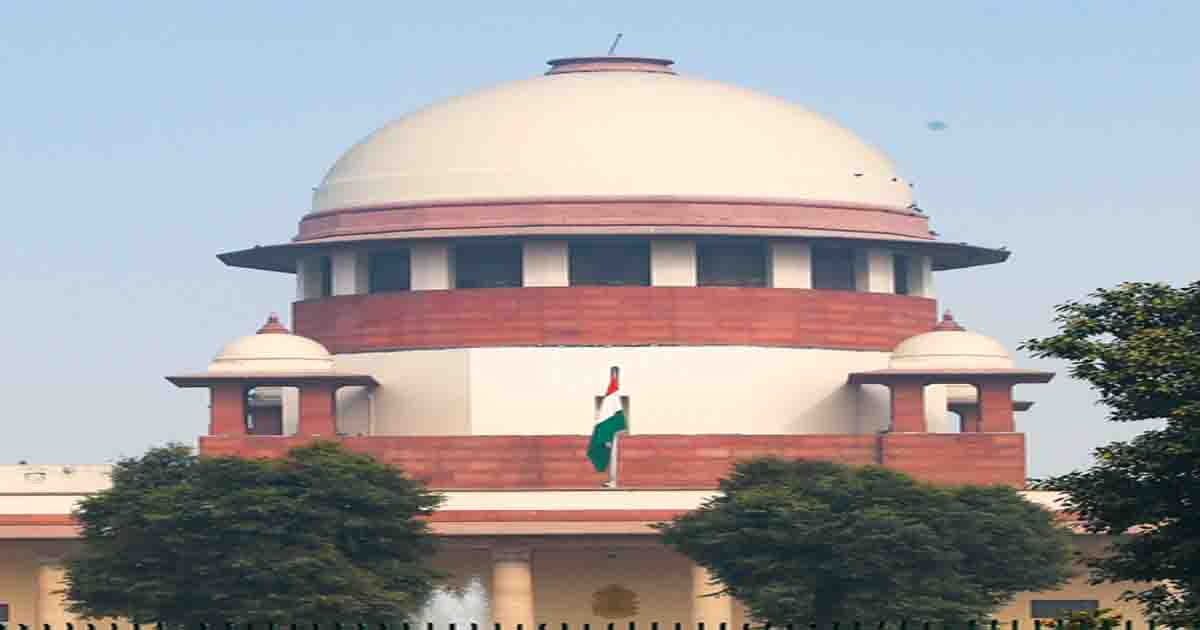
Jailed student activists Umar Khalid and Sharjeel Imam have separately moved the Supreme Court challenging the Delhi High Court’s judgment rejecting their fresh bail pleas in the 2020 northeast Delhi riots “larger conspiracy” case.
As per details available on the apex court’s official website, Khalid’s petition has been registered as Diary No. 70020/2026, while Imam’s plea has been registered as Diary No. 70106/2026.
Both Special Leave Petitions (SLPs) were filed on November 4 and are currently shown as “Cases under Defect List valid for 90 Days”.
Khalid has filed his petition through advocate N. Sai Vinod, while Imam’s plea has been filed through advocate Fauzia Shakil.
The petitions challenge a common judgment delivered on September 30 by a Division Bench of the Delhi High Court comprising Justices Prathiba M. Singh and Dinesh Bhatt, which had rejected their appeals against the trial court’s July 4, 2026, orders refusing them regular bail.
The High Court had held that it could not modify the specific conditions imposed by the Supreme Court while rejecting their earlier bail pleas in January 2026.
The apex court, while declining bail to Khalid and Imam in its January 5 judgment, had granted them liberty to renew their applications either after the examination of the protected witnesses relied upon by the prosecution or upon the expiry of one year from the date of the order, whichever was earlier.
However, the two activists had approached the trial court in June 2026, citing subsequent developments, including the Supreme Court’s observations in another UAPA case concerning prolonged incarceration and delay in trial, the grant of interim bail to co-accused Tasleem Ahmed and Khalid Saifi, and the further period of incarceration undergone by them.
The trial court had rejected their applications, following which they approached the Delhi High Court. Before the High Court, the duo had argued that the trial was unlikely to conclude anytime soon and that continued incarceration without substantial progress in the proceedings warranted reconsideration of their bail pleas.
However, the High Court held that the specific liberty granted by the Supreme Court could not be expanded or modified by a subordinate court.
The Delhi High Court observed that the Supreme Court had drawn a clear distinction between the alleged roles of Khalid and Imam and those of the co-accused who had been granted bail.
It also held that the cases of Tasleem Ahmed and Khalid Saifi could not be treated at par with those of Khalid and Imam, whose alleged roles had been categorised as those of “masterminds” and “core conspirators” in the apex court’s earlier judgment.
It further observed that no submission had been made that the prosecution had deliberately delayed the trial, adding that the delay, if any, was attributable to proceedings initiated by a co-accused and circumstances beyond the control of the parties.
The case relates to the alleged larger conspiracy behind the communal violence that broke out in northeast Delhi in February 2020, in which 53 people were killed and several others injured.
Khalid and Imam are among several persons booked under the Unlawful Activities (Prevention) Act (UAPA) and other penal provisions in connection with the case and have remained in custody for several years.
Earlier, on January 5, 2026, the Supreme Court had granted bail to five co-accused — Gulfisha Fatima, Meeran Haider, Shifa Ur Rehman, Mohd. Saleem Khan and Shadab Ahmed — while declining relief to Khalid and Imam.
More recently, the apex court granted six months’ interim bail to co-accused Tasleem Ahmed and Khalid Saifi while referring to a larger Bench the question of whether prolonged incarceration and delay in trial could justify the grant of bail despite the restrictions under Section 43D(5) of the UAPA.
National News
July 20 protest: SC asks panel probing police action during student protests to submit report in a month

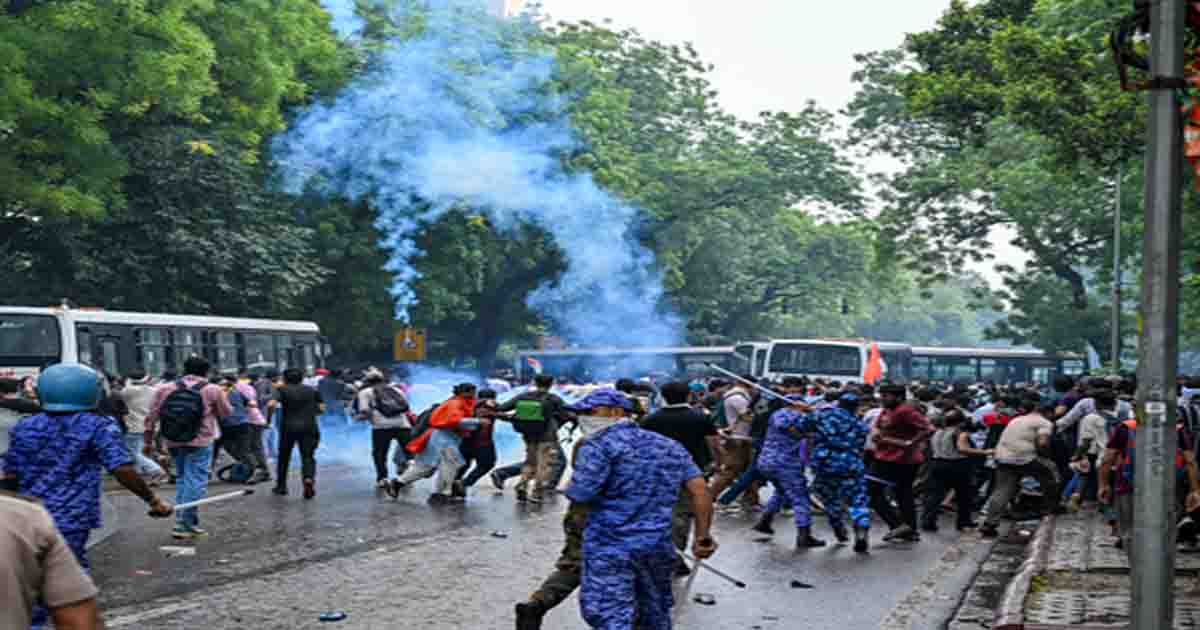
The Supreme Court on Thursday directed the five-member High-Powered Enquiry Committee (HPEC), constituted to investigate allegations of police excesses during the July student protests, to submit its fact-finding report within one month.
A Bench of Chief Justice of India (CJI) Surya Kant and Justice Joymalya Bagchi made the observation after the Committee, chaired by former apex court judge Justice R. Subhash Reddy, submitted its status report in a sealed cover.
The top court clarified that the status report submitted by the HPEC on October 31 merely outlined the progress made so far and did not contain any findings on the allegations under investigation.
The CJI-led Bench directed the HPEC to examine all documents, video recordings and other material placed before it, including those submitted by the petitioners on behalf of the affected persons, and also seek responses from the authorities concerned.
The Supreme Court said the panel should not restrict its inquiry to complaints formally received from victims but should also consider the representations and evidence submitted through lawyers and other persons.
The CJI-led Bench was informed that despite efforts to invite complaints, only a few representations had been received through the dedicated portal, while none had been submitted through email, post, or physical delivery.
The apex court said the Committee had made efforts to publicise the complaint mechanism, including through print and electronic media, and had also issued notices to protestors who had sought to register their grievances. However, only one complainant appeared before the HPEC on October 29 and submitted an affidavit. Some police personnel had also appeared before the panel.
The Supreme Court said the Committee should proceed with its fact-finding exercise on the basis of the material already available with it rather than wait indefinitely for more complaints.
“Whatever material has come, the committee need not wait indefinitely. Based on that, we would like the committee to give a fact-finding report,” the bench said. It also asked the Centre to file a detailed affidavit in the matter.
The CJI-led Bench also recorded the resignation of retired Meghalaya Director General of Police Dr L.R. Bishnoi from the HPEC. The matter has been posted for further hearing on December 2.
The Supreme Court had constituted the five-member HPEC on August 18 to investigate allegations of excessive police force and violence during the students’ march from Jantar Mantar towards Parliament on July 20. Headed by Justice Subhash Reddy (retd), the panel also comprises former Punjab and Haryana High Court Chief Justice Ravi Shankar Jha, former Delhi High Court judge Justice Shalinder Kaur, and former CBI Director Rishi Kumar Shukla.
The HPEC was tasked with examining allegations relating to the use of pellet guns, electric batons, lathi charges and tear gas, alleged targeted violence and harassment of women protestors, and excessive violence and destruction of property by both sides.
The Supreme Court had also directed the police authorities, paramilitary forces and other investigating agencies to preserve and furnish CCTV footage, drone recordings, body-worn camera footage, wireless communication records and PCR call logs relating to the protests. The HPEC subsequently launched a dedicated portal to invite complaints and representations from affected persons, including police personnel, while providing safeguards for vulnerable witnesses and confidentiality of identities.

India bolsters ties with diamond-producing countries

Umar Khalid, Sharjeel Imam move SC against Delhi HC order denying bail

July 20 protest: SC asks panel probing police action during student protests to submit report in a month

Shah Rukh Khan says, ‘Let’s create some more magic’ to his ‘Jawan’ captain Atlee

Goa records most marine mammal strandings, CMFRI maps 161 cases

Rahul, Cong ecosystem want to force regime change: BJP after Neha Bora praises B’desh Gen-Z protest

Attack on democratic rights: INDIA Bloc leaders on detentions of anti-ECI protestors

BJP pays tribute to ex-President Abdul Kalam, recalls his enduring influence on generations of India’s youth

Congress trying to protect 3 crore Bangladeshi infiltrators in voter list: HM Shah

Online betting: ED conducts searches at 20 premises in Mumbai, Pune, Hyderabad
-

 Crime4 years ago
Class 10 student jumps to death in Jaipur
-

 Maharashtra2 years ago
Mumbai Local Train Update: Central Railway’s New Timetable Comes Into Effect; Check Full List Of Revised Timings & Stations
-

 Maharashtra2 years ago
Mumbai To Go Toll-Free Tonight! Maharashtra Govt Announces Complete Toll Waiver For Light Motor Vehicles At All 5 Entry Points Of City
-

 Maharashtra2 years ago
False photo of Imtiaz Jaleel’s rally, exposing the fooling conspiracy
-

 National News2 years ago
Ministry of Railways rolls out Special Drive 4.0 with focus on digitisation, cleanliness, inclusiveness and grievance redressal
-

 Maharashtra2 years ago
Maharashtra Elections 2024: Mumbai Metro & BEST Services Extended Till Midnight On Voting Day
-

 National News2 years ago
J&K: 4 Jawans Killed, 28 Injured After Bus Carrying BSF Personnel For Poll Duty Falls Into Gorge In Budgam; Terrifying Visuals Surface
-

 Crime2 years ago
Baba Siddique Murder: Mumbai Police Unable To Get Lawrence Bishnoi Custody Due To Home Ministry Order, Says Report