
Education
‘Impermissible’: SC rules out residence-based reservation in PG medical courses

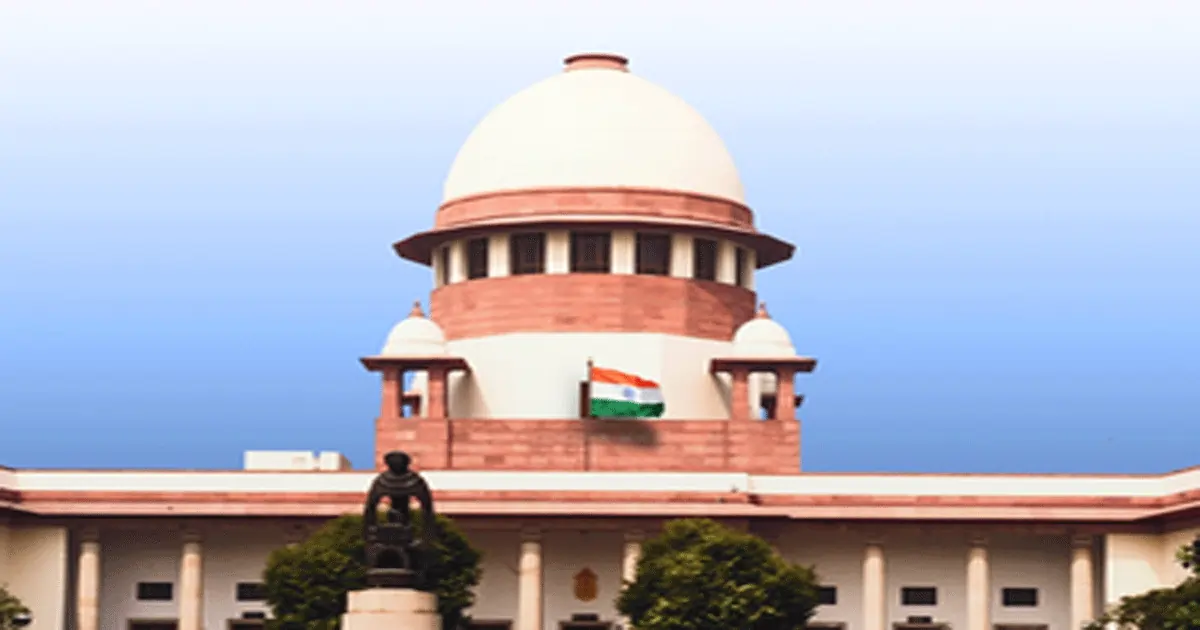
New Delhi, Jan 29: The Supreme Court on Wednesday ruled that residence-based reservation in Post Graduate (PG) medical courses under state quota is constitutionally invalid.
A bench, headed by Justice Hrishikesh Roy, said that providing for domicile or residence-based reservation in PG medical courses is constitutionally impermissible and cannot be done.
It opined that residence-based reservation is impermissible for the reason that such reservation runs counter to the idea of citizenship and equality under the Constitution.
It clarified that institutional preference or reservations to a reasonable extent permissible under the Constitution in PG courses, yet reservation in PG medical courses and other higher learning courses, on the basis of ‘residence’ violates Article 14 of the Constitution.
“We must also remember that, to a reasonable degree, residence-based reservation in a state is permissible for MBBS course, but the same reservation for PG courses is not permissible,” added the Bench, also comprising Justices Sudhanshu Dhulia and S.V.N. Bhatti.
It referred to previous decisions of the apex court, where it was held that at the PG level, merit cannot be compromised, although residence-based reservation can be permissible to a certain degree in UG or MBBS courses.
In Chandigarh’s Government Medical College and Hospital, 64 PG medical seats falling under the state quota were reserved either for the ‘residents’ of Chandigarh or for those who have done their MBBS from the same college.
The prospectus provided a very wide definition of ‘residents’ of Chandigarh and even included a person who studied in Chandigarh at any time for 5 years or the children of parents who had property in the Union Territory for a period of 5 years at any point of time.
After several petitions were filed before the Punjab and Haryana High Court challenging this residence-based reservation, the high court held that the reservation was given on the basis of a long-discarded principle of domicile or residence and was bad in law.
Upholding the decision, the Supreme Court said: “We are all domiciled in the territory of India. We are all residents of India. Our common bond as citizens and residents of one country gives us the right not only to choose our residence anywhere in India, but also gives us the right to carry on trade & business or a profession anywhere in India. It also gives us the right to seek admission in educational institutions across India.”
It said that the benefit of affirmative action in educational institutions to those who reside in a particular state can be given to a certain degree only in MBBS courses, but considering the importance of specialist doctors in PG Medical Course, reservation at the higher level on the basis of ‘residence’ would be violative of Article 14 of the Constitution of India.
“If such a reservation is permitted then it would be an invasion on the fundamental rights of several students, who are being treated unequally simply for the reasons that they belong to a different state in the Union! This would be a violation of the equality clause in Article 14 of the Constitution and would amount to a denial of equality before the law,” the top court added.
It stressed that state quota seats, apart from a reasonable number of institution-based reservations, have to be filled strictly on the basis of merit in the All-India examination.

Education
First day of Rajasthan Assembly: Congress stages sit in, demands education minister’s resignation

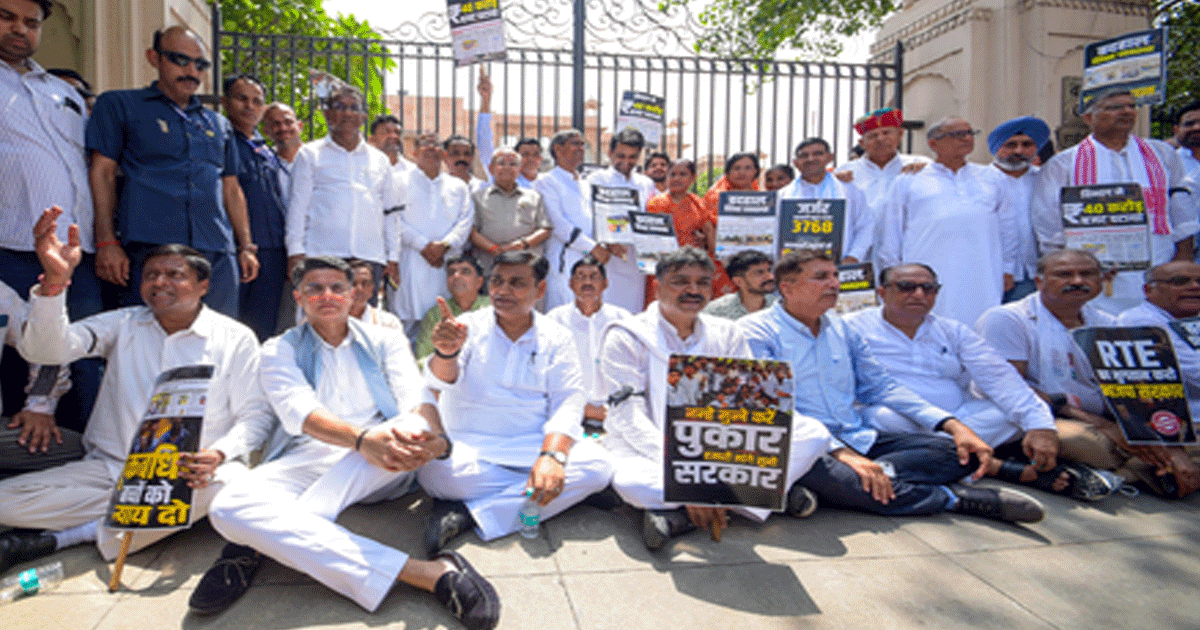
Congress MLAs staged a sit-in outside the Rajasthan Assembly on Thursday, the first day of the Monsoon Session, protesting restrictions on media entry into government schools and demanding the resignation of Education Minister Madan Dilawar over their condition.Leader of Opposition Tikaram Jully, Rajasthan Congress President Govind Singh Dotasra and senior Congress leader Sachin Pilot participated in the protest.
The leaders accused the Chief Minister Bhajanlal Sharma-led BJP government in Rajasthan of adopting a “dictatorial” approach towards the media and the Opposition.Earlier, Congress MLAs visited the Poddar School for the Deaf and Mute and subsequently marched on foot towards the Assembly, led by Jully. The protest was aimed at highlighting the condition of the school and opposing restrictions imposed by the Education Department on media coverage of schools.
As the legislators attempted to enter the Assembly premises, police stopped them with barricades. A scuffle broke out between the police and Congress MLAs, with several leaders climbing onto the barricades during the confrontation.Govind Singh Dotasra also alleged that RSS shakhas were being started in schools, while Congress leaders accused the Rajasthan government of failing to address problems in the education sector. The Opposition has sought the Education Minister’s resignation over the issue.
Meanwhile, proceedings of the Rajasthan Assembly began on schedule at 11 a.m. After tributes were paid to departed leaders, the House was adjourned until Friday at 11:22 a.m, bringing the day’s proceedings to an end after just 21 minutes.Following the adjournment, Congress MLAs ended their sit-in outside the Assembly gate. Bharat Adivasi Party (BAP) MLAs also staged a protest outside the Assembly complex, demanding national monument status for Mangarh Dham.
Government Chief Whip Jogeshwar Garg criticised the Opposition, saying Congress MLAs had stayed away from the House without a valid reason. He claimed that had they arrived on time, they would have participated in the singing of the full Vande Mataram.Two Bills, the Geetanjali Global University Jaipur Bill and the Rajasthan Tree Protection Bill, were tabled in the Assembly on Thursday. Both are expected to be taken up for debate before passage.
Crime
Tension prevails in Jadavpur University after SFI, ABVP groups clash; several students hospitalised
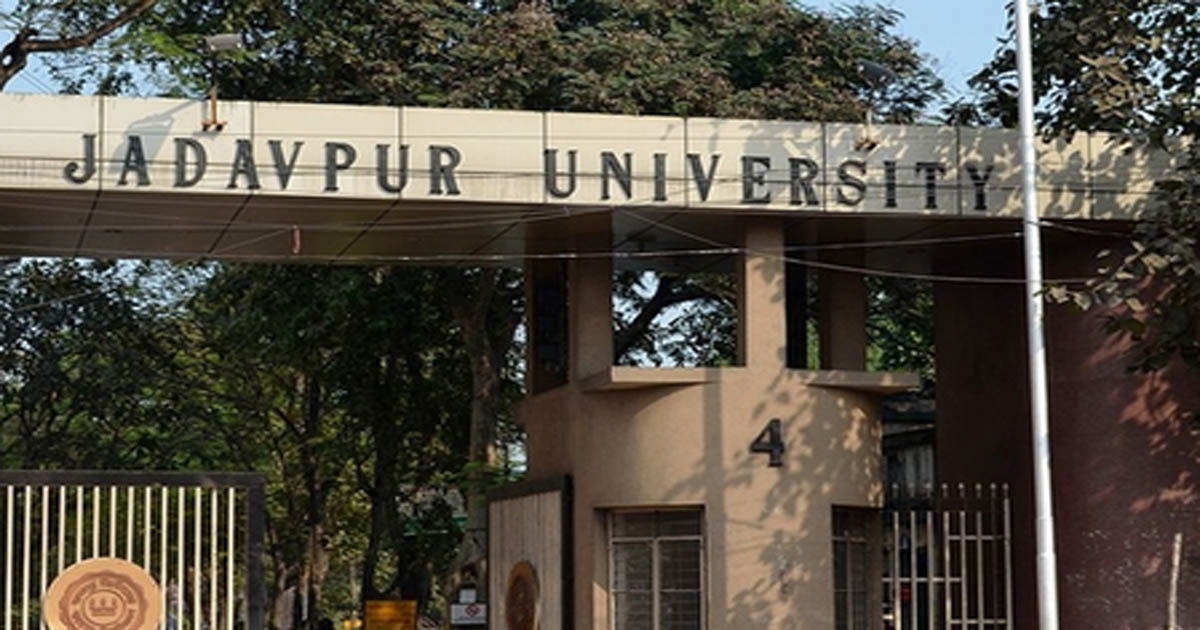
Kolkata: Tension broke out at Jadavpur University (JU) campus in South Kolkata on the intervening night of Wednesday and Thursday over clashes between the Students’ Federation of India (SFI), the CPI(M)’s students’ wing and the Akhil Bharatiya Vidyarthi Parishad (ABVP).
The tension between the two rival students’ unions erupted over the general body meeting of the Faculty of Engineering and Technology Students’ Union (FETSU).
The SFI has claimed that the ABVP has been trying to take control over the JU since the formation of the new state government in West Bengal, mobilised outsiders within the university campus and resorted to vandalism.
The ABVP, on the other hand, has accused the SFI, assisted by activists of the Socialist Unity Centre of India (Communist)- affiliated Democratic Students’ Organisation (DSO), of launching an attack on the ABVP office-bearers inside the campus in the guise of a general body meeting.
Some of the students injured in the clashes are currently under treatment at the nearby K.P.C. Medical College and Hospital.
The local Bharatiya Janata Party (BJP) legislator from Jadavpur Assembly Constituency, Sarbori Mukherjee, an actress-turned-politician, arrived at the hospital on Thursday morning to enquire about the injured students admitted there.
Both the rival groups have lodged FIRs at the local Jadavpur Police Station over the incident. At the same time, both the rival students’ wings have announced massive protest demonstrations on Thursday over the issue within the campus.
At the time the report was filed, no one had been arrested in connection with the clashes that broke out in the intervening night of Wednesday and Thursday.
According to the ABVP’s central working committee member, Subhabrata Adhikari, the attack on their office-bearers was orchestrated not just by SFI activists but also by students affiliated to other Left-wing student groups, including those having links with Left-Wing Extremism (LWE) groups.
On the other hand, SFI’s general secretary, Srijan Bhattacharya, said the SFI was nowhere to be found in the entire mess. “What I heard is that the ABVP activists aided by local BJP associates resorted to vandalism within the campus. Why is ABVP so scared to face elections and democratically take control of the students’ body in JU?” Bhattacharya questioned.
Education
Kalyan: 3,000 Mumbai University Engineering Students Face Uncertainty Over Retrospective Exam Rule Change

Kalyan: Nearly 3,000 engineering students from colleges affiliated to Mumbai University in the Kalyan region are facing academic uncertainty after the university reportedly altered examination rules after the completion of exams, triggering widespread confusion and anger among students.
Students appeared under prescribed guidelines; new norms now threaten eligibility
According to students, they appeared for their examinations under a prescribed set of academic guidelines. However after the examination process concluded, the university introduced revised rules, raising serious concerns over results eligibility for promotion to the next academic year, and overall academic progression.
Students fear that implementation of the new norms could jeopardise their entire academic year. If these rules are enforced retrospectively, many of us may lose a year despite following the guidelines that were in place at the time of examination a student representative said.
Students approach Senate Member Alpesh Bhoir seeking immediate intervention
Distressed by the sudden development, a large group of students approached Mumbai University Senate Member Alpesh Bhoir seeking immediate intervention. The students submitted a representation outlining how the abrupt rule change could directly impact their results, admissions to the next semester, and future career prospects.
Taking cognisance of the issue Bhoir assured the students that their academic interests would be safeguarded. He termed the move “unjust and unacceptable stating that altering rules after examinations undermines fairness and transparency in the education system.
Bhoir terms move ‘unjust and unacceptable’; to meet Pro-Vice-Chancellor on Thursday
“I will immediately intervene in the matter and meet the Pro-Vice-Chancellor of Mumbai University on Thursday to present the students’ concerns. Under no circumstances should students suffer due to administrative decisions taken after the examination process Bhoir said.
The sudden policy shift has created anxiety across engineering campuses in Kalyan, with students and parents closely watching the university’s response. Academic experts have also opined that retrospective implementation of rules could lead to legal and administrative complications.
All eyes are now on the Mumbai University administration as thousands of students await clarity on their academic future.

MPSC aspirant’s death by suicide in Pune amid paper leak row sparks outrage

Nepal: Gen-Z uprising days treated differently by political parties

Pandya included as Padikkal and Gaikwad to captain India A against Australia A

Cabinet okays 5 railway projects in south India at total cost of Rs 10,021 crore

Suniel Shetty wishes ‘Hera Pher’ co-star Akshay Kumar as he turns 59

Four more Indian nationals rescued in Nepal, 120 cross safely from China: MEA

Nepal floods: First batch of 106 stranded Maharashtra tourists reaches India; 84 more expected today (Ld)

India, Brazil sign ICT MoU to deepen digital, telecom cooperation

Maharashtra: 17-year-old boy dies by suicide on Raksha Bandhan after emotional social media posts

Sensex ends flat, Nifty gains marginally as oil surge, US-Iran tensions weigh
-

 Crime4 years ago
Class 10 student jumps to death in Jaipur
-

 Maharashtra2 years ago
Mumbai Local Train Update: Central Railway’s New Timetable Comes Into Effect; Check Full List Of Revised Timings & Stations
-

 Maharashtra2 years ago
Mumbai To Go Toll-Free Tonight! Maharashtra Govt Announces Complete Toll Waiver For Light Motor Vehicles At All 5 Entry Points Of City
-

 Maharashtra2 years ago
False photo of Imtiaz Jaleel’s rally, exposing the fooling conspiracy
-

 National News2 years ago
Ministry of Railways rolls out Special Drive 4.0 with focus on digitisation, cleanliness, inclusiveness and grievance redressal
-

 Maharashtra2 years ago
Maharashtra Elections 2024: Mumbai Metro & BEST Services Extended Till Midnight On Voting Day
-

 National News2 years ago
J&K: 4 Jawans Killed, 28 Injured After Bus Carrying BSF Personnel For Poll Duty Falls Into Gorge In Budgam; Terrifying Visuals Surface
-

 Crime2 years ago
Baba Siddique Murder: Mumbai Police Unable To Get Lawrence Bishnoi Custody Due To Home Ministry Order, Says Report