
National News
Igatpuri Fake Call Centre Probe: How A Fake Call Centre Network Grew Under An IG’s Supervision, CBI Probe Reveals Shocking

Mumbai: The Central Bureau of Investigation (CBI) is probing a sprawling fake call centre network dismantled in Igatpuri in August 2025, which allegedly operated under the protection of an Inspector General of Police (IGP)-rank officer of the Maharashtra Police, considered one of the masterminds. The officer, with significant political clout, reportedly provided protection and logistical support to the syndicate, which allegedly had links across multiple districts and possible political backing.
Sources indicate the IG-rank officer exercised influence within the political and police hierarchy, allegedly controlling IPS postings, overseeing promotions, and directing the relocation and operations of illegal call centres. The network had a hierarchical, corporate-style structure involving officers from the IG-level oversight down to constables. It even maintained an internal “crisis management team” led by SP-rank officers and extending to local crime branch units and station-level officials. This setup allegedly ensured quick responses to enforcement actions, allowing the multi-crore operation to continue unhindered.
Investigators believe the network first took root around 2020–21 in Palghar district, where three fake call centres allegedly operated under the shield of a senior Superintendent of Police (SP)-rank officer in areas like Saphale, Wada, and Mokhada. Each centre boasted 25-30 “desks,” with operators paying Rs 1-2 lakh per table in monthly protection fees, generating Rs 10-15 lakh daily per table through frauds peddling fake Viagra, Amazon gift cards, credit card scams, and bogus ayurvedic products.The operation relied on advanced digital tools, cloud servers, e-commerce gateways, and VPNs to target international victims. A significant portion of illicit proceeds reportedly flowed via hawala networks to senior police brass, including IG-level officials.
The Palghar network expanded further in 2022. The officer, then a Superintendent of Police (SP) and now the IG in question, was promoted and posted as Joint Head of Law and Order in Thane, assuming a senior supervisory role. Soon after, in April 2022, a newly promoted IPS officer from Palghar, who controlled the three call centres, joined him as Additional Commissioner of Police (Addl CP) in Thane. These two senior officers, allegedly in collusion with a DCP-rank promotee IPS officer, facilitated the relocation of the Palghar network to Thane in June 2022. Operational control of the syndicate allegedly remained with the same core team, led by absconding accused Sandeep Singh and arrested accused Vishal Yadav, both of whom were later linked to the Igatpuri call centre network busted by the CBI on August 8 this year.
Later that year,a DCP-rank officer transferred to Mira Road allegedly shifted one Thane-based call centre to the Mira Road–Vasai–Virar (MBVV) jurisdiction. By the end of 2022, three units operated across Thane and MBVV, with senior officers allegedly collecting substantial protection payments. Sources described these relocations as strategic, designed to evade law enforcement, rather than routine precautions.
A senior officer, speaking on condition of anonymity, said it was a calculated strategy, allegedly orchestrated with the involvement of senior IPS officers. All logistical requirements for leasing premises, including forged KYC documents and advance cash rentals, were reportedly arranged through middlemen. The officer added that this process would not have been possible without police links, particularly the blessings of senior officials. By shifting premises, changing internet providers, SIM cards, and IP addresses, the operators effectively erased digital footprints, evading law enforcement while recruiting unsuspecting employees under new identities.
Investigation findings suggest that this syndicate of uniform and fake call centre operations allegedly generated crores of rupees annually over the past few years, functioning through a meticulously organised system of fund collection, distribution, and laundering. Lower-rank officers, identified as Khade, Patil, and Nimde, are alleged to have acted as intermediaries, collecting protection money and funneling it through hawala agents, who then reportedly routed the funds to senior officers. Both senior and junior police officers are now reportedly under CBI scrutiny.
The network reportedly continued to operate even as senior officers changed postings. In June 2024, the senior Thane officer was promoted and transferred to Special Inspector General (IG) of Nashik Range. During his absence, the Additional CP-rank IPS officer reportedly faced challenges in managing the operations but remained active.In May 2025, the IG-rank officer allegedly ensured the transfer of the Additional CP-rank officer from Thane to a prime position in the MBVV Commissionerate. Following this move, the Thane units were allegedly shuttered and quickly re-established in the new MBVV jurisdiction.
The establishment of a new fake call centre in Mira Road faced resistance from an active syndicate led by Sadik, whose network was already operational in the MBVV region, defrauding U.S. citizens. A raid on May 26, 2025 by MBVV police, dismantled Sadik’s network. Although the Additional CP’s unit continued operations briefly, it was eventually shut down due to conflicts with Sadik’s group. Despite his alleged involvement in the syndicate, the Additional CP remains in service and currently heads the Special Investigation Team (SIT) appointed by the DGP to probe a controversial custodial death (or ‘encounter killing’) case.
Central agency sources revealed that even after the IG’s promotion and transfer to Nashik, the call centre operations remained under his control. Units in Thane, Navi Mumbai, Raigad, and Karjat were managed by trusted officers under the supervision of some of his close promotee IPS officers.A few months after he assumed charge in Nashik, these call centres were allegedly shifted back to his jurisdiction, ensuring that the operations continued under his oversight, with substantial amounts of protection money reportedly collected regularly.
The CBI has seized extensive digital evidence, including call logs, server data, and financial transactions, which may establish a direct chain of command between operators and high-ranking officers. Several senior officials are under investigation. “The probe is at a critical stage,” said an official familiar with the case. “We are uncovering the anatomy of an organised racket that operated under the very noses of those meant to stop it.”

National News
‘Chief Minister should contest election from here’: Akhilesh Yadav’s dare to Adityanath in Ayodhya

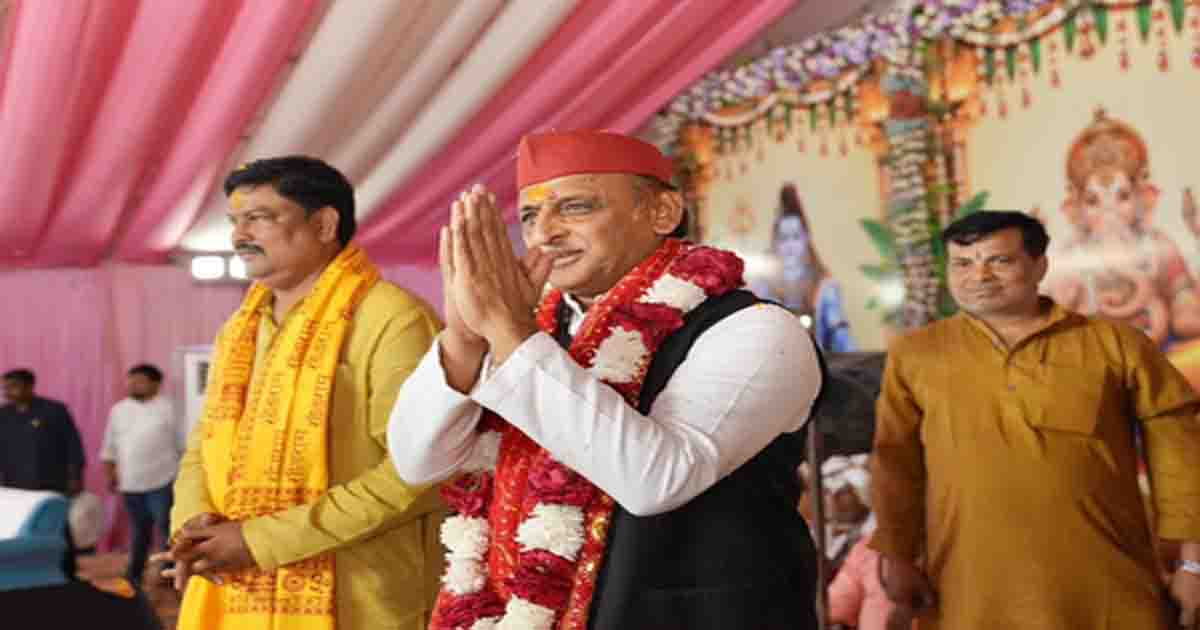
Ayodhya, Oct 8: Samajwadi Party (SP) chief Akhilesh Yadav, during his visit to the holy city on Thursday, issued a direct challenge to Chief Minister Yogi Adityanath to contest the upcoming UP Assembly elections from Ayodhya.
Akhilesh Yadav’s dare to the Chief Minister ignites public interest because the BJP, having championed the cause of the Ram Mandir movement, was vanquished by the SP candidate in the previous elections.
The SP chief, who refrained from visiting the Ram Temple despite his third trip to the holy city since its inauguration in 2024, said that the BJP was struggling to find a candidate in Ayodhya and its “internal surveys are hinting at another rout”.
“If the Chief Minister who makes tall claims and remains so confident, he should contest the election from Ayodhya,” the SP leader mockingly said, eliciting cheers from the supporters.
“Ever since we announced our candidate for Ayodhya, the BJP has been conducting survey after survey. In every single survey, it is falling behind. There is growing buzz that the party is unable to even find a suitable candidate for Ayodhya,” he further said, adding that their ‘false prestige’ will be stripped away.
Reiterating the party’s poll pledge, Akhilesh Yadav said that womenfolk in the state, including mothers and sisters, will be provided with Rs 40,000 monetary assistance every year, and this will bring “real change” in their lives.
Outlining the party’s plans for reviving Ayodhya’s glory and identity, he said that when the socialist government is formed in the state, it will work to accelerate development, bringing international recognition to the city, the birthplace of Lord Ram.
“In the coming times, when a socialist government will be in power, there will be no discrimination against you, nor will your shop or house be demolished,” he said, in a direct reference to the “bulldozer justice” under the incumbent Yogi Adityanath government.
Uttar Pradesh, the most populous state, is bracing for high-stakes Assembly elections early next year, and the ruling as well as the Opposition parties have already started outreach and mass mobilisation programs to woo the electorate.
National News
NHRC seeks report from Delhi Police over women journalists’ sexual harassment allegations
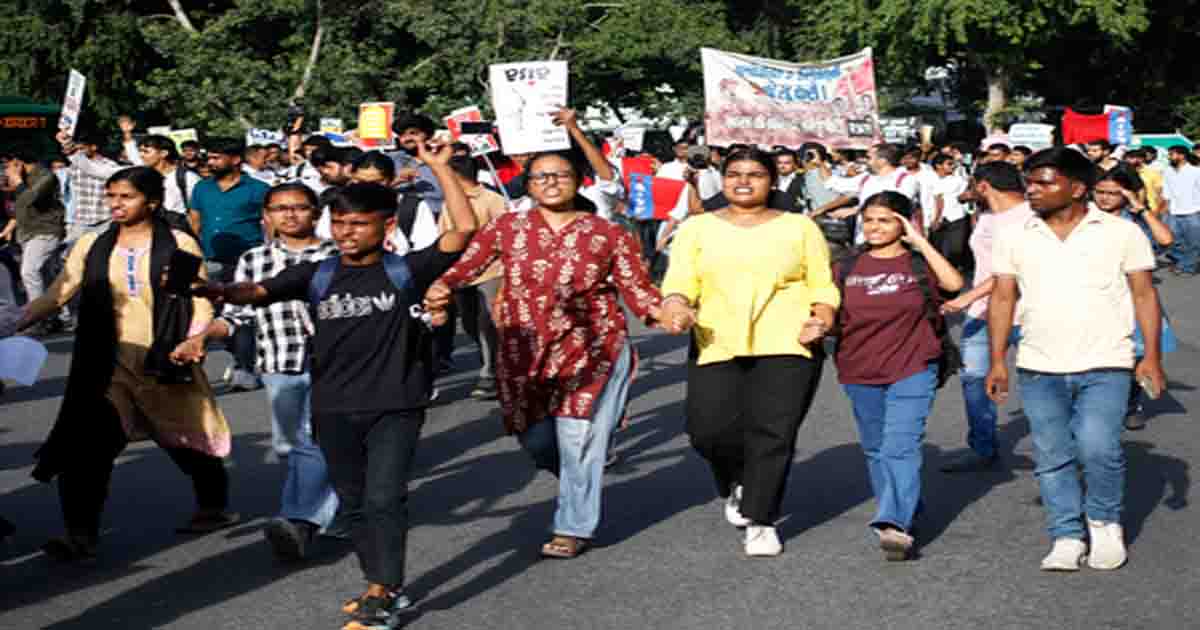
New Delhi, Oct 8: The National Human Rights Commission (NHRC) has taken suo motu cognisance of a media report regarding the alleged sexual harassment of three women journalists by Delhi Police personnel during a protest at Jantar Mantar on October 3.
Observing that the contents of the media report, if true, raise serious issues of violation of human rights, the NHRC has issued a notice to the Delhi Police Commissioner, seeking a detailed report on the matter within two weeks.
According to the media report, three women journalists alleged that they were subjected to sexual misconduct by police personnel while being detained during the protests at Jantar Mantar.
The NHRC said the press report, carried on October 5, stated that the New Delhi District Police had received complaints regarding the alleged incidents and transferred them to the Crime Branch of the Delhi Police for an enquiry.
The Delhi Police said that the complaints were being transferred to the Crime Branch for a “fair and impartial enquiry”.
In a post on X, the Delhi Police said that on October 3, during the protest in the New Delhi area, allegations of sexual harassment were made by three female journalists against police officers.
“New Delhi District has received their complaints, and the same have been transferred to Crime Branch for fair and impartial enquiry,” it said.
The protests were being held at Jantar Mantar despite prohibitory orders, with protesters demanding the resignation of Chief Election Commissioner Gyanesh Kumar over alleged irregularities in the Special Intensive Revision (SIR) of electoral rolls.
Meanwhile, amid the allegations, Vivek Bhagat, Assistant Commissioner of Police, voluntarily requested that he not be allowed to continue with his temporary current duty charge assignment until a full enquiry into the alleged harassment of the women journalists was conducted and satisfactorily concluded.
Following his request, the Delhi government modified an October 5 order assigning additional charge to senior police officers. The revised order excluded Bhagat and covered the remaining 11 officers.
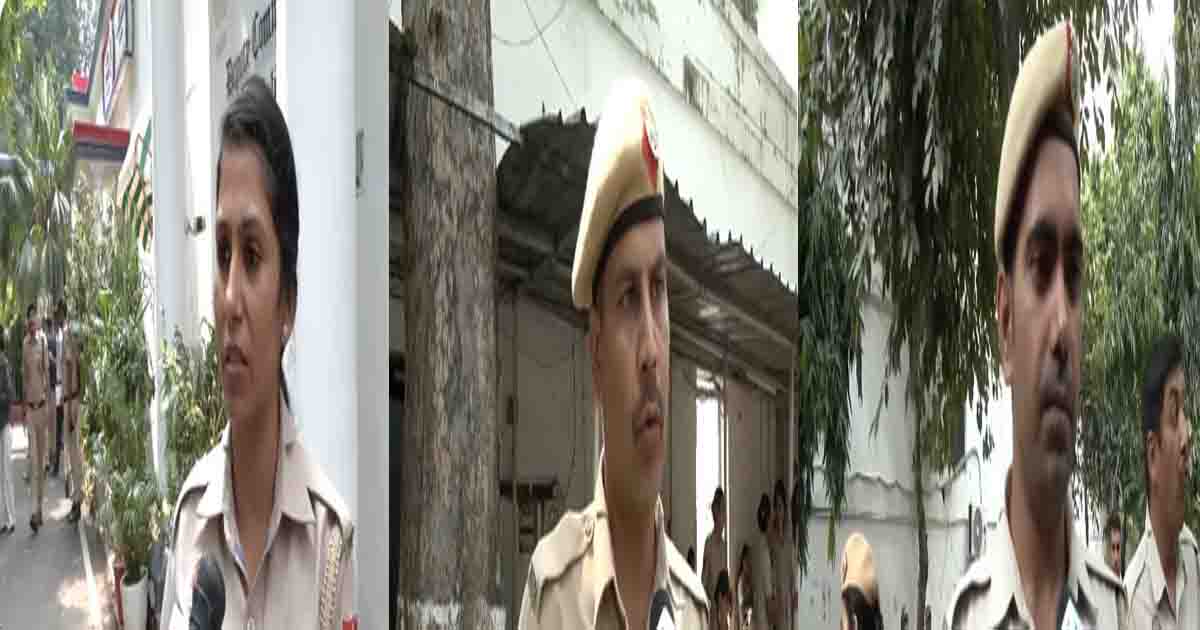
New Delhi, Oct 8: A couple of Delhi Police personnel who allegedly came under attack from the Congress workers and supporters during the INDIA bloc stir in the national capital a day before, narrated the ordeal that they underwent while trying to contain the surging crowd.
A couple of Delhi Police Constables, including women personnel spoke to media, recounting the physical attack inflicted on them while the Congress-led INDIA bloc protested against the Election Commission’s Special Intensive Revision (SIR).
They claimed that they were kicked and punched by the mob while doing their duty.
Deependra Sandhu, a Delhi Police Constable, said that he was assaulted while trying to control the unruly protesters on Wednesday.
“They (protesters) deliberately targeted us because we were informing everyone that Section 163 was in force in the area and that they could not protest here. Suddenly, they went behind us and pulled us from behind. They then pushed us to the ground and started kicking and punching us. We somehow managed to protect ourselves and get away,” he recalled.
The Constable also told media that he saw the attacker running from the protest site after assaulting him from the behind.
“The man who pulled me down from behind and kicked me was wearing white clothes,” he said.
Head Constable Bhupendra Ahlawat had a similar tale to share. He, too, was attacked allegedly by Congress workers while he was in police uniform.
He called it a planned attack as the attacker was allegedly given a “cover and escape route” by the protesting party workers.
“I am the one who was kicked. They intentionally and deliberately pulled me from behind by my waist and made me fall. When I turned around to see who it was and whether I recognised him or not, as soon as I made eye contact with him, the Congress workers hid him. They took him to the green area in the middle of the roundabout and deliberately made him leave after asking him and hiding him,” he said.
Seema, a woman Constable said that she was assaulted during the INDIA bloc protest on Tuesday.
“It is our duty to follow the instructions given by our officers. At that time, we do not pay attention to whether we are getting injured. I realised only later that I had been injured. This happened at Akashvani Bhavan, when we were detaining the legislators.”
“They were the MLAs who were sitting with Priyanka Gandhi,” she added.
According to reports, the Delhi Police have lodged multiple FIRs over alleged misbehaviour, manhandling and assault of its personnel by the Opposition workers, while they adhered to security protocols and strived to maintain order amid difficult circumstances.

‘Chief Minister should contest election from here’: Akhilesh Yadav’s dare to Adityanath in Ayodhya

PACL investment fraud: ED attaches properties worth Rs 567 crore in Mumbai, Pune

Kanpur woman given triple talaq after 16 years of marriage, demands husband arrest

2021 Antilia bomb-scare: Bombay HC expresses surprise over Vaze’s high-end cars, long stay in hotel

NHRC seeks report from Delhi Police over women journalists’ sexual harassment allegations

Gift to President Putin part of PM Modi bid to globally display India’s heritage

PM Modi’s warm camaraderie with Putin, Xi on full display at BRICS Summit

Complaint against Netflix & Mukesh Chhabra for inappropriate language on ‘India’s Got Latent 2’

INDIA bloc begins protest march against ECI

Maha Congress stages agitation against Gyanesh Kumar
-

 Crime4 years ago
Class 10 student jumps to death in Jaipur
-

 Maharashtra2 years ago
Mumbai Local Train Update: Central Railway’s New Timetable Comes Into Effect; Check Full List Of Revised Timings & Stations
-

 Maharashtra2 years ago
Mumbai To Go Toll-Free Tonight! Maharashtra Govt Announces Complete Toll Waiver For Light Motor Vehicles At All 5 Entry Points Of City
-

 Maharashtra2 years ago
False photo of Imtiaz Jaleel’s rally, exposing the fooling conspiracy
-

 National News2 years ago
Ministry of Railways rolls out Special Drive 4.0 with focus on digitisation, cleanliness, inclusiveness and grievance redressal
-

 Maharashtra2 years ago
Maharashtra Elections 2024: Mumbai Metro & BEST Services Extended Till Midnight On Voting Day
-

 National News2 years ago
J&K: 4 Jawans Killed, 28 Injured After Bus Carrying BSF Personnel For Poll Duty Falls Into Gorge In Budgam; Terrifying Visuals Surface
-

 Crime2 years ago
Baba Siddique Murder: Mumbai Police Unable To Get Lawrence Bishnoi Custody Due To Home Ministry Order, Says Report